
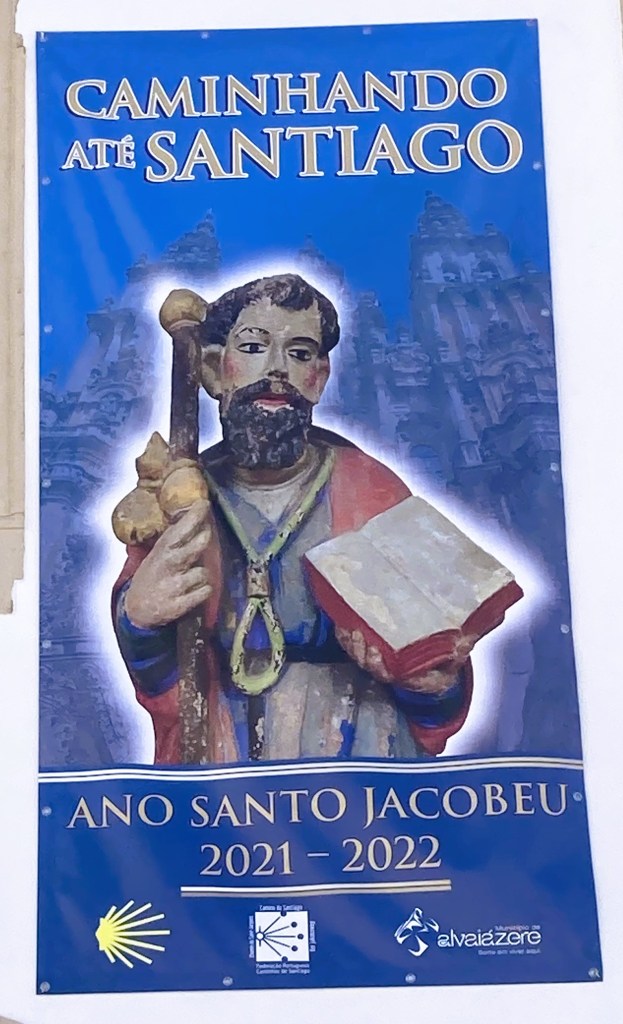
I’m in a Roman Catholic majority country. It is not hard to forget that with all the churches, crosses, and statues.
Although the patron saint of Portugal is Anthony of Padua, and not St. James, I don’t forget that they honor St. James. The ways of honoring St James are endless. Besides statues and paintings, I saw frequent posters of St James. It just so happened that 2021 was a Holy Year.
I find it interesting how individuals, groups, nations remember important figures. The New Testament records Jesus calling two men named James. One along with his brother John, the Sons of Zebedee , is called Jacob the Great; the other was called Jacob the Lesser. The designation refers to their ranking in terms of Jesus’ calling them, not ranking due to their importance. James the Greater is the first Apostle to be executed (Acts 12:2).
Unlike other Apostles who are depicted according to some feature of their life, St Peter with keys as he has the keys to heaven, St Paul with a sword and a book as he traditionally was martyred by a sword and the book represents his epistles, James is not identified with anything remotely connected with his life as an Apostle. As a fisherman, he does not have anything associated with fishing; as the first martyred Apostle, he does not bear anything associated with his martyrdom.
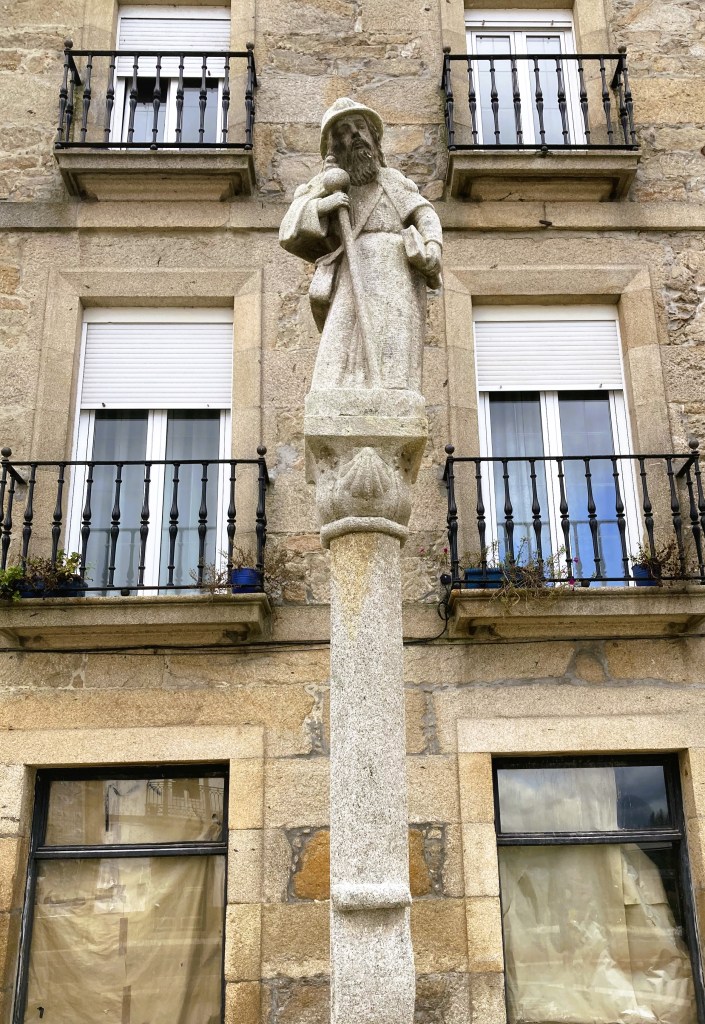
Instead, St James is most frequently portrayed as a pilgrim. He is remembered in such a way because his own burial site became a pilgrimage destination. His attire is that of a pilgrim: broad rim hat, a cloak, a staff, a water gourd, an open satchel, and, of course, the scallop shell. In this designation, he is the patron of all pilgrims.
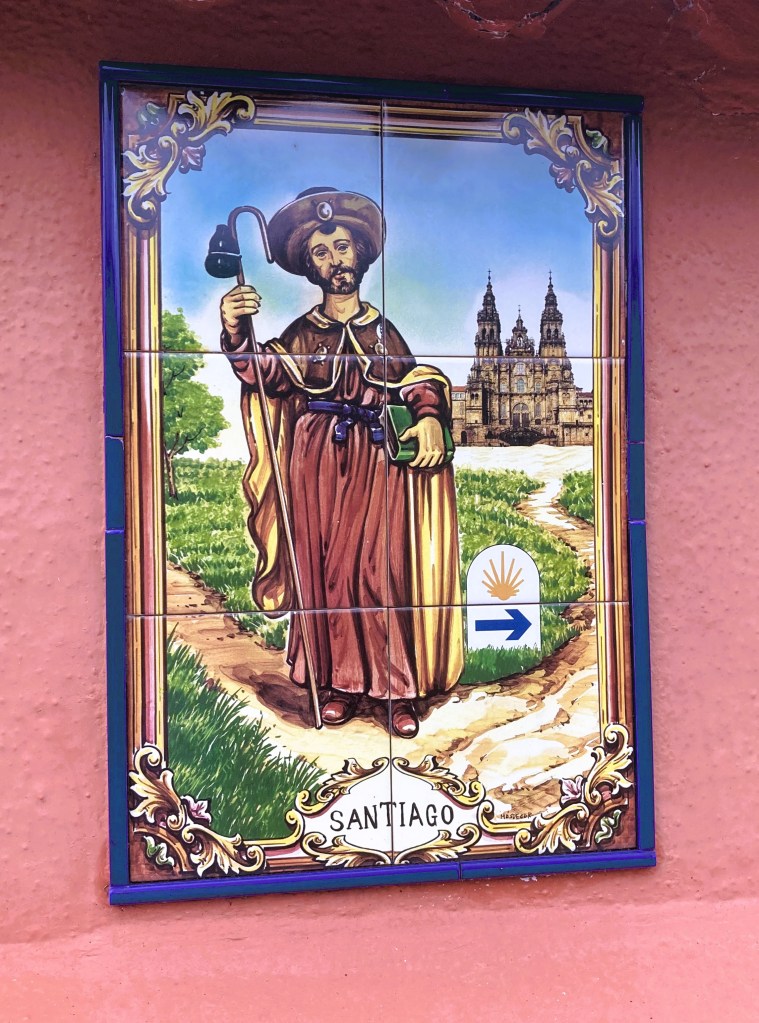
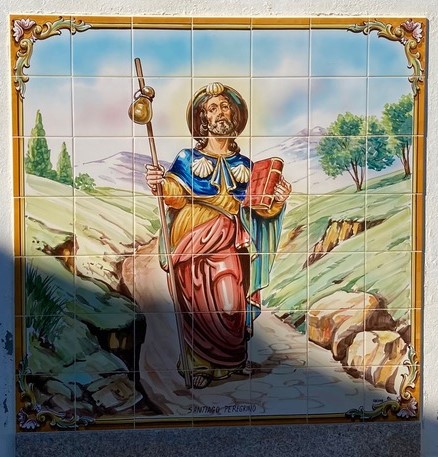
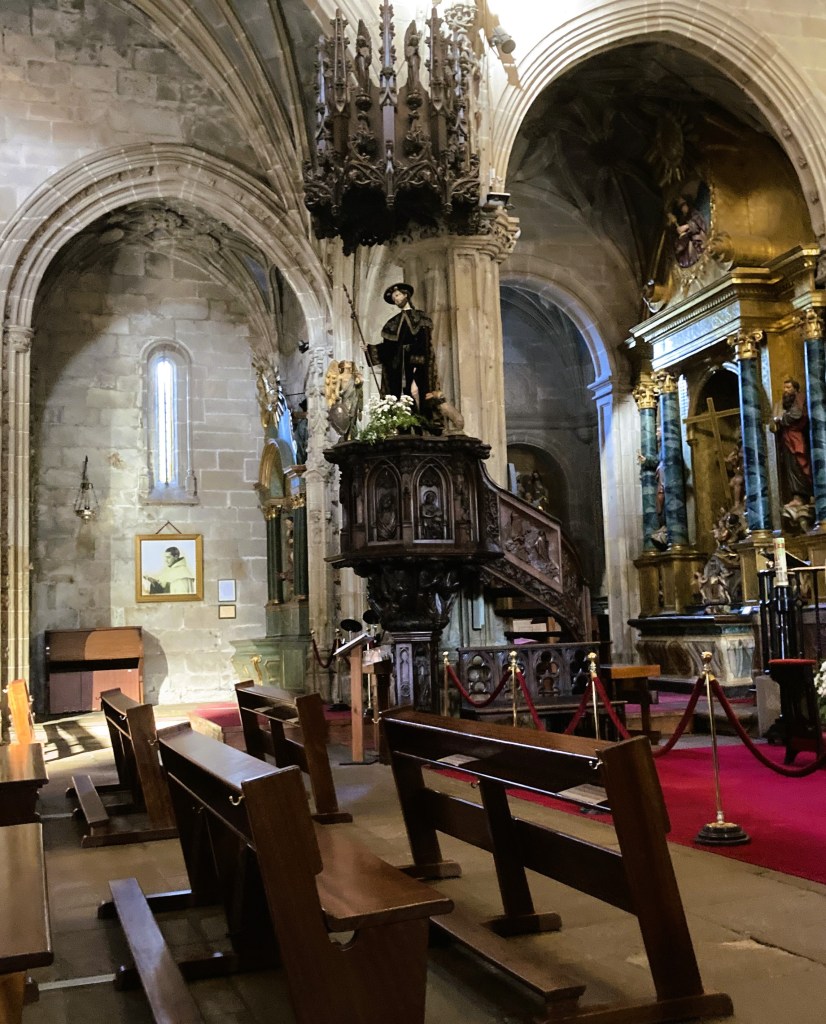
I find the placement of St. James also interesting. He is found in altar shrines, crossroads, the exterior niches of churches, and, obviously, in the interior of churches. In the last photo he is posed above the pulpit. An unusual location.
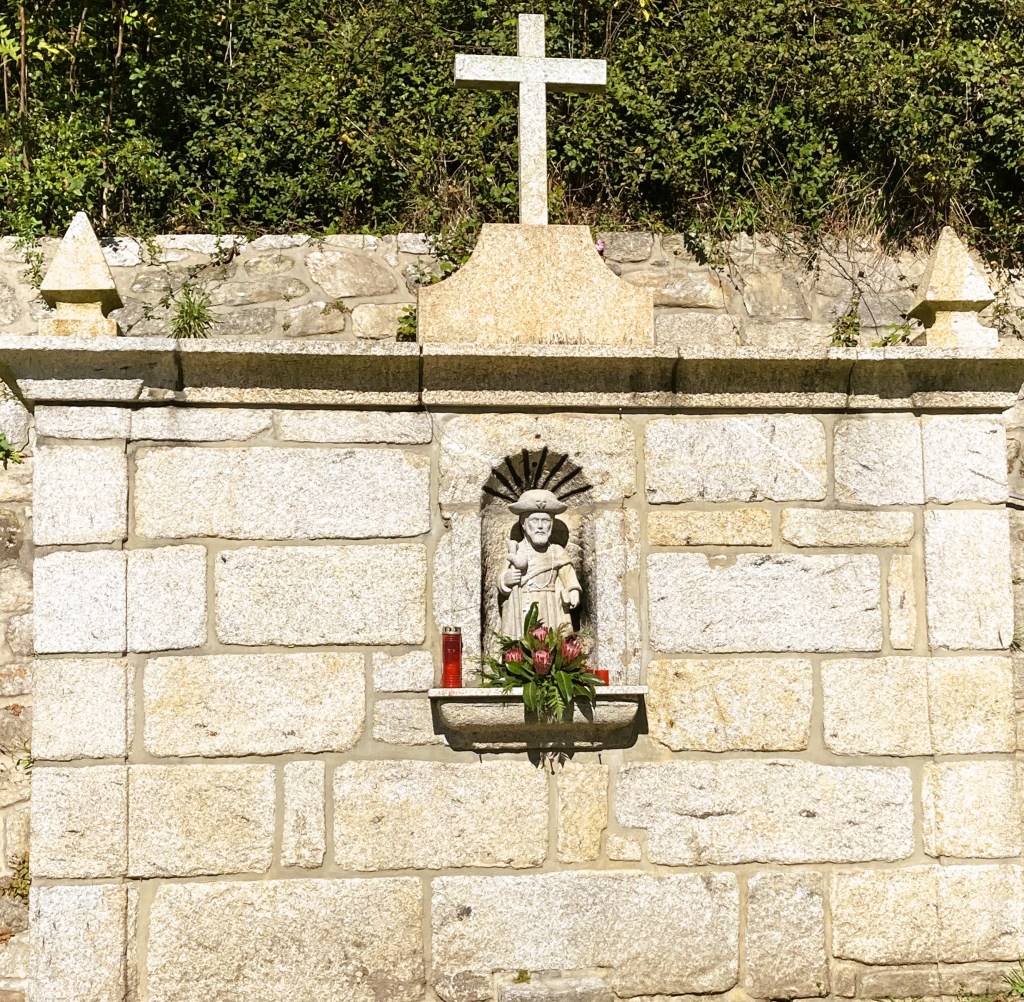


I have not seen an image of St James the Moorslayer. According to a 12th century document, before the Battle of Clavio in 844, St James appeared to Christian soldiers declaring that he would help them defeat the Moors. During the battle, the Christian troops shouted “May God and St James help us.” They won.
Why did the Portuguese not adopt the representation of St James the Moorslayer. Why? The Portuguese drove the Moors out of their territory in 1244, almost 250 years before the Moors were driven out of Spanish territory. Could it be that the Portuguese did not need their efforts reinforced by religious passions generated by St James as the Moorslayer? Could it be that they didn’t need to bend this growing and powerful figure in the Iberian Peninsula to their efforts? Intriguing question whatever the reason.
 Journeys: Explorations in Body, Mind, and Spirit