
Finistera and Muxia. The “End of the World” to the ancient Europeans. Whether the earth was flat or a globe, Finistera and Muxia were the end of Europe. Whatever else lay to the west, it wasn’t an extension of Europe, an extension of their world.
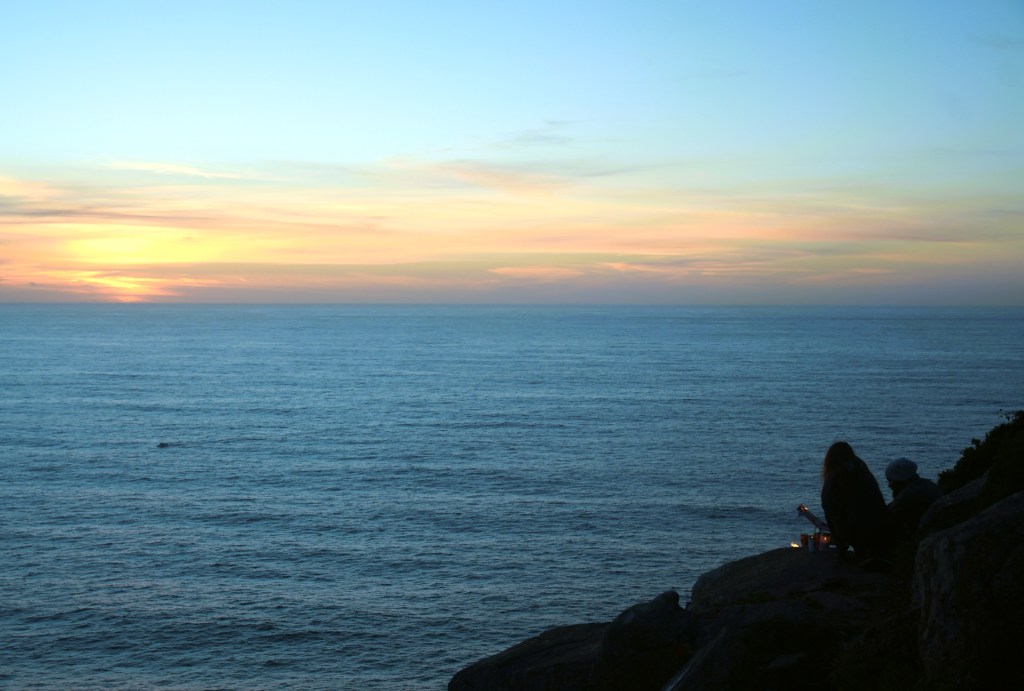
At Finistera, the marker reads “Km 0.000.” The iconic lighthouse sits near the very end of the point. At night, some traditional pilgrims set fire to their boots or a piece of clothing. Of course, this practice is rather infuriating. Who wants to see half-burned shoes or shirts lying at the point!
Muxia is approximately 18 miles from Finisterra. Driving to Muxia, one has beautiful views of the coastline.

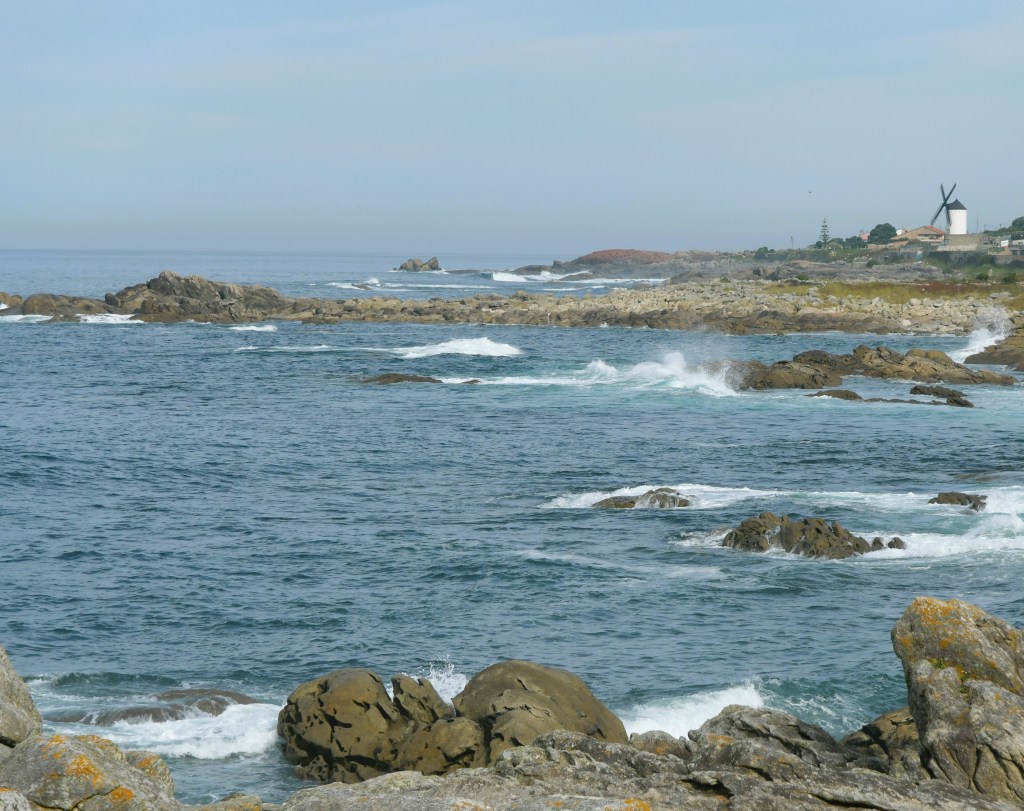
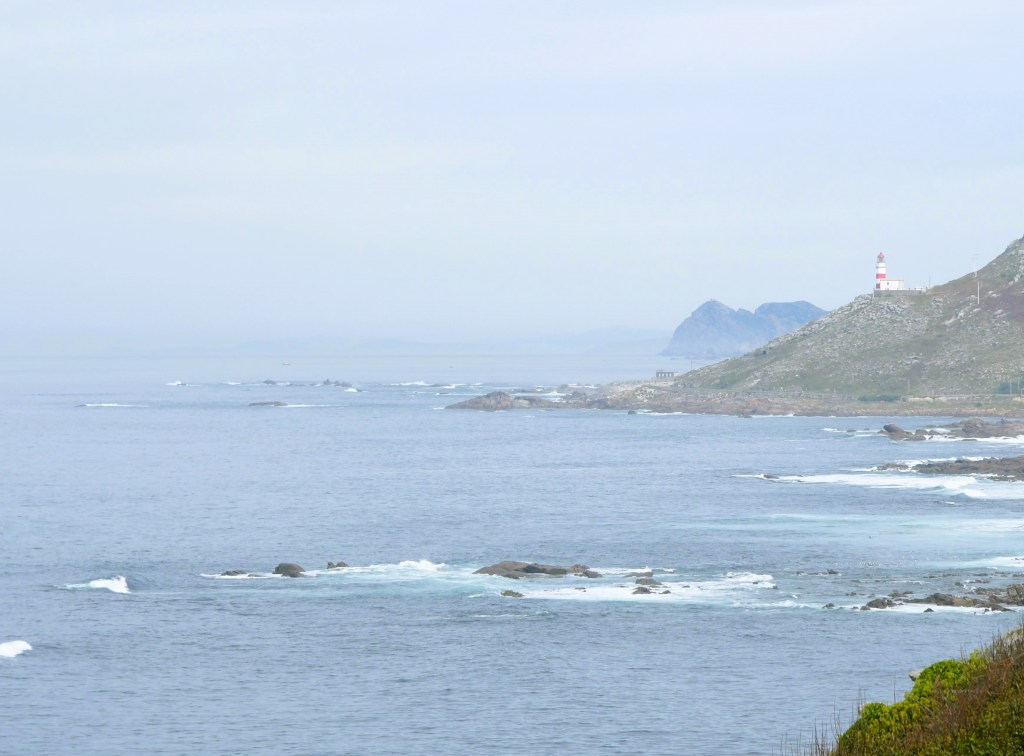
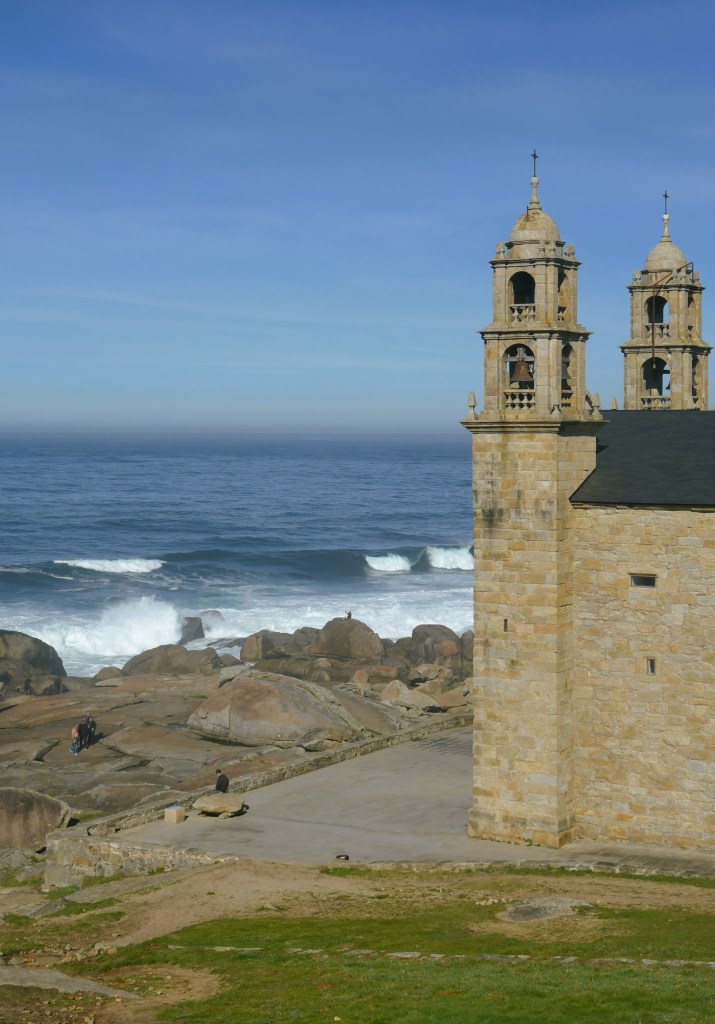
From the village of Muxia, Mary and I walk several hundred meters to the chapel. Mary and I can get quite close to the ocean. More so than Finisterra, I feel the waves pounding against the rocks; I hear their roar. Even more than Finisterra, I feel that this could be the end of the world.

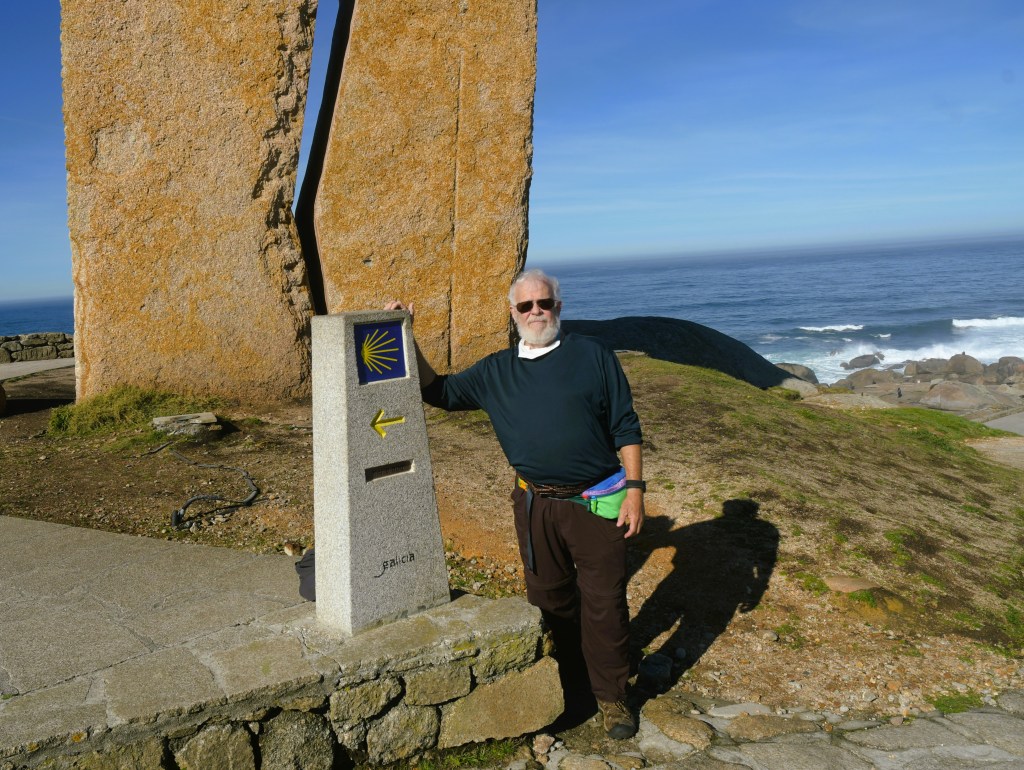
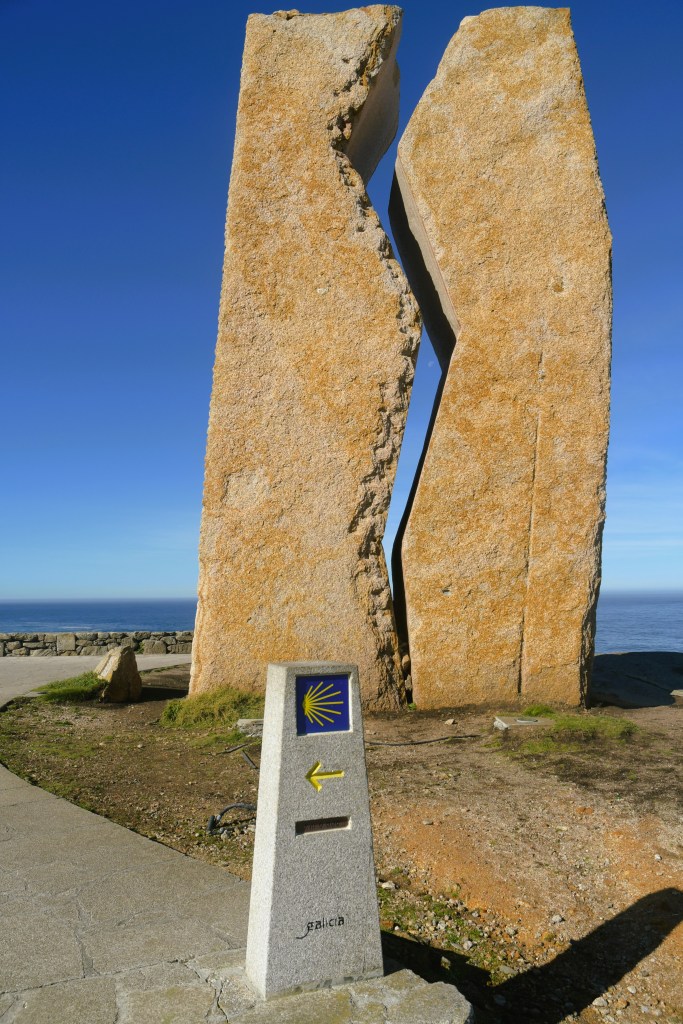
This large split stone has its own traditional meaning. It is meant to symbolize a wound, the earth’s wound. The earth’s wound was caused by the oil tanker Prestige’s breaking apart off the coast of Galicia in 2002, and the subsequent spill of many tons of oil onto the coastline.
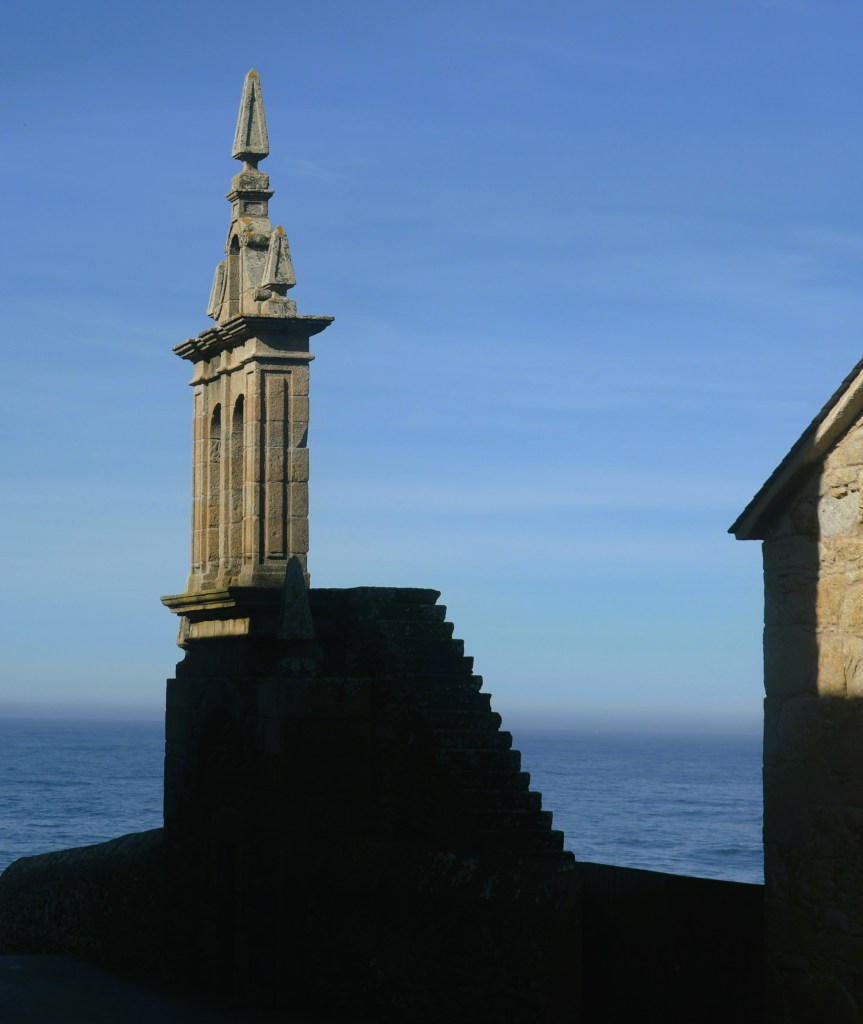
The Sanctuary of Our Lady of A Barca is located at this point. While the first one was built in the 12th century, the Sanctuary has been rebuilt numerous times during its history. Legend has it that Mary arrived at this spot in a stone boat to help St. James convert local people. Several of the stones are claimed to be remnants of that stone boat!
For some like me, the walking part of the Camino ended in Santiago. Whether reaching Finisterra or Muxia by walking, by bus, or by car, there is a feeling at both of these sites “yes, this is the end of the Camino.”

 Journeys: Explorations in Body, Mind, and Spirit