
I’ve finished the Camino Portuguese. Along with Mary, I’ve toured the Porto region and visited Fatima. We’ve returned to Lisbon before our flight. A wonderful city! Especially after I don’t have to walk anymore!
Lisbon sits on several hills overlooking the Tagus River. Only a few miles away, the river empties into the Atlantic. It has always had connections with the ocean, and with people and places who are reached via the ocean. As Hailaire Belloc wrote: “If there is one portion of Europe which was made by the sea more than another, Portugal is that slice, that portion, that belt. Portugal was made by the Atlantic.”
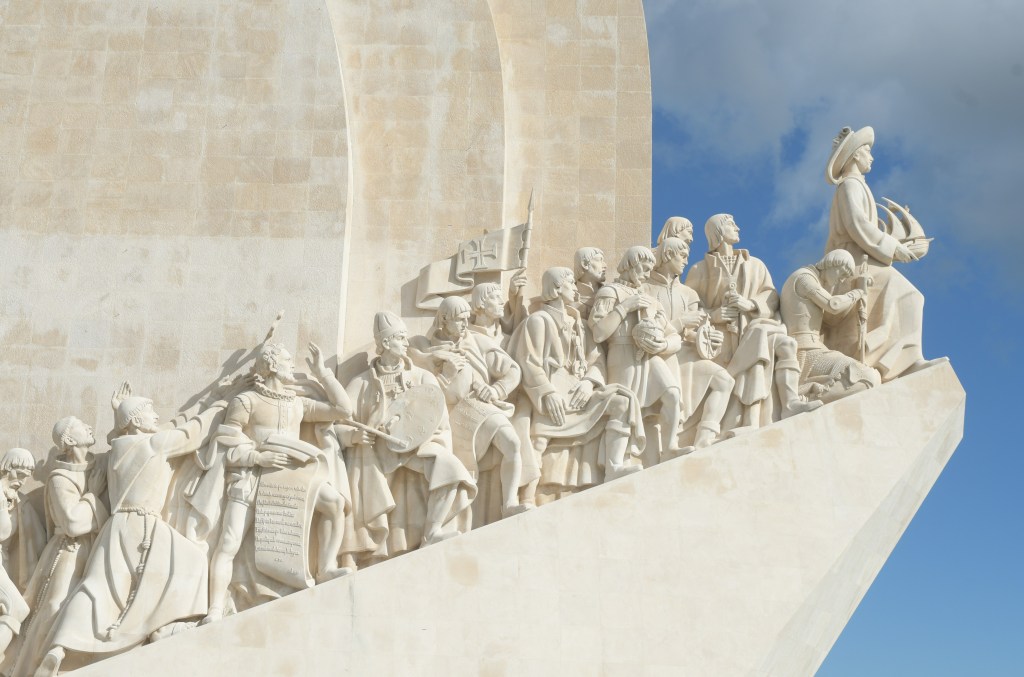
The Portuguese have reminders of this past. The previous photo is of the Belem Tower, the gateway fort to Lisbon’s harbor. Close to the Belem Tower is the modern Monument of the Discoveries which celebrates some of the individuals involved in Portugal’s 15th and 16th century “Age of Discovery.”
The Jeronimos Monastery is a monumental building along the waterfront which contains the Maritime Museum.

A statue of Prince Henry the Navigator dominates the entrance. Although he never traveled on any of hte “voyages of discovery”, Prince Henry spearheaded the voyages. While not a “school” in typical modern meaning, his “School of Navigation” provided a place for sailors and scientists to share information and new instrumentation.


On a more sober note, Lisbon remembers the tragic treatment of the Jews. Established in 1536, the Portuguese Inquisition killed thousands of Jews in Lisbon. The main target in Lisbon were those Jews who had converted to Catholicism while, or so it was believed, still practiced Judaism. Not restricted to Lisbon, the Jesuit missionary Francis Xavier requested that this inquisition be established in Goa, India. Eventually, the inquisition was in effect throughout the Portuguese empire.
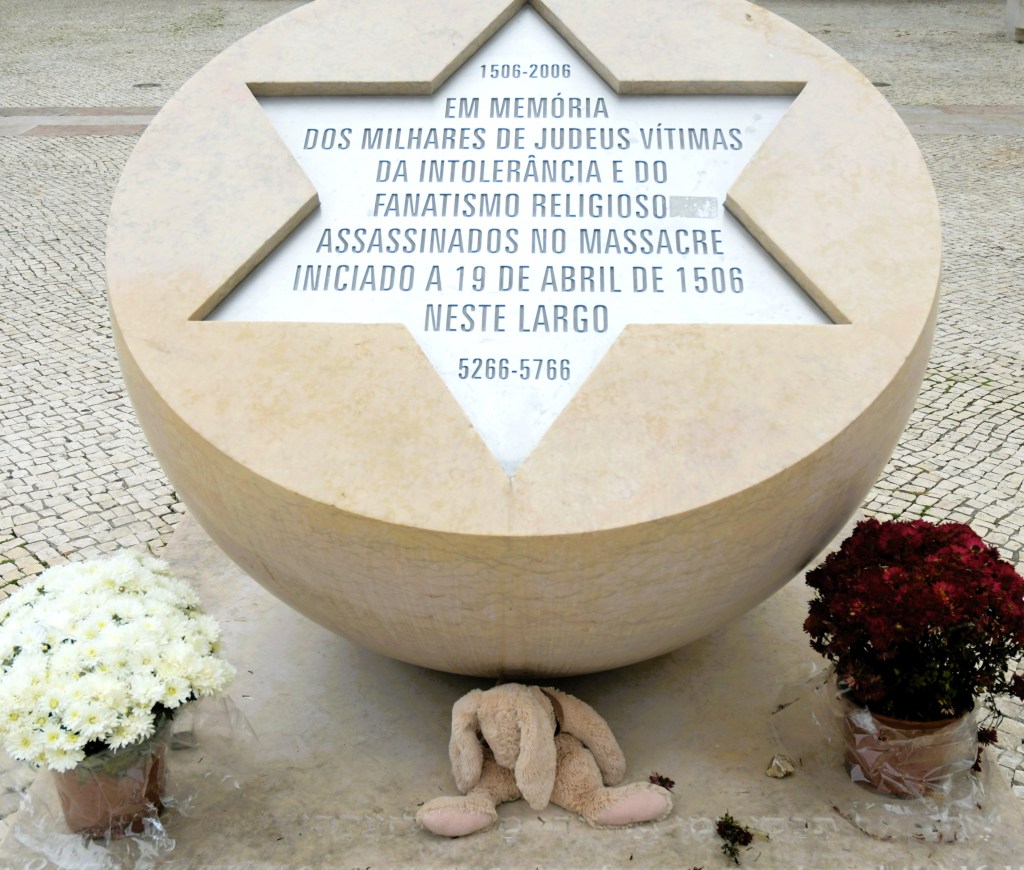
The Portuguese are proud of their history. Rather than turning their back to the sea in fear, the Portuguese are proud that they embraced the dangers and uncertainties. With the advantage of distance, they also acknowledge the suffering resulting from those actions. Sometimes centuries elapse before we can more clearly see the constructive and destructive features of that past.
 Journeys: Explorations in Body, Mind, and Spirit