
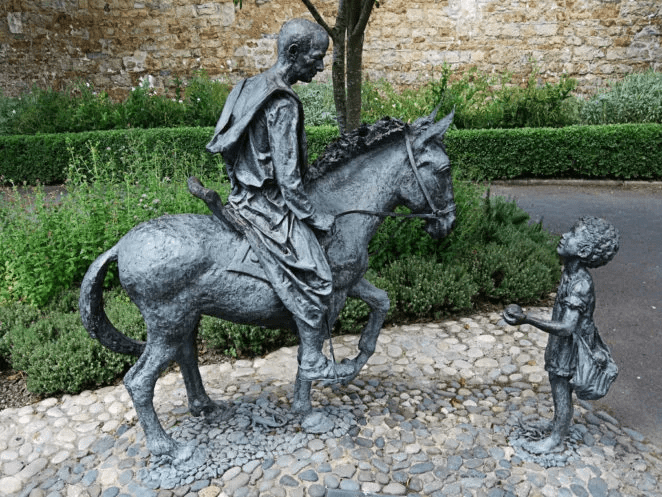
Siegeric is famous for his return trip itinerary from Rome to Canterbury. As a newly selected Archbishop of Canterbury, he, like other newly named Archbishops before him, travelled to Rome to receive his pallium, a “Y” shape stole marking his office. The contemporary Via Francigena generally follows his itinerary. However, who was he? Debra J Birch Pilgrimage to Rome in the Middle Ages and Harry Bucknall’s “Time to ‘Get Serious’ about Sigeric, 10th century Renaissance Man” and Veronica Ortenberg give us a portrait.
Church officials and scholars know neither his place of birth or birthdate. At best, they estimate that he was born between 940-950 CE. Because of his becoming Archbishop of Canterbury, his date of death is much more certain, October 28, 994 CE. Prior to becoming Archbishop, there are three church-related features of his life. He was educated and became a monk at Glastonbury Abbey (of King Arthur legend); he was elected an Abbot of St. Augustine’s around 975; and he became Bishop of Ramsbury prior to becoming Archbishop. Besides these bare facts, can we say much more about Siegeric? Some additional knowledge has historical warrants. Some knowledge is only inferential.
A bit of background first. During the early and middle 900’s, a reform movement began in England associated with Dunstan, Abbot of Glastonbury Abbey and eventually Archbishop of Canterbury. Dunstan’s reformist actions involved enforcing clerical celibacy, forbidding practice of simony (selling ecclesiastical positions for money), ending clerics appointing relatives to lucrative positions, and insisting that monks and canons abide by the Benedictine Rule. An inference follows. It is not unlikely that any person who became a monk at Glastonbury during Dunstan’s period and influence probably adopted many of Dunstan’s views toward reforming the church. Thus, more likely than not, Siegeric, as one of those monks, also pursued many of Dunstan’s reformist actions. Siegeric obviously supported the church and dedicated his life to the church; however, he probably had high ideals for the church and sought to make the church more adequately reflect those ideals.
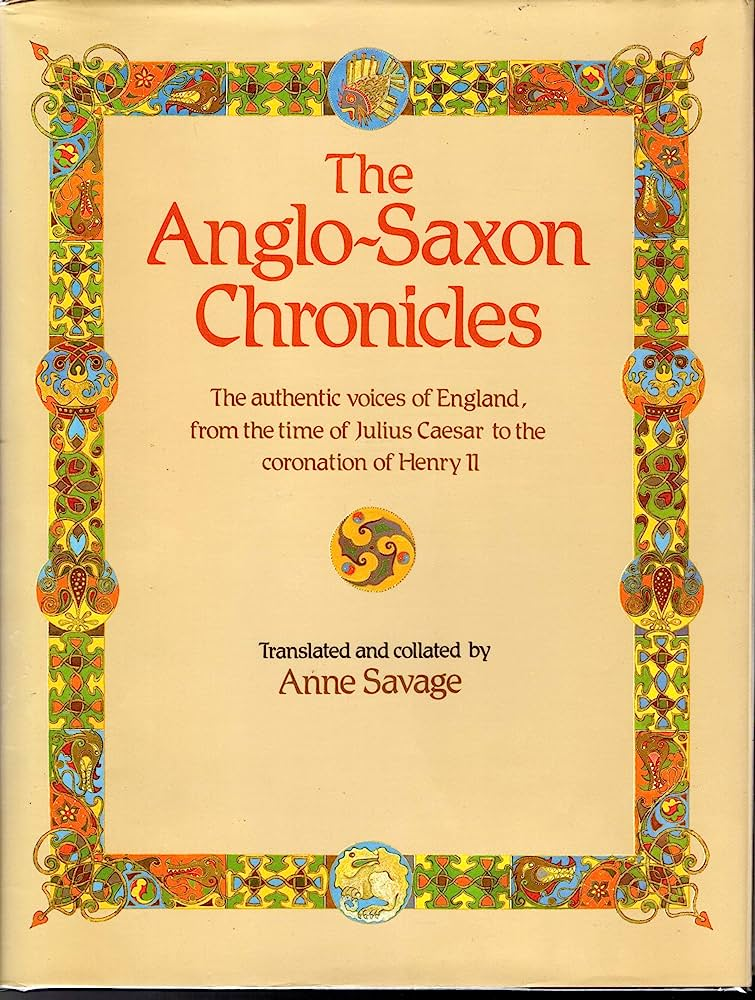
There is historical warrant for another piece of knowledge about Siegeric during his first year as Archbishop. The Anglo-Saxon Chronicle, a history of the Anglo-Saxons begun by Alfred the Great in the 860’s and updated regularly for two-hundred years, states the following: “Ipswich was harried, and very soon afterwards ealdorman Byrhtnoth was slain at Maldon. In this year it was decided for the first time to pay tribute to the Danes because of the great terror they inspired along the sea coast… this course was adopted on the advice of archbishop Sigeric”. The Chronicle adds “that on this first occasion the tribute amounted to ten thousand pounds.”
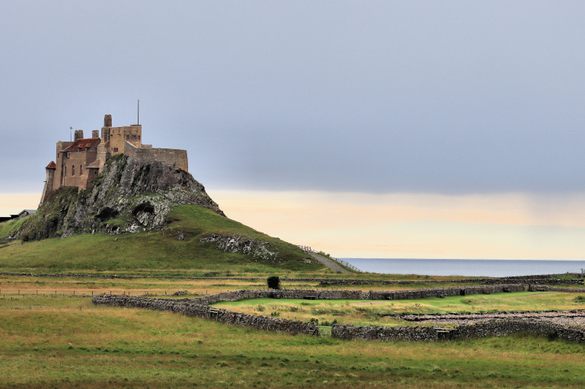
Some supporting background for the Chronicle’s entry. In 793, the Vikings raided the Anglo-Saxon coastal monastery Lindisfarne. The same Chronicle states: “heathen men wretchedly destroying God’s church on Lindisfarne, with plunder and slaughter.” The Vikings continued to raid, seize people, plunder property, and even settle in England until 1066. Only weeks before William the Conqueror killed King Harold and defeated his army, King Harold had defeated the last invasion by a Norwegian King.
Since my heritage is Swedish, I digress to mention that the Vikings’ influence was significant. Some words have Norse orgins, “dale” (valley), “beck” (stream), and “fell” (mountains) as well as many common words such as window, husband, egg, and skull. Furthermore, as the Vikings actually ruled the northern part of England and various cities exploded in size and wealth (cities such as Lincoln, Stamford, Derby, Leicester and Nottingham). During various decades, the late 900’s and 1000’s this period of English history should probably be called the Anglo-Scandinavian period rather than the Anglo-Saxon period.
What does this imply about Siegeric? After the disastrous English defeat, Siegeric convinced the king to pay money to the Vikings in order to avoid future attacks. Besides showing the close power relations between the Archbishop and the King, Siegeric shows himself a political realist. If future attacks could be avoided by paying money, pay the darn money! A political pragmatist!
Another inference about Siegeric concerns the English language. Returning to the work of Dunstan and other church leaders during the 900’s, these individuals encouraged the creating of illuminated manuscripts and the using of the vernacular language beyond the usual use of Latin. Scholars estimate that by 1066, there were more vernacular works written in old English than vernacular works in any other European language.
A brief digression. While old English from approximately 550-1150 CE differs tremendously from modern English, there are similarities. For example, some Old English words of Latin origin still used are belt, butter, chalk, chest, cup, fan, fork, mile, minster, mint, monk, pepper, school, sock, strop, wine. Thank you Oxford English Dictionary.
Back to Sigeric. Again, this claim about Sigeric influencing the king and his supporting the efforts to use a vernacular language are matters of inference. While there is no direct evidence that Siegeric played a large role in these two elements, Siegeric as Archbishiop of Canterbury certainly must have played a contributing role in the king’s political decisions and in the growth of illuminated manuscripts and the use of vernacular language.

One last comment about Siegeric. While not the first Archbishop of Canterbury, St Augustine in 597 was the first, Siegeric was assigned an important ecclesiastical position. Besides his itinerary to receive his pallium, Siegeric lists the 23 churches that he visited in Rome. Besides Rome as a pilgrimage destination, his church visits are part of a larger historical practice of visiting numerous churches in Rome at the conclusion of one’s pilgrimage. This practice became more formally established in the 1533 as a pilgrimage to Rome’s “Seven-Sister Churches.” Besides visiting these 23 churches, Siegeric recounts visiting Pope John XV. Probably insignificant to most of us, he used the term dominus in speaking of Pope John XV. Scholar Veronica Ortenberg suggests that from Siegreric’s perspective Pope John XV “personified St Peter himself” and Siegeric “knew that Peter is the Vicar of Christ; and where there is Peter, there is Christ.” Thus, when Siegeric walked his 1000 miles to Rome, Siegeric not only showed himself a loyal church leader and administrator, but also, upon his arrival, a loyal and devoted believer in the the position of the Pope, his representing St Peter, and, Christ himself.
Who is Siegeric? A committed ecclesiastical “insider.” A probable reformer of the English church. An admirer of beauty as in the illuminated manuscripts. A contributor to the growth of English a an accepted and evolving vernacular language. A political pragmatist who advised the King. Oh yes, the most immediate cause for our current Via Francigena. Quite a fellow!
 Journeys: Explorations in Body, Mind, and Spirit