

Sigeric would have seen the Roman world even before he reached Rome.
He would have traveled on Roman roads.

He would have crossed rivers using Roman bridges.

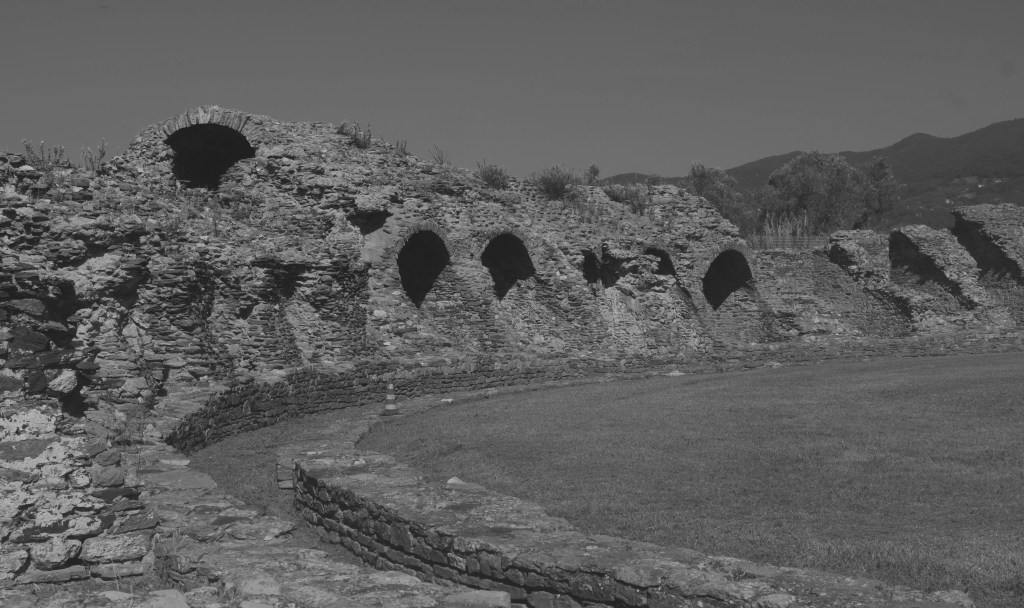
He would have seen the remains of Roman amphitheaters. This one is at Luna along the coast south of Pontremoli.
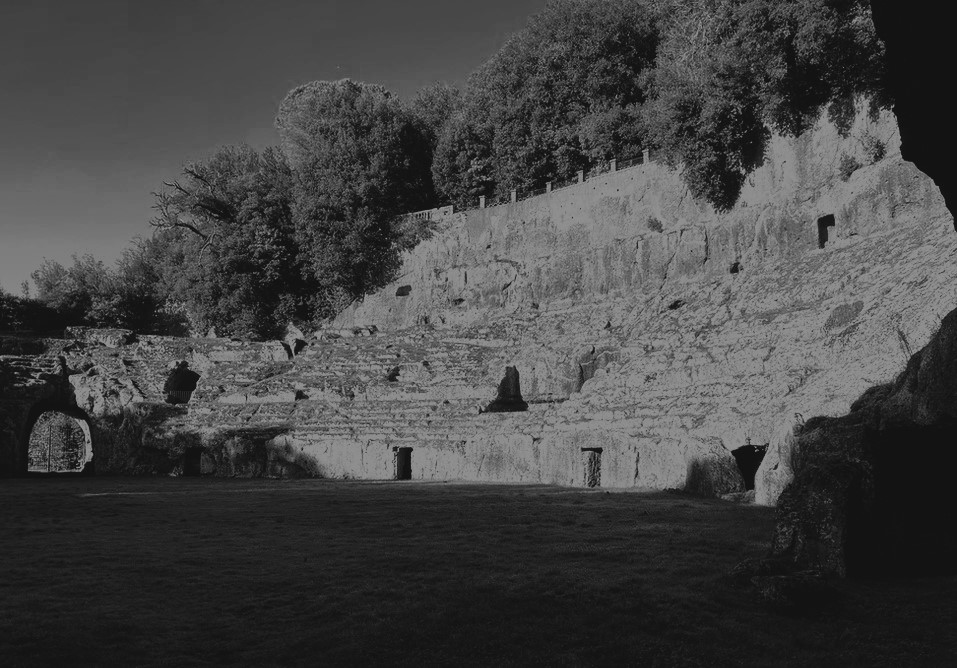
In Sutri, he would have seen another Roman amphitheater, only feet from Etruscan burial caves, necropolis.
Although the following aqueduct is from Provence, he surely would have seen remains of aqueducts.

I wonder what Sigeric thought about these vestiges of the Roman Empire?
Would he be like that ancient writer? The ancient writer declares ” The Lord knows all human plans; the Lord knows that they are futile.”
Would he have contemplated the words of the Roman historian Livy and wonder about why Rome fell? Livy writes in the History of Rome:
The subjects to which I would ask each of my readers to devote his earnest attention are these-the life and morals of the community; the men and the qualities by which through domestic policy and foreign war dominion was won and extended. Then as the standard of morality gradually lowers, let him follow the decay of the national character, observing how at first it slowly sinks, then slips downward more and more rapidly, and finally begins to plunge into headlong ruin, until he reaches these days, in which we can bear neither our diseases nor their remedies.
Would he wonder like a later day civil engineer Gustave Eiffel or architect Frank Lloyd Wright? “How did they build these roads, these bridges, these aqueducts, these buildings?”
Whatever his own religious judgments, I suspect that Sigeric would have pondered the tangible Roman remains that he saw and used.
 Journeys: Explorations in Body, Mind, and Spirit