
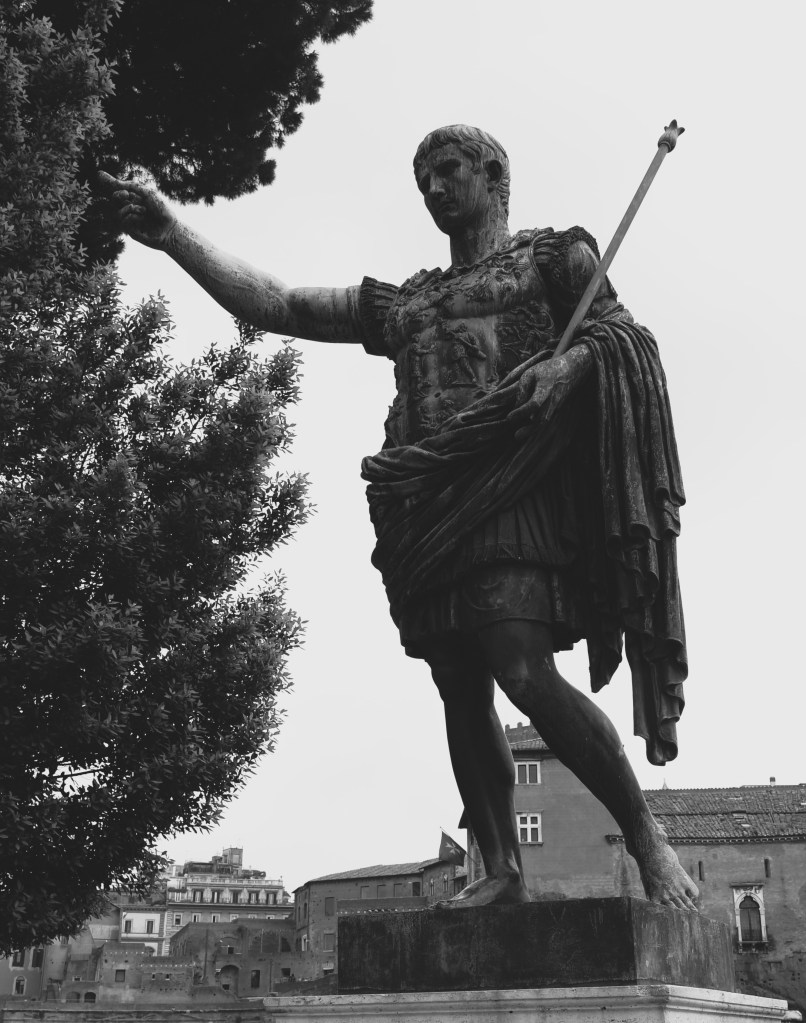
I wonder: what would Sigeric have seen and experienced when he entered Rome?
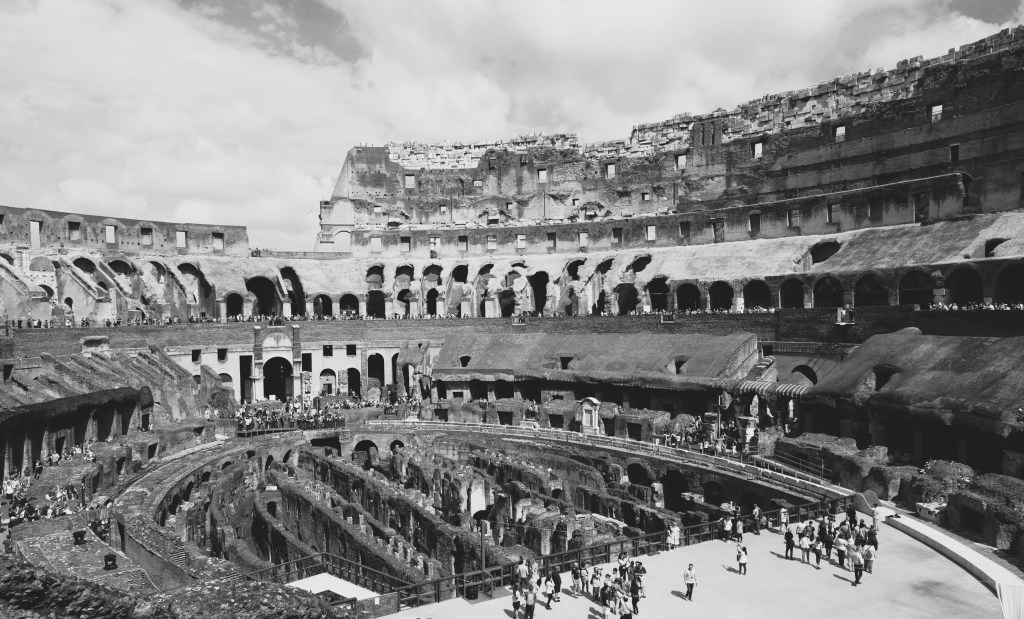
As we see some of Imperial Rome’s remaining buildings and structures, so also he would have seen some of the classic structures. With the help of Christopher Hibbert’s Rome: The Biography of a City, we can better imagine what he saw, even if we can’t known what he felt. I’ll mention four periods whose structure and history he would have experienced.
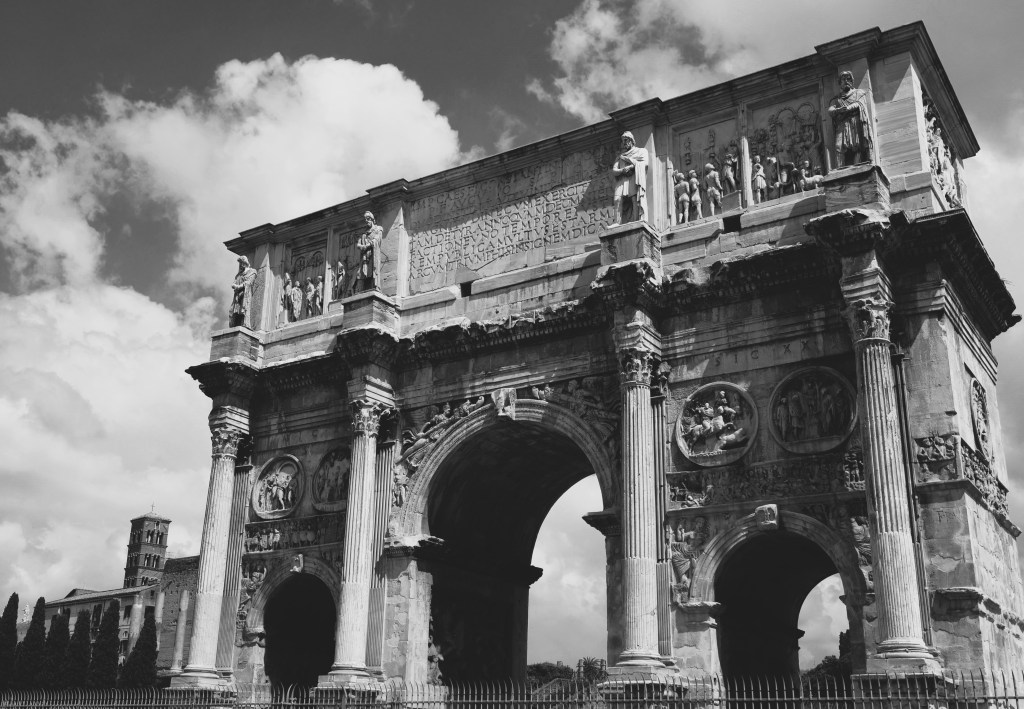

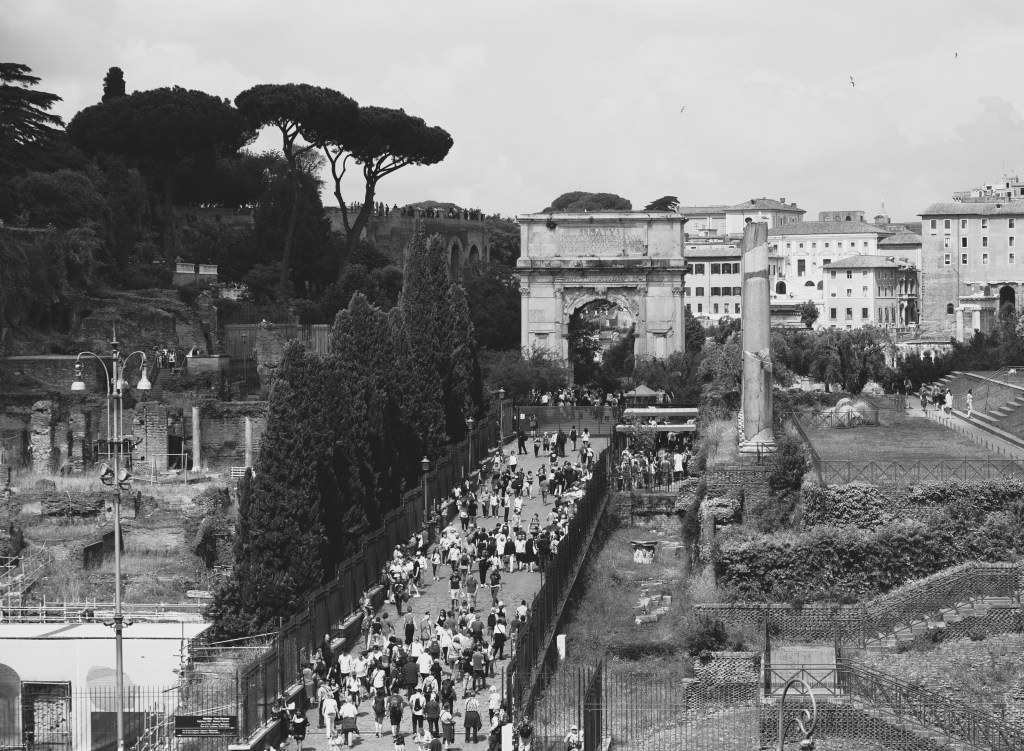

First, of course, all the large Roman structures such as the Colosseum, the three great Arches, the Pantheon, the Column of Trajan, the Roman walls, and so much more would have still existed. Of course, buildings would be partial since the Roman cut-stone had been “repurposed”; the walls broken and incomplete. Regarding Christian history, Sigeric would have learned about the Catacombs, those on the Via Appia, Catacombs of St. Domitilla, or the Catacombs of St. Priscilla. Although some early Christians were buried above ground, as he persecutions increased these subterranean passages began to be used. Sigeric would have seen those early Christian symbols of the fish, the lamb, and the shepherd painted in these catacombs.

Sigeric would have seen a second impressive change to the city. Constantine changed the tangible signs of the city’s Christian identity. Both from the emperor but also from wealthy family donations, palaces were converted into churches. As a result of his mother Helena bringing the “Holy Stairs”, the supposed stairs by which Jesus ascended to Pilate’s Jerusalem palace, a large palace became the new Lateran Cathedral. Shortly later the Santa Maria Maggiore was built.
After Constantine, Rome’s decay became pronounced. Famine occurred. The population declined. Life was miserable.
A third period in the late 500’s changed Rome into a city that Sigeric would especially begin to recognize. When Gregory the Great became pope, he sent missionaries to numerous European regions. This successful missionary work meant that new individuals wanted to see the Pope and Rome. Besides new guidebooks for these pilgrims, the church began to provide for these pilgrims with existing buildings converted into hospices and churches.

Once again though, this period of renewed life would have been short-lived. The Byzantine Emperor Constantans II stripped the city. He transported statues, the Pantheon’s bronze tile roof , and other valued items to Constantinople. After his plunder, many of the ancient sites were roofless, grass and weeds rather than people, filling the buildings.

The final noteworthy change came as a result of the Franks in general, and Charlemagne in particular. In the 774, Charlemagne visited Rome as a young man. In November 800, he returned in a different capacity. At a Christmas Mass, Pope Leo III placed the imperial crown upon Charlemagne’s head as people shouted “Long life and victory to Charles Augustus, crowned by God, the great and pacific Emperor of the Romans!”

Like the other previous periods of glory, this Carolingian renaissance was short-lived. Revolts and armed uprisings among Roman citizens and foreigners became the order of the day. As Christian leaders were involved as anybody else, Pope’s were killed and properties looted. In the 850’s, a young Pope John XII is deposed. When he returns to Rome to overthrow the newer Pope Leo VIII, he took revenge upon one hundred priests who had supported Pope Leo VIII through various mutilations. Shortly before Sigeric’s visit in 991, Pope Stephen VI ordered a previous pope’s body to be exhumed. Clothing the corpse in papal vestments, he is placed on trial and found guilty. Hibbert writes “the three finges of the right hand wiht which papal benediction was customarily bestowed were torn off; and the remains were then thrown into the Tiber (Hibbert, 84).” Only a few months later, Pope Stephen VI was killed. During the early 900’s, there were eight popes in eight years. Hopes for job longevity were pure fantasy. This violence continued during the years more immediate to Sigeric’s visit. In 974, Pope Benedict VI was dragged out of the Castel Sant’ Angelo and strangled. In 983, Pope Benedict VII was imprisoned and killed by starvation or poisoning. Shortly after Sigeric’s visit, John XVI was left to die in a monastery after he had his nose, tongues, and ears cut off.
Rough, rough days! And, to think that Sigeric moved into this Rome world, along with other priests and nuns, for a short period of time!

 Journeys: Explorations in Body, Mind, and Spirit