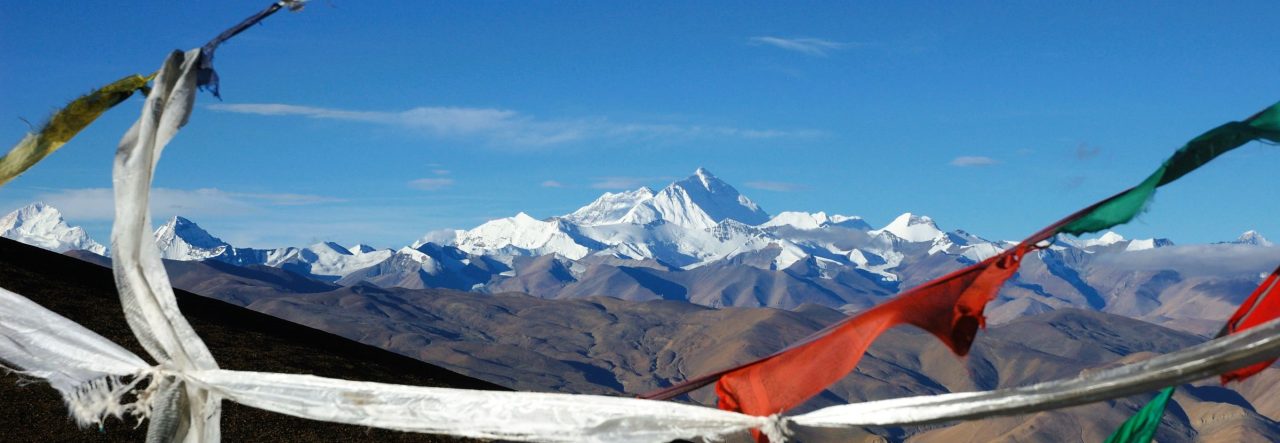
“At bottom, mountains, like all wildernesses, challenge our complacent conviction – so easy to lapse into – that the world has been made for humans by humans. Most of us exist for most of the time in worlds which are humanly arranged, themed and controlled. One forgets that there are environments which do not respond to the flick of a switch or the twist of a dial, and which have their own rhythms and orders of existence. Mountains correct this amnesia. By speaking of greater forces than we can possibly invoke, and by confronting us with greater spans of time than we can possibly envisage, mountains refute our excessive trust in the man-made.” Robert Macfarlane
I am excited about walking from Canterbury to St. Bernard’s Pass. Part of the walking is simply that walking is a form of “slow-travel.” When I walk, when you walk, we are walking upon something which ultimate has been shaped by the earth’s forces. Part of the exhilaration of these next several weeks is seeing what those earth forces have produced, and not from a plane, train, or car.
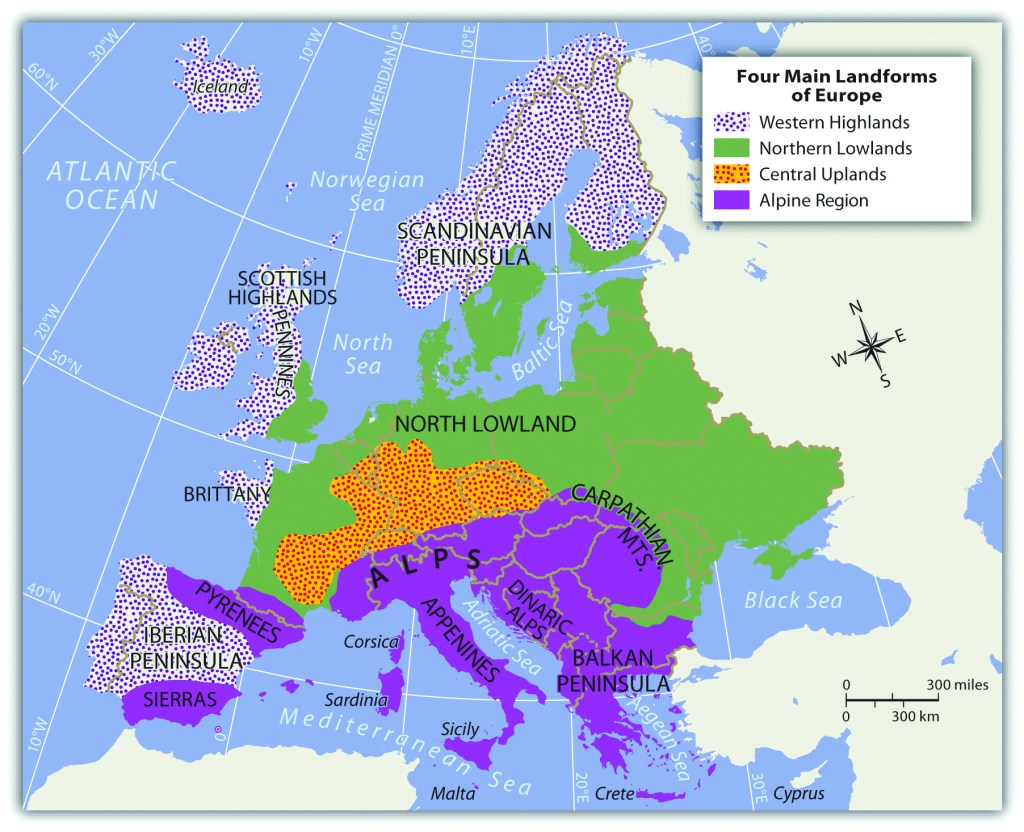
The map shows the four physical geographical regions of Europe. I’ll be walking across three of them.
The North Lowlands, or the Great Plains of Europe, is the first region I’ll traverse. My feet will find this region in England and northern France. In fact, this lowlands is almost one-half of Europe. If I want to stay in this region, I could walk all the way to Poland! And beyond!
Between England and Calais in northern France, I’ll pass the cliffs of Dover and the English Channel. As part of the continental European shelf, the English Channel is only several hundred feet deep at the greatest. Apparently, on a clear day, one can see from Dover all the way to northern France. I won’t count on that!
I’ll continue in the great North Lowlands in northern France. I’ll walk for miles through one of the great “bread baskets” of Europe. This farmland, and stretches of forests cut by rivers, has been cleaned and cleared by glaciers. In most places, the land is fertile farmland. As I grew up in central Illinois, I’m used to seeing acres and acres of farmland. Later, for five years, I lived in villages whose populations were less than 400 and whose primary business was farming. Unlike the United States, this Northern Lowlands of France does not have vast stretches of “wheat belt”, “corn belt”, “dairy belt.” Locally, there is a much greater farming diversification. This farming supports myriads of small villages. I’ve been warned that miles and miles separate towns where I’ll find accommodations and food.
As I walk this region of France, I expect my miles to fall away quickly. I’ll cross rivers and canals, but not until I approach the Central Uplands will I begin to proceed more slowly as I climb larger hills. I suspect that I’ll find humans are associated with many of the larger hills and hilltops of the Central Uplands. Besides these hills being the source of great mineral deposits, humans have mined these hills and inhabited these hilltops for centuries.
Once I enter Switzerland, I’ll enter the Alpine region, the youngest geological region of Europe. Especially after I pass along the northern side of Lake Geneva, I’ll begin my ascent of the Alps. I’ll make my ways through several valleys as I eventually reach the St Bernard Pass. At approximately 8100 feet, that Pass has been one of the historic trails for crossing from northern Europe to southern Europe. Walking this portion of the Via Francigena, my trip ends there before the actual Via Francigena descends to Italy’s
When my journey continues later, I’ll walk through Italy’s Aosta Valley and later the Po Valley. Eventually, I’ll cross the Apennines mountains, much less elevation than the Alps; I’ll enter the varied and wonderful landscape of Tuscany; finally, I’ll walk around Lake Bolsena, and across some of the foothills on my final approach to Rome.
I’ll see plenty of evidence of human occupation and human alteration of the landscape. However, as Robert Macfarlane writes, mountains and great stretches of land, reminds us that the terrain is always created by us and for us.
 Journeys: Explorations in Body, Mind, and Spirit