

I am walking the Somme. From downtown Decatur to Bethlehem, Georgia or from Springfield to Decatur, Illinois, between 2 1/2-3 million men fought with over 1 million killed, wounded, or missing in action. In the period July 1 to December 1916, over 500,000 killed. That July 1 has been declared the “worst day in the history of the British army”, 60,000 killed and wounded in the first day the British attacked the Germans in this area.
It is unfathomable. As I just mentioned in previous post, there are hundreds of monuments, memorials, and cemeteries. In the Somme, there are no monuments to hometown son making big time political leader; there are no museums for a world renown artist; no plaque commemorating some event such as Lindbergh’s landing in France.
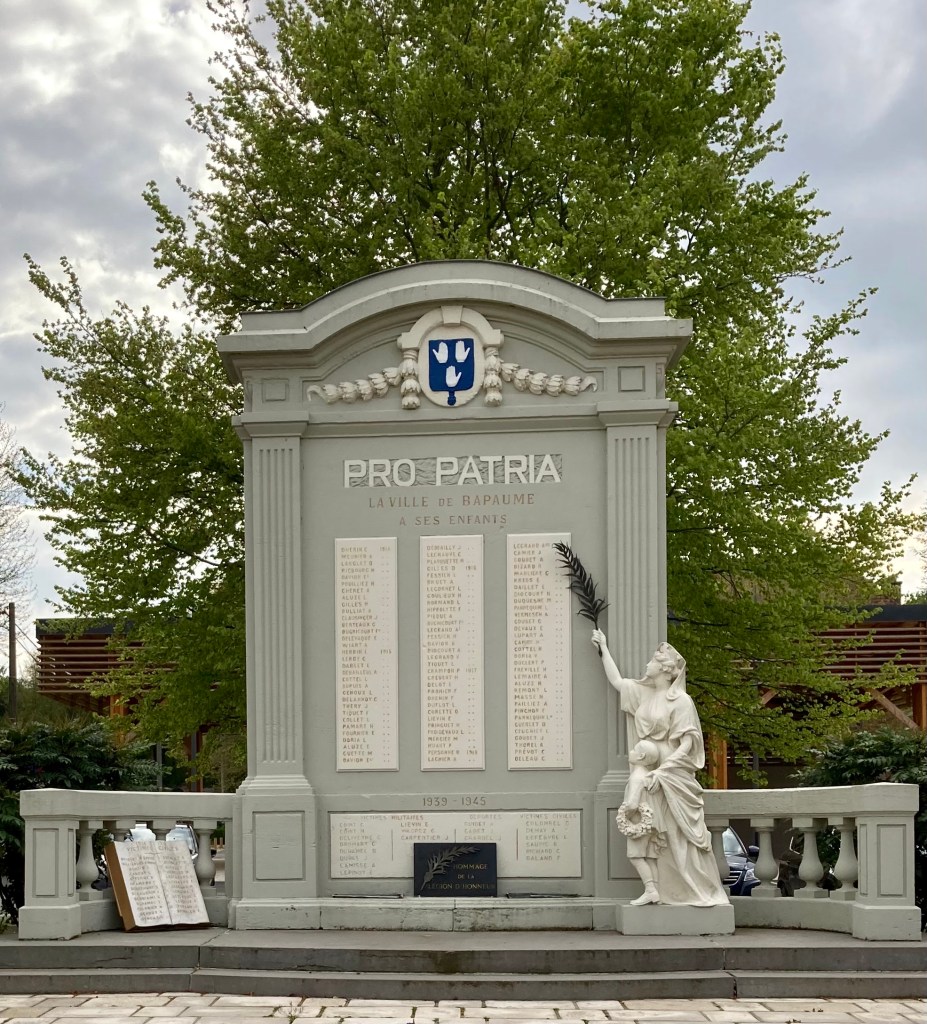
Every French village has a monument for its WW1 dead. The monument may be next to the church; the monument may be at the village center; the monument may be at its crossroads. But it is there.

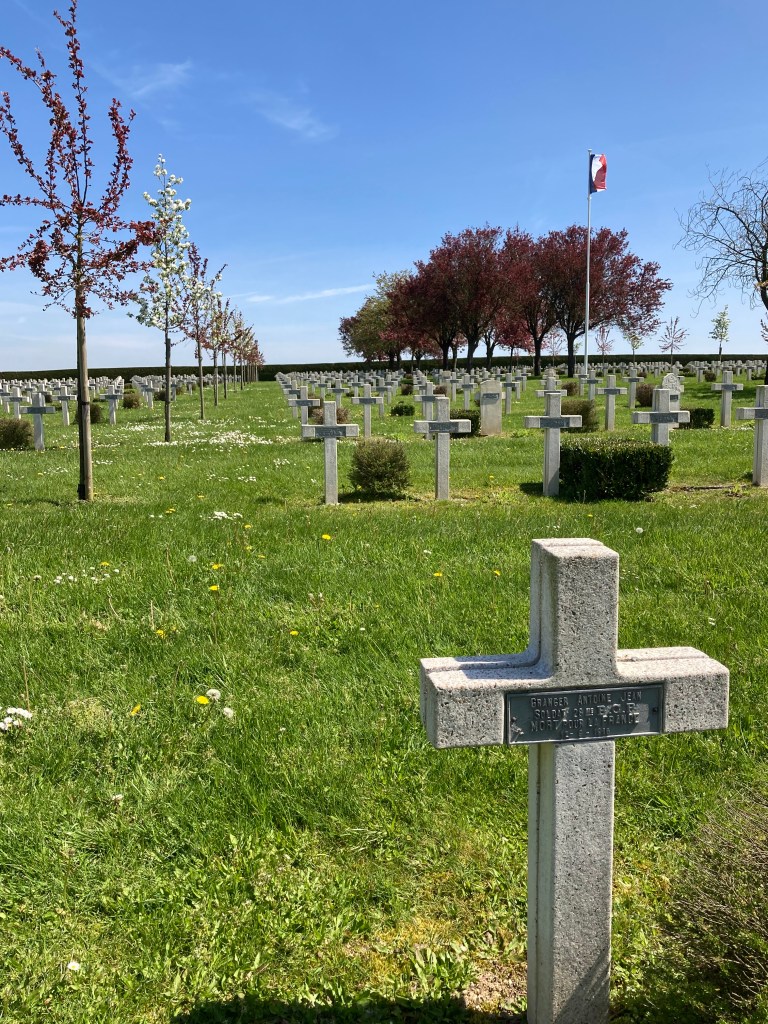
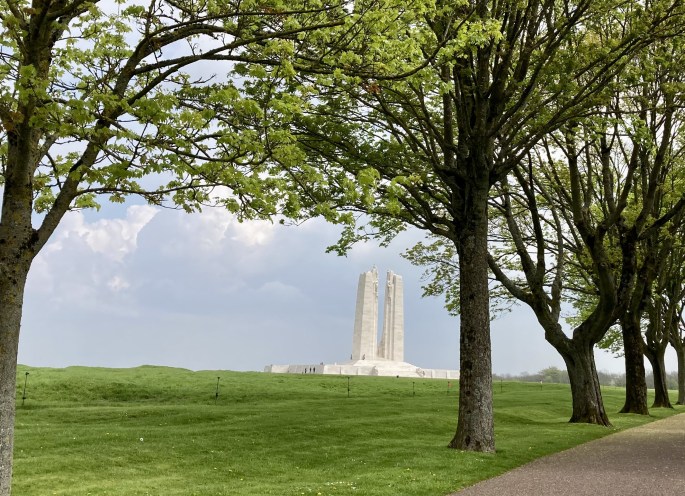
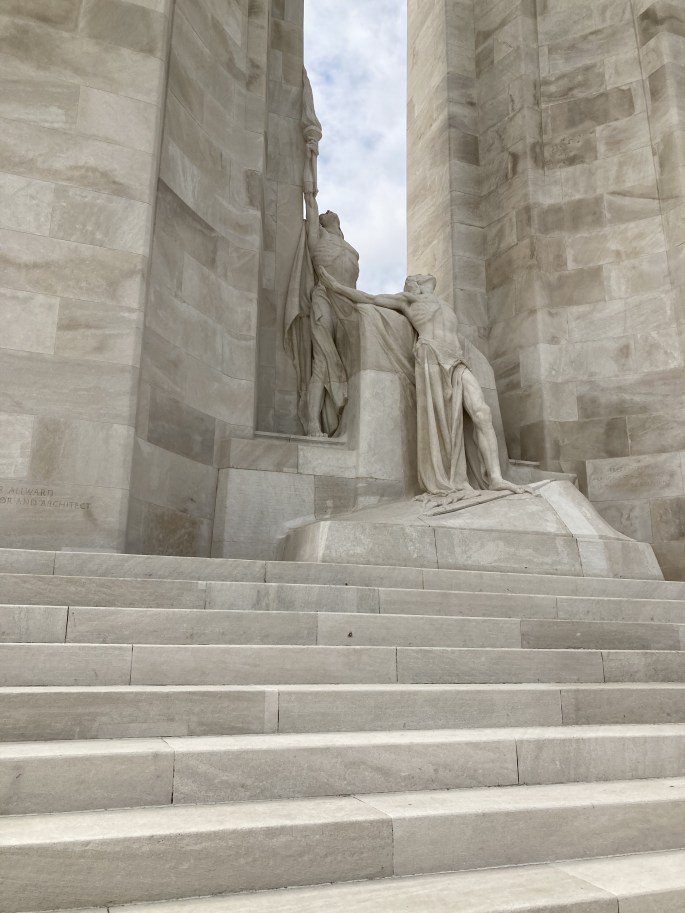

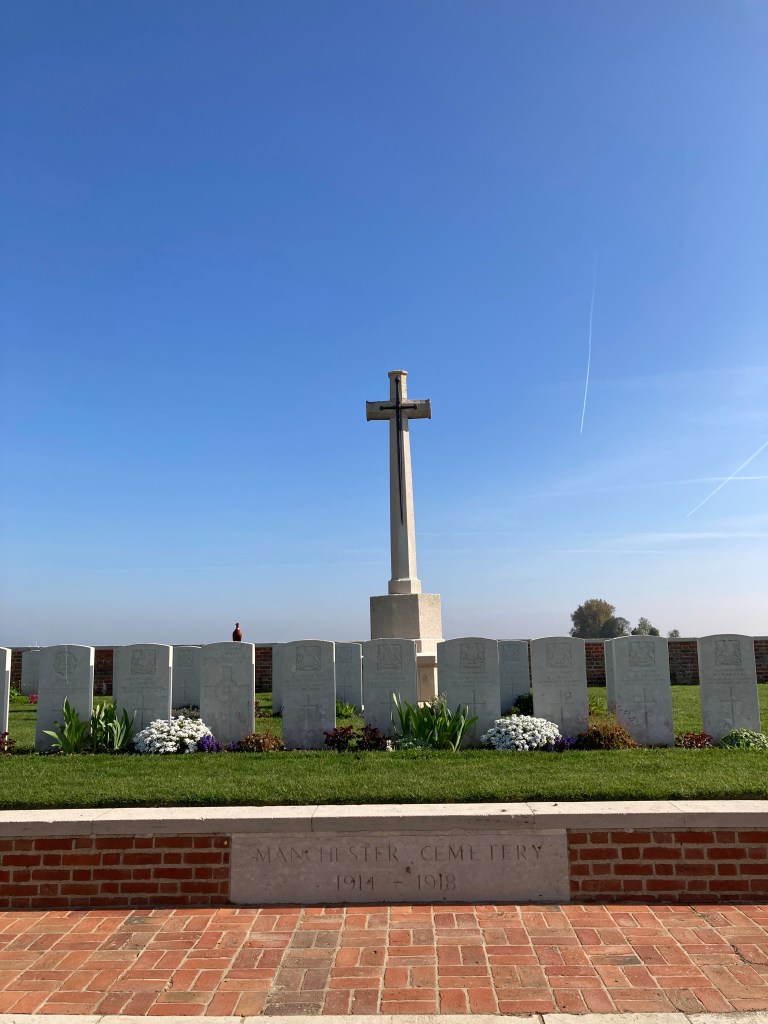
The cemeteries are everywhere. Even though the French allowed its soldiers to be buried elsewhere such as their home village or town, the French cemeteries contain hundreds of thousands of soldier. Since the British did not repatriate the dead, their cemeteries contain hundreds of thousands of men, their ossuaries contain the skeletal remains of hundreds of thousands more. The Germans also repatriated their dead; however, while not frequently visited according to Sylvester my guide, there are subdued German cemeteries, without any large monuments, for thousands of German dead. I am jolted by seeing a German grave with the Star of David.
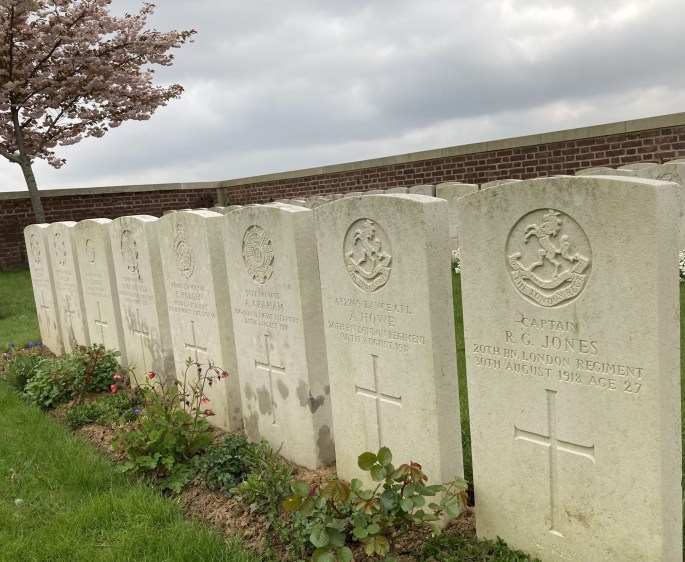
Although my Jones ancestors arrived in the USA hundreds of years ago, I look for some sign of distant, distant Jones relatives that are buried in these cemeteries. I don’t have to look long.
This war truly was global. I visited an out-of-the-way Indian and Chinese Cemetery. Their numbers are staggering. Over a million South Asians served with approximately 10,000 killed in France; over 145,000 Chinese served as workers with at least 3,000 dying in France. While I didn’t specifically see evidence of their serving, many Algerians and other French colonists fought and died.
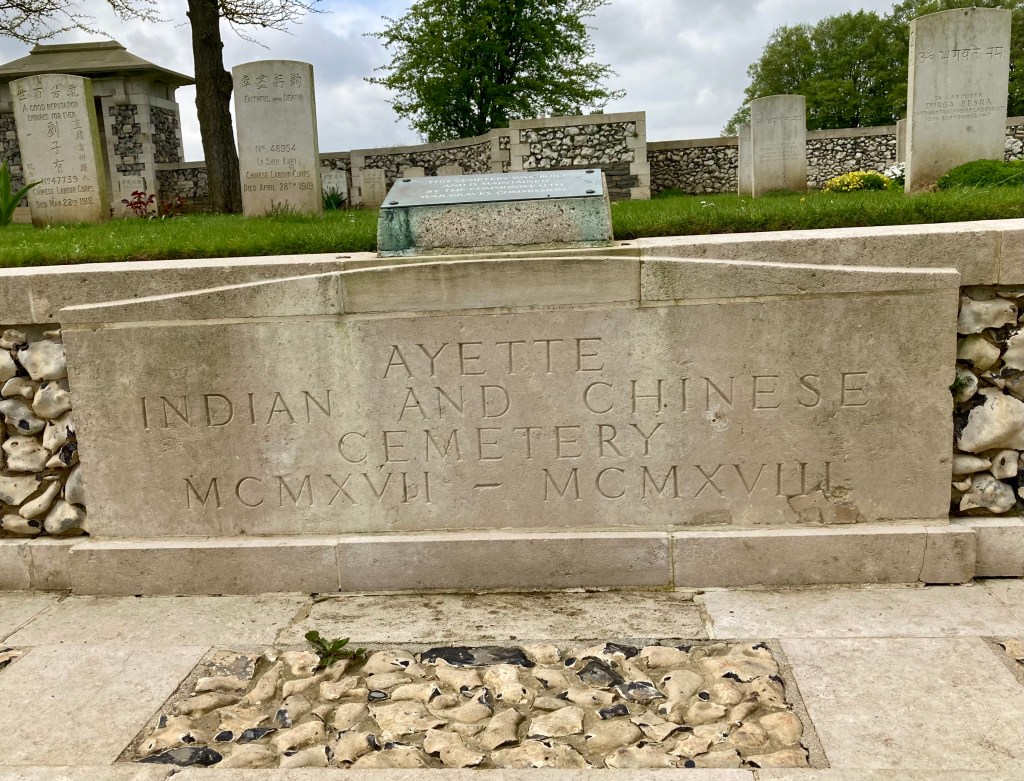

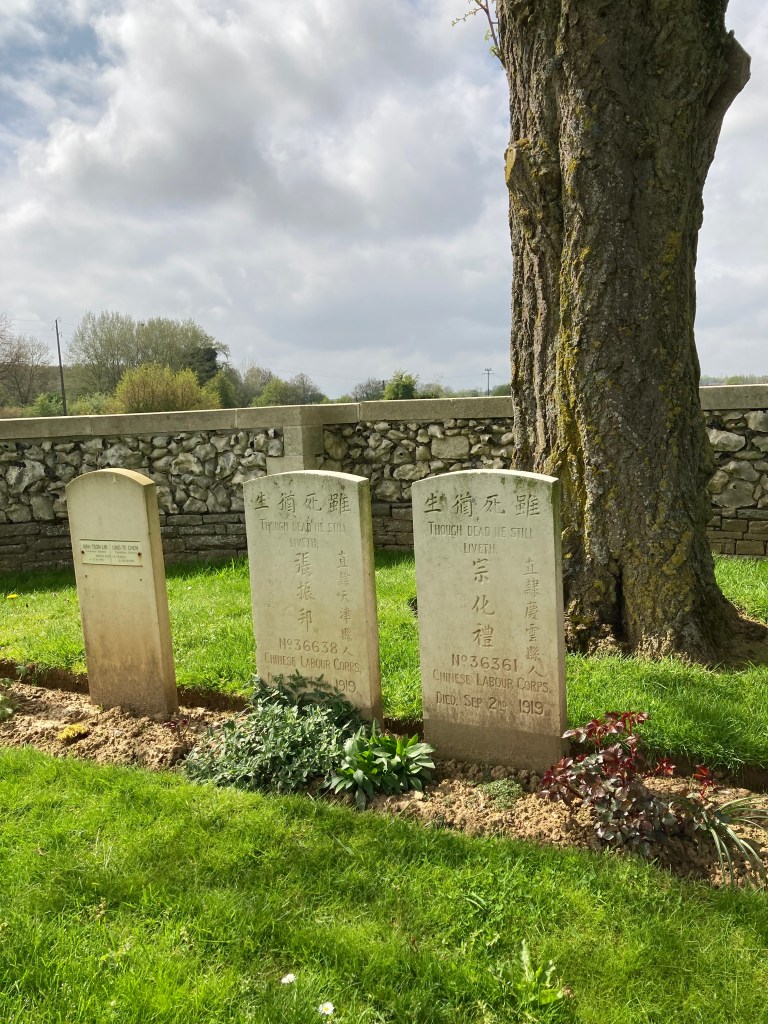
The region is too large to turn it into a Smokey National Park of the Dead. Visitors come from everywhere. I talked to two women from Perth whose great grandfather’s had died here. I listened briefly to a guide talking to a dozen visitors from the UK. I saw three bus loads of children, almost definitely French, walk into the Norte Dame de Loretta.
Whether successful or not, the home countries of these soldiers wanted to try to honor their sacrifice. Sadly to say, even such massive killing as happened in the Somme can fade into unreality. Sometimes it takes a jolt to make what we’ve read become real and concrete. That “jolt” can come in many ways. Certainly one way is walking the Somme and seeing its memorials and cemeteries.
 Journeys: Explorations in Body, Mind, and Spirit