

Since it is Memorial Day, I want to look back at some of the French memorials that I’ve seen. However, I want to preface my comments about a remembrance tendency.


Similar to all empires and countries, France has its shares of monuments to the great general or the great political leader. The “Great Man” theory of history manifests itself in those monuments. The few monuments to Napoleon’s Marshall’s, the generals of the Franco-Prussian War are pre-World War One visible manifestations of that theory.
Just as the Constantinian change in Christianity brought profound changes to Christianity’s public presence and practices associated with death, so World War 1 brought profound changes in French memorials. With the Constantine era, churches could be openly constructed and the growing cult of saints meant that their relics could, and should be, placed in those churches. Thus, Christian burial moved from invisible places such as the catacombs to very visible places within the church. Closer to the relics the better!
The way of remembering changed in relation to the dead of World War I. During World War 1, France lost approximately 1.3 million soldiers. There needed to be a way to mourn, to express the profound grief, due to that tremendous number of individuals killed. There needed to be specific focal points for that grief. As a result, probably 36,000 memorials were built. Many were in the town square; many were also in church cemeteries where religious words and symbols could be included. Sometimes funded partially by the government ( even though the French government had little financial resources post war); sometimes funded simply by local communities, villages, and churches.
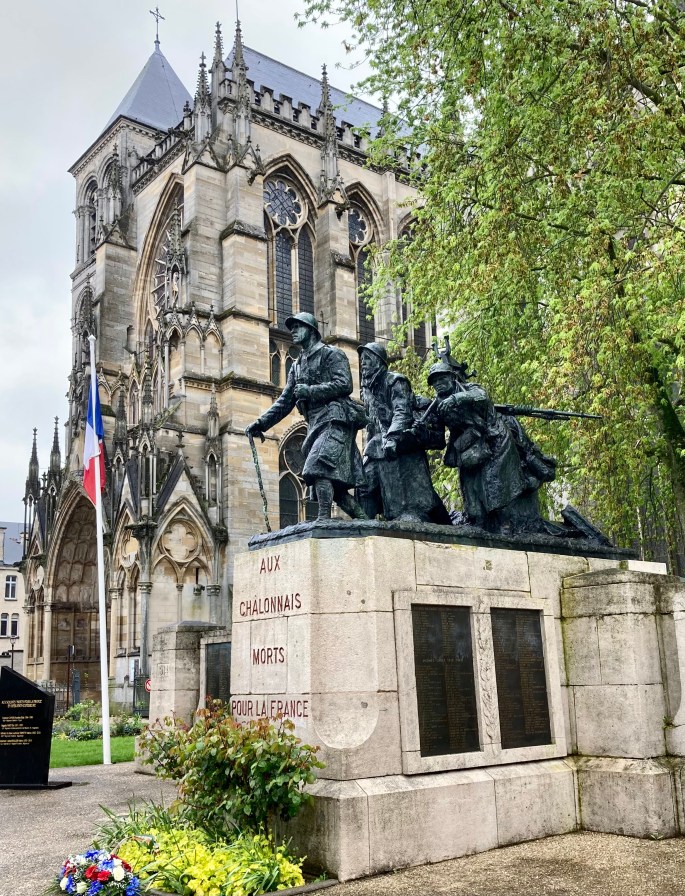
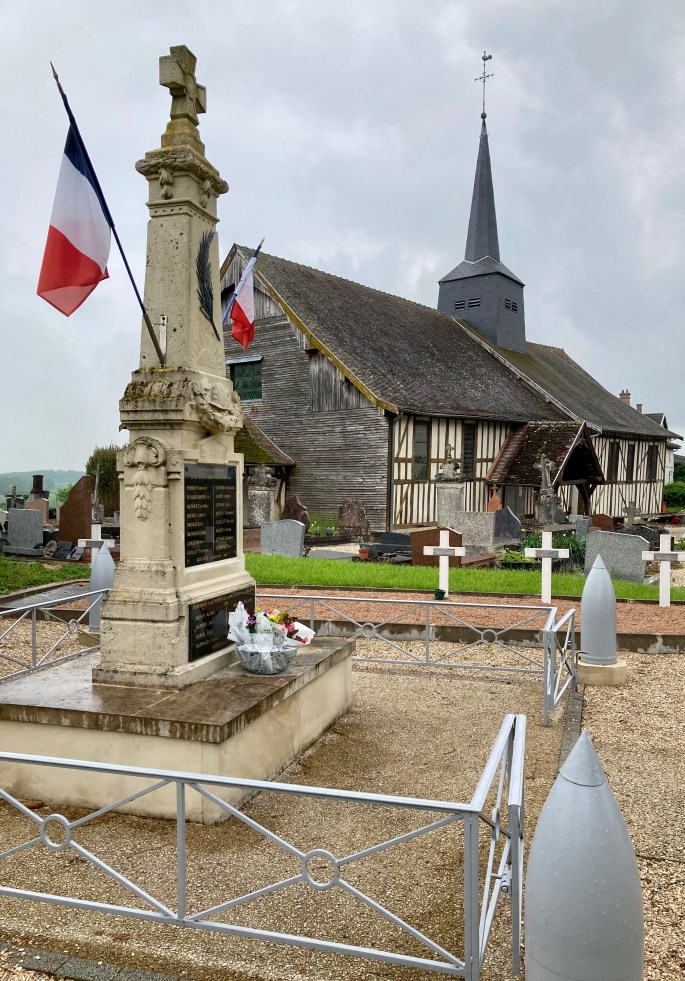
The great style change is that the ordinary soldier is to be remembered. Like the British Commonwealth War Commission, there was to be no mention of rank in the village memorial listing the names of the dead. Furthermore, there is generally no triumphalism. No French soldier standing over a dead German; no dying French soldier in his last breath bayoneting a German soldier. In general, the memorials are somber and realistic.
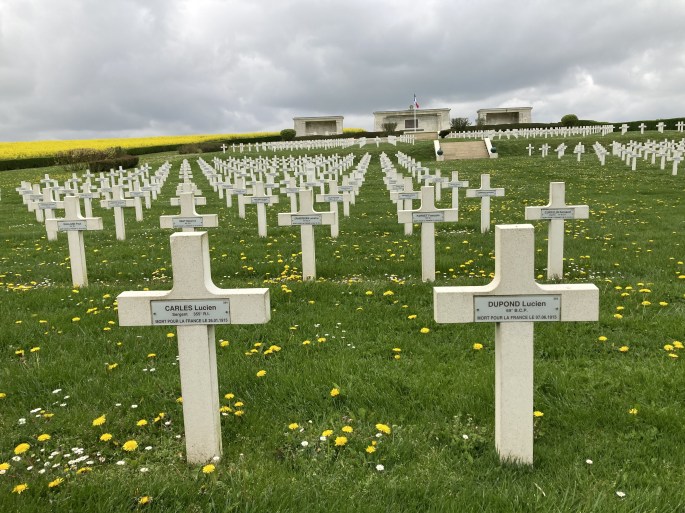

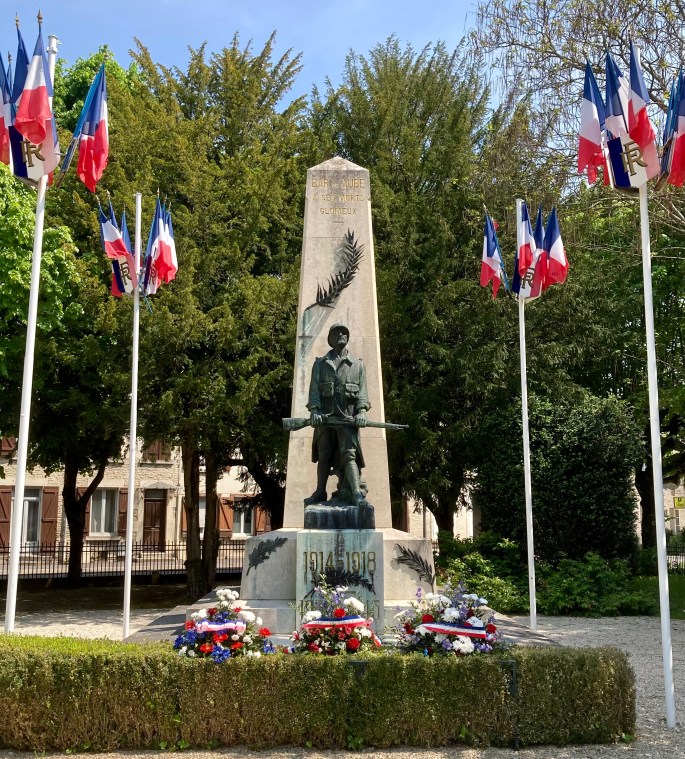
Beyond the memorials to the World War 1 soldiers, there are also remembrances of France’s national motto and guiding values: Liberty, Equality, and Fraternity. Earlier, I saw a marker of the Battle of the Marne. The words made me want to read more about the French soldiers desire to continue the war. Finally, just today in Besancon, I saw a monument to 100 members of the World War 2 French resistance who were shot as prisoners in the city’s Citadel.


Every society remembers its dead. While all death through the violence of war is tragic, the monuments seek to remember, with various degrees of success, all those who died. As the saying states: in death, all are equal.
 Journeys: Explorations in Body, Mind, and Spirit