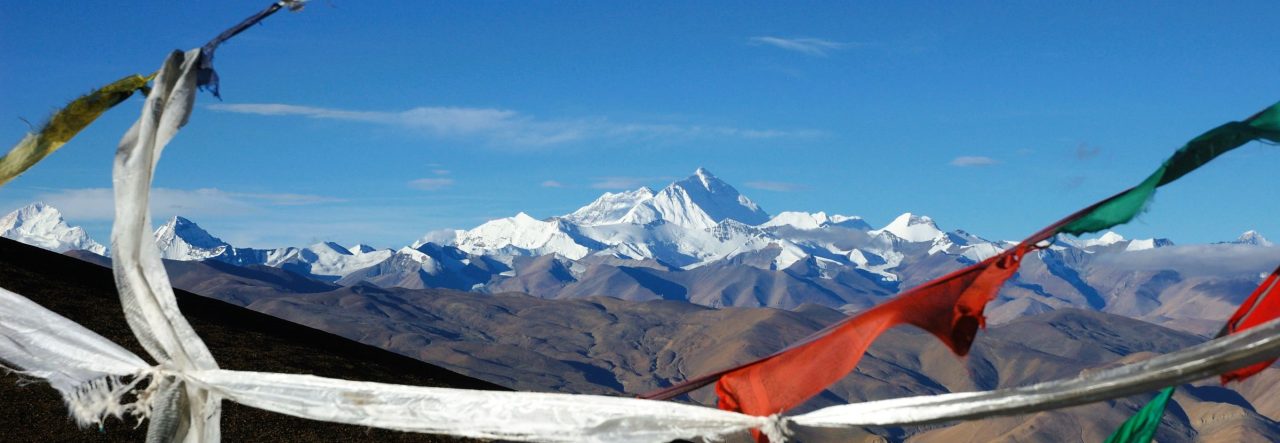

“Butterfly, Its’ late, We’ve miles to go with each other.” Basho
“Walk as if you are kissing the Earth with your feet.” Thich Nhat Hahn

Many of the best experiences of long-distance walkers are their new-found, even if temporary, friendships. Because of the widespread practice of yoga and cultivating “mindfulness”, I’m sure that during my long-distance hikes that I’ve walked with several Buddhists. I know that I have on this hike. While definitely no expert, I know more than the basics of Buddhism. Besides scholarly reading, I’ve had the good fortune of attending several months for several years of extended meditation practice at the Atlanta Dharma Jewel Monastery, a Taiwanese Mahayana form of Buddhism. In other words, I have a soft spot in my heart and head for Buddhism.
One walking companion during several hours on 3-4 different days is a recently turned 60 year old Northern European woman. Granted a year’s sabbatical in the fall from her public service job as a community care worker, she has spent time resting, hiking in northern Italy with her partner, spent a month in Berlin with friends, and traveled to Bali and other Indonesian locations. For these current three months, she hopes to complete the Via Francigena.
Finding that her childhood Catholicism no longer spoke to her, she began to explore Buddhism after being introduced to Buddhism in a college course. After practicing yoga for several years, she now teaches yoga part-time. Similar to other new and brief friendships, we talked at times about what we liked and found helpful in Buddhist practices; we didn’t talk Buddhist concepts or history.
She is bothered by her work. More accurately, she has reached the point of “burn-out.” Her dilemma is the dilemma for almost all 60-year olds. If she retires, how will she pay her bills? In her country, the equivalent of American social security begins at 65. If she continues at her job for more than her current 20+ years, how can she face others around her when she puts less and less of herself into her work. She hopes to make a decision by the end of her sabbatical. A common, but painful, bind.

Probably anybody that meets her picks up that she is a gentle and kind person. Toward the end of our first day of walking together, we enter the Clairvaux Abbey. Excited that a tour in her own native language starts in ten minutes, she offers to translate the guides’ words for me. Another time, with her knowledge of four or five European languages, she gladly translates for several others. She turns her head to the right, then to the left, as we sit around a global dinner table trying to communicate with each other. A warm, warm heart. So, her need to reach a decision isn’t motivated by greed, hatred, or delusion, Buddhas “three poisons”. She definitely isn’t motivated by a selfish Ego.
The often repeated long-distance hiking words of Emerson “It’s not the Destination, It’s the journey” or TS Eliot’s “The journey, not the destination matters…” While she hopes to reach a decision, she, in good Buddhist fashion, wants “to live in the present.” In her words, she “wants to learn how to switch off her thoughts and anxieties.”

She seems to be succeeding. She loves walking through vineyard hills and small villages, drinking cold water from a fountain or wine at dinner, conversing with friends of two-weeks or two-hours.
She acknowledges her practices of yoga help. It has “helped me relax. Relaxing my body relaxes my mind.” While we don’t talk about the type of yoga she teaches, I couldn’t agree more. For some of us cerebral folk, we need that constant reminder of the body-mind connection. In addition, at a very fundamental level, Buddhism gets it right. To alter the body, to alter the mind, takes practice, repetitive practice, patterned practice, disciplined practice. As Thich Nhat Hahn writes “Our mind darts from one thing to another, like a monkey swinging from branch to branch without stopping to rest.” Disciplined practice is one way to stop the monkey from continually swinging.
She doesn’t rely upon her own intuition and reasoning; she has developed trust in a Zen Buddhist teacher. In regards to her upcoming decision, her teacher advises “Make the best decision that you can, and see what happens.” Whatever “karma” is as a descriptive concept, and maybe an explanatory concept, “karma” never eliminates the person’s present freedom in making choices. Furthermore, the person acting in that freedom should not expect perfection. Gather information, weigh the pro’s and con’s, and make a decision.

As I mentioned, our few hours together limit our conversations. Our conversations are not classroom or seminar discussions. As I’m not a Buddhist, although I borrow Buddhist practices and I appreciate the helpful reminders of several basic Buddhist convictions, I know that my “generous, but critical Christian orthodoxy” diverges with all the classic and contemporary forms of Buddhism. Unlike somebody who might say that explicit Buddhist practices are only forms of living without embedded beliefs and convictions, I disagree. Committed Buddhists would disagree even if they severely caution us on our conversations. (As one Buddhist scholar restates the Buddha’s words and attitude: “Our problems are urgent, and irrelevant theorizing is as silly as refusing to receive treatment for an arrow wound until you know the name of the man who shot the arrow.”) In regards to the convictions attached to practices, those attached convictions picture a different ultimate reality than my “orthodoxy.” But enough.
I do wonder though: “Sigeric, what would you think if you walk with a Buddhist?” To be honest, I’m not sure if I would like his response. I hope that he would see the basic goodness of my Buddhist hiking partner, but I have deep doubts. For me, my response must involve “generosity.” I’m walking with a concrete, live person, not some abstract, papier-mâché person. I’m walking with a particular person, not some nameless European. In our walking, the shared steps elicit, or hopefully elicit, that sense of generosity, not judgment. In those shared steps, we both find pleasure and enjoyment.




 Journeys: Explorations in Body, Mind, and Spirit