
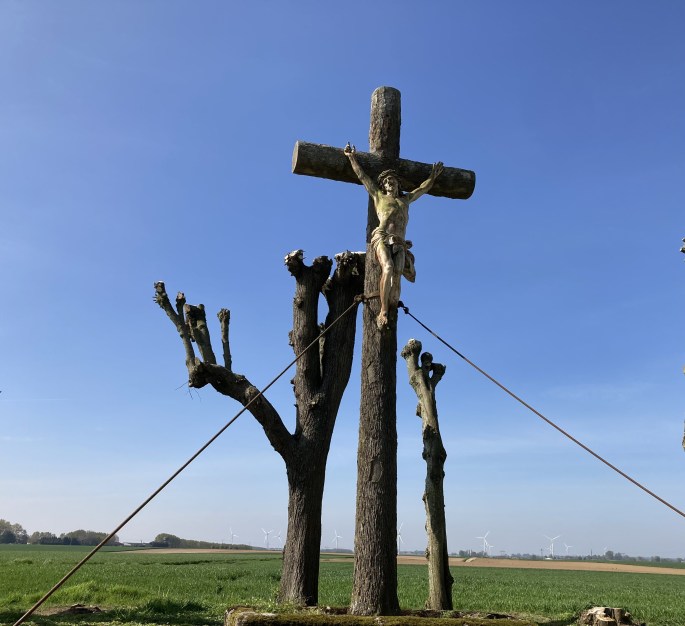
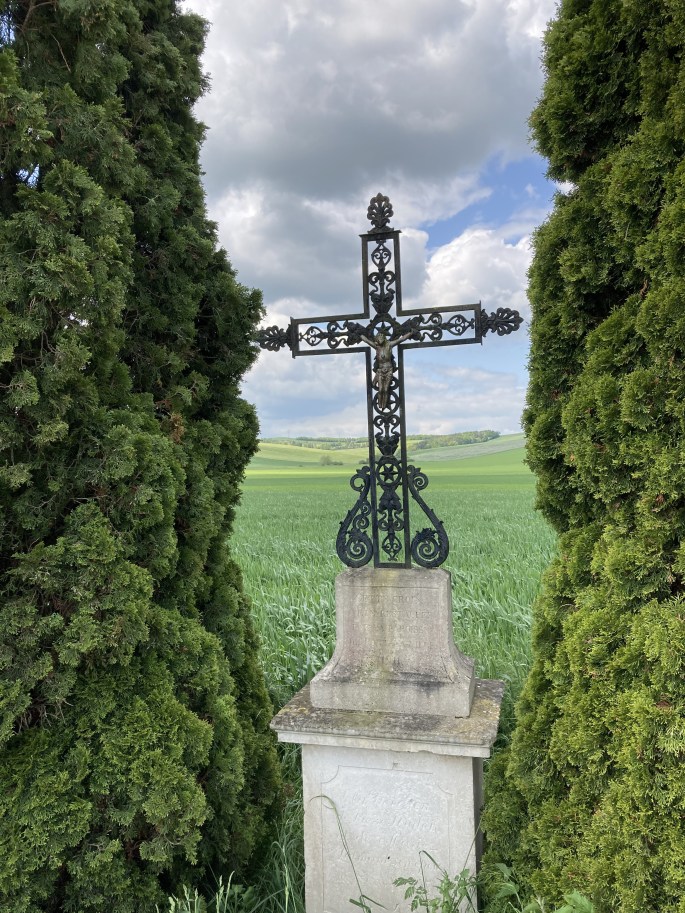
Wayside Crosses. Physical Markers. If you look out a car or bus window, you see many of them. When you walk, you see every single one of them. Wayside crosses. One author estimates that France has 100,000 stone, wood, or metal crosses. Wow!
We are familiar with roadside crosses in the USA. Sadly, many of them have a name, flowers, and possibly a photograph of the deceased. The site of a traffic fatality. These crosses are impermanent, gradually disappearing. There are the evangelizing crosses. If I’m not mistaken, driving from Atlanta to Springfield, Illinois, I would see the 200 foot cross near Effingham. Definitely an “in-your-face” statement.
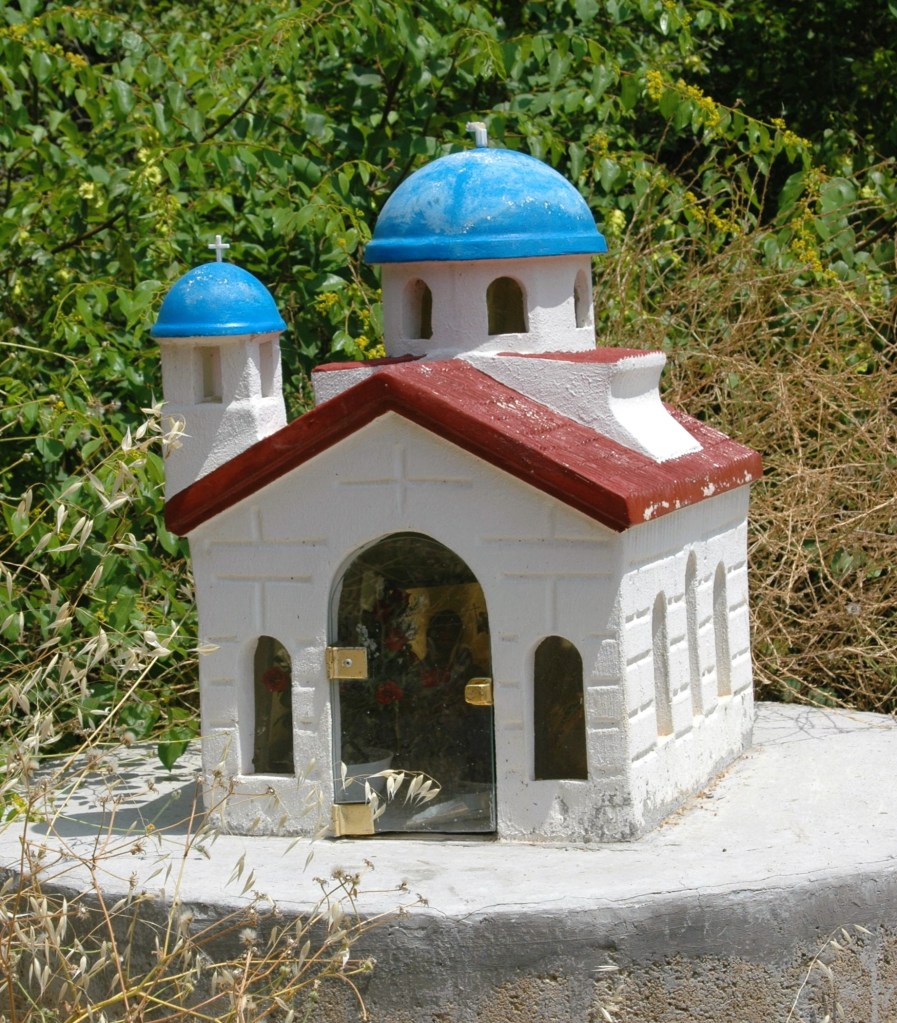

I’m familiar with other religious markers. In Greece, the roadside markers may be open or closed chapels with an icon and a candle, the size of “your free neighborhood book boxes.” In India, the markers may be linghams representing Shiva or even large statues of Shiva as at Haridwar. In Tibet, the markers may be small or towering cairns, sometimes with Tibetan prayer flags.

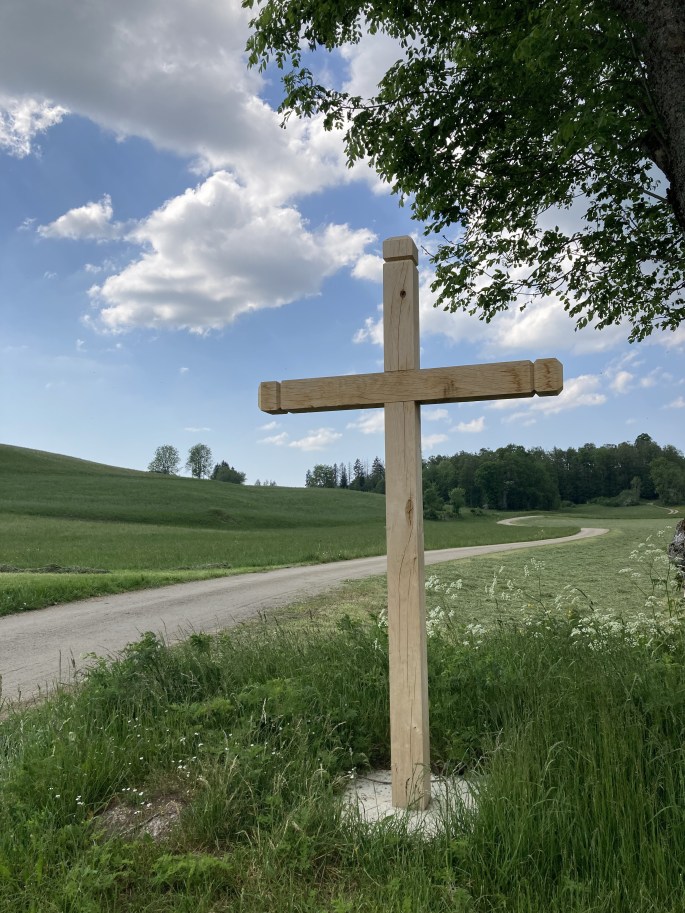
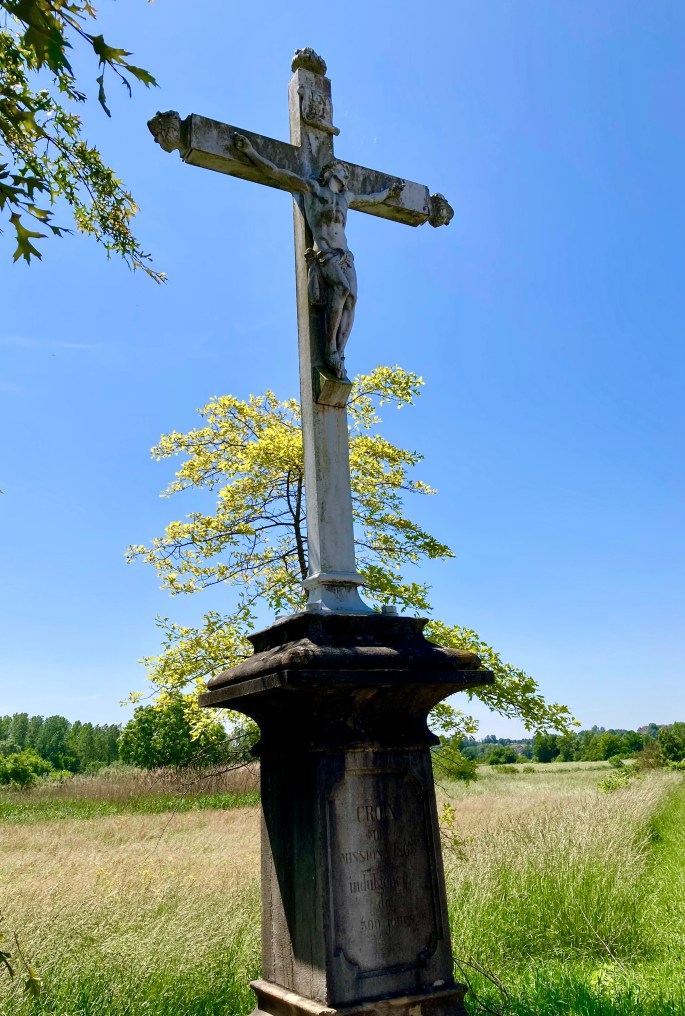
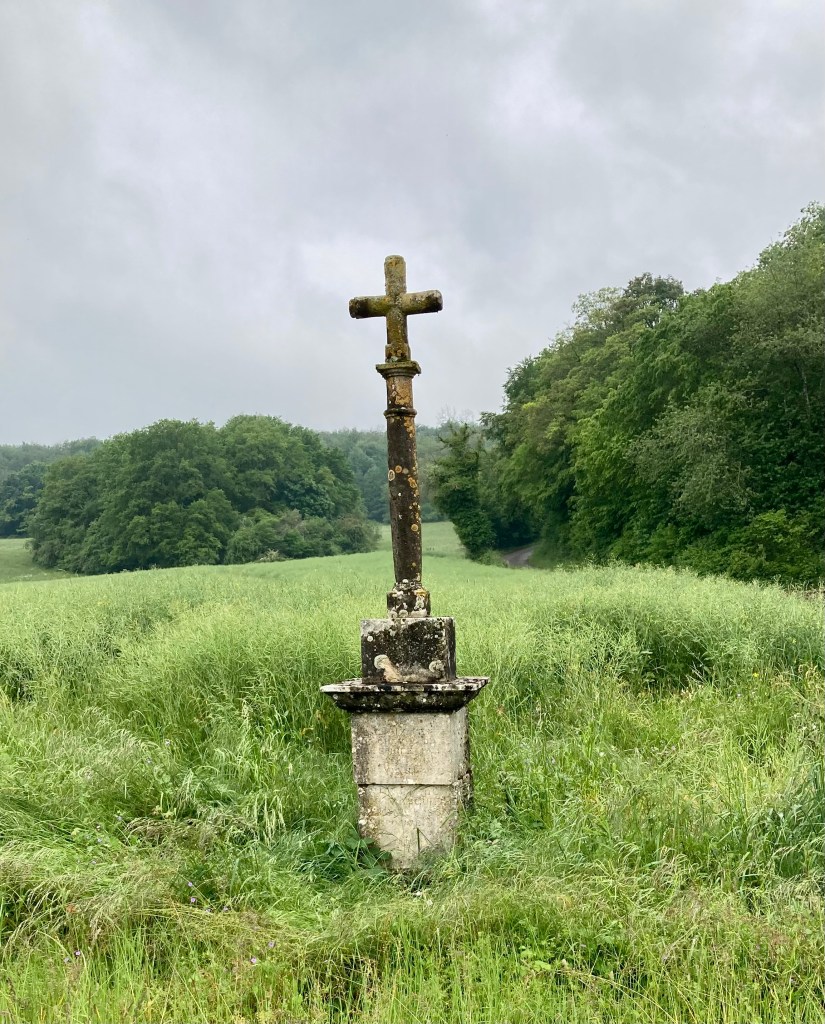
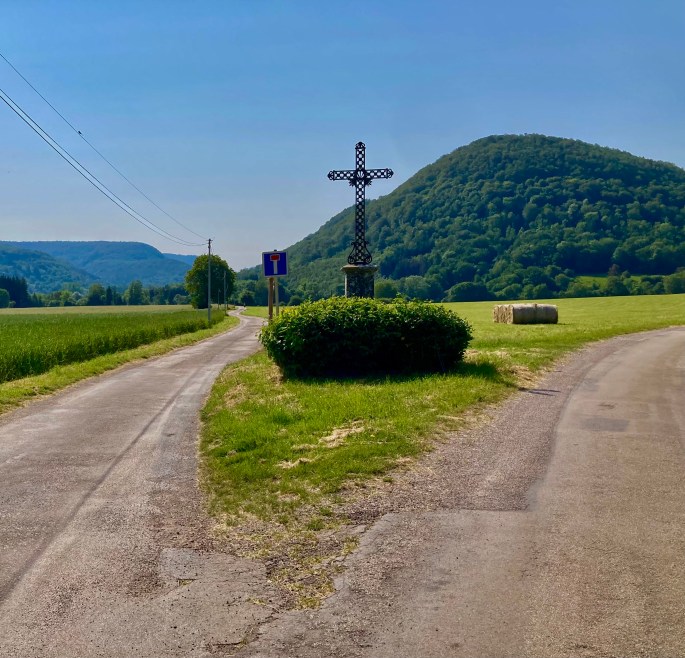
In the French countryside, the primary markers are crosses. I find crosses of various styles: a simple or ornamental cross, passion crosses with some feature of Jesus’ passion (lance, nails, hammer, crown of thorns), and crucifixes. Some are only 2-feet tall; some can be 20-feet tall. The locations as motivated by Christian sentiment are quite varied. Marking an intersection for the benefit of travelers and pilgrims. Marking a nearby abbey or monastery. Marking boundaries between parishes. Marking a holy and sacred site. Marking a site as protected by God. Marking a general location as a means of showing gratitude for some gift of God.
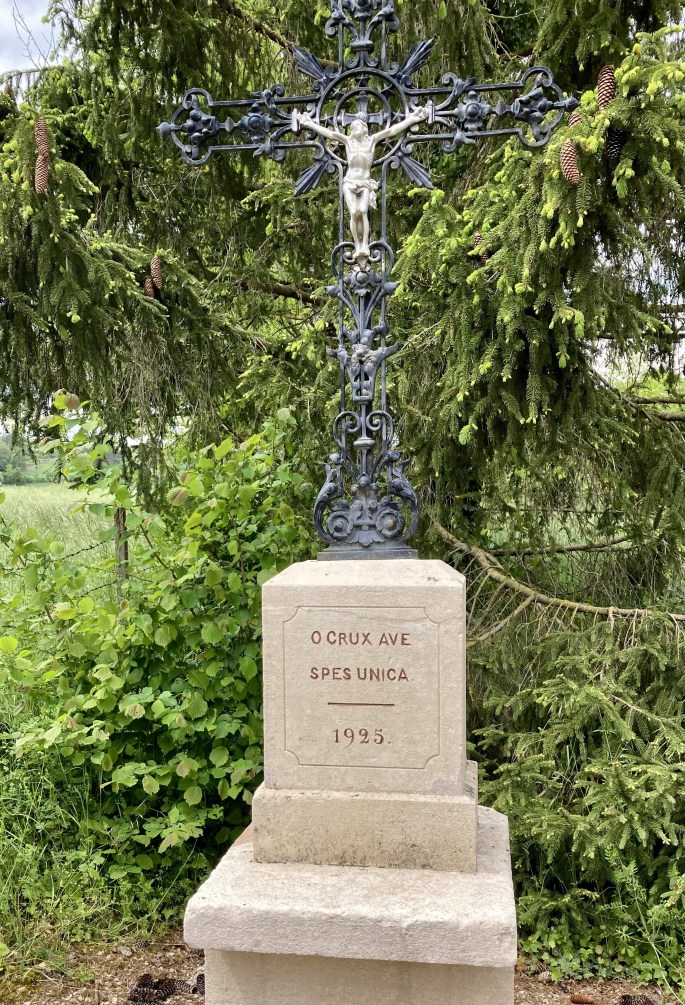


While the weathered markers might look extremely old, most aren’t. Sigeric in the 990’s might have seen some wayside crosses, but I don’t see the same markers. Beyond the few from the late medieval years, most have come from the last 300 years, especially the last 100 years. The older crucifixes were destroyed. Protestants often removed the crucifixes for they symbolized Roman Catholicism and “Popery.” Zealots of the French Revolution destroyed crosses as symbols of outdated superstition propagated by a self-serving church. As a visible way of separating church and state, a 1905 French law prohibited the placement of new crosses or crucifixes on public land. In all these periods, a backlash by French Catholics resulted in many new crosses being displayed. Even now, the S.O. S. Calvaires, a French lay Catholic organization founded in 1987, ambitiously hopes to restore a thousand crosses a year. TThese new crosses are quite simple, often two 4×4’s. While old and innocent looking, the crosses and crucifixes also mark places of tension and conflict.
I’m now in Switzerland. I suspect that I won’t see many of these wayside markers. However, I’m willing to be wrong. I see online that there is a market for the smaller crosses, as expressions of “antique decor.” Maybe I’ll see one in a hotel lobby or an AirBnB. If I don’t see the wayside crosses anymore, I’ll miss them.
Despite their being part of the culture wars today both here in Europe and the USA, I’ll be saddened when our markers are only Speedway signs, QT signs, or the new Buc-ees signs.
 Journeys: Explorations in Body, Mind, and Spirit