
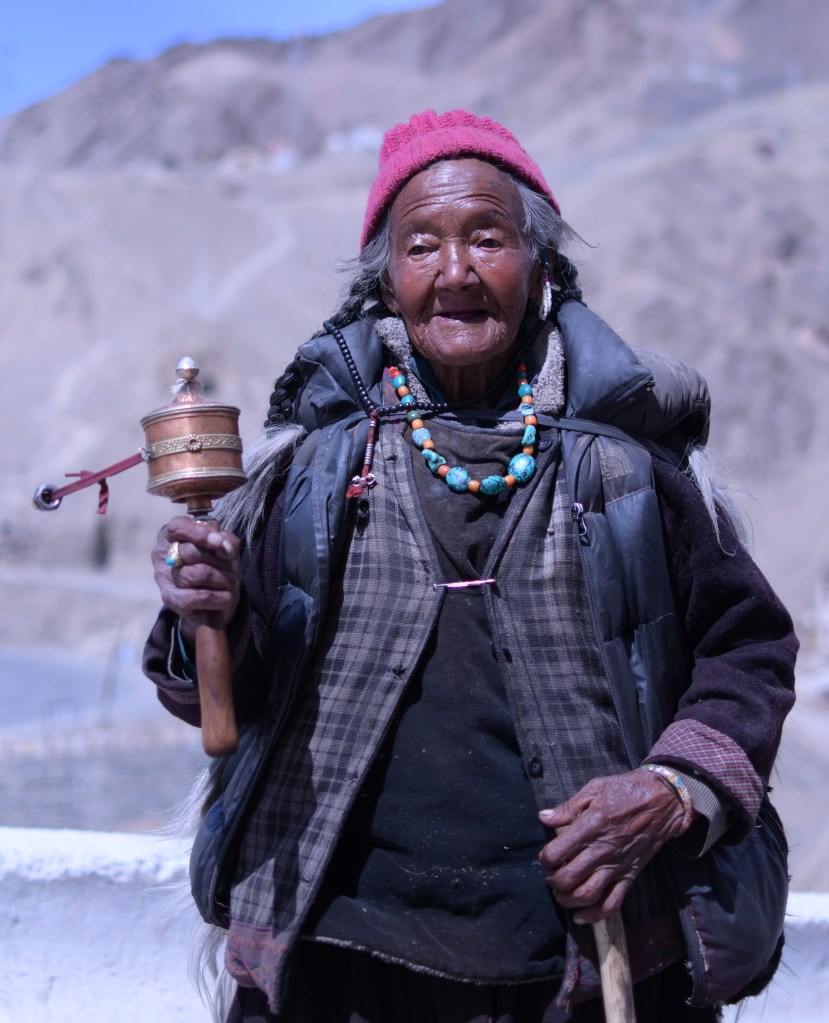
I have finished walking this part of the Via Francigena. While my feet have finished, my head is still trying to catch-up with what my eyes have seen. When I travel, I always look for signs of religious sensibilities. These signs can be obvious: women pilgrims visiting a Shiva temple in Tamil Nadu, a Rangoon taxi with a dashboard Buddha, a woman in Ladakh praying with a Tibetan prayer wheel, a Jew praying at the traditional site of King David’s tomb.



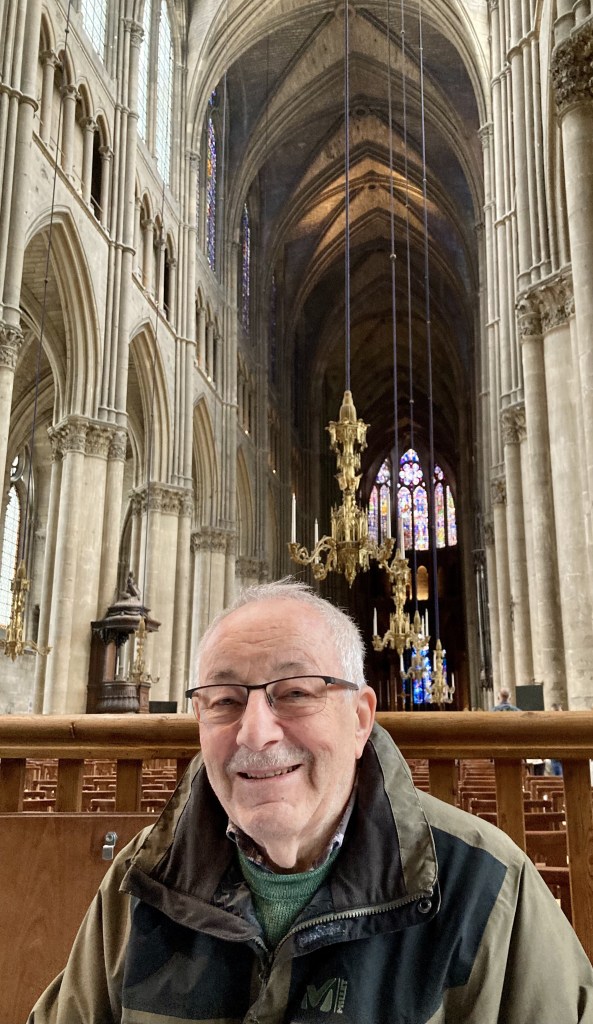
As a relatively frequent, but irregular, traveler to Europe through the decades, I’m struck by Europe’s historical contrasts in apparent Christian religious sensibility. On the one hand, magnificent cathedrals. Those workers, designers, and donors built those cathedrals for many purposes and by many motivations, including those manifesting Christian heart and mind. One has to be willfully, and perversely bullheaded, to ignore those purposes and motivations. On the other hand, today these cathedrals may be viewed as simply the medieval architectural equivalents of the Louvre, or Prada, or the British museum. Interesting visual openings to a long-surpassed age. Vibrancy and creativity are there, but only as expressions of human aesthetic capabilities. Modern folk lacking apparent Christian sensibilities see only their own reflections in these magnificent cathedrals.
So what do I see today? I have to check myself. I don’t want my eyes to be betrayed into thinking that the only signs of life are cathedrals full of worshippers. To do so would be to validate one (really two) periods of “Christendom.” The high medieval period creating the Reims, Amiens, Chartres, and the ideal and glorified years of the 1950’s. The years of self- confident North American mainstream Protestantism. I have to see with different eyes.
My eyes see signs of faithfulness, signs of vitality. Limited to seeing worship, church posters and notices, with only a few conversations, I still see those signs. In our completely, and in many ways justifiable, secular perspectives, these signs may not be appraised as significant. An Incomplete response. I’ve noted some of these signs already without flagging them as signs of Christian vitality.

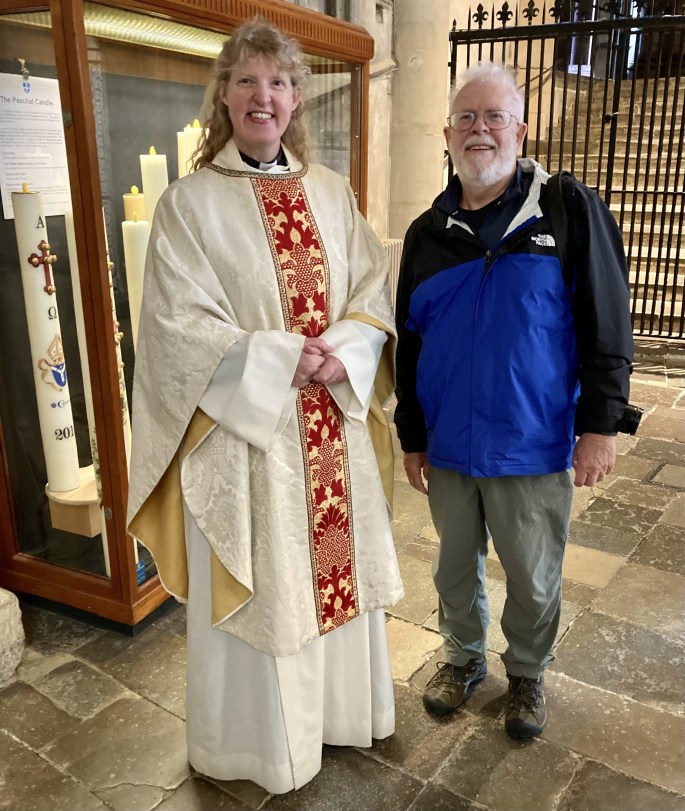

From Reims to Saint Maurice, the volunteers who give time and hospitality to tired and clueless Via Francigena pilgrims. In Canterbury and the Abbey in Wisque, the kindness of clergy and the transcending music of choir voices. In Vitry-en-Francaise, a side chapel for those who have suffered abuse, with contact information for help (I hope non-church resources). In another church, a welcoming area with kid-tables only feet from the pulpit and altar. In Laon, a couple, family, and friends smiling as they enter the cathedral for the couple’s wedding. In Briene and Epiney, friends gathering to celebrate a life now ended.
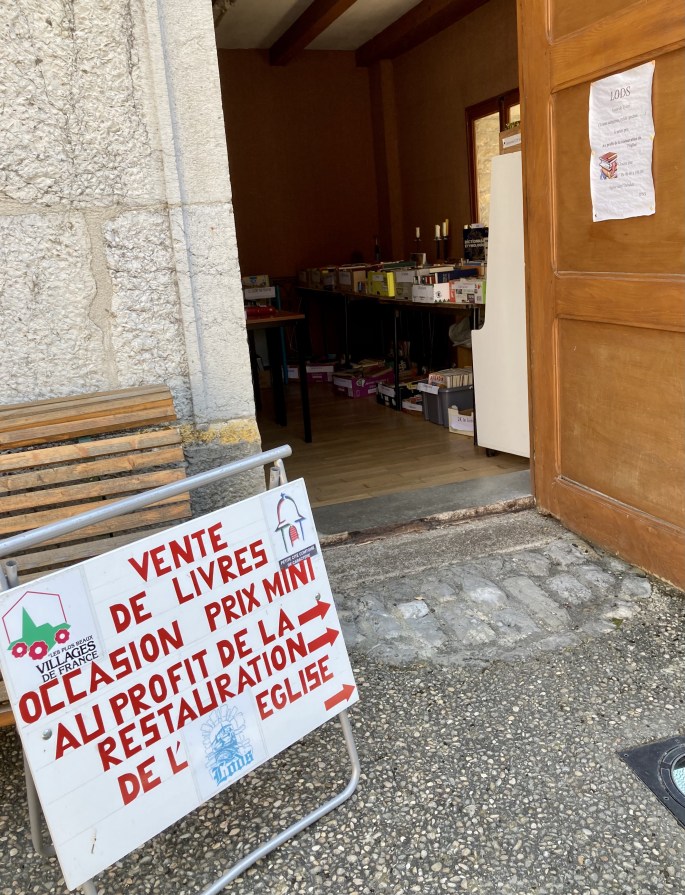
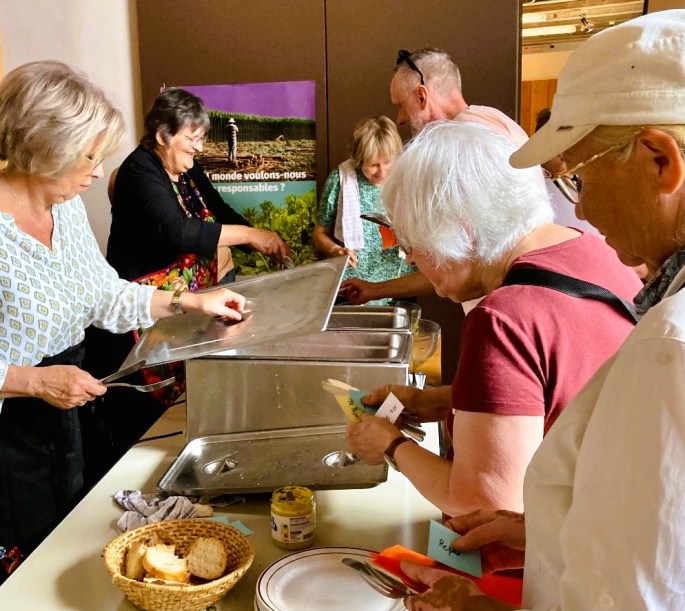
A church selling books to help raise money for repairs. A wonderful Reformed Church in Romainmothier hosting a festival. Surely a small congregation, but dozens of folks preparing food, distributing food, and greeting hundreds of visitors. A branch of St Vincent de Paul Society in Strasbourg with several down and out folk waiting for it to open. Donations given for the poor in Amiens.
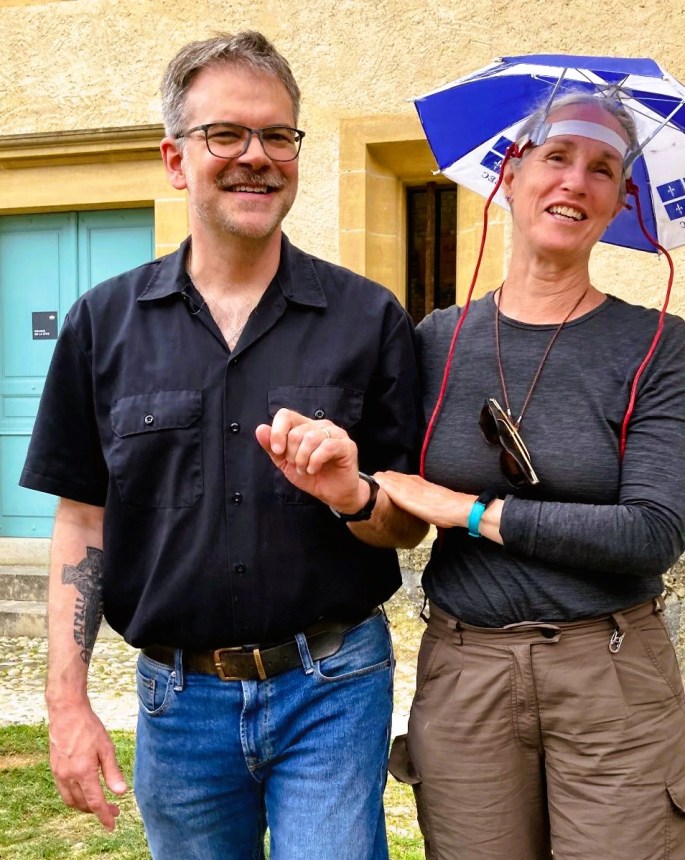


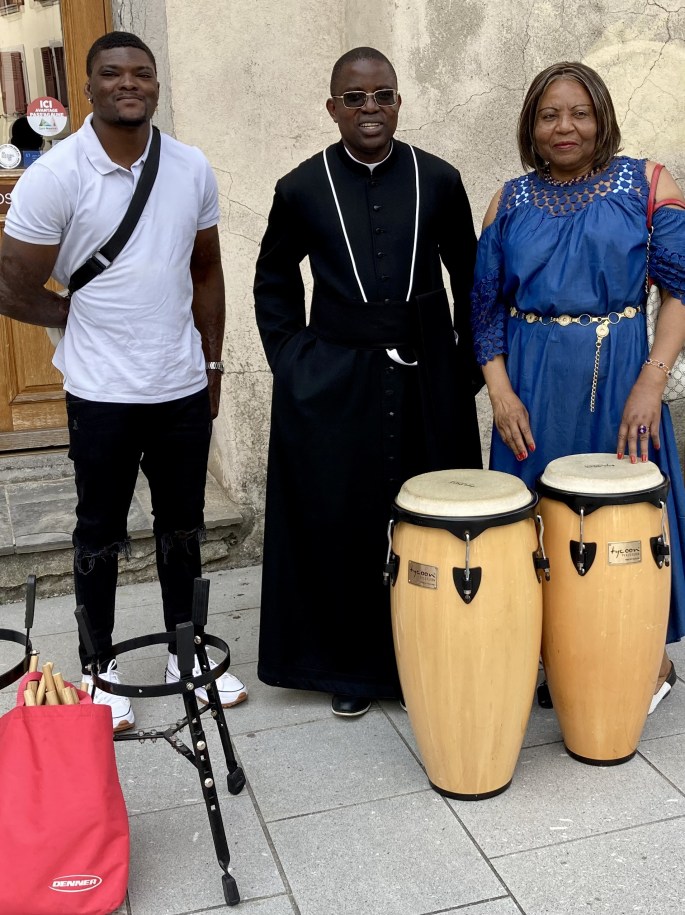
The Abbey Saint-Maurice welcoming two new French-speaking priests from Africa. A worship service blending music and readings from 40-50 Africans present with a more traditional European Roman Catholic style. THe Lausanne Cathedral welcoming survivors arriving in Europe by boat from Africa, and the art to make their plight real.


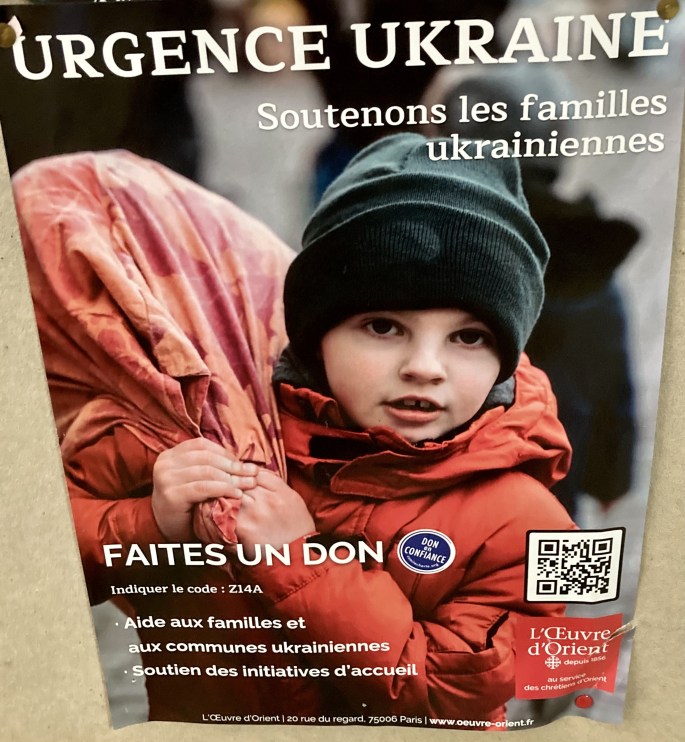
Poster after poster. Announcement after announcement. Aid for Ukrainians. Aid for alcoholics. Aid for those with cerebral palsy. Programs for kids, and photos of younger adults at camps. Posters advertising Biblical meditation, Taipei programs, as well as various pilgrimages.
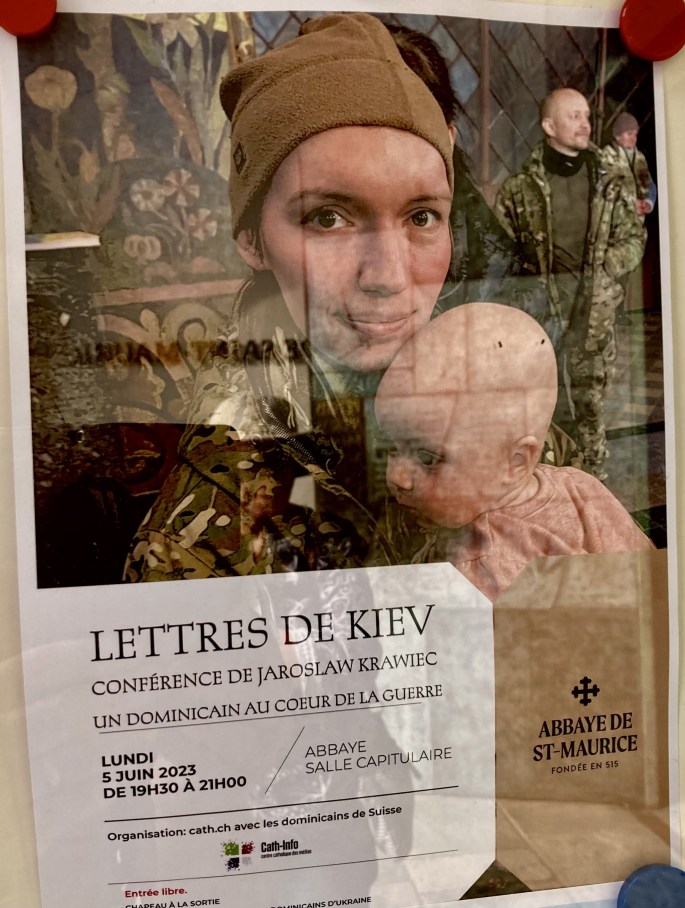

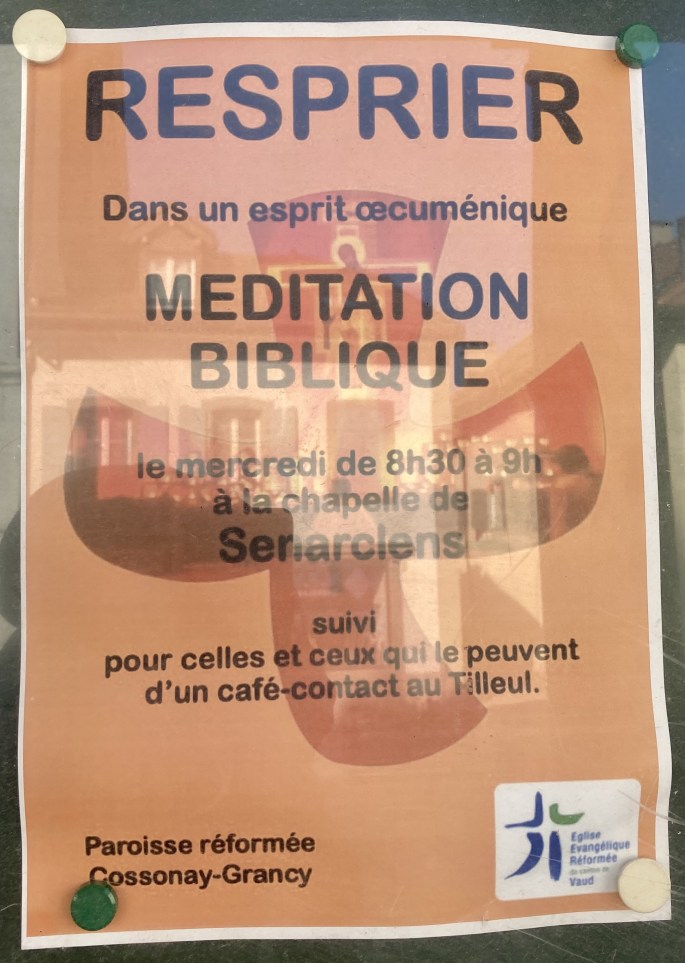
On and on. I see life from my admittedly limited slow traveling eyes. These aren’t signs that suggest a radical change in the societies of which they are part. Our secular society has too many other amazingly deep forces, hidden as well as visible forces, and those almost intractable forces shaping various dimensions of our secular life.
Yet, these signs of Christian agency, Christian purposefulness exist. There are signs of individuals and individuals working together to address their needs, acquaintances’ needs, and strangers’ needs. On the one hand, the actions might not remove those needs or their root causes. On the other hand, the actions give evidence that an alternative to not addressing these needs is possible. In their gathered life of worship, they show signs that the heaviness of this life is real, but not final.
At the risk of an already long post, I have to mention my “tag-line” shapes what my eyes see. My friends know that my heart and mind are shaped by a “generous, but critical, Christian orthodoxy.” Unlike those loud, shrill, and self-righteous Christians on the right and left, my eyes see faith as generous. Inviting, not judging.
Unlike those naive and complacent, my eyes see that there are many, many reasons to be self-critical. Irrelevance and hypocrisy are high on the list. Among its many attempted efforts to live in those contested question regions of faith and the world, liberal Protestants and their descendants rightly insisted on being critical.
Unlike those who see their task as building a new Christian faith from the ground floor, my eyes see much that is and should be retrievable from the past. While not buying everything from the past, I allow the St. Anthony’s, Athanasius, Augustine, Anselm, the Luthers, Calvin’s, and Wesley’s to shape my heart and mind. Being part of such an expansive, ecumenical orthodoxy allows me to see the Spirit living in previous ages, living in our age.
 Journeys: Explorations in Body, Mind, and Spirit