
I’m no architect or sculpture; however, I do find features of northern Italian religious buildings fascinating, intriguing, beautiful, and historically important. I’ve collected some photos of Ivrea, Pavia, Piacenza, and Fidenza.
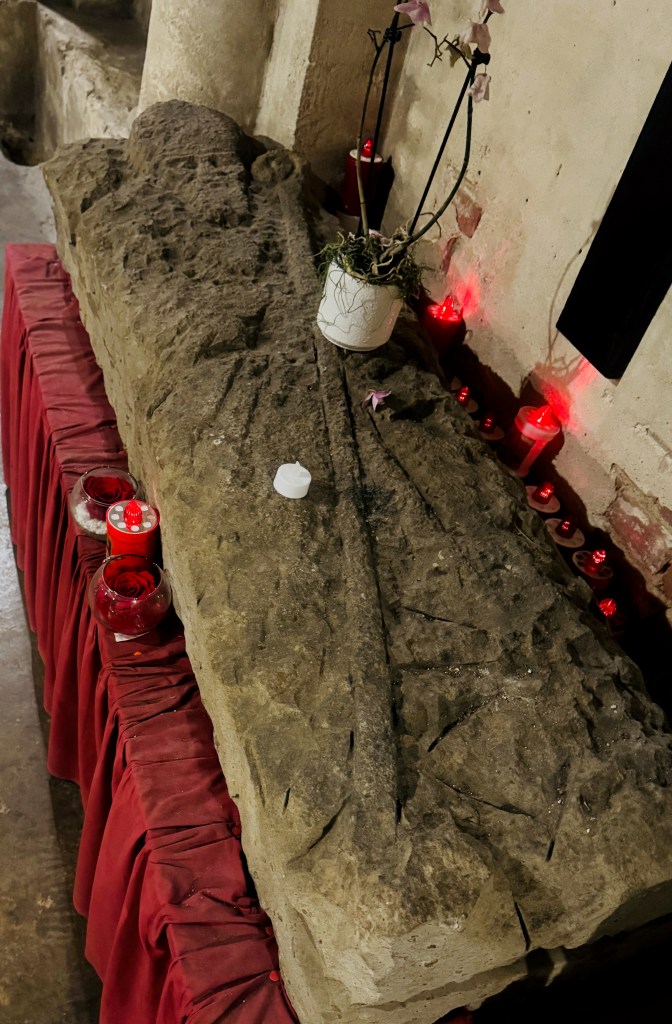
The very plain looking Church of San Pietro in Pavia is such a church as the church is the burial place for St. Ambrose (the photo of Ambrose is from Milan Cathedral) and the final resting place for St. Augustine.
A quick primer thanks to google search.
564-788. The Longobards invade and politically dominate northern Italy. They offer their own variation of early Romanesque. The present Basilica Sant’Ambrogio (Ambrose) in Milan shows its 9-10th century construction (although some parts of the church originate from the 4th century).
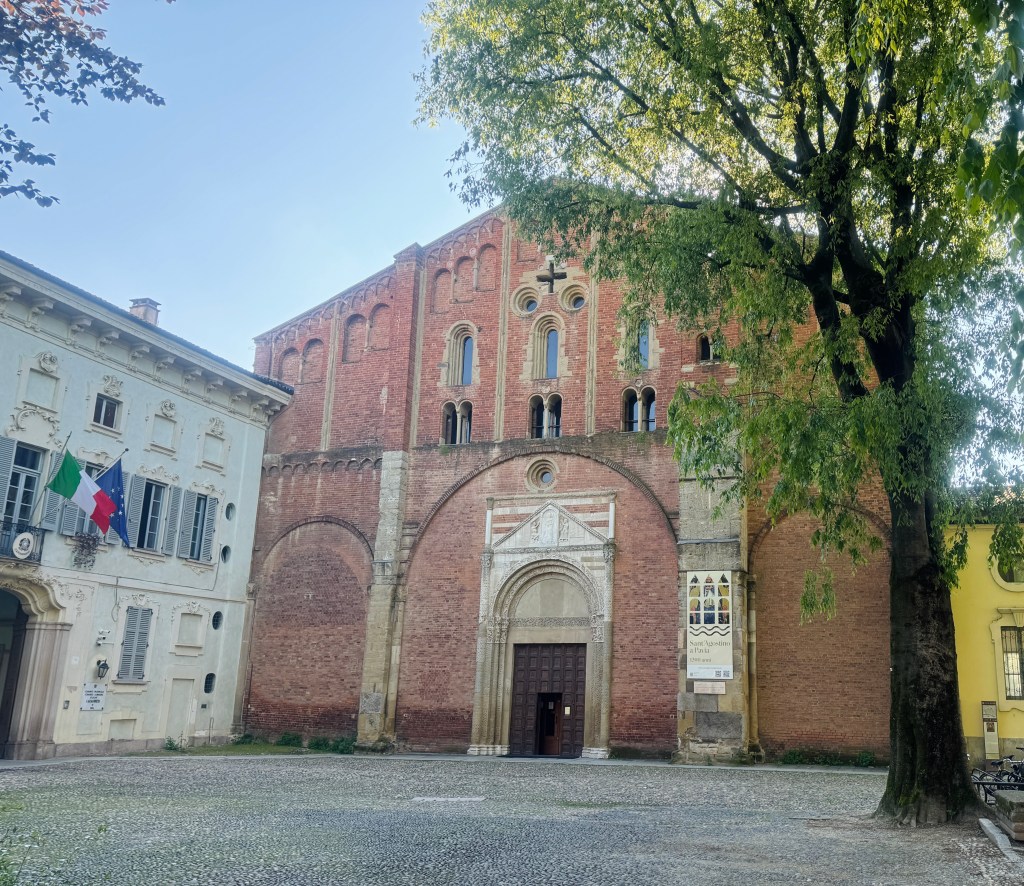


1000-1200 Romanesque is similar to Norman in England. In Italy, the exterior consists of brick and stone, not later marble. Front facade is flat and wide. A rose window above the porch and main entrance. The ornamentation is usually Christ as Judge. Despite an tall bell tower, the building often gives an impression of a solid, unmovable, compact, low-lying structure, not the light-weight, stain glass windows covering the later floating Gothic cathedrals with their spires which soar into the heavens.
The interiors have central aisle with two-side aisles. The interior has numerous semi-circular arches. Again, the arches style contrasts to the later pointed Gothic arches. The columns are massive, often Corinthian inspired with decorative figures at the top.
The following church is Pavia’s Basilica San Michele Maggiore. While the exterior is plain and representative of Northern Romanesque, the interior is wonderful in a restrained manner compared to later styles.

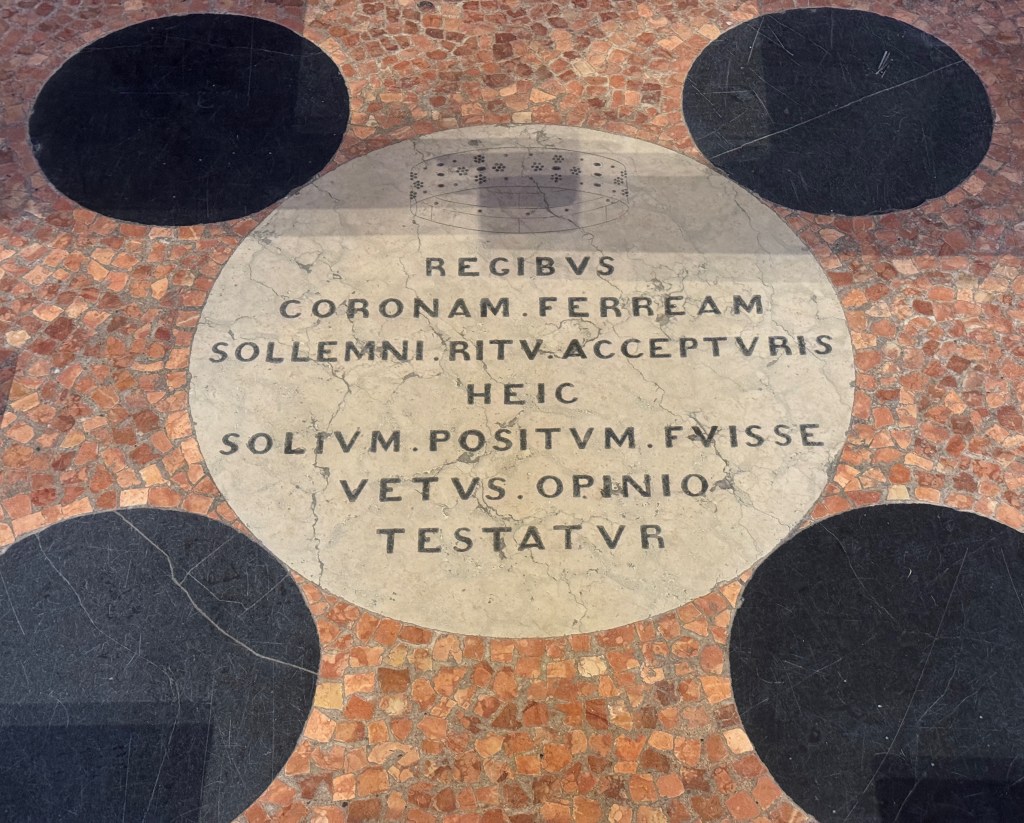
In 1155, the Emperor Frederick Barbarossa was crowned in this 12th century church.

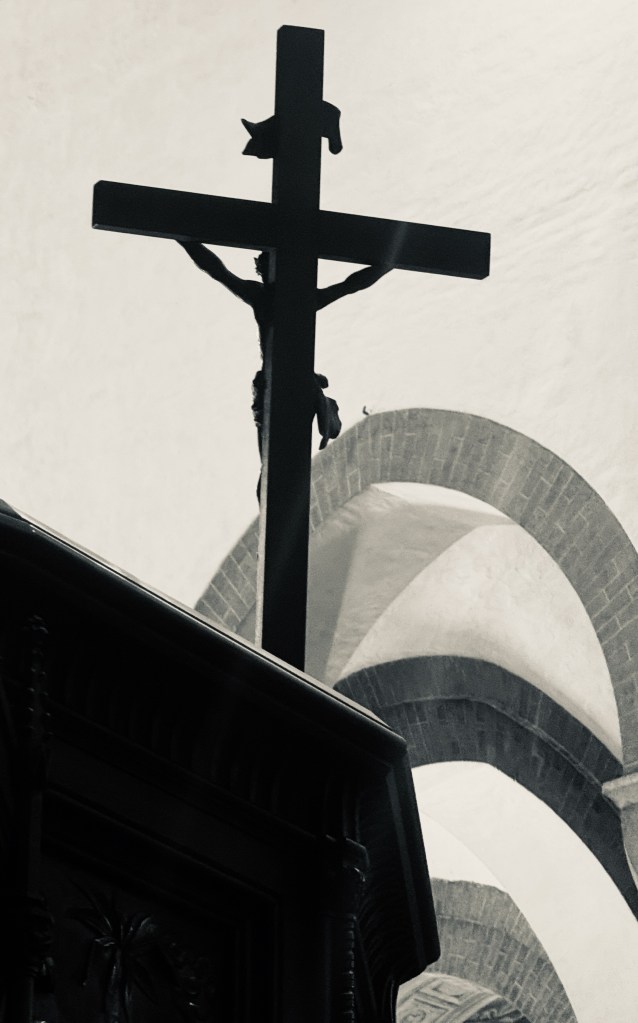
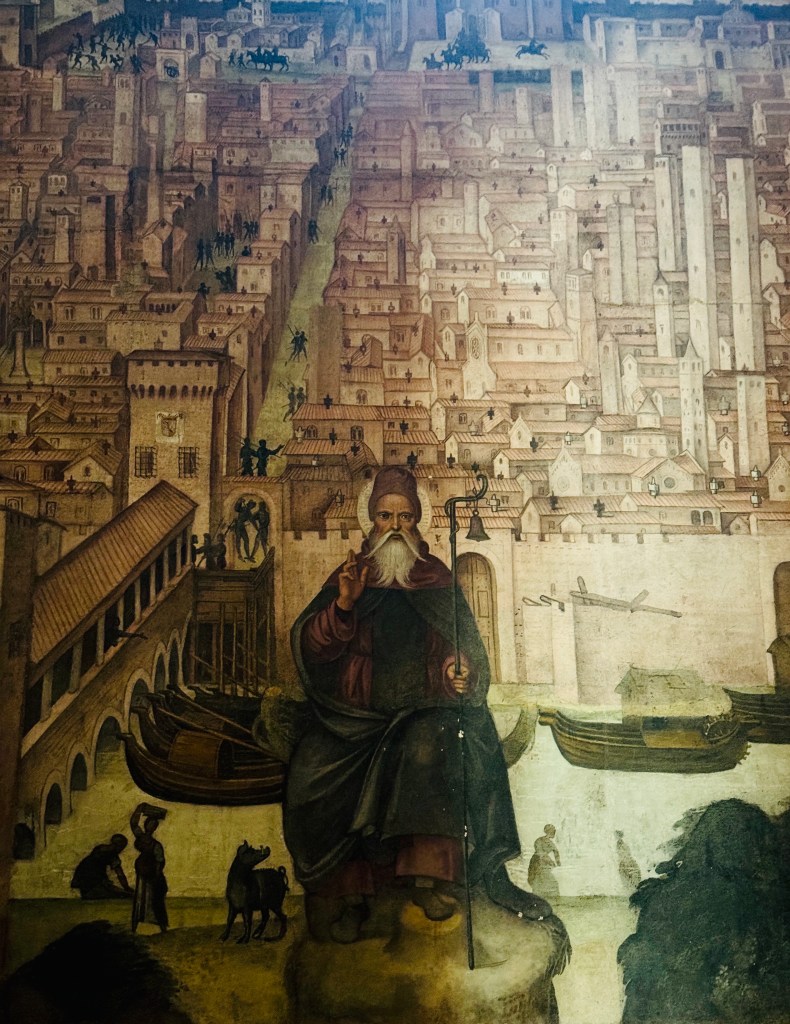
Another interesting church is Pavia’s San Teodoro, a 12th century church. Hidden inside the plain exterior is a large fresco map of 16th century Pavia. Who would have “thunk” a church would want a fresco of the larger city?
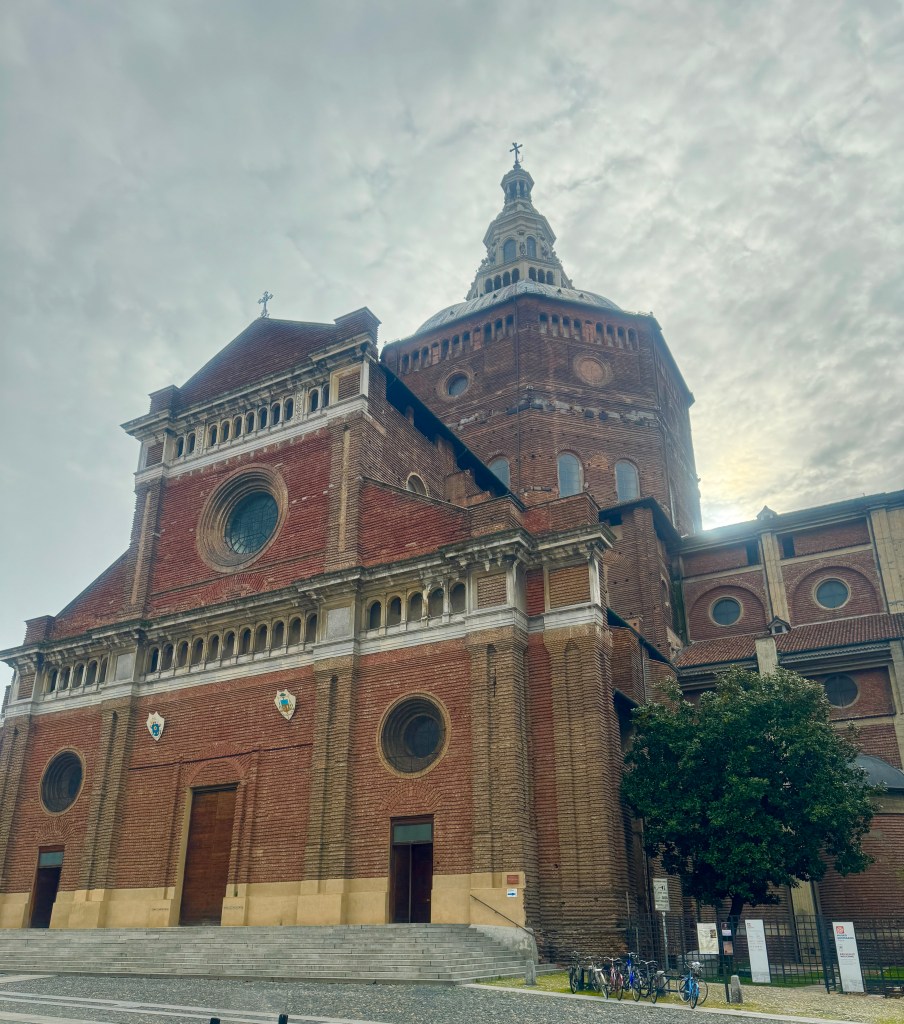
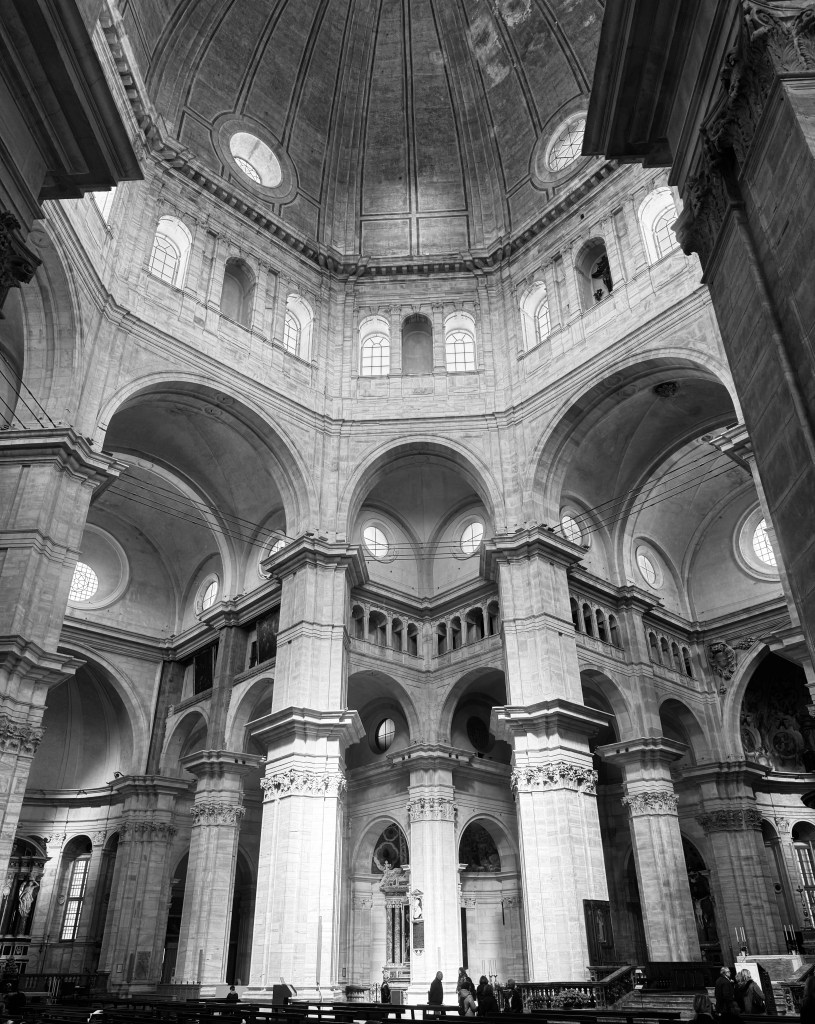
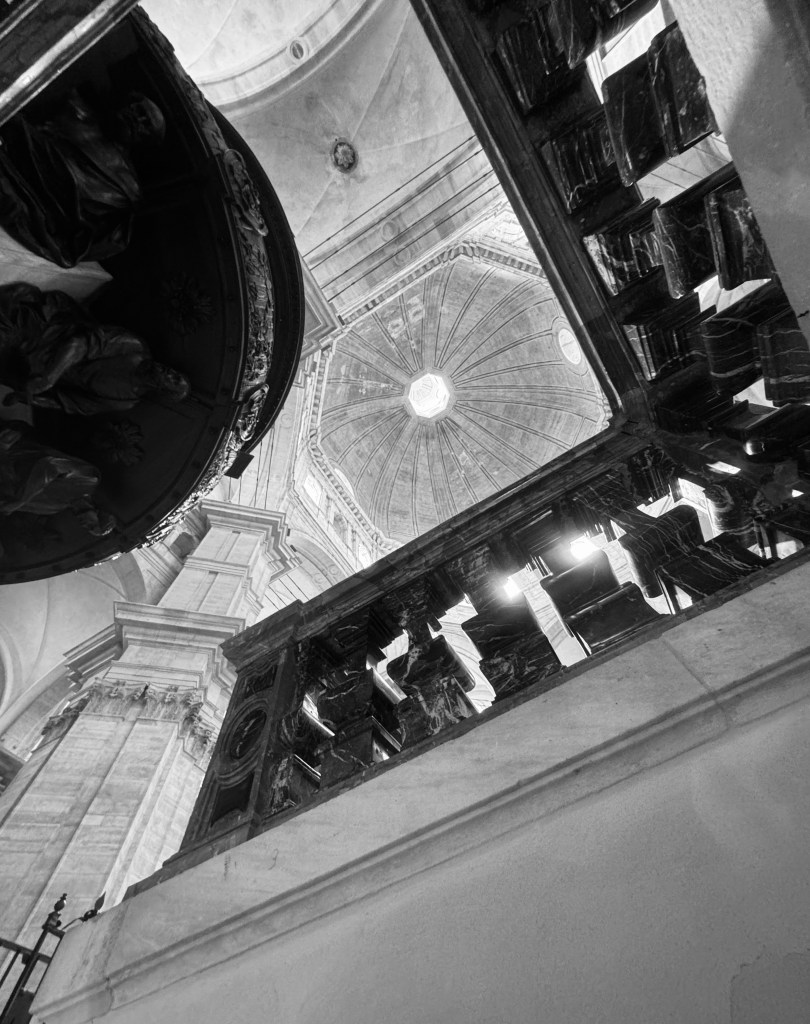
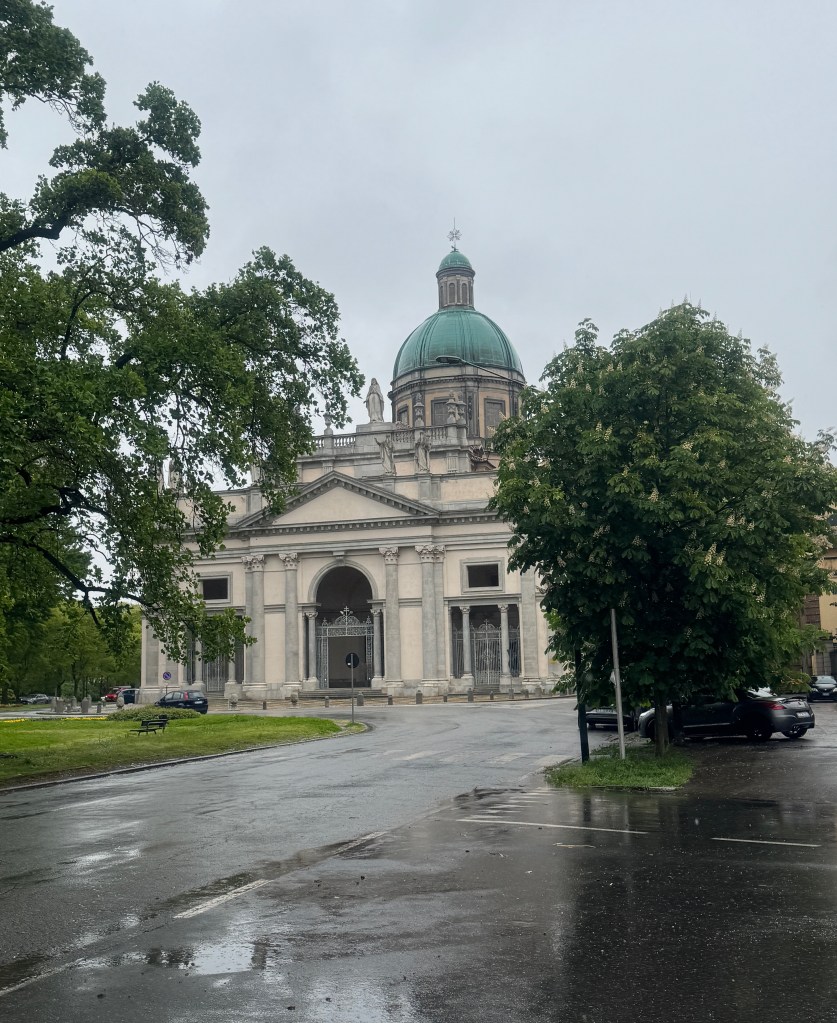
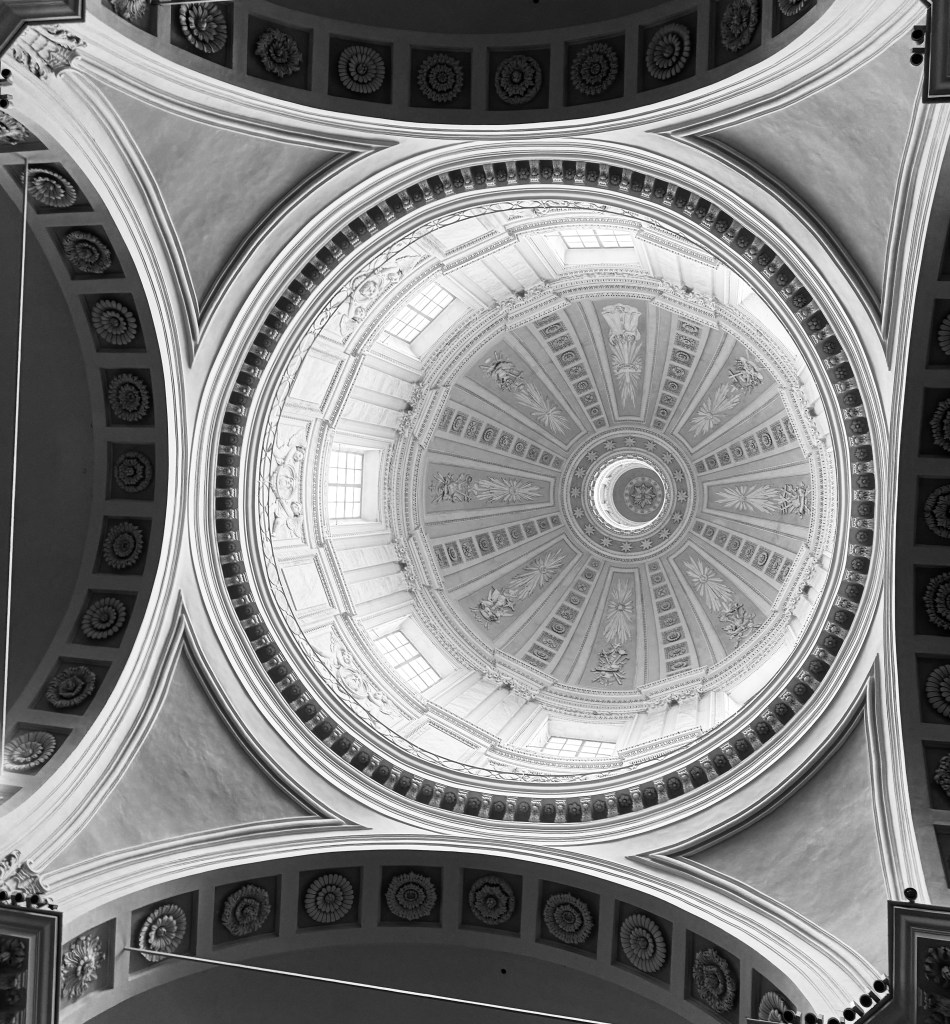
Probably around the late 1300’s, the Italian Gothic emerges. Pavia’s Cathedral is built later and has the third largest dome in Italy. Its brick exterior has ornamentation. Again, I find the striking feature of this church its primarily white interior.

Here are some other churches.
The Vercelli Basilica of Saint Andrea is a Romanesque church which was and still is used by the Cistercian. Very plain.
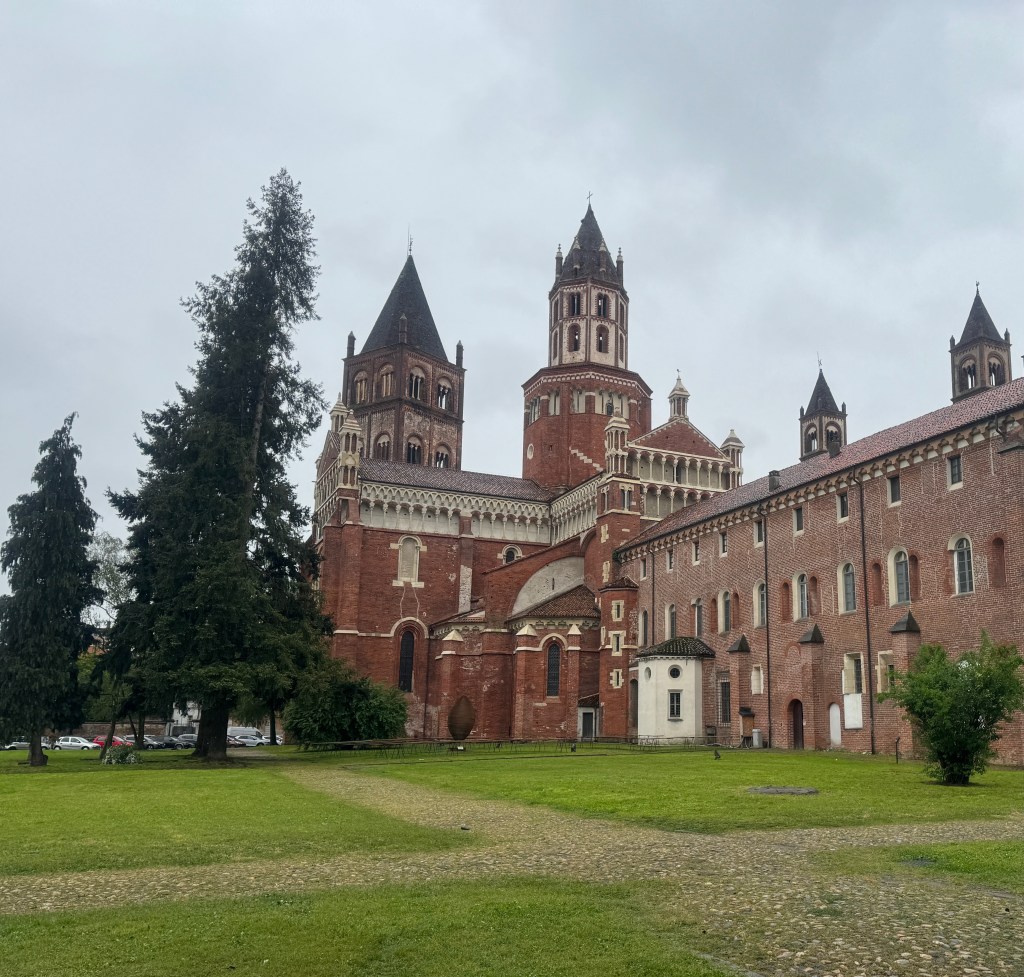
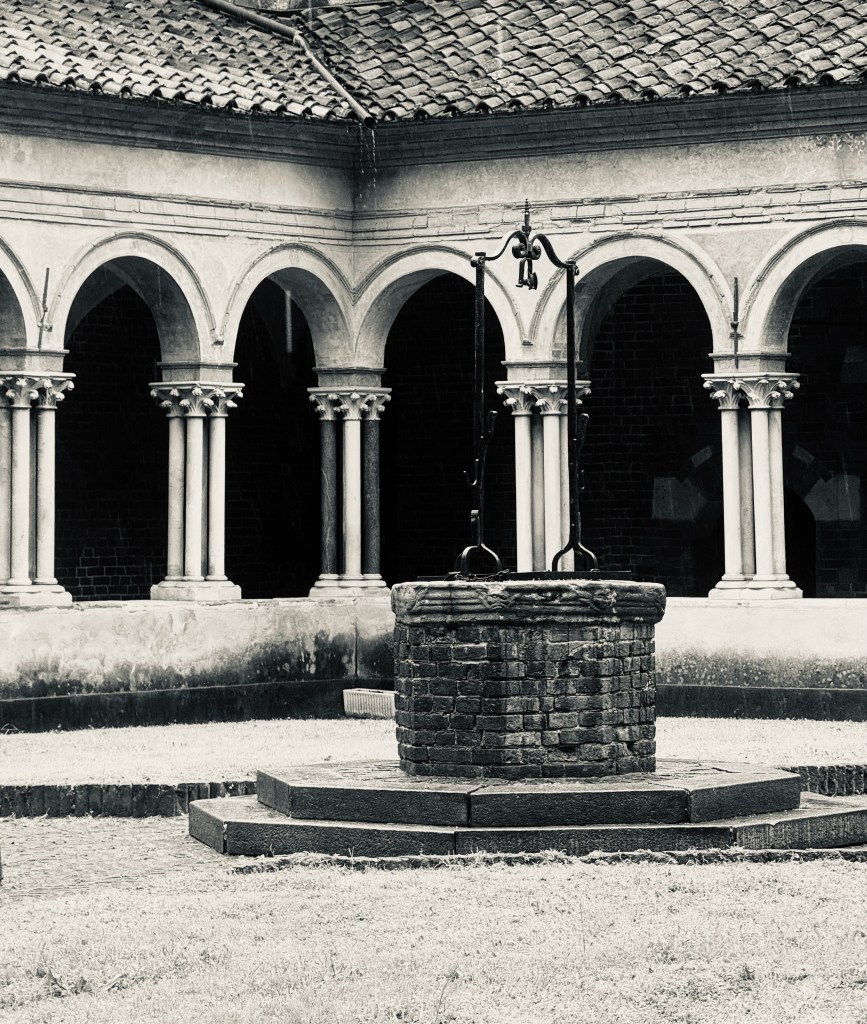
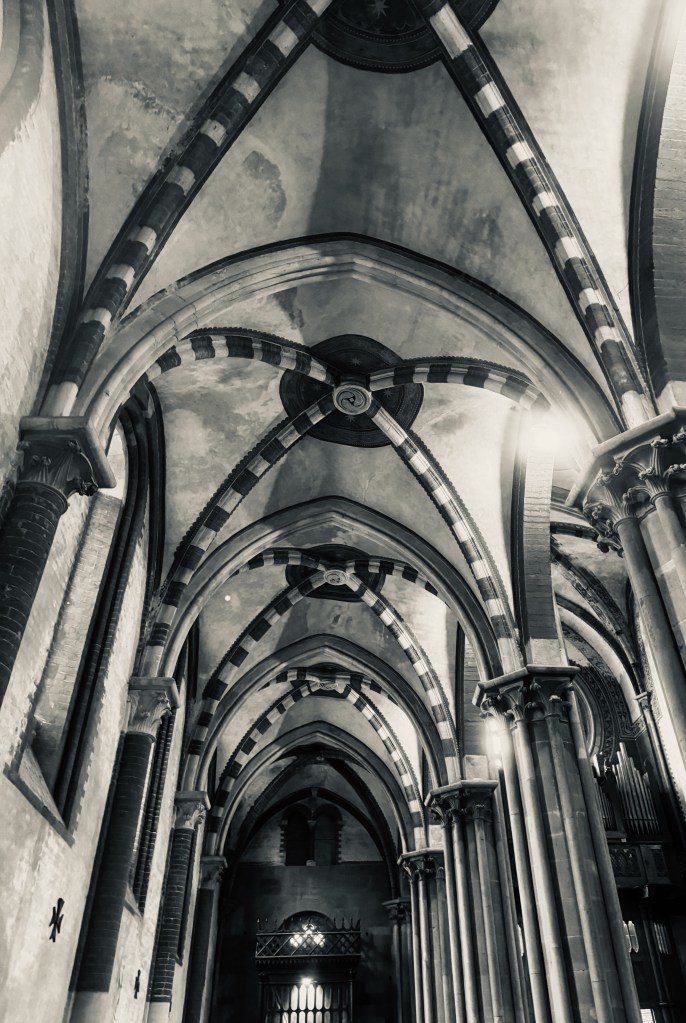
This small church in Nicorvo is typical of small village churches.

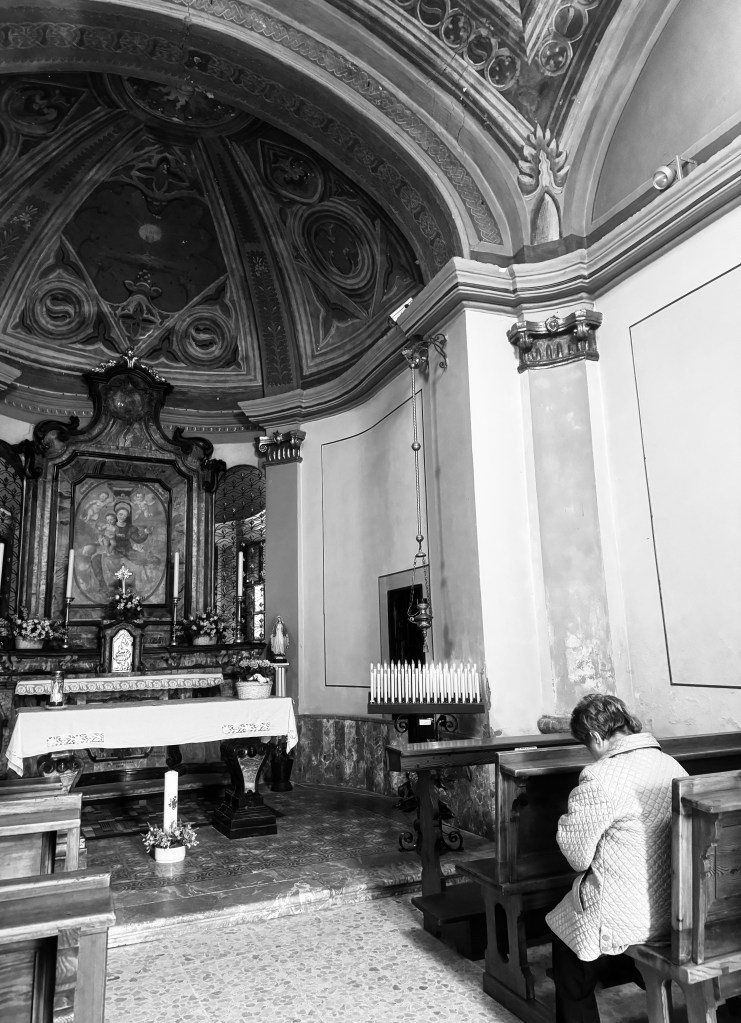
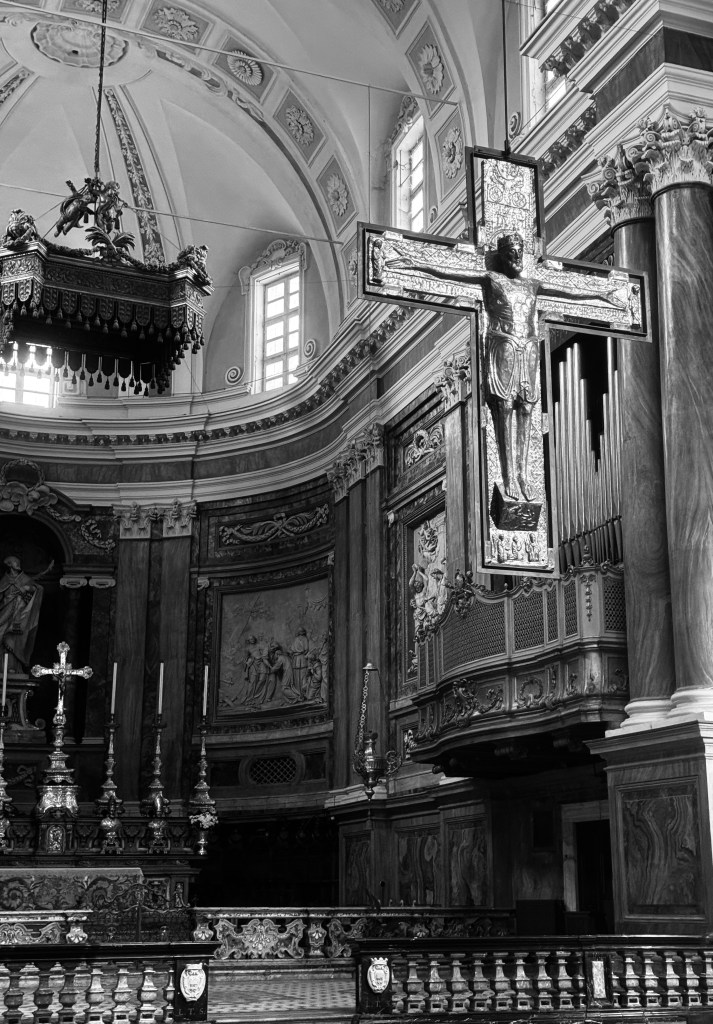
The Baroque makes quite a splash. When I begin to see all types of geometric shapes, rather than the precise, straight lines and angles of earlier styles, then I know that I’m entering the Baroque. Why have only one column? Let’s place several twisting columns together. Why have either so little ornamentation, or only the familiar Biblical figures. Let’s add I more ornamentation, little cherubs flying, smiling, pouting.
The 11th century Irvea Cathedral had to be rebuilt in the 17th century and the Vercelli Cathedral was also rebuilt in the 17th-18th centuries. Because both retained significant parts of earlier church structures, both churches have an eclectic sort of styles despite being predominantly Baroque style.
By the later 1600’s the crazy Rococo emerges. As one writer declares, this style is “Baroque gone wild.” I’ll have to post some photos of these types of churches later. I haven’t visited any yet!
For all sorts of reasons, from enjoying the aesthetics to their conducive atmosphere for silence, I love walking around and simply sitting in the abbeys, chapels, churches, basilicas, and cathedrals.
While I’ll have to work on some of my photos when I return, I hope you enjoy some of the photos. I haven’t sorted them according to portion, place, or style. Probably later. You’ll also notice that I love changing the photos to variations of black and white.
 Journeys: Explorations in Body, Mind, and Spirit