To partially make sense of my pilgrimage, I’m using three simple concepts: a pilgrim moves to a destination. Some of my fellow pilgrims are Roman Catholic. I can tell because they know what to do when we visit a church together!
Here are my observations and thoughts about some aspects of being a Roman Catholic pilgrim. Two key assumptions. On the one hand, I’m an outsider since I have a mainstream Protestant perspective. On the other hand, I suspect that none of the pilgrims would want to be a pilgrim during the time of Sigeric in the 990’s. Today’s Roman Catholic pilgrims travel in today’s modern world, not in a medieval world.
“Pilgrims”. Because of the global nature of Catholicism, I meet pilgrims from innumerable countries. Italy, Spain, Portugal, Ireland, Germany, Switzerland, and while walking the Camino to Santiago, the list includes Brazil, Mexico, Korea, and other countries. As I’ve mentioned earlier, I meet mainly older pilgrims. These pilgrims know that they aren’t walking alone.
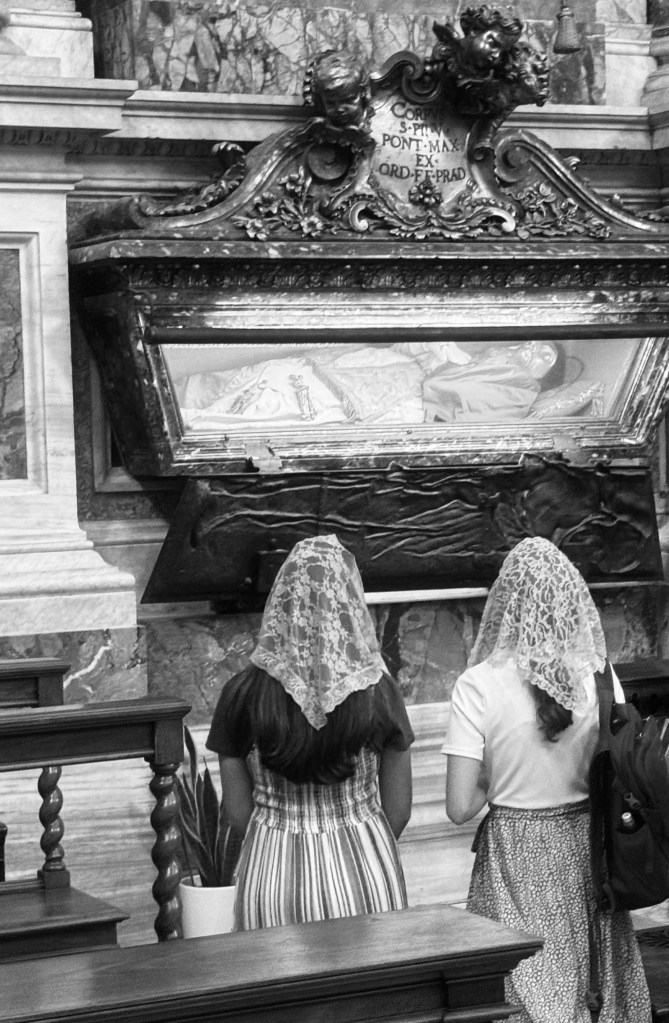
They are not alone in another sense. They constantly are reminded of pilgrims of other periods. In Pavia, they can see the tomb of Ambrose and Augustine. In Assisi, the tomb of St. Francis. I see numerous photos and paintings of Mother Teresa. While staying in Assisi, I see people praying in front of a picture of Carlos Acutis, a young teen-ager who died in 2006. As the “patron saint of the internet,” Acutis is going through the process of beatication. The first “millennial” to be made a saint.
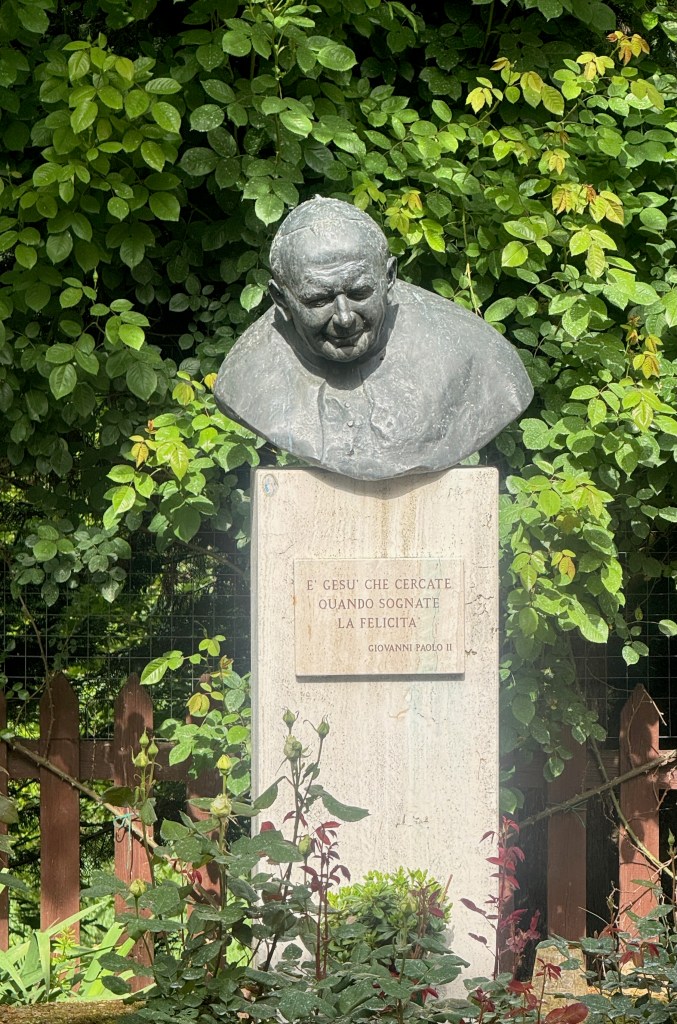
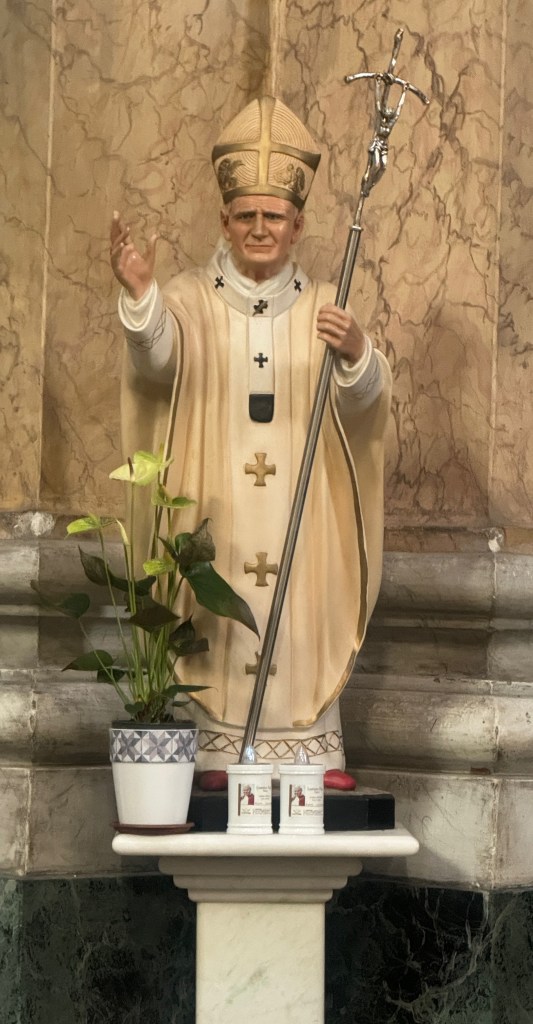
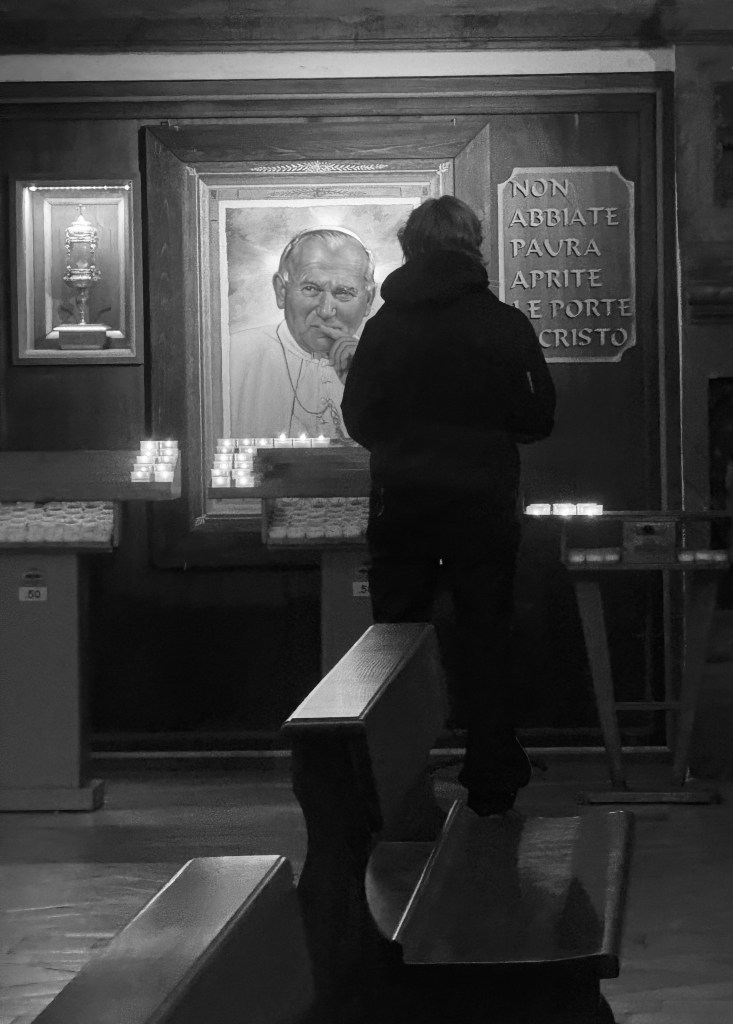

In some ways, Roman Catholic pilgrims may have a greater feeling of connectedness to past and present pilgrims. As a result, these exemplars provide contrary and contrasting ways of living to us modern folk. If nothing else, a different lived life expands our sense of possibility.
As pilgrims, they encounter the official “religious” pilgrims. Priests, Bishops, Brothers, Sisters, Friars, and other individuals. While admiring many of them for their devotion and compassion, I do get uneasy at times with titles and roles. Sometimes that person loses their own sense of “humanness” as they live according to assumptions about that role. Sometimes other people think that that person automatically knows more and lives a more authentic life. Dangerous and destructive assumptions.


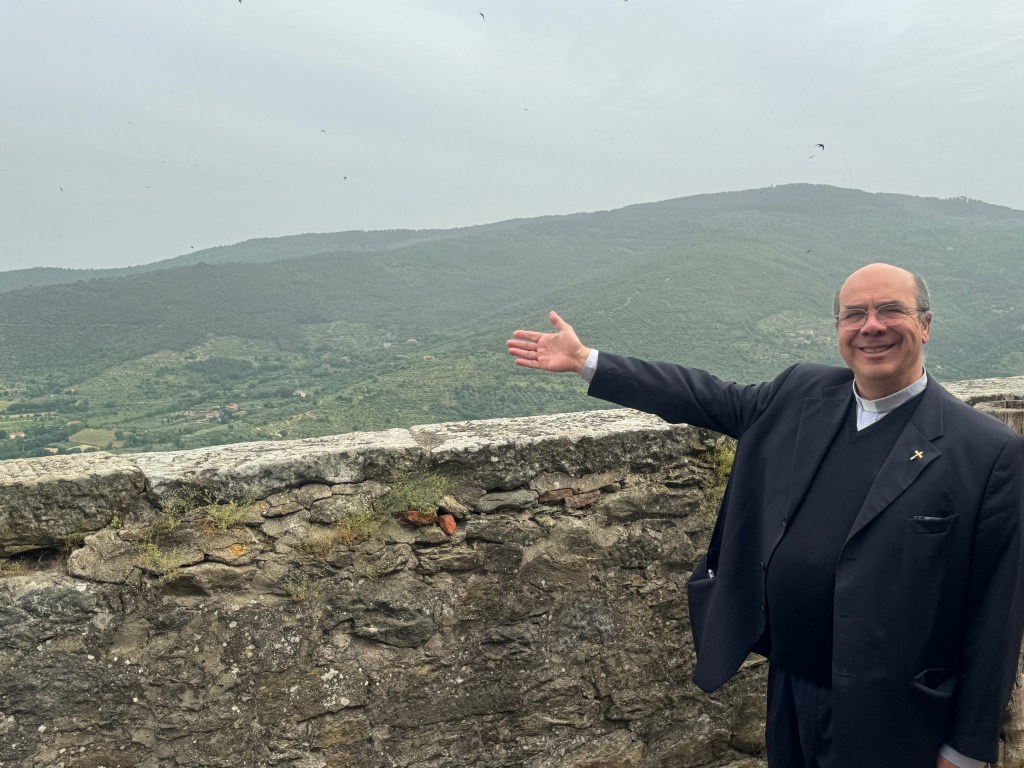
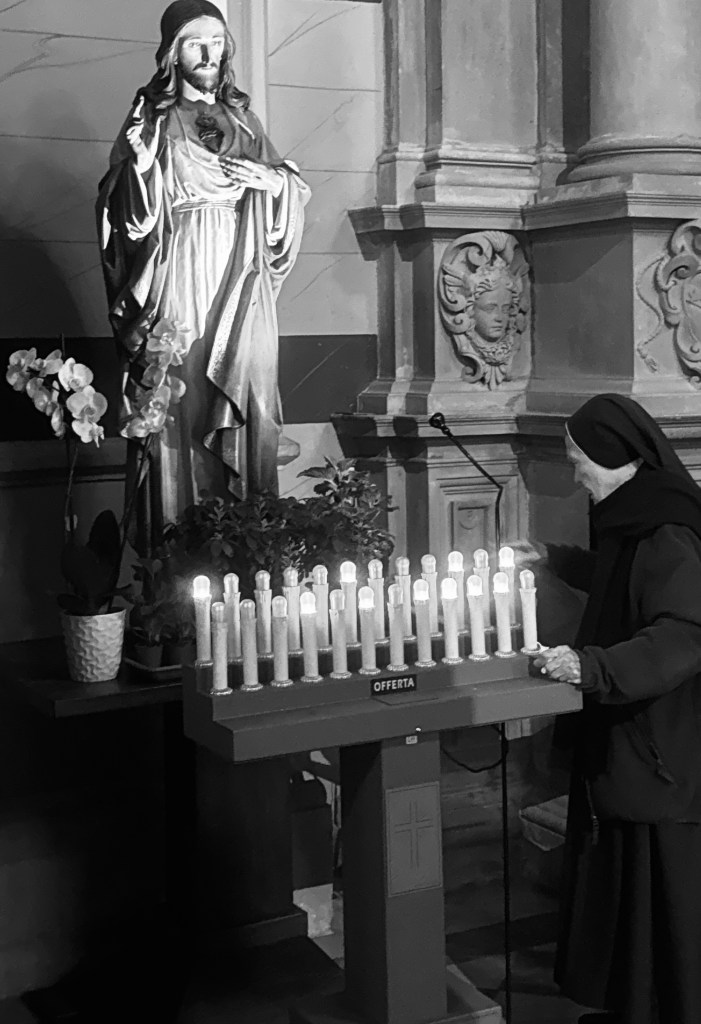
“Moving”. Besides traveling on this medieval pilgrimage route, Roman Catholics may have a greater sense of movement. They move within a church or outside a church as they walk the Stations of the Cross. They may move in unusual ways. In Portugal, I saw pilgrims move on their knees at Fatima to a shrine. Also, I watched a priest and church members walk behind a statue of Mary and parish banner in a procession around the parish boundaries.


It is also from the church that these pilgrims move to help others. They move to help local people and people in places such as Africa.
“Destination”. Of course, these pilgrims hope to make it Rome. Besides Rome, they have other senses of “place.” They are baptized in a church; they confess to a priest in the church; they receive Mass in church; they learn about their faith and travel to monasteries as teenagers; they are married in the church; their funeral occurs in a church.


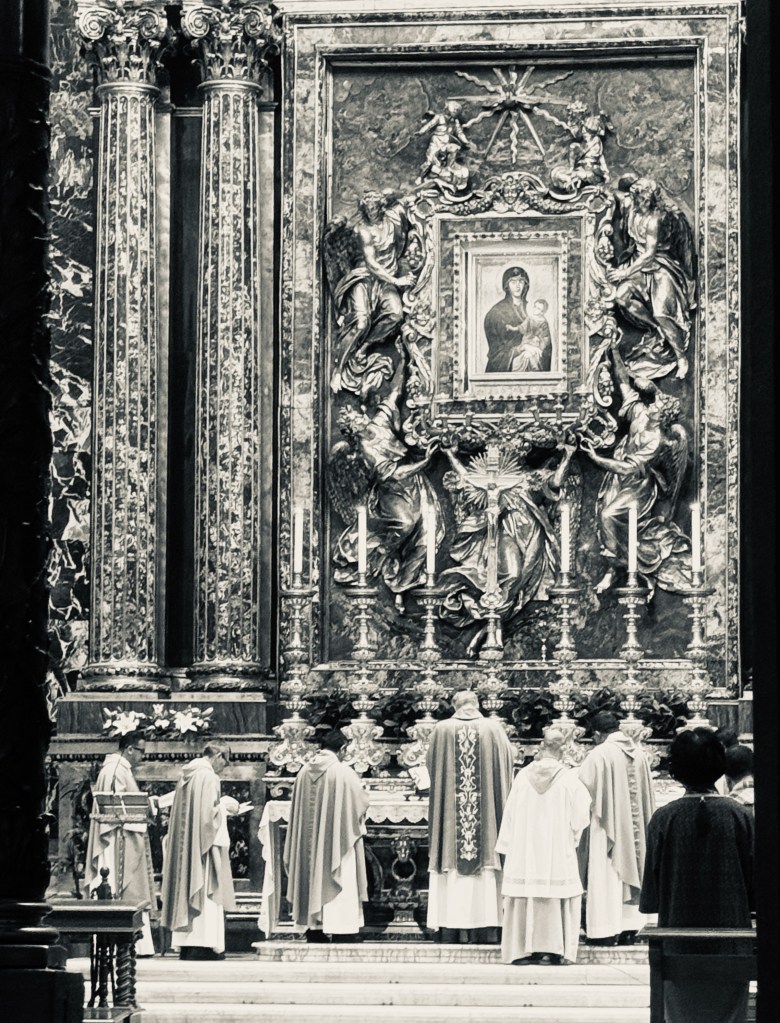
Yet, as I wrote weeks ago, they may have a greater sense and value of church as a “place” for Protestants. Besides the strong sense of Christ present through transformed wine and bread, the Catholic Churches still display relics from the past. Francis breviary, Claire’s robe, St John the Baptist head, woof from Jesus cross.
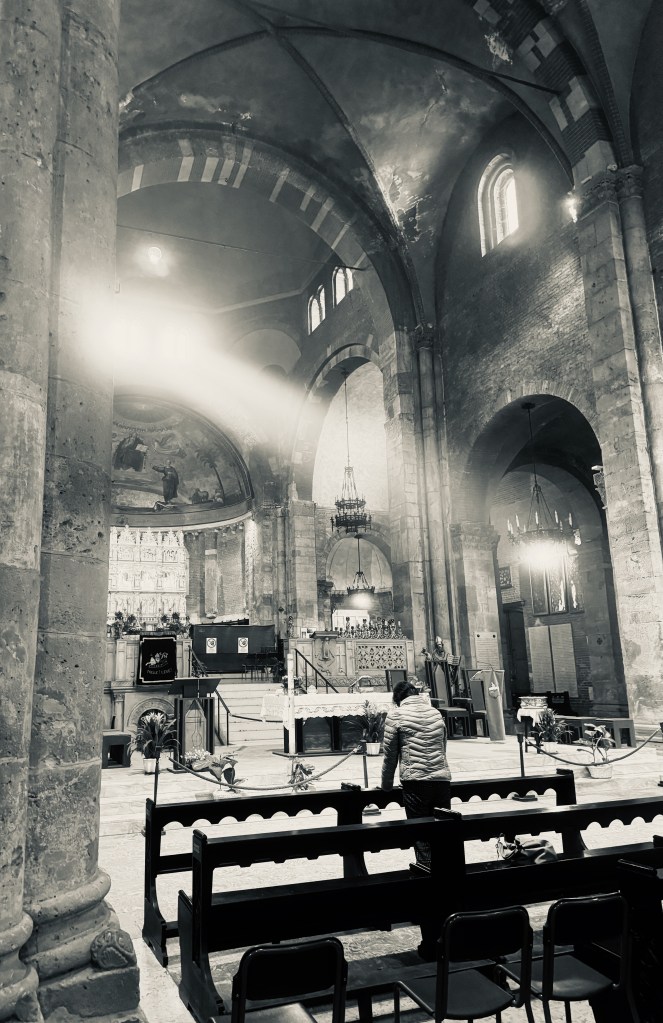


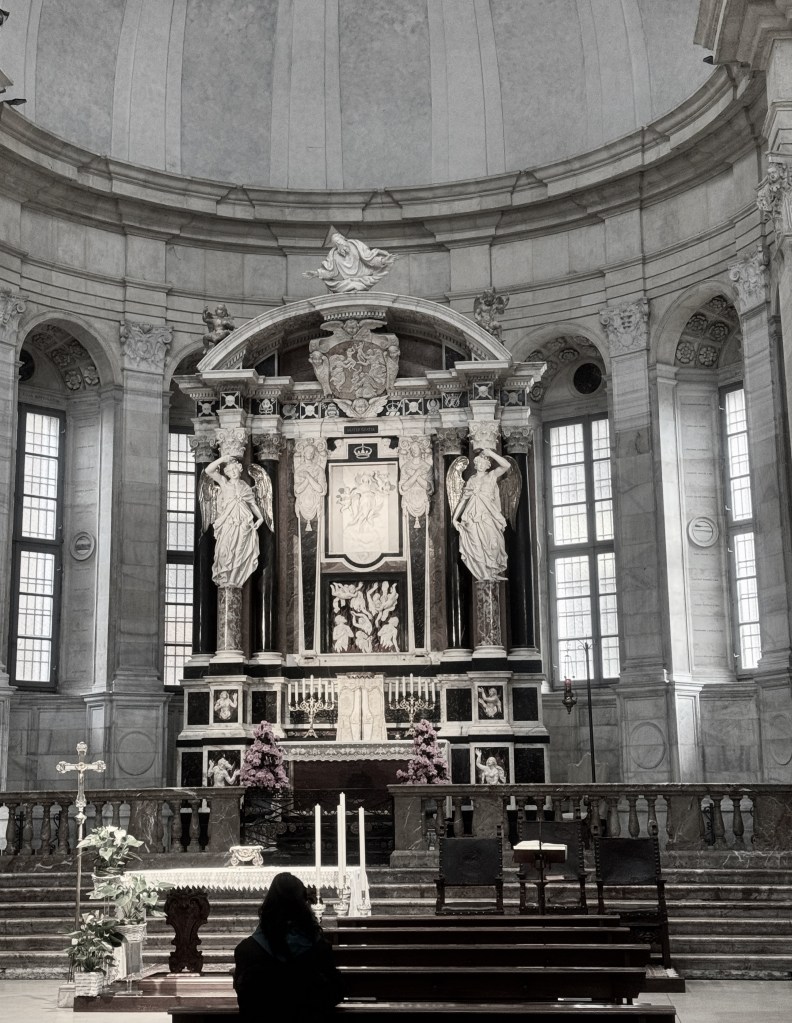
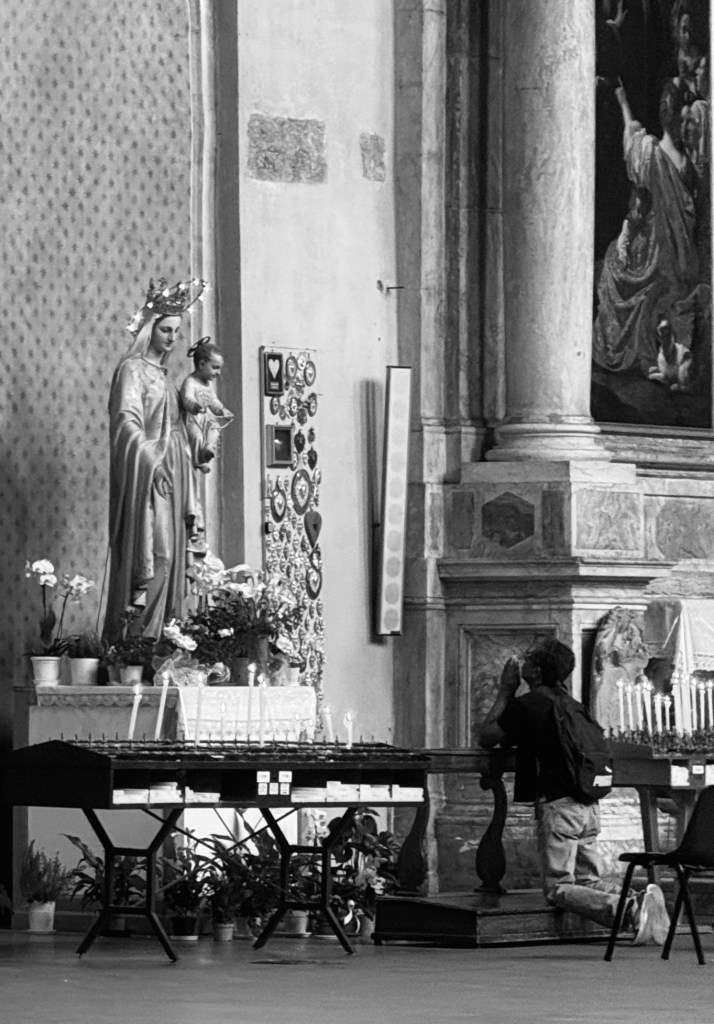

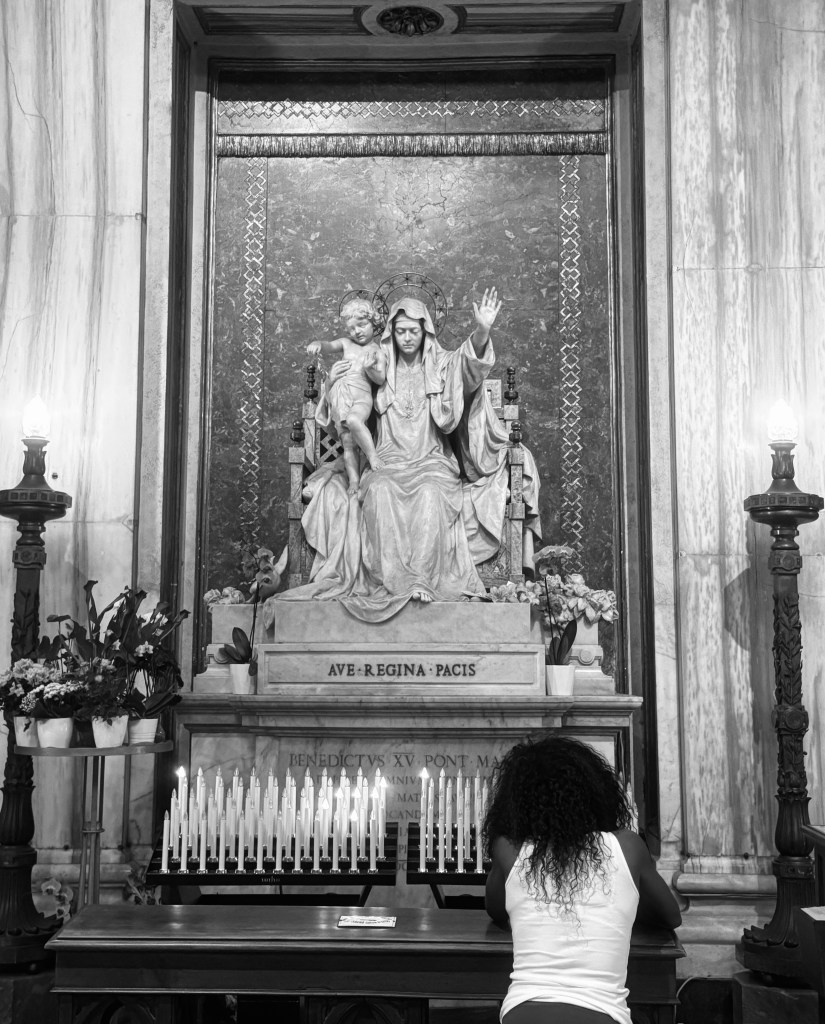
Furthermore, there are over 200 “Incorruptibles.” Bodies not embalmed, but displayed bodies manifesting their sainthood. Coming from a Protestant perspective, I and other Protestant pilgrims like Steve and Elaine do find this practice strange.


There are innumerable ways to live in our modern world. Roman Catholic pilgrims show one such way forward. There are other obvious ways of being a pilgrim. Last year, I wrote about Esther and her walking as a Buddhist. There are evangelical pilgrims. While I haven’t consciously met evangelicals walking, I’ve met them on the Camino in Spain. They certainly go on pilgrimage to Jerusalem. So much for Luther’s and Calvin’s condemning such practices even though John Bunyan saved the idea of pilgrimage by spiritualizing the practice. There are “seeker” pilgrims. There are some of us, if you want a very inadequate phrase, who are “post-liberal” pilgrims. With no one dominant religious and cultural perspective, could we expect anything less regarding the diversity of pilgrims. Nope!
So much to think about! Enjoy the photos.

 Journeys: Explorations in Body, Mind, and Spirit