
I have moved from Aosta, south of the Alps, across the Po River Valley, over the Apennines, down Tuscany and Lazio to Rome. While primarily walking, I have taken trains and buses. I’ve even had several unexpected short car rides, two strangers driving me half-a-mile on my second day, a host’s son driving me three-four miles to the Po River banks to catch Danielo’s ferry, and Grandma “Mario” Colombo helping me beat a thunderstorm. I’ve moved.
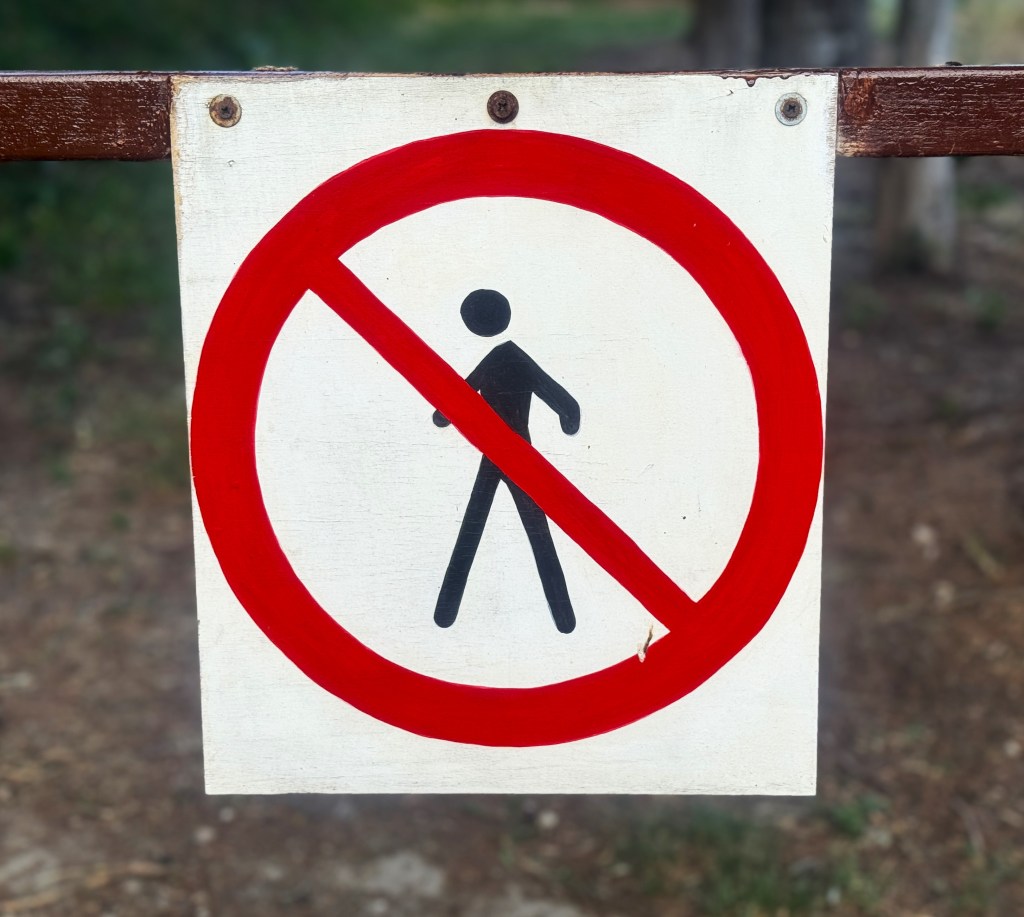
From my very first days in Milan to my very last day in Rome along along the Appian Way, I’ve also been reminded that there is a time of no movement. I don’t mean that I shouldn’t walk along a certain path as the sign above communicates. I don’t mean that it is time to rest on a bench or at my nightly lodging. I refer to the reality of death. Whatever one believes about a reality after death, death is the state when neither our lungs inhale oxygen nor our heart beats. No movement.
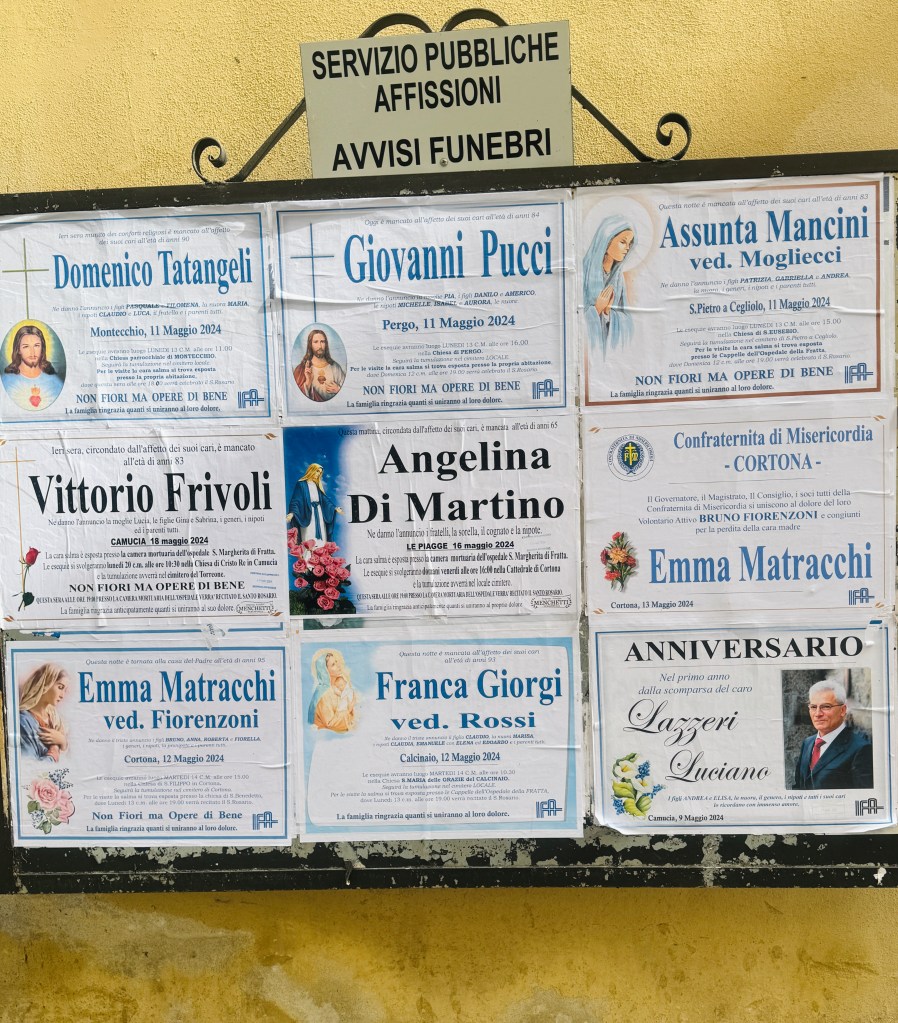
I and other walkers see plenty of death reminders. Some are very simple and direct, funeral notices.
Years ago, I gave some talks on “Regarding the Dead before God: The Deceased, the Burial Site, the Rituals, and the Memorials.” There has been no one historic way of handling death; rather, individuals and societies handle death in innumerable ways. People handling the corpse, selecting the burial site, the ritualizing death, and memorializing the deceased has changed immensely. The early Romans borrowed from the Greeks and Etruscans. Later Americans borrowed from the Victorian era’s photos of a deceased with surrounding family members to the European rural cemetery movement. Needless to say, I noticed death, “no movement.”
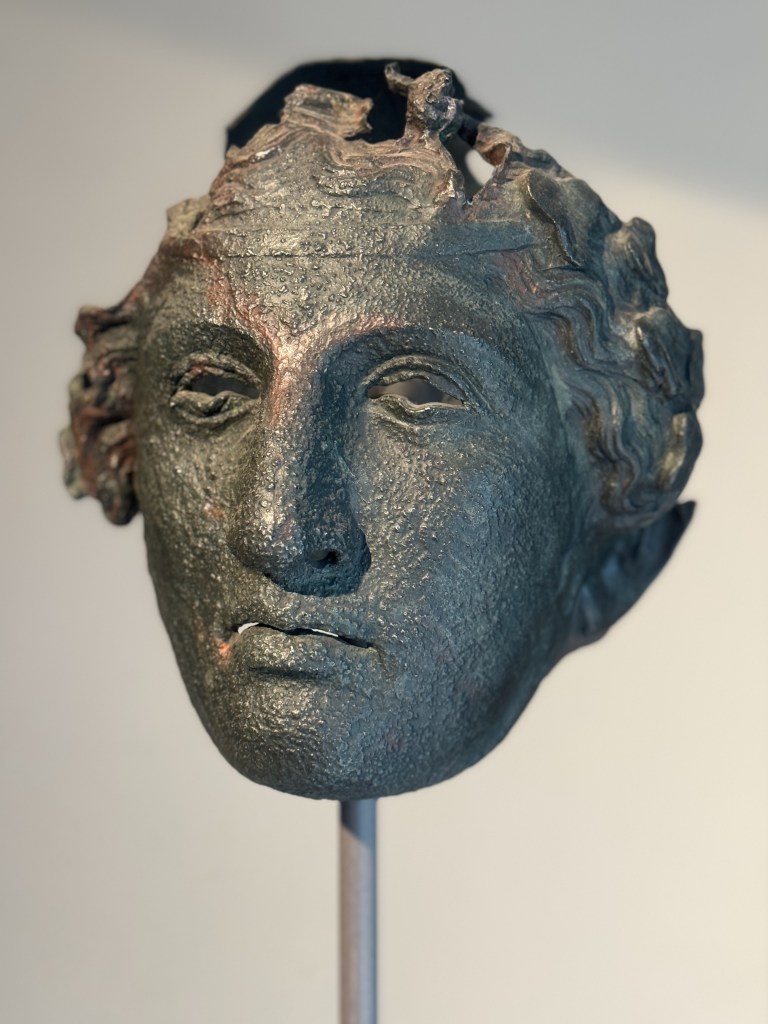

In several places, I learned about the early Etruscans handling of death. In an Asciano museum, I saw the cremation urns and personal effects of the deceased, helmets (above) and swords for warriors and earrings (above), combs and perfume containers for women. In Sutri, I saw hillside caves where they placed the corpses.
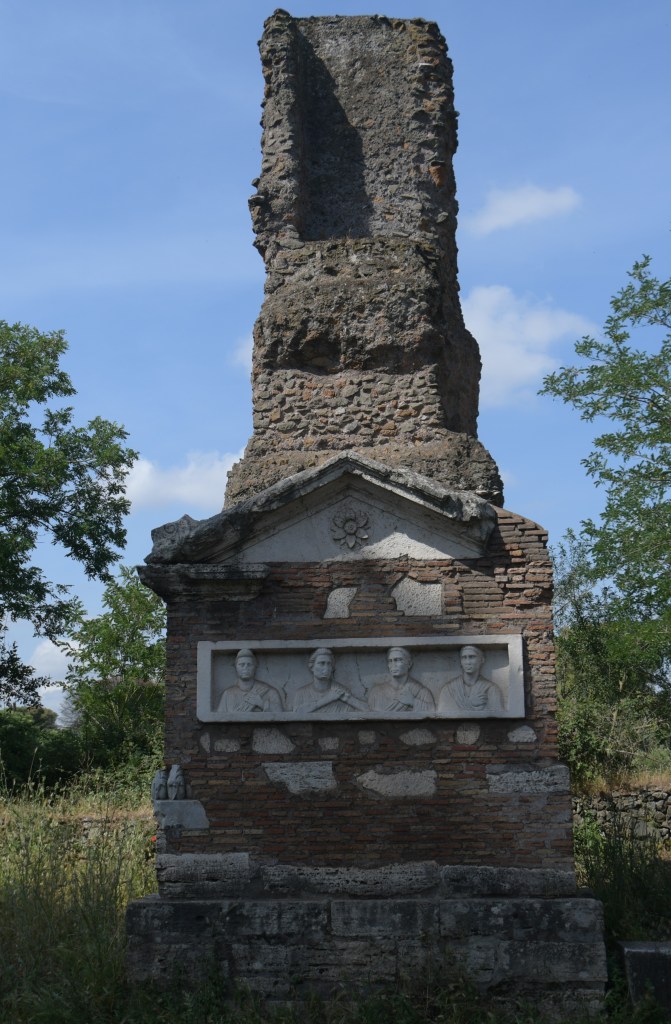
The early Greeks and then Romans buried individuals outside their polis or city. For them, death was a “polluting force.” The sarcophagi along the Appian Way showed the family and friends both their remembering those who had died and their own social and economic status in the memorials they constructed. Early Christians maintained the attitude of burial outside the city, although their catacomb burial sites also assured a degree on hiddenness.

During the medieval centuries after Constantine and “Christendom”, corpses and burials began to appear in churches and cathedrals. A leading early Christian figure in western Christianity, Bishop Ambrose died on April 4, 397. In the Basilica of St. Ambrose, we find his figure robed in bishops’ attire with a mitre and even slippers on his feet. Even when he died at 60, he had a full-set of teeth!

As I’ve mentioned in other posts, the church continued to display corpses of saintly figures, the “Incorruptibles.”

Sometimes there are simply markers in the church. A skeleton sitting on a block above an illegible name marks one’s grave.

Of course, the closer to the altar the better!
There are also the familiar monuments. One of the most beautiful is the Funeral Monument of Ilaria del Carretto by Jacopo della Quercia (Siena, c. 1374 – 1438) in Lucca’s Cathedral of San Martino. The life-like marble monument to this young woman who died at twenty-six is breathtaking.

In the mid-1700’s, the Capuchins created a unique way of both remembering their deceased members and conveying a message to those still alive.
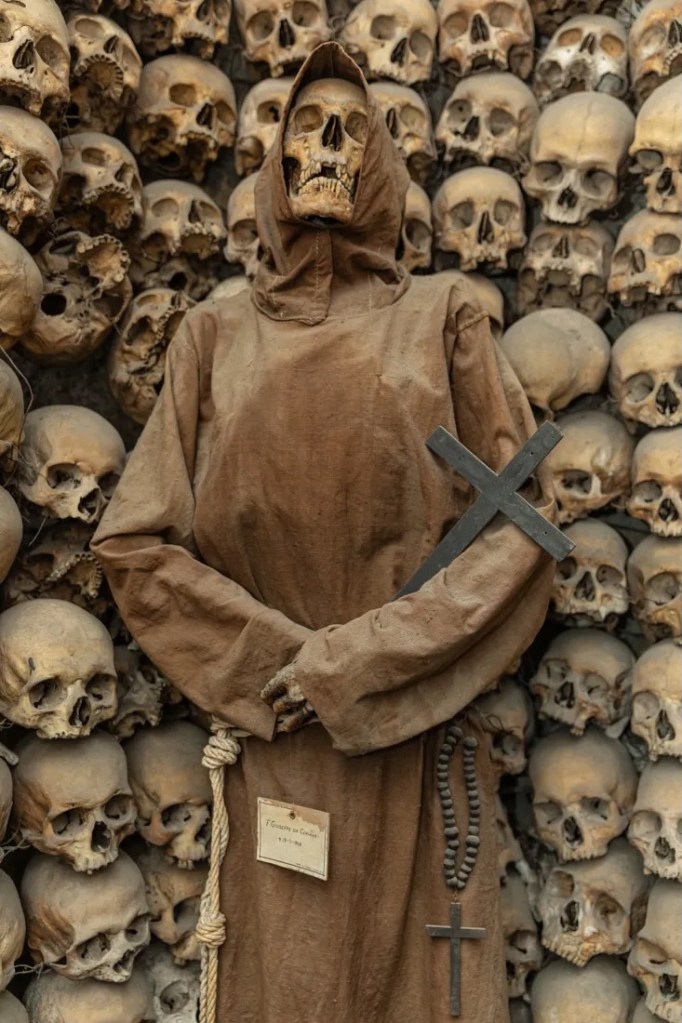
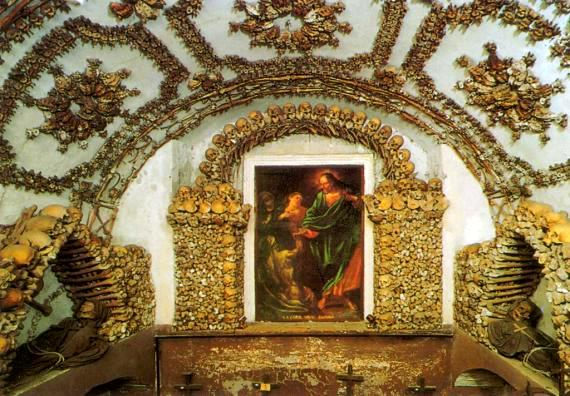
Part of the Franciscan family of orders, the Capuchin’s order was given land in Rome for a new church in 1625, “Our Lady of the Conception of the Capuchins.” Completed in 1631, the order moved, both the living and the dead to their new headquarters. Approximately a hundred years later, a change occurred. An unknown Capuchin “artist-monk” began to transform the six rooms of the crypt into a work of art. Using skeletal remains of the approximately 3700 monks. Some skulls are carefully placed on shelves, some skeletons are clothed in the Capuchin robe and hood almost like the Grim Reaper, some bones are precisely made into chandeliers and an hour glasses. This crypt has two powerful messages. On the one hand, remember one’s mortality. In the attached museum, there is Caravaggio’s St. Francis in Meditation in which St Francis is holding a skull, pondering life and death. Caravaggio’s painting reminds the viewer of the the Latin saying memento mori (“remember you will die”) or the sign in one corner of the crypt ““What you are now we used to be; what we are now you will be.” On the other hand, in the very last room the Crypt of the Resurrection, there is a painting of the Christ leading Lazarus from his tomb. After Death, Life. Since there was no photography in the crypt, I have taken these photographs from internet sites.

It seems as though I walked past every village’s cemetery. Some were simple with gravesites; some were more modern with large mausoleums.

In 1866, Milan opened its “Monumental Cemetery.” This cemetery is a later exemplification of the “rural cemetery movement” which began in Paris in 1805. The cemetery is not controlled by the church; its setting is resembles a peaceful of a garden or park; its memorial statues are pieces of art both displaying traits of the deceased as well as the wealth of the remembering family.

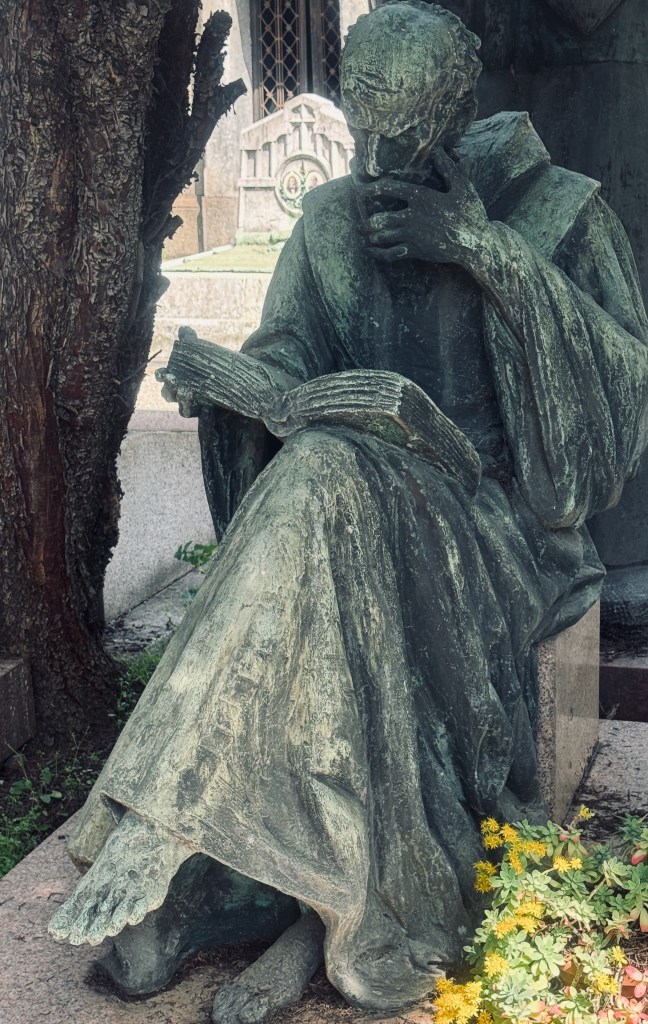


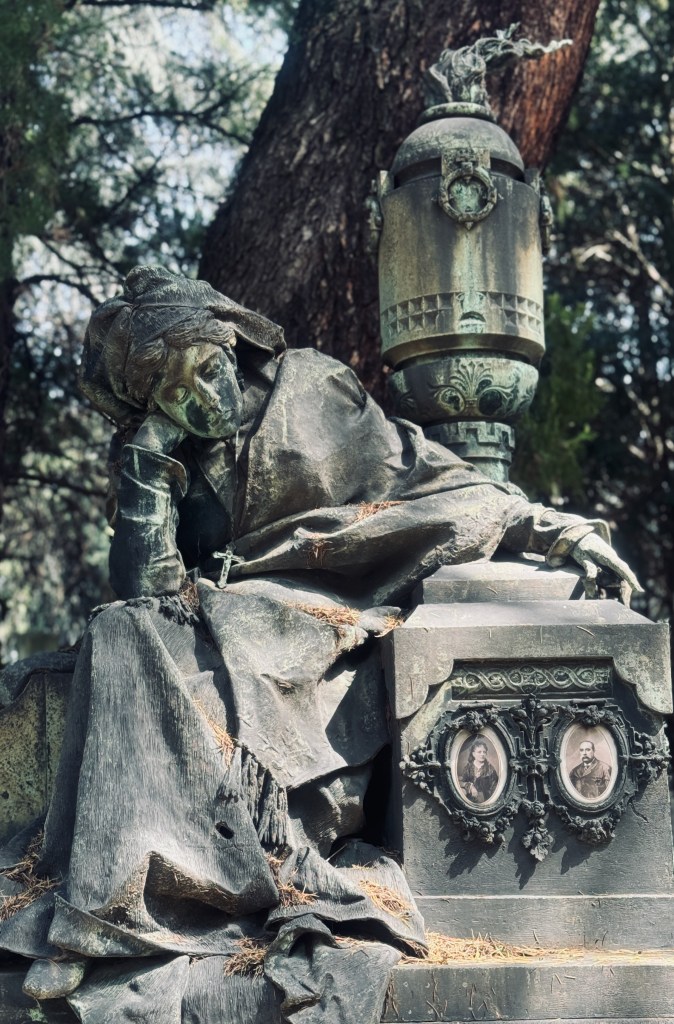
Eventually, we don’t move. Our pilgrimage ends in death. People have responded to that reality in many, many ways. As Freud recognized, eros and thanatos, love and death, characterize much of our lives. Whatever comes after death, we as humans have handled death in an astounding number of ways.

 Journeys: Explorations in Body, Mind, and Spirit