

Besides specific pains, which lessen with this day.
Besides other specific walkers, who have been delightful to meet.
Besides specific scenic views, walking past rhododendrons, weaving through gorse and blackberry bushes, looking up at centuries old oak trees, and overlooking coves, bays, and cliffs.
I walk through the people of Braunton’s specific history.
What should I do in the small village of Braunton? Seemingly like every other small English village, Braunton has its own museum. Not quite the size of the British Museum, not quite as prestigious as the Tate, the museum is the pride of the village. Even though its two rooms can fit into our front living room.

I learn about Braunton and north Devon. On a hill, archaeologists place an Iron Age settlement where people had moved from hunters and gatherers to rudimentary farmers. Probably 3000 years ago. By 500 CE, the farmers moved from working a Great Field to working smaller, individual plots. I learn the multiple stories describing St. Brannock’s arrival in this area in the 500’s. Possibly by donkey, possibly by raiding vessel from Wales, possibly by floating across the Bay of Bristol in a stone coffin! You can’t pin a Celtic Saint down! I learn how families grew both to depend on the sea as well as to fear the sea. Fishing boats and trading ships left its port; dishing boats and trading ships failed to return to its port. Because of a dangerous sandbar, simply called the “Bar”, a lifeboat is commissioned in 1829, and around then a lighthouse was built, “Blinking Billie.” But, no part of Braunton’s history can be overlooked including James Jones repairing cycles and Braunton’s women forming a handbell choir!
No country- shaping or world influencing events in Braunton. No Whitby or Hastings. Simply the long continuity of individual lives shaping their surroundings as they are shaped by those same surroundings.
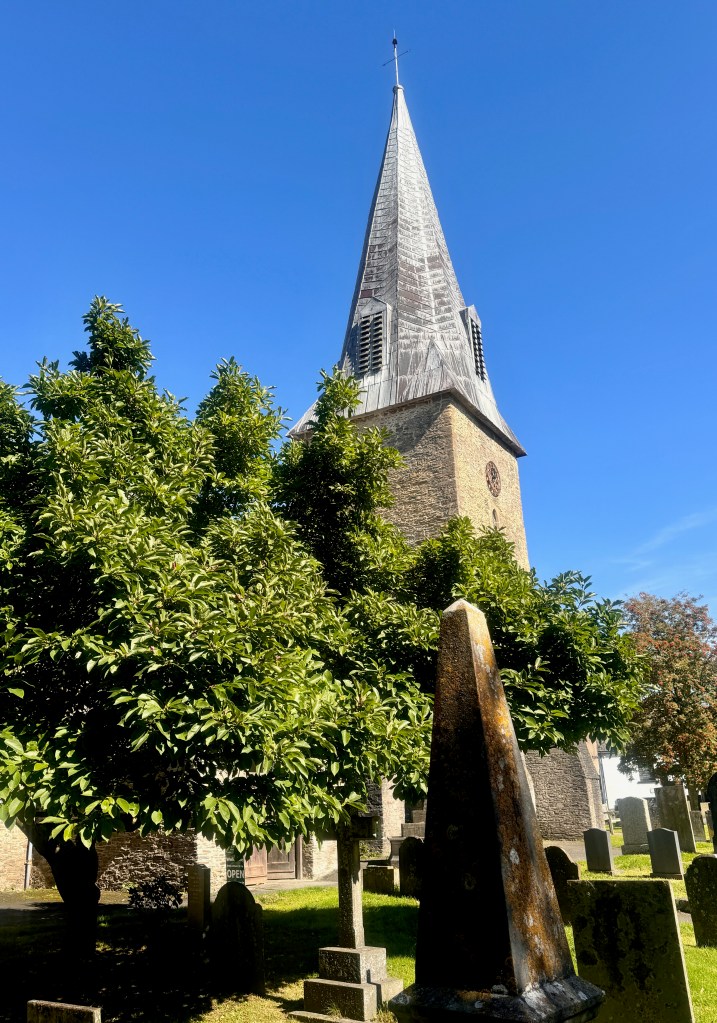

I wander to St. Brannock’s church. Since a church has been here since the 500’s, St. Brannock may still be under the main altar. Missing the sculptures, the multiple aisles, or the Rose window of a cathedral, the church has its own charm. Built in the 1300’s with oak beams dating to the 1100’s, the church has beautiful end- decorated pews and an ornate pulpit. A brochure sadly laments the destruction of a stain glass window, “vandalized by the Protestant reformers during the 17th century.” Darn those Protestants! Yet, the church is alive. Trying to be an Eco-church as well as encouraging those young people thinking of suicide to call a helpline.


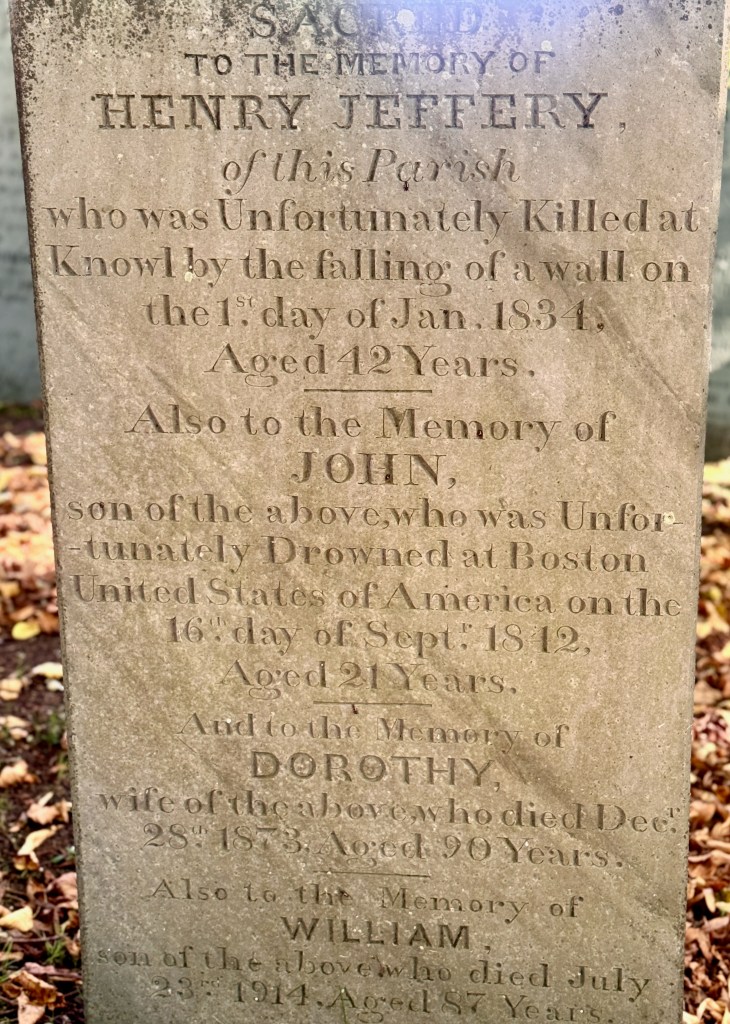
I can’t resist the pull to wander the cemetery. The tomb of Prudence, a John Bunyan era English name! The tomb of Henry killed by a falling wall on New Year’s Day, 1834. The tomb of young men killed in France during “The Great War.” The tomb of couples loved. Ordinary individuals who lived their lives. Some reaching that Ancient writers “three score and ten”; others not.
A rest day. Low-key. Revelations of ordinary life in Braunton. A restorative day!
 Journeys: Explorations in Body, Mind, and Spirit