

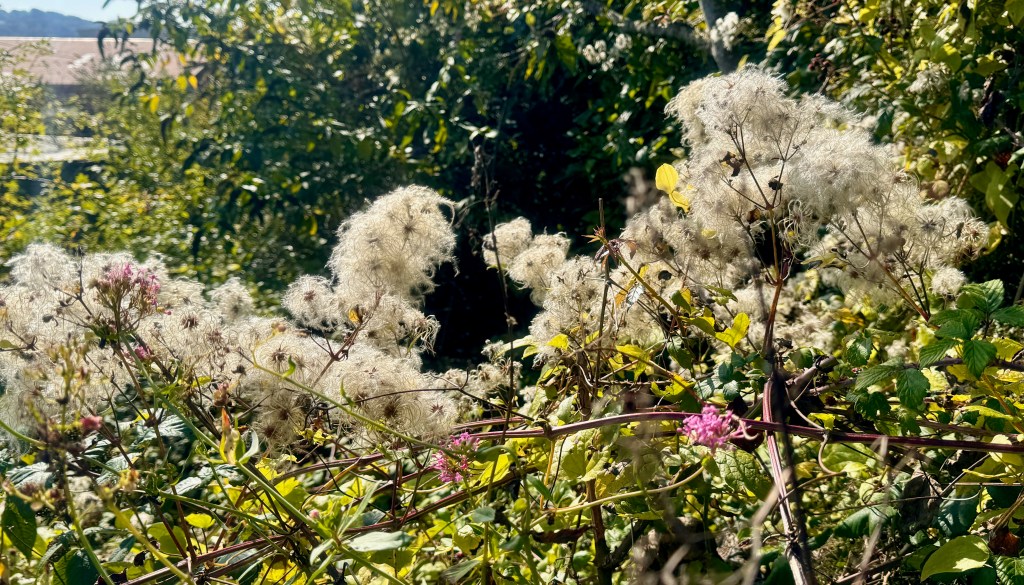
Who doesn’t enjoy a blooming flower or shrub? What could be more quintessential than walking past English flowers and plants, in gardens or simply in the wild? Solitary geraniums in pots. Daisies, dahlias, echinacea along a stone wall. Hydrangeas and fuchsia anchoring garden corners. Of course, roses everywhere. Then the plants in the wild such as Old Man’s Beard. Blackberries everywhere. Surprising clumps of blueberries. Intentionally planted self-propagating flower strips along pastures and fields. Flowers and shrubs everywhere!

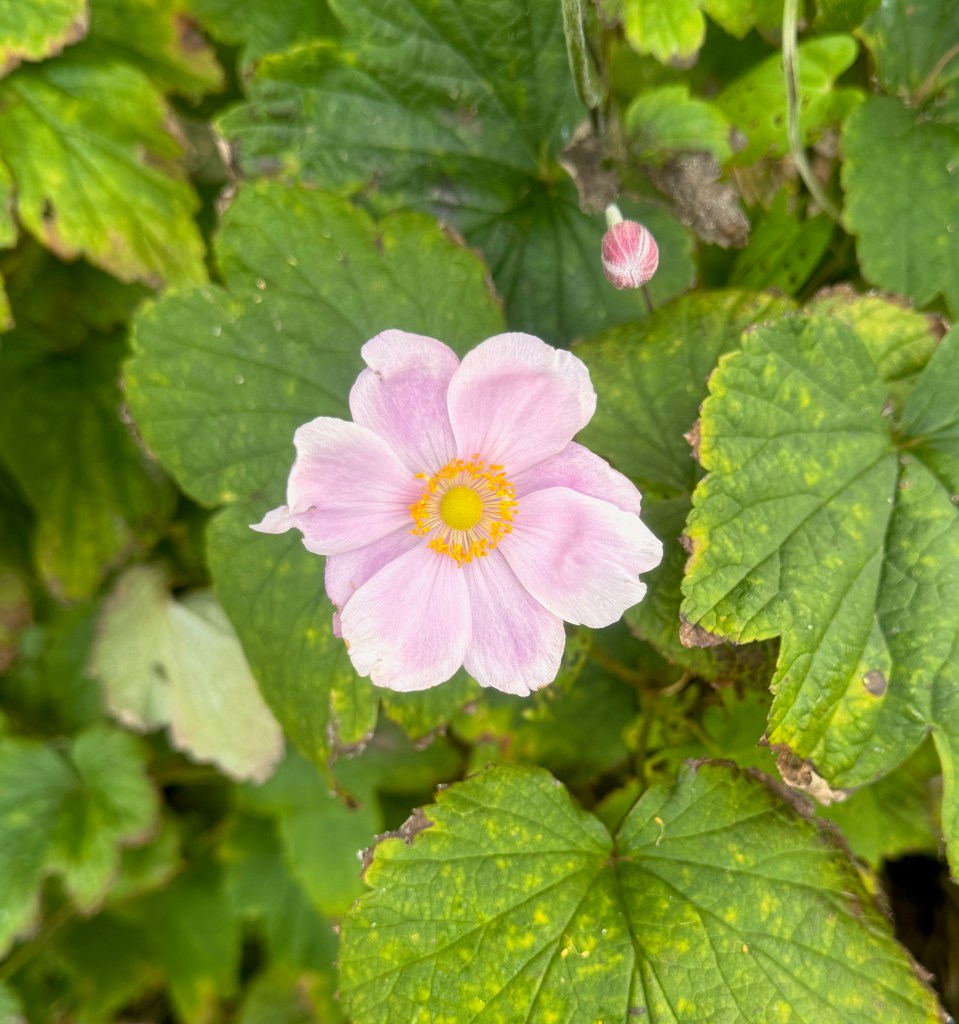
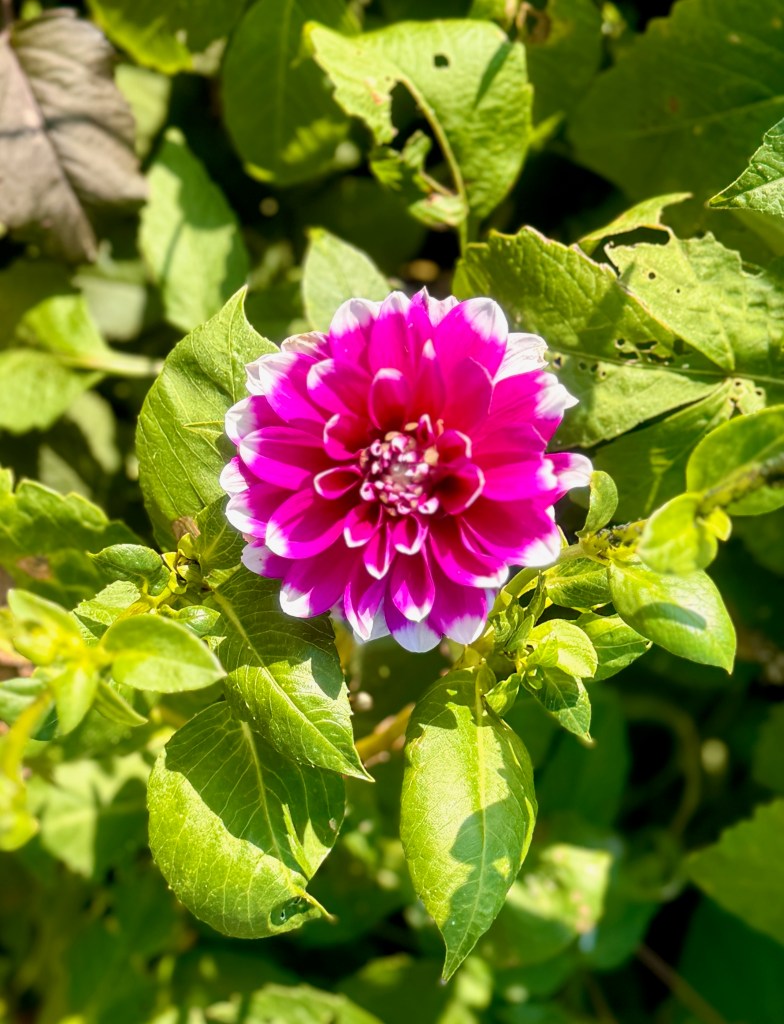
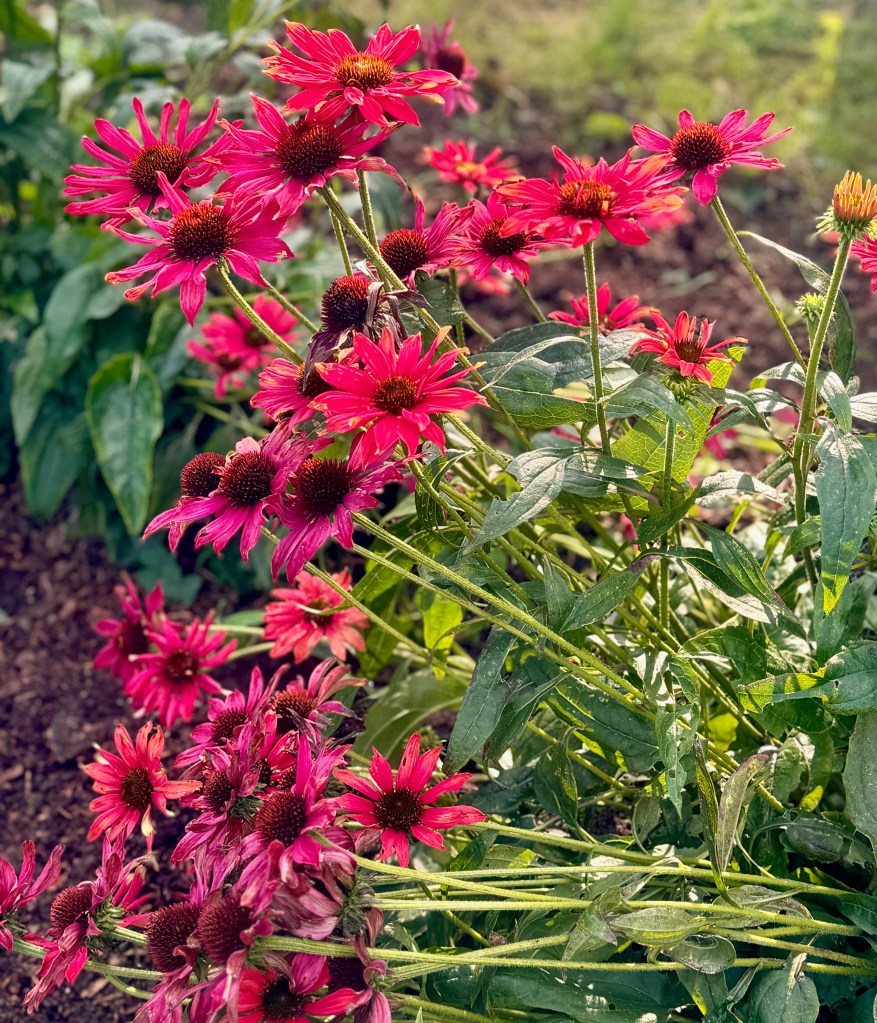
While I can appreciate the formality of a Versailles or Italian gardens with their clipped topiary, their geometrically precise hedges, their measured flower beds, I like the apparent unruliness of English plantings. Of course, the actual gardens are a “planned” unruliness. Every gardener becomes aware of the confines and opportunities of their space. Every gardener recognizes the changing of time with each season.


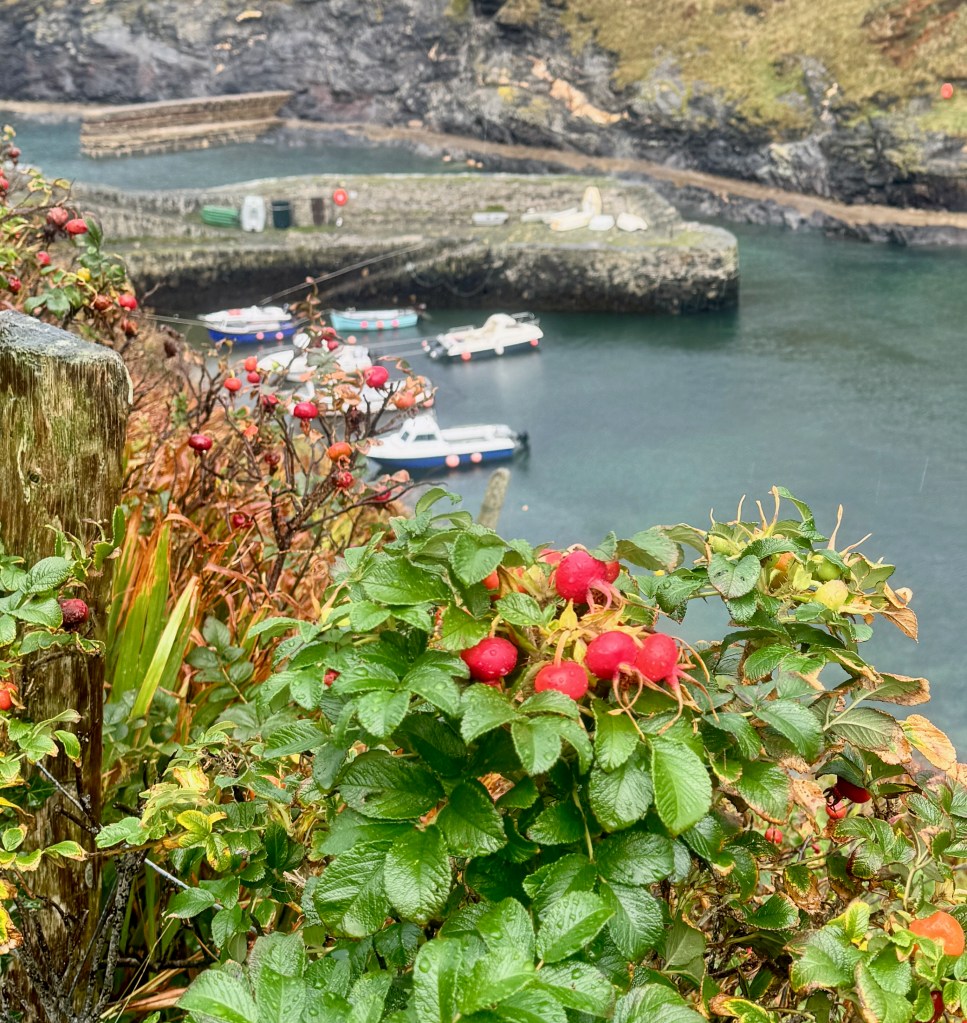
Although the latitude of my walk is quite different, south west England is equivalent to lower Canada, I find so many similar plants. The geography fosters a climate which allows for familiar plants.
Although I don’t walk by many overflowing gardens during this late September walk, I love the variety of flowering plants and shrubs. For the most part, I am hopeless at identifying what I see. Sometimes I say “Darn it, I know that plant, what is it?” Or, “The other day I used the app to identify that plant, what was that name again?” In my better moments, I don’t scold myself, I simply enjoy what is in front of me, below me, or above me. “Ah, that is nice!”
So, enjoy the photos of some of the plants that I’ve seen. Enjoy those plants that I’ve seen, but haven’t a clue as to what their name is. Thoreau, like so many others, penned the words: “Heaven is under our feet as well as over our heads…”

 Journeys: Explorations in Body, Mind, and Spirit