
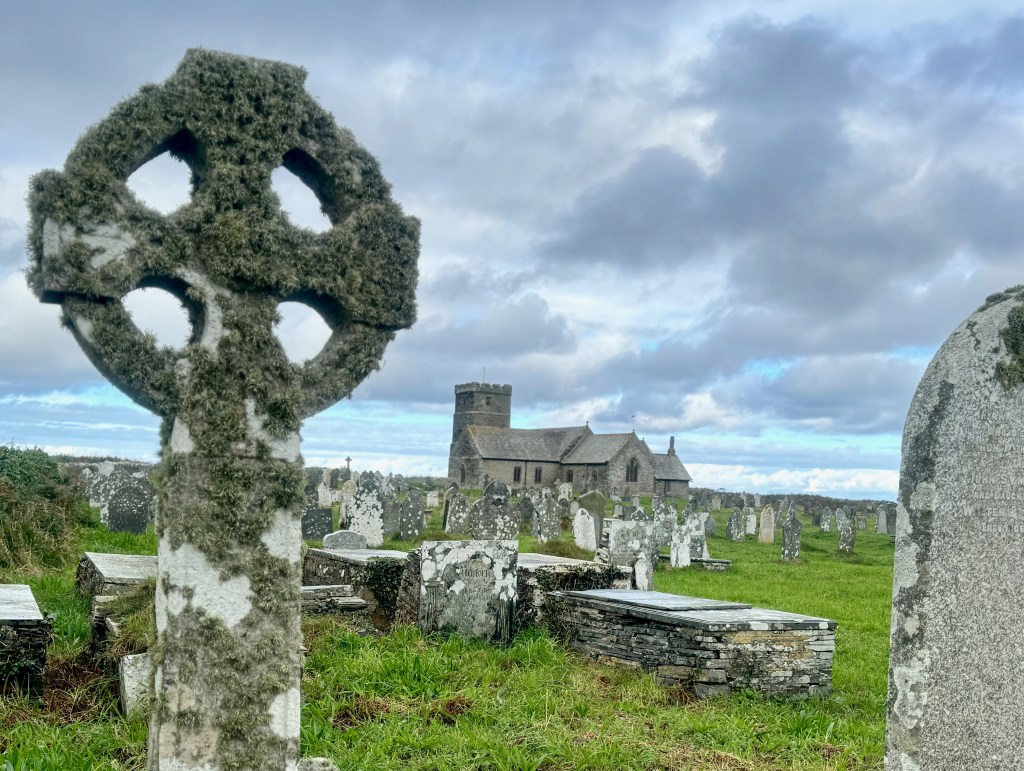
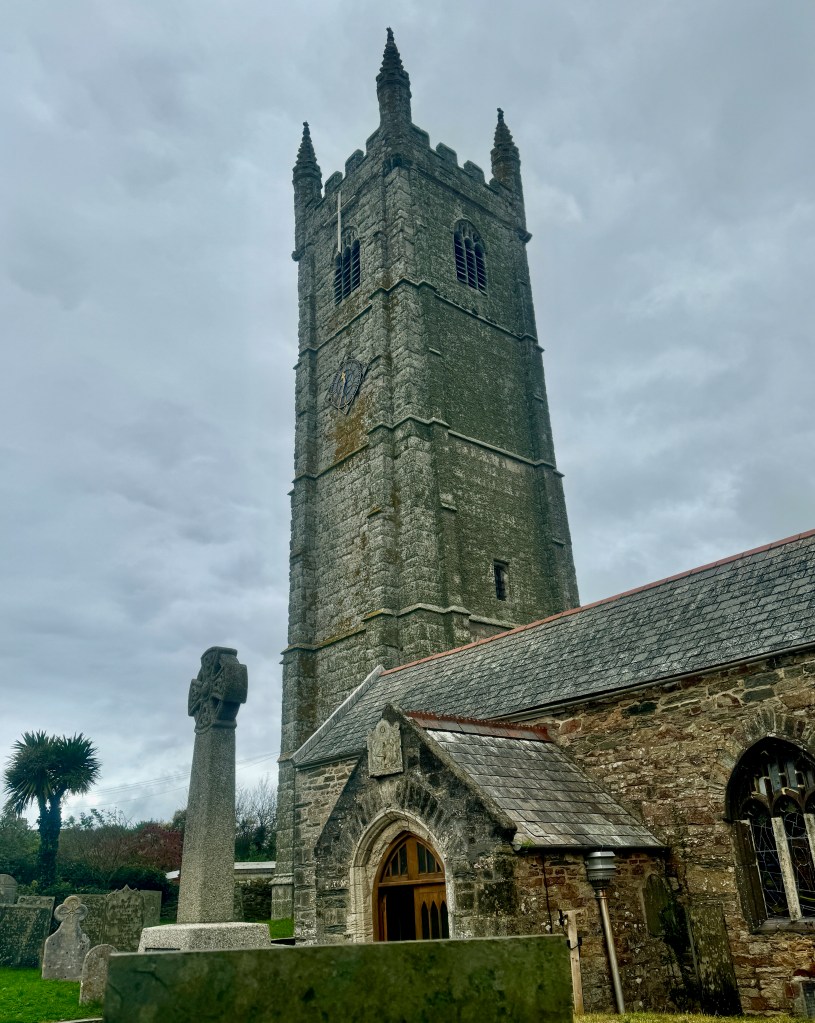
Another quintessential English landscape feature is the parish church. In Cornwall alone, there are over 200 parishes. A lot of churches! Despite many of the medieval Norman style churches “restored” in the mid-late 1800’s, the churches still generally have their characteristic shape. The stone cruciform exterior usually has, but not always, an attached bell tower. The comfortable size interior often has a nave with a single aisle, pews for probably 150-200 people. Some still have stained glass windows; some are dark, with that centuries old, musty smell.
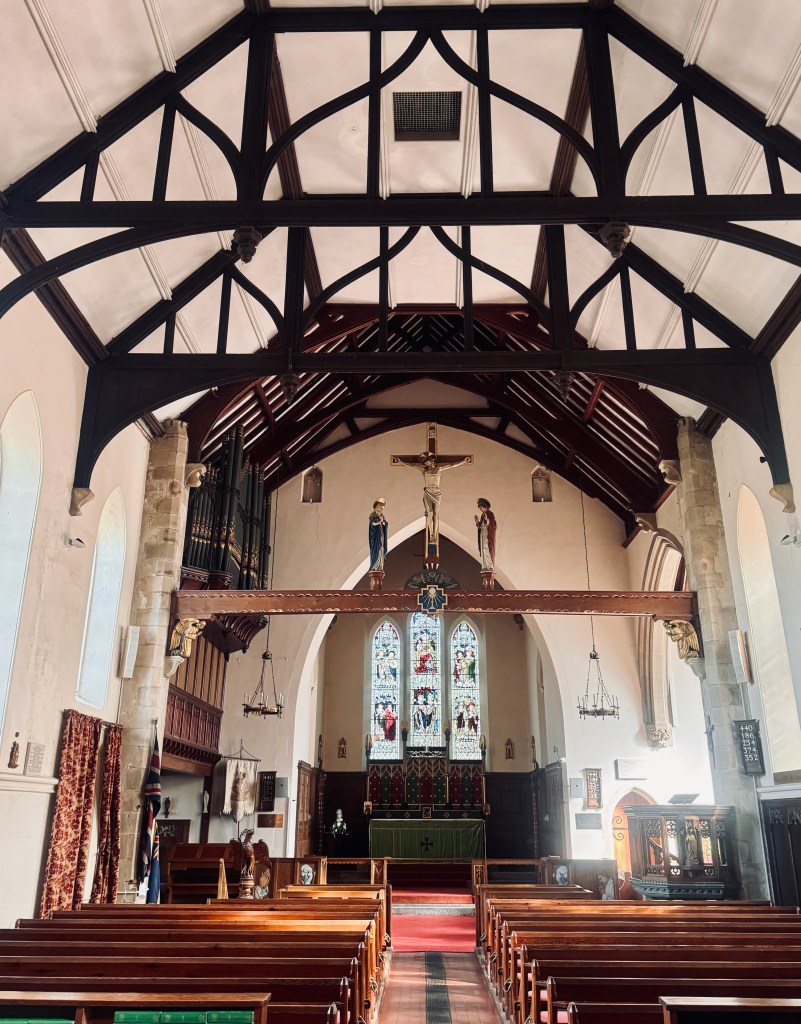

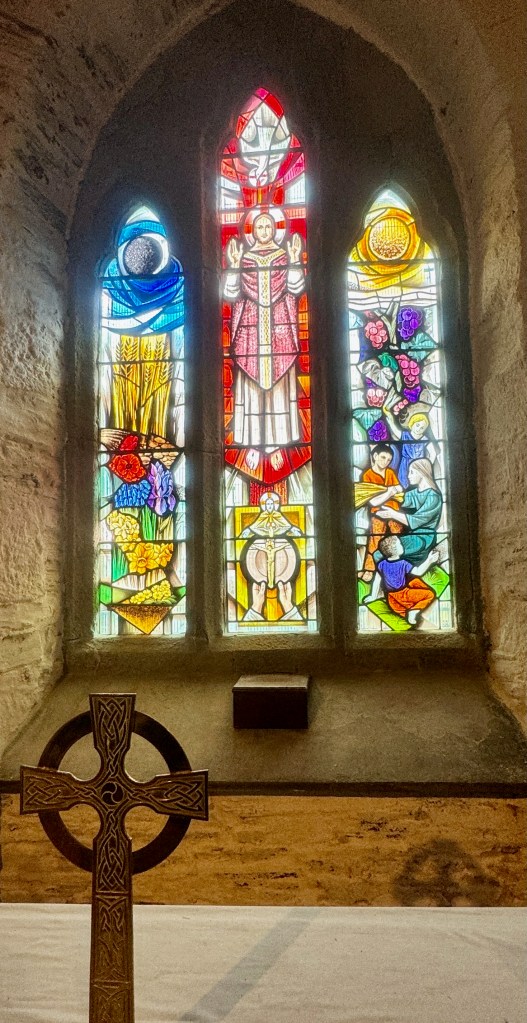
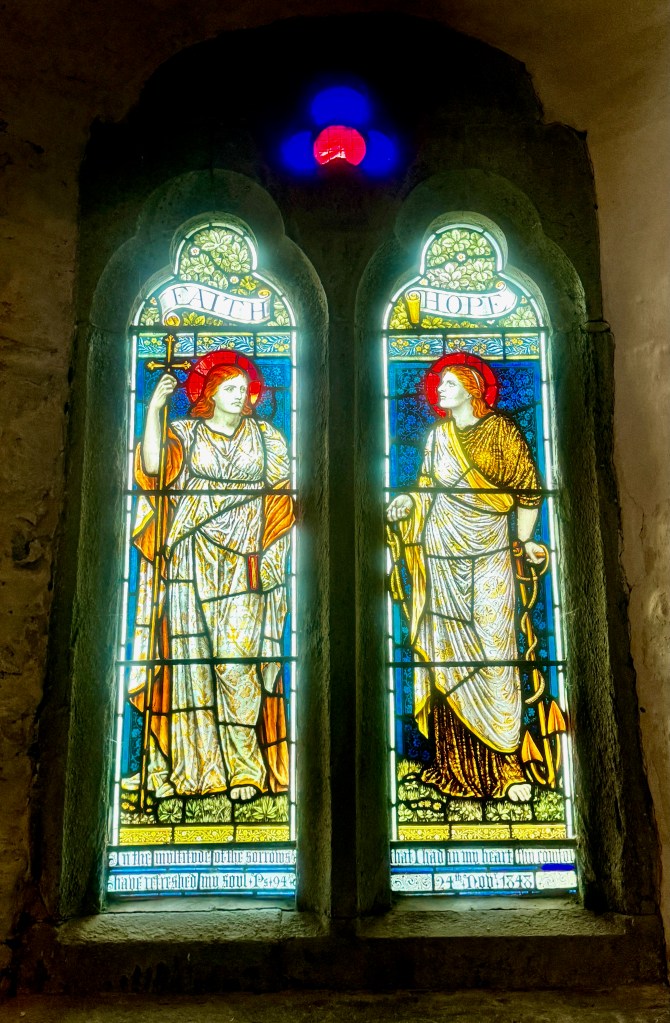

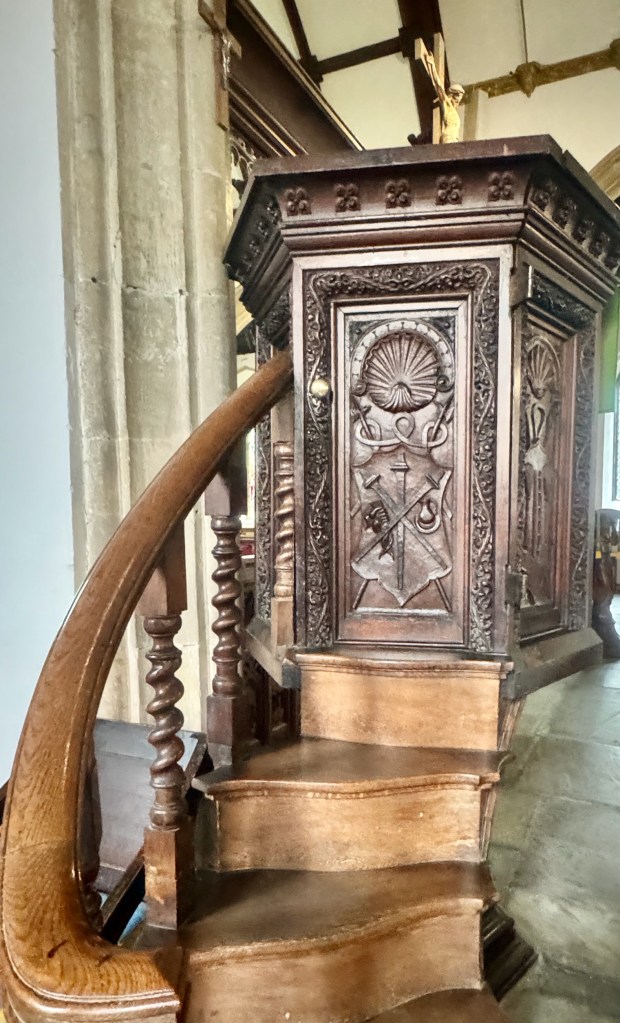
These churches weren’t meant to overwhelm the worshippers as the later Gothic cathedrals did. They were meant to aid in the daily living of ordinary folk, through their uncertain births, trials of work, nervous fulfilling of obligations to rulers, joyful marriages, and confident deaths.
As tangible reminders of the past, I’ve enjoyed walking through the churches and their cemeteries. Since I’m neither veering very far from my walking path nor am I taking a bus to another town on my rest days, I’ve only visited a few.

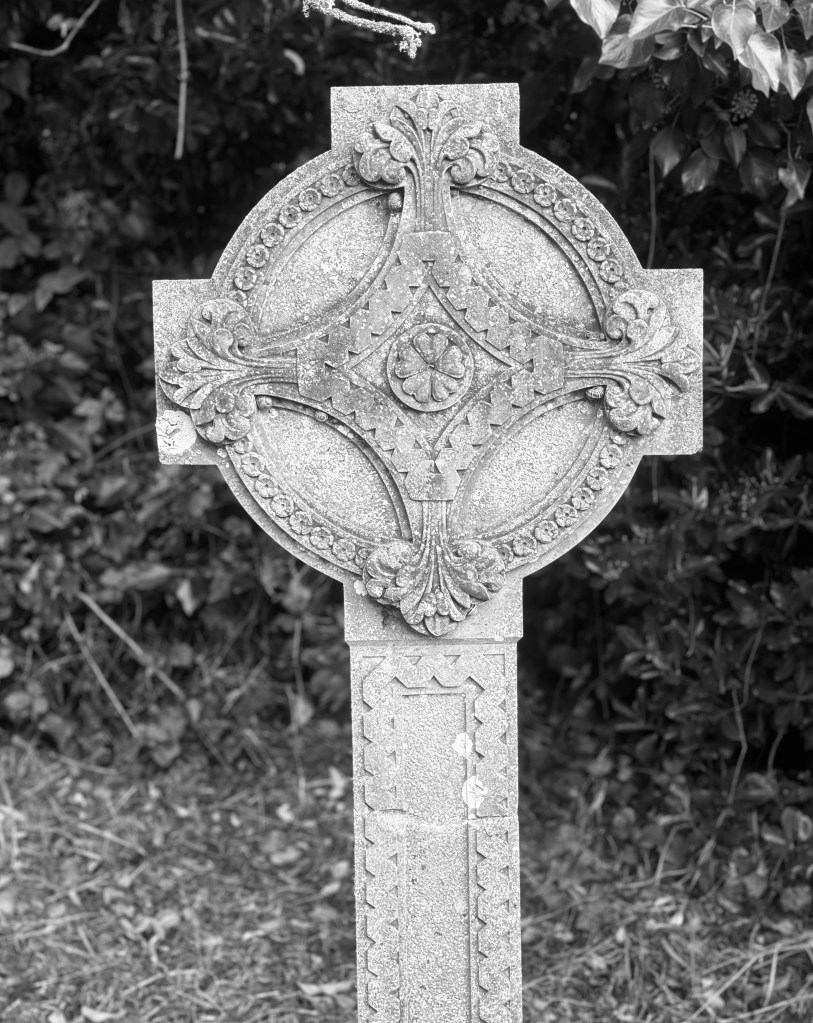
Mentioning the cemeteries, I’ve included a few photos of Celtic crosses, the classical circular section linking the arms of the cross. Although there are many modern replicas, the 9th century Celtic crosses at Iona (Scotland’s Hebrides islands) and Ahenny (Ireland) are usually considered the two major origin places associated with Christian Celtic crosses.
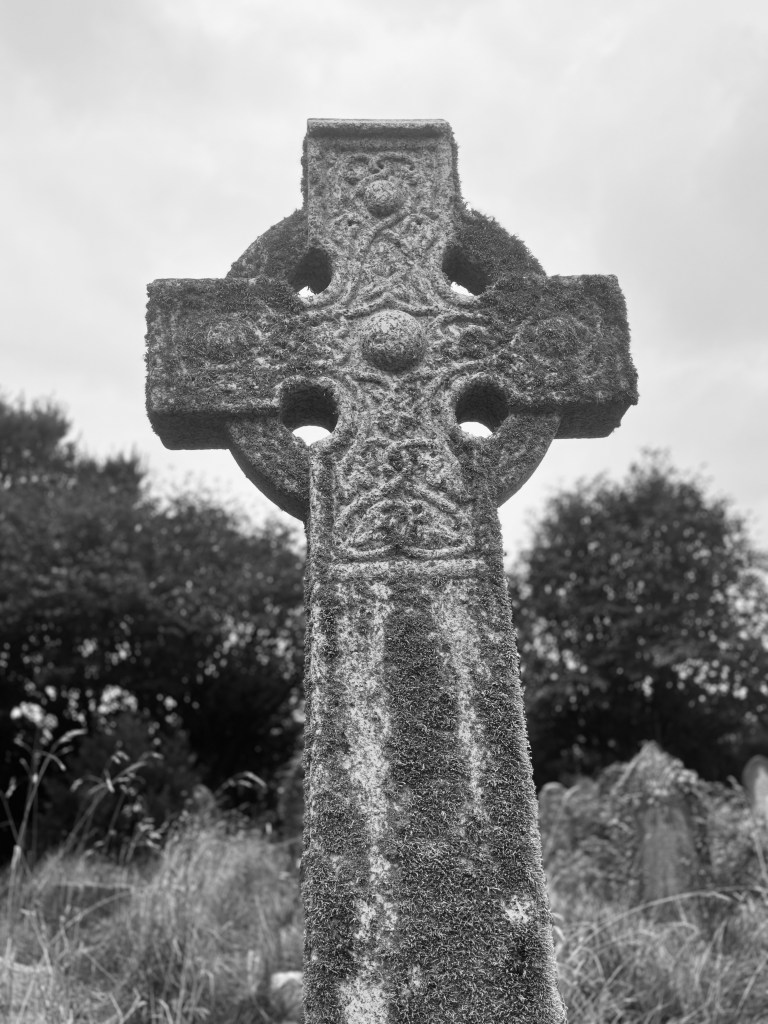

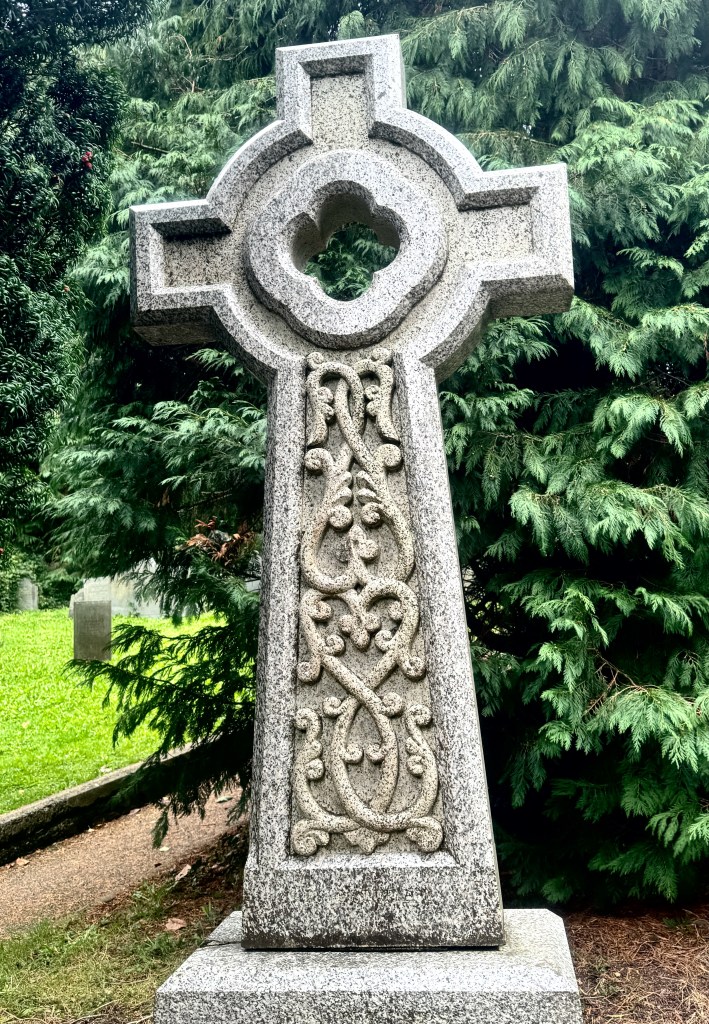
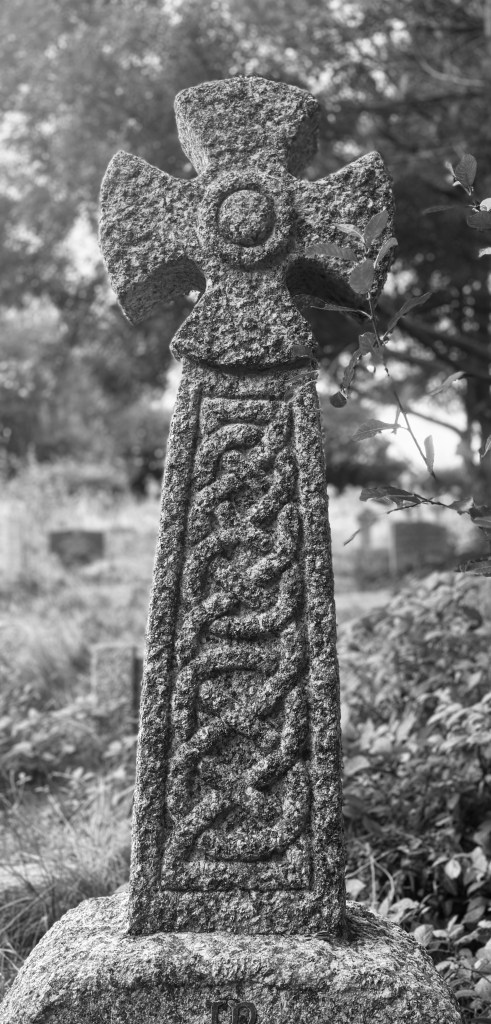
Even with the key circular section, there are a variety of shapes. Two of the most common are the four holed cross and the wheeled cross. There are also a variety of uses. Since burial grounds often preceded the parish church, some Celtic crosses were markers for a cemetery. Later, these and other high crosses were placed near the south entrance to the church. Like the thousands of crucifix markers in France, the Celtic crosses might also mark a road or a land boundary.
It is a cliche, but wandering in these churches and through these cemeteries makes one feel as though I am wandering back in time. The people of old who stood and knelt, heard the Ancient writers words “Enter his gates with thanksgiving and his courts with praise; give thanks to him and bless his name. For the Lord is gracious; his steadfast love is everlasting, and his faithfulness endures from generation to generation.” However, and an important caveat, some of these churches, some of this present generation, seek to be more than simply tangible reminders of the past, the best of these churches and their parishioners seek to be alive to the present. More about that in a future post.
 Journeys: Explorations in Body, Mind, and Spirit