

I’m walking. I’m moving through some woodlands and approaching a grassy field. What do I expect, a stile. I don’t expect stiles in France. I don’t expect stiles in Italy. I expect stiles in England because these ingenious portals allow walkers to cross into fields where sheep, cattle, or horses feed, while assuring those animals will stay in the enclosed field. Although I’m only walking half the South West Coast Path now, I’ve read that there are over 400 stiles along the whole path. Yikes!

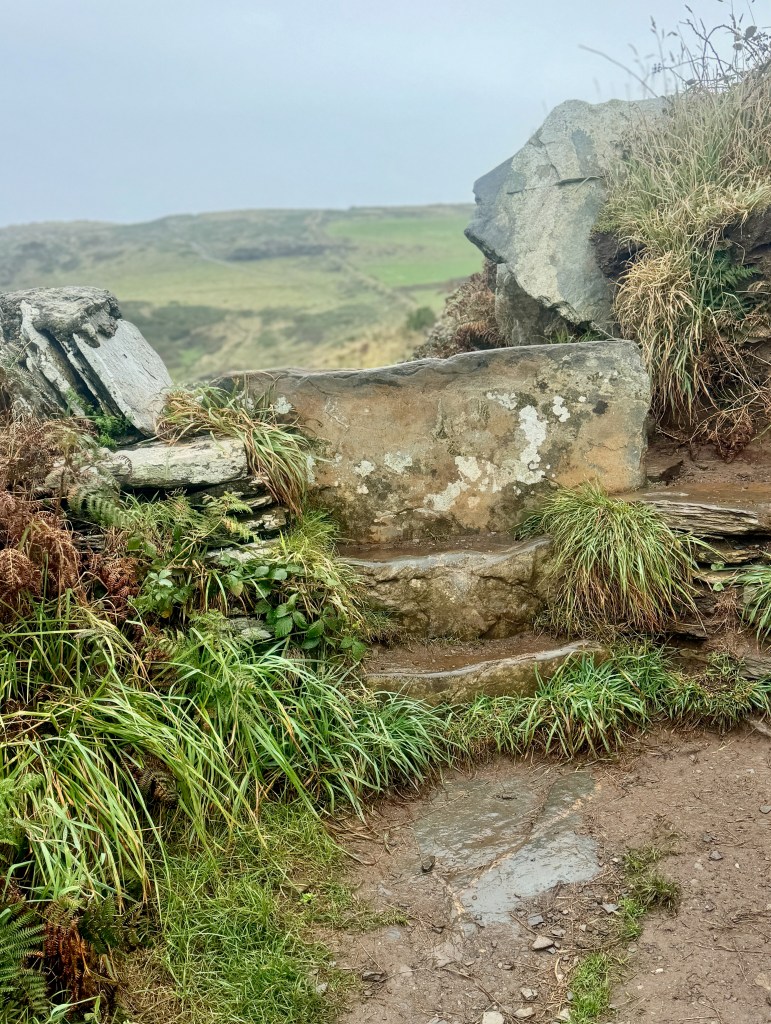
On the surface, stiles come in a wide variety of shapes each with their own aesthetic appeal and operational challenge. The swinging gate latch stile. Unimaginative, but efficient. The “Y” shape stile. I step part way into a rather tight space and swing the gate past me such that I then step clear. No animal will figure this maneuver; most of us with a bit of girth and full backpack have our own “challenge.” Then there is the step over stile. Simple looking, but I always pray that the boards or stones are firm, that there is a post to hold onto, and that I don’t catch a leg as I lift my leg over the top fence slat. Otherwise, a very ugly scene!
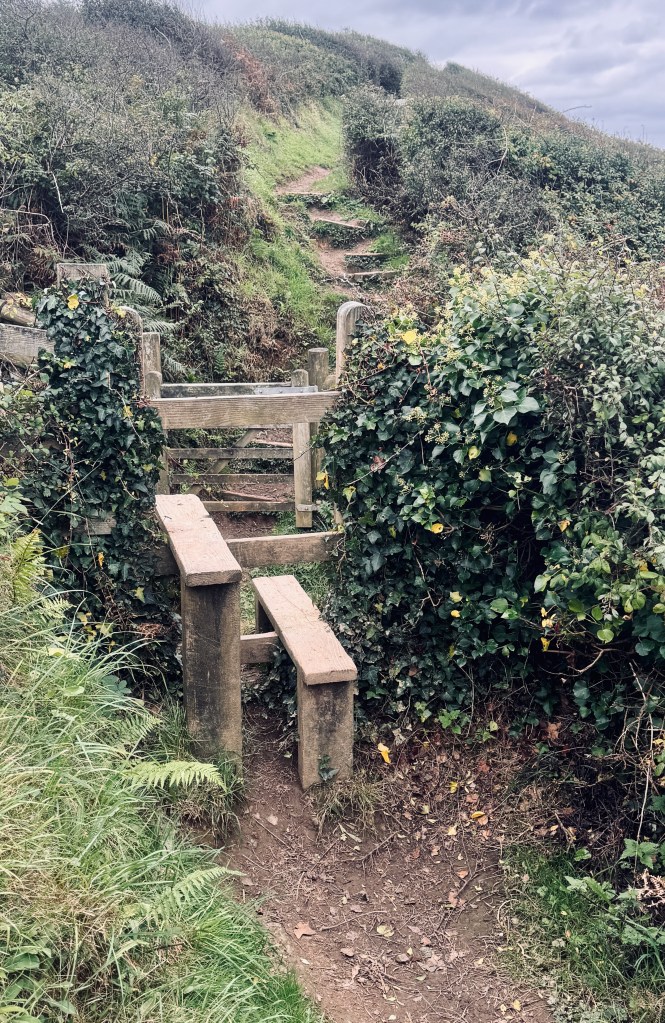
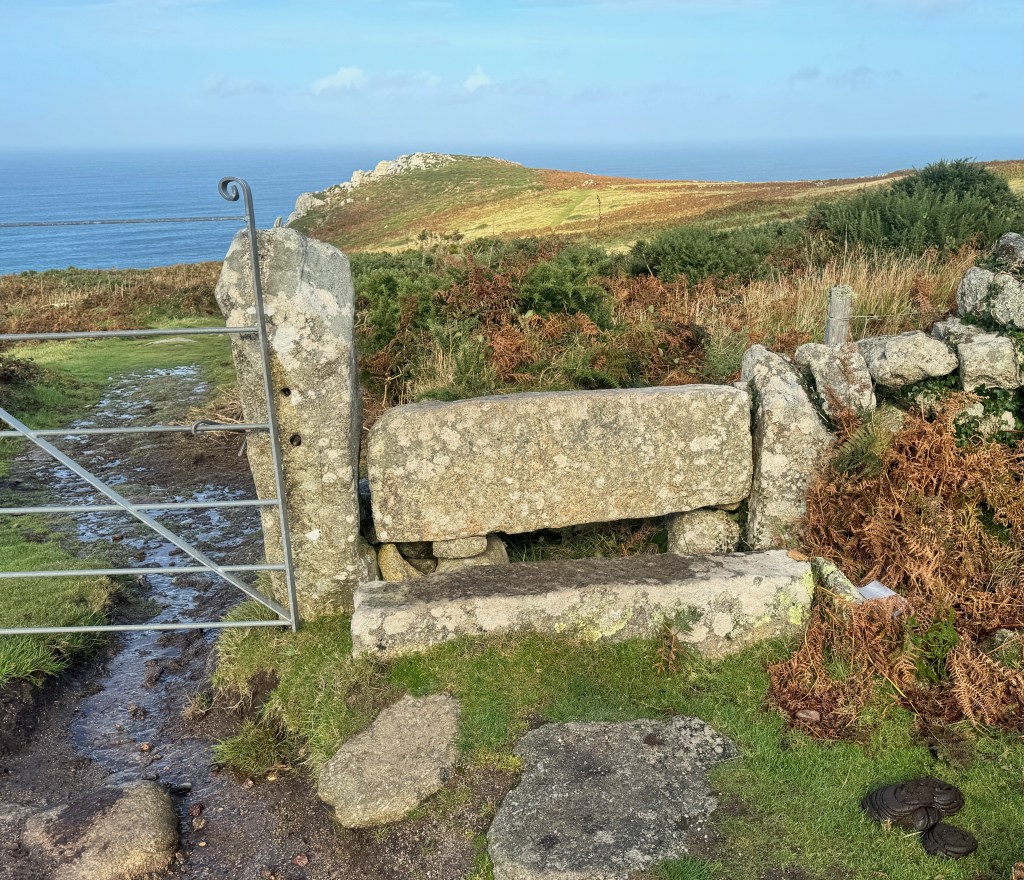

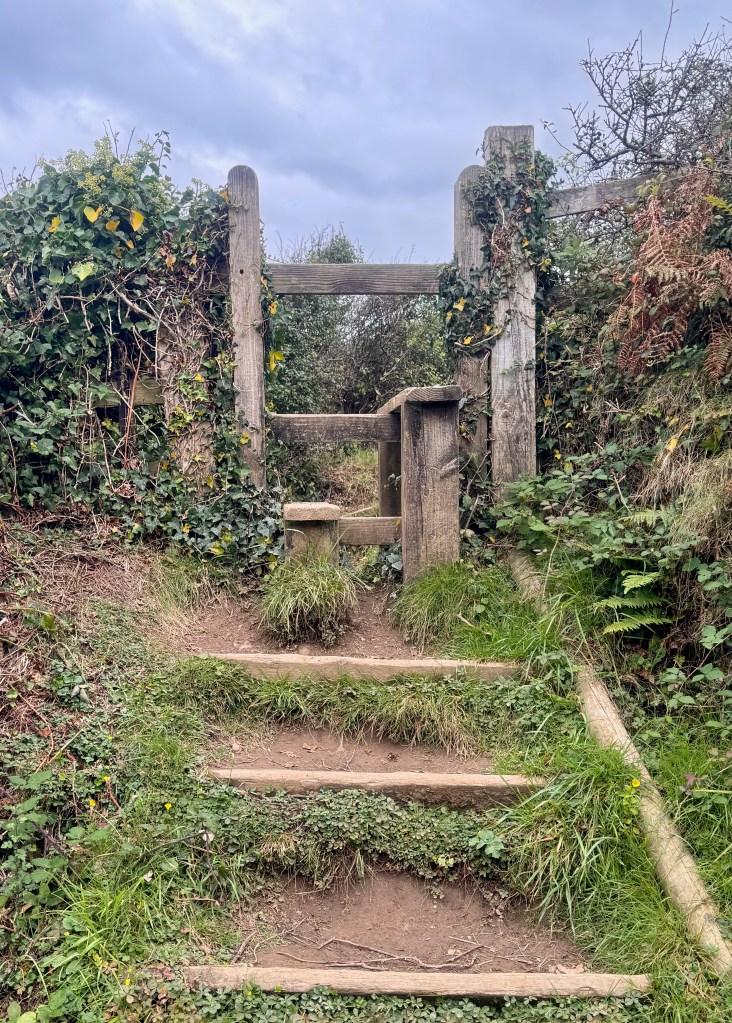
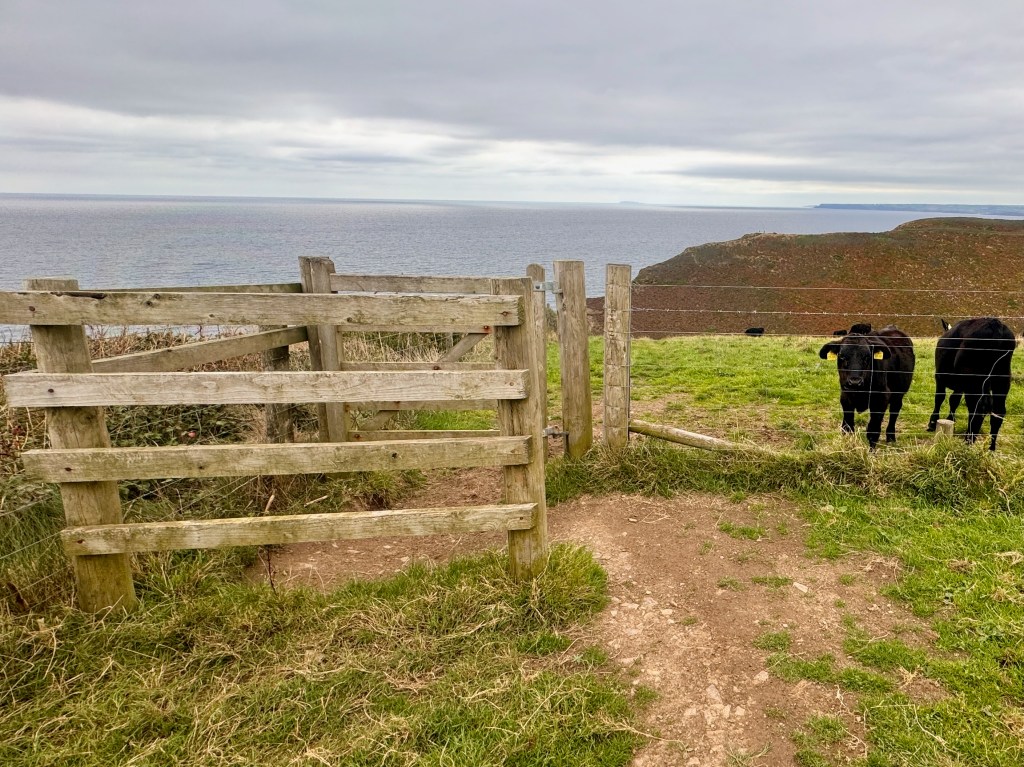
There are other styles. There is the “V” shape. The stile is too narrow for an animal to enter and exit; however, it is progressively wider as it gains height. I have only seen one yet due to the probable ease of smaller animal, lambs or young calves, walking easily through the stile. There is the zig-zag style. With no swing gate, the unseen entrance, a quick change of direction, is supposed to befuddle animals. I guess!
There are other ways to talk about stiles. If I was an economic/ political historian, I could connect stiles to great English changes. When William the Conqueror in 1066 took over England, he distributed the land to 175 of his leading men. 175! What an amazing concentration of wealth and power. Part of the slow grinding of history has been to reduce wealth and power from the many and to increasingly transfer that wealth and power to the many (the Musks and others duly noted). Parliament has passed numerous laws allowing everyday individuals the right of passage across private fields. The Law Act in 1980 requires land owners to maintain stiles on their land. The “Right to Roam” Act of 2000 expanded the range of British walkers. Those walkers encounter stiles everywhere they roam.
If I was a psychologist or Buddhist, I could connect stiles to our construction of imposing boundaries and the need for “gates.” We consciously and unconsciously live within boundaries, many times necessary, sometimes debilitating. We may need to confront these boundaries in order to see what restricts us; we sometimes need to push through the boundaries no matter how painful in order to live more freely “on the other side.” To do so, we pass through a gate, a stile.
Stiles. Beautiful and utilitarian at the same time. Stiles are food for thought on so many levels, literal, historical, metaphorical.
 Journeys: Explorations in Body, Mind, and Spirit