
Mary has arrived. We speed into full tourist mode. This mode of travel has worn me out more than my slow-travel. In slow-travel, I’m exhausted physically with the hard walking; in tourist mode, I’m exhausted physically and mentally because of all the varied and conflicting sensory input. Traveling by trains, buses, and taxi. Coastal views, village views, city views. Plymouth, Dorchester, Poole.
So, I’m catching-up on several days. My topics may not be interesting in a new or startling manner; my manner of writing may not be interesting on these non- interesting topics. But here goes.


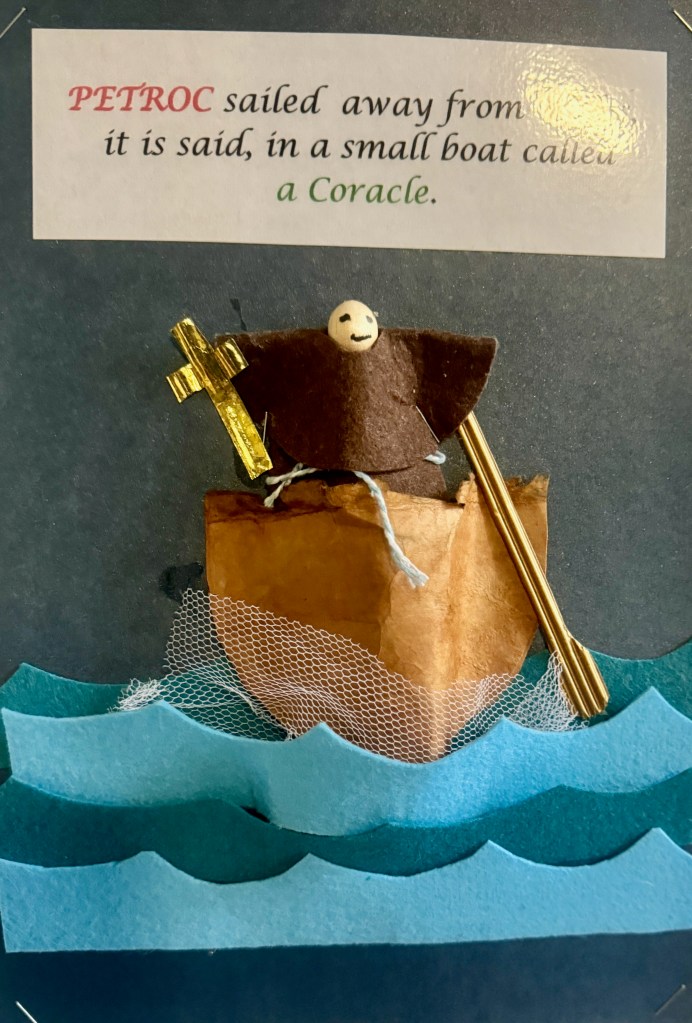
I’ve been walking in the world of Celtic saints. It has been suggested that there are 300 specific Cornwall sites associated with these post-Roman era Celtic saints. The churches often reflect these saints. Saint Bramrock in Braunton; Saint Materiana in Tintagel; St. Petroc’s in Padstow; St. Columb Minor in Newquay. Saints and saints and saints. I’ve stopped at places where one might have successfully emerged from the seas in their small coracle “boat”; where one might have lived as a hermit; where one deemed a well or spring holy; where one might have performed a healing or miracle.
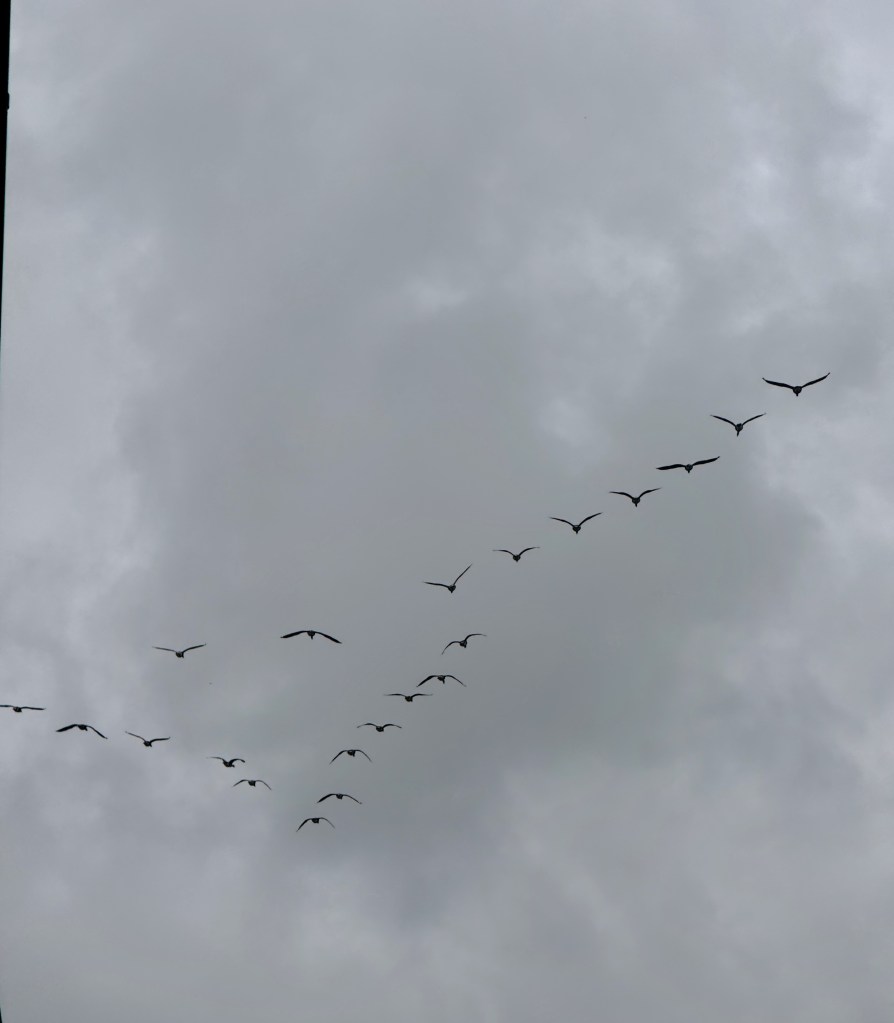

For these saints, as they lived in the natural environment, that environment reflected this different God. Their later prayers frequently use the words of the natural environment in easy, unforced, intimate, “natural” ways. For example, rather than the dove, the wild geese became a symbol of the independent, untamed, movement of the Holy Spirit! In a broad manner, St. Columbanus said, “Understand creation if you would understand the Creator.”
As you probably know, others later claimed that these and other locations were “thin places.” In these places, the usual permanent difference between the infinite and the finite, between the transcendent and the earthly, between God and all-that-is-not- God, reduces such that a greater connection is felt.
In my reading, these Celtic saints viewed God in very traditional ways, the three-in-one, the Triune God of Father, Son, and Holy Spirit. This God is supremely mysterious both in nature and presence. This God is not identified as a pure “nature” god; this God is not some remote and distant God. Different, but not Distant.
These saints called upon this non-distant God. Attributed to St. Patrick in the 5th century, his classic “Lorica”, a prayer for protection, exemplifies this request for help from a non- distant Christ. It begins as follows:
“I arise today
Through a mighty strength, the invocation of the Trinity,
Through belief in the Threeness,
Through confession of the Oneness
of the Creator of creation.”
The later words continue.
“Christ with me,
Christ before me,
Christ behind me,
Christ in me,
Christ beneath me,
Christ above me,
Christ on my right,
Christ on my left,
Christ when I lie down,
Christ when I sit down,
Christ when I arise,
Christ in the heart of every man who thinks of me,
Christ in the mouth of everyone who speaks of me,
Christ in every eye that sees me,
Christ in every ear that hears me.
I arise today
Through a mighty strength, the invocation of the Trinity,
Through belief in the Threeness,
Through confession of the Oneness
of the Creator of creation.”
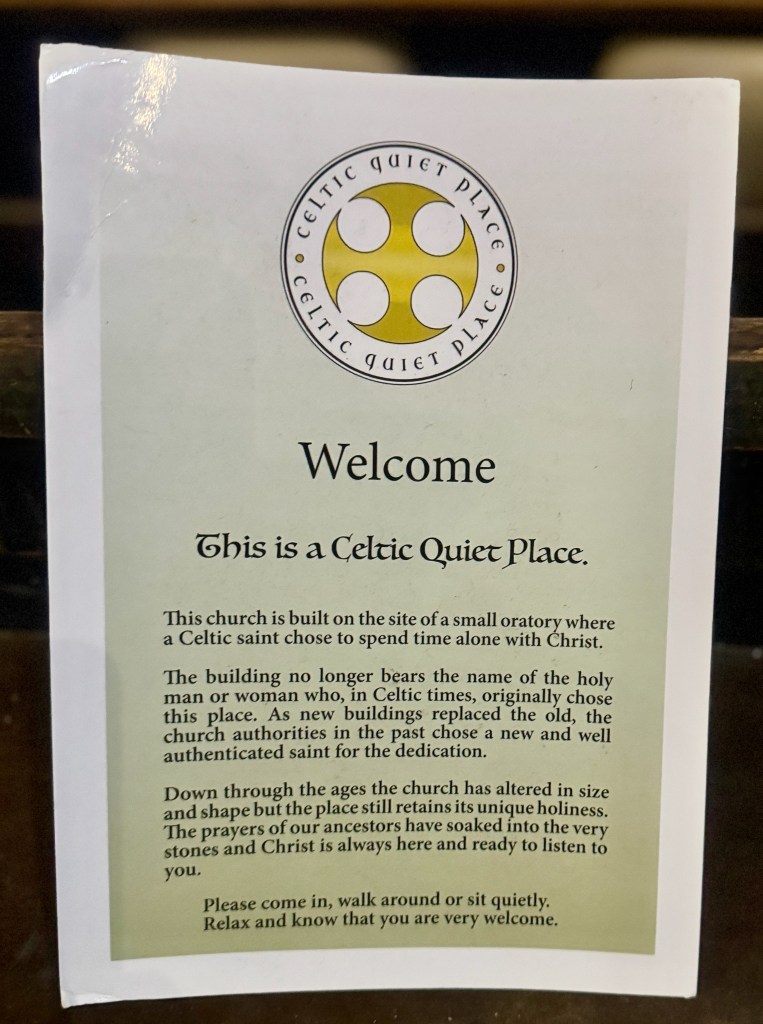
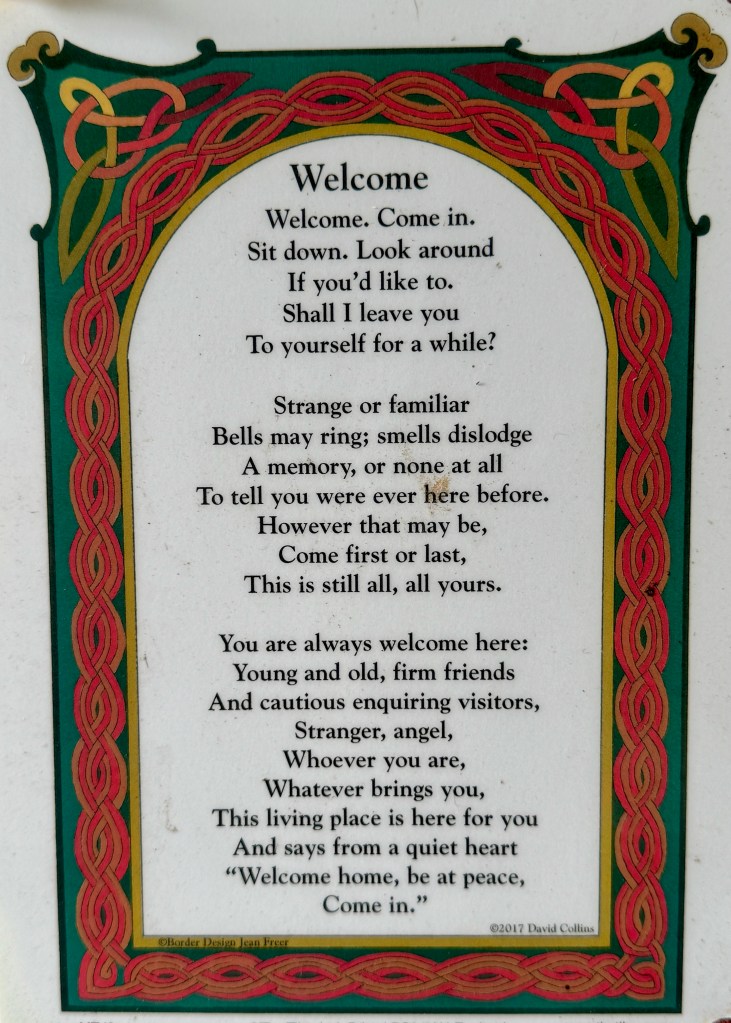
Because of late 19th and 20th revivals, the legacy of these Celtic saints continues today. Having previously visited Iona twice, the arrival place by St. Columba, I was thrilled when the Wells Cathedral used an Iona service for morning prayer. Because of their wide-spread presence in Cornwall, Canon Robinson, a Church of England vicar, formed an association of “Celtic Quiet Places.” “By joining together as Cornish Celtic Quiet Places, we can support one another and offer something unique to Cornwall that celebrates our Celtic heritage, and keeps the doors open all year round. All that is required of each church is that they are open at the times they say they will be and welcoming to all-comers.” In Robinson’s opinion, “Climate change, environmentalism, and the ever-growing stress many people face in their daily lives has resulted in a renewed interest in Celtic Christianity.” This interest is exemplified in one parish where children are taught St. Columba’s history on an old-time felt board. I love it!
With the Synod of Whitby in 7th century, Roman Catholicism’s form of Christianity officially became the sanctioned and dominant form. I, like others, wonder about the “what-if.” What if Celtic Christianity had survived in a more dominant manner? What if?
 Journeys: Explorations in Body, Mind, and Spirit