
I love history. At DePauw University from 1969-1973, I majored in history and religion. Like most programs at that time, my studies were primarily European and American. However, Harvard-trained historian Professor Clifton Phillips taught Modern China, and Professor Cooper, one of my American historians, soon published a collection of primary readings on American women’s history. My senior history thesis was tied to a course on the American Revolution, studied in comparative terms because of the then recent Iranian Revolution. During my first year at Yale, I attended lectures by Professor Sidney Ahlstrom, who wore a plaid jacket, bow tie, and had a flat-cut military style haircut and who published a massive 1000-page history of American religion. Aware that the field of American history was rightfully changing and that his work would be the last of its kind, Ahlstrom emphasized the Puritan influence upon broader American history. Since then, historians have broadened their work.
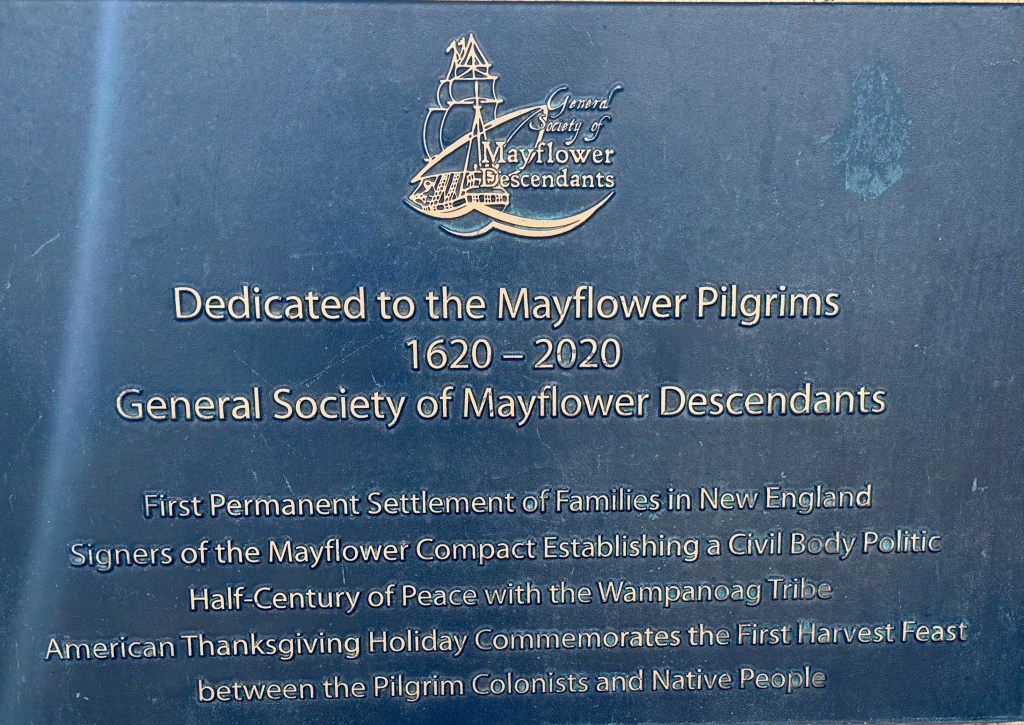
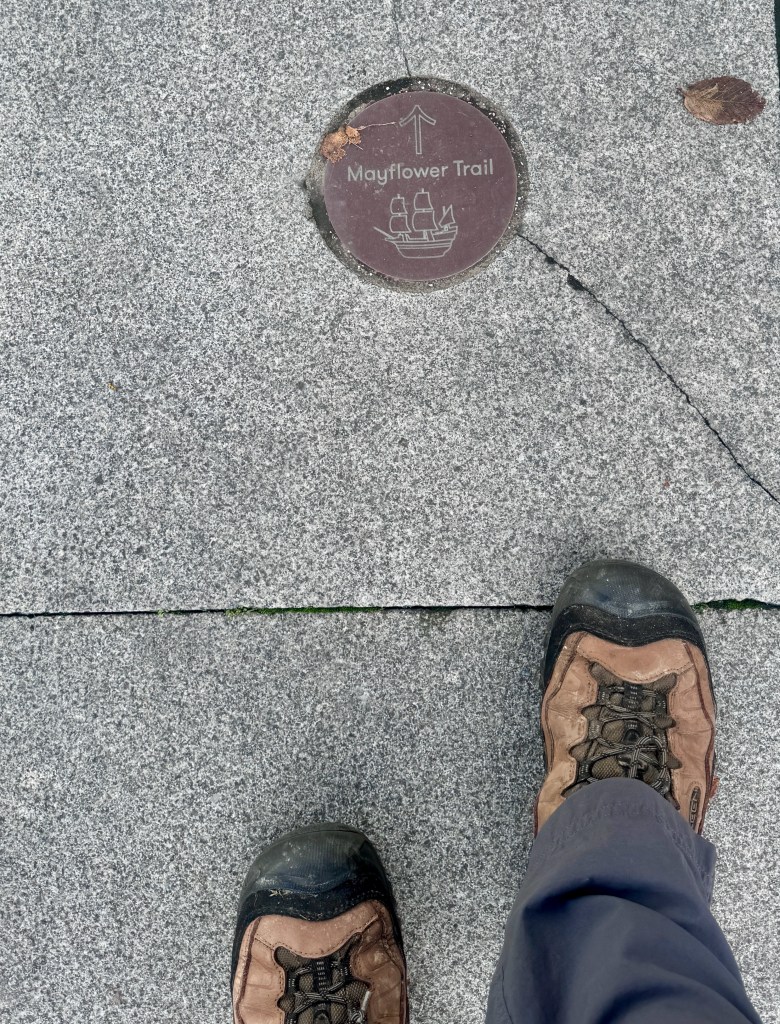
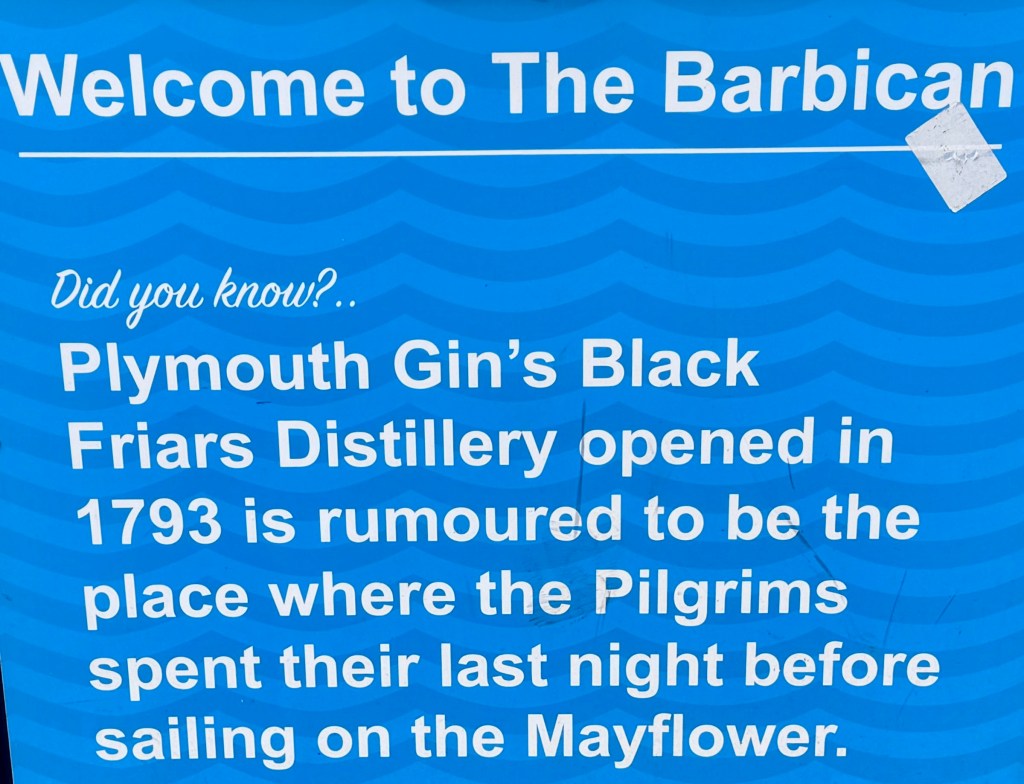

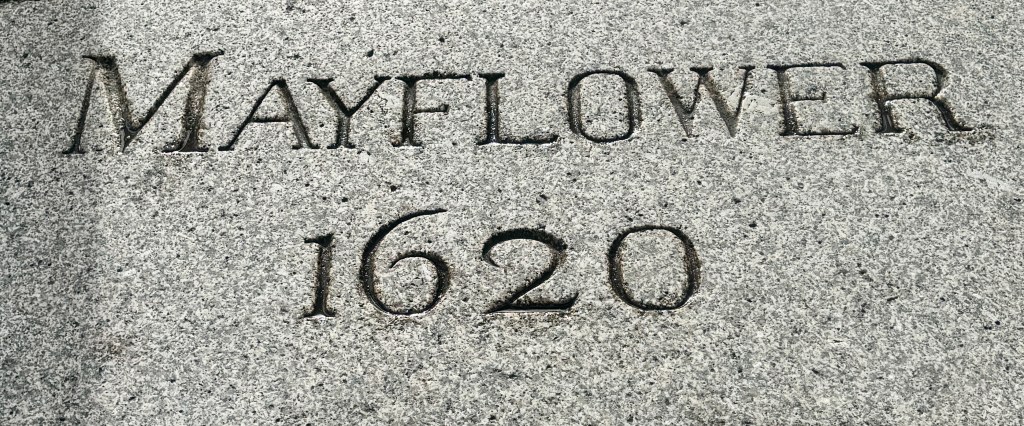
When Mary and I visit the Plymouth Museum, we see evidence of this broadening. The Museum is 100-feet from the unlikely “Plymouth Steps,” the final steps the Pilgrims walked on land to board the Mayflower. “Unlikely” steps because in 1934 a road was built covering the old waterfront and pushing the new waterfront further into the bay. Oh well…
Although not containing original artifacts, Mary and I spent two hours at the small museum. As expected, the Pilgrims are set within English and European history. Escaping King James’ I repression in 1607, some of the Pilgrims settled in moral liberal and tolerant Holland, first in Amsterdam and then Leiden. However, financial difficulties, concerns that their children were becoming more Dutch than English, a surrounding culture’s carefree attitude about honoring the Sabbath and other religious principles, and a growing fear of the Spanish invading the low countries, led these “Separatists” to plan the hazardous voyage to North America.
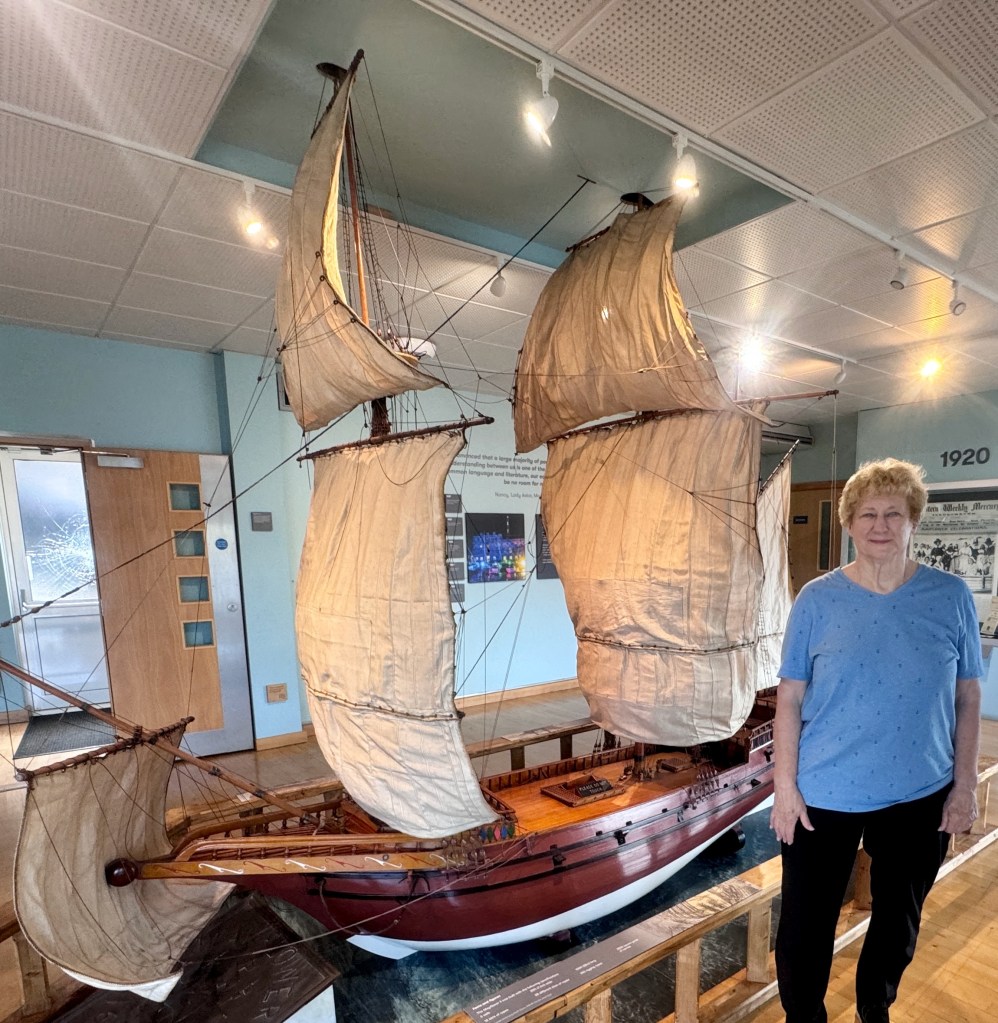

I marvel at the courage of the Pilgrims and the crew in sailing late in the season. Because the sister-ship to the Mayflower, the Speedwell, leaked, the Pilgrims abandoned her. Most of the Pilgrims from the Speedwell crowded onto the Mayflower. The 2800 mile and 64-day voyage had to be harrowing.

I find it hard to read about the Pilgrims’ arrival. I know the tragic impact upon the native-Americans in general, and the Wampanoag tribe in particular. Because of earlier contact with European fishermen, a “Great Dying” had occurred with an estimated 70-90% of the tribe killed. However, I didn’t know some of the other details. Despite a justifiable suspicion, two Native-Americans acted as go-between between the native-Americans and the Pilgrims. One had learned English from this previous contact; one had been taken as a slave, learned English, and eventually returned to this region. Talk about extending a hand of friendship!
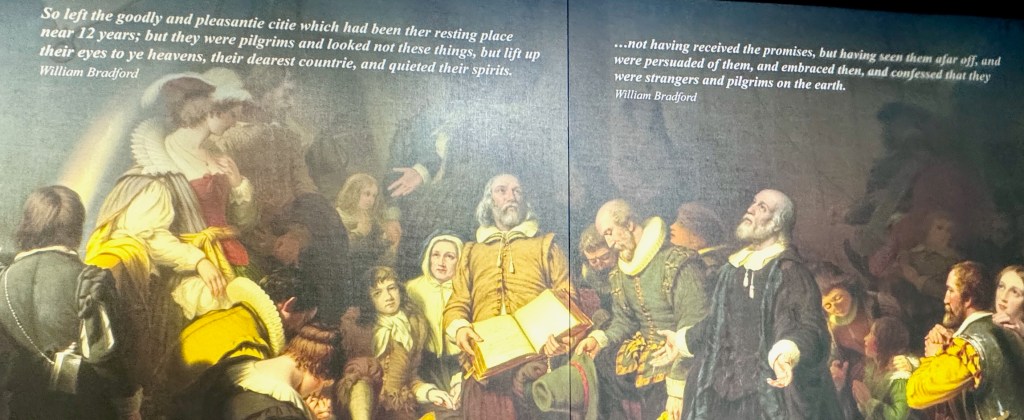
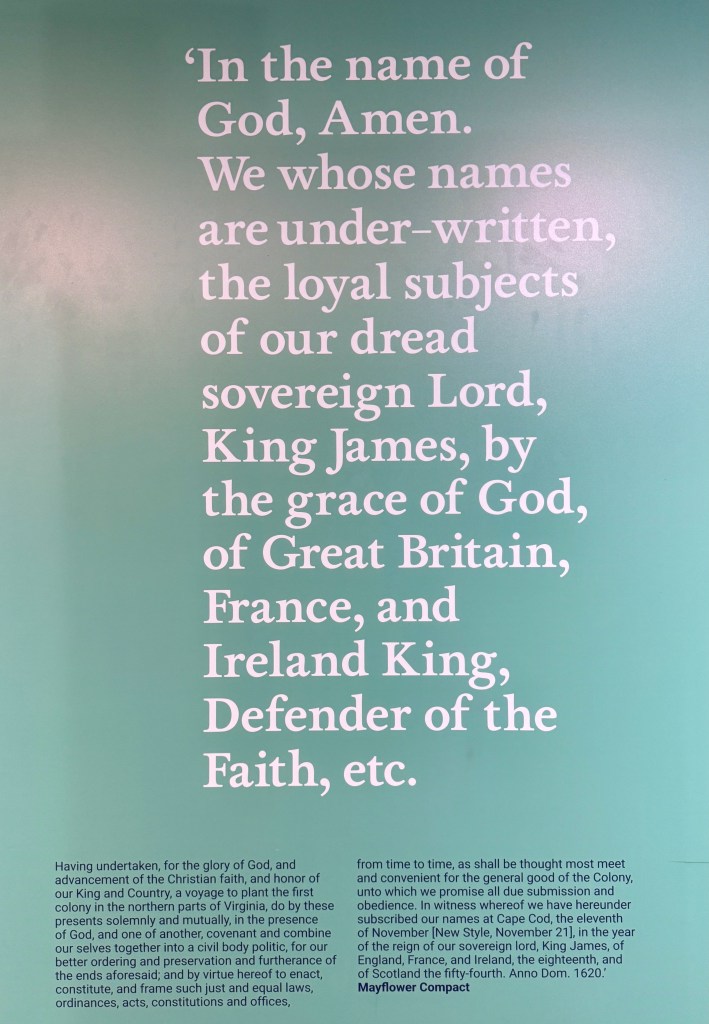
Since the Mayflower Museum is in Plymouth, Plymouth England!, the museum then describes briefly the Pilgrims’ legacy. Again, I along with everybody else knows the agreement reached upon their arrival, the Mayflower Compact, as a step in our movement toward democracy. The Museum does point out though that only males signed the document, no women.


In addition, ironically, in the United States, the term Pilgrims to designate these Separatists really only became a widely used term because of a 1790’s hymn to the Pilgrim forefathers. Interesting! Finally, the English in Plymouth only began to recognize and value their role after the United States assistance in WWI. In 1920, the people of Plymouth put on a pageant celebrating the 300- year anniversary of the Mayflower and the Pilgrims. Isn’t it interesting who shapes and how narratives of crucial historical events originate and gain acceptance!
In less than a week, Mary and I return home to make sure that we exercise our right to participate in this continuing democratic experiment. In a week, I’ll vote against a person who I suspect has not read the few words of the Mayflower Compact. “combine ourselves together into a civil Body Politick, for our better Ordering and Preservation… do enact, constitute, and frame, such just and equal Laws, Ordinances, Acts, Constitutions, and Offices, from time to time, as shall be thought most meet and convenient for the general Good of the Colony.” This candidate and many election deniers reject what we as a “Body Politick” voted for four years ago; this candidate works to deprive members of this “Body Politick” the right to vote now; this candidate makes a mockery of the Christian faith as he manipulates Christians and shows no hesitancy to legitimize extreme right-wing Christian nationalism. On and on and on!

I think William Brewster, Mary’s distant ancestor, is turning over in his grave!
 Journeys: Explorations in Body, Mind, and Spirit