

I’m not the only person to have Bath as my destination. Probably two hours after arriving at London’s Heathrow, I’m on the bus. Since learning that my first days of walking are better if I allow an “adjustment period,” I chose the city that I visited in the mid 1970’s. I am not only visiting a classic English city, but adding my name to a long list of other famous and not-so-famous visitors.

The Romans came as visitors. Although Julius Caesar sent Roman troops into Britannia in 55-54 BCE, the Romans didn’t conquer southern England until 54 AD. Gradually moving west, the Romans discovered the mineral waters of Bath. Always wanting a good bath, the XX Legion “visitors” found themselves turning the three springs in the middle of a basin of hills into a shrine/spa complex. Some experts suggest that water as far as two miles below the surface becomes warmed; then, during the next 5000 years, the water gradually moves back to the earth’s surface. These three springs discharge 250,000 gallons of hot mineral water a day! These Romans made Bath a bit like home with their villas and shrines. They even pitched into the “sacred waters” curses written on pieces of lead. “May the thief of my cloak die.” I guess it could be said of the Romans: “They came, they saw, they conquered, and they cursed.”
Unfortunately for the Saxons, other visitors, the Normans, also liked Bath. After William the Conquerors victory in 1066, the Normans controlled this city for its strategic and commercial importance. To show that they were the “biggest guys around”, the Normans built a cathedral three times the size of the present cathedral. Of course, such a colossal structure couldn’t’ be adequately maintained. More enduring, St. John the Baptist Hospital was built in 1180.
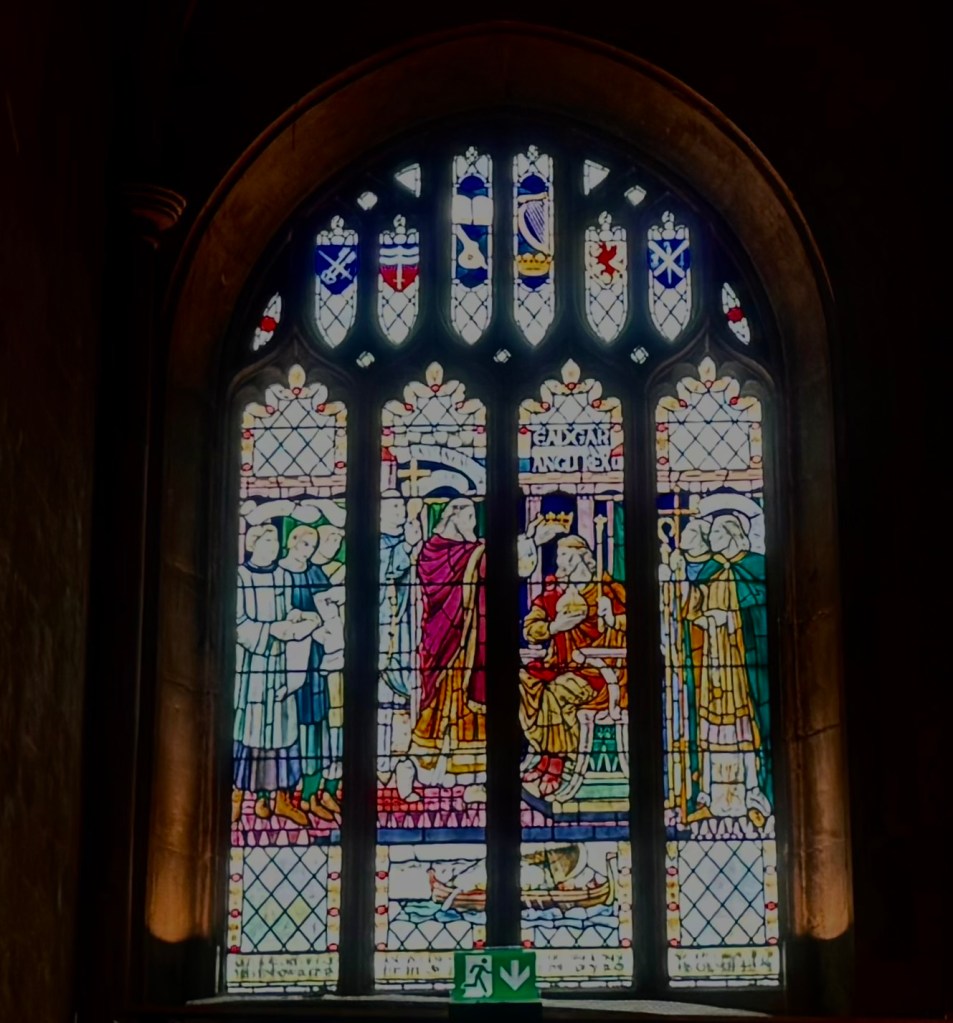
The Saxons also came as visitors. In particular, one Saxon came for a coronation. After the Romans left Britannia, England was divided into three kingdoms. Eventually, King Edgar unified England. The Archbishops of Canterbury and York crowned him King Edgar the Peacemaker in 973 CE. When King Charles III was crowned recently, his coronation service borrowed some of the features of this coronation of King Edgar, the first English king.
Before the great plagues, the medieval period did have its visitors. Chaucer describes the wife of Bath as an “expert in cloth making, better than the clothiers of Ypres and Ghent.” Apparently, visitors came, either as wealthy visitors to purchase cloth or with dreams of making a living through the cloth industry.
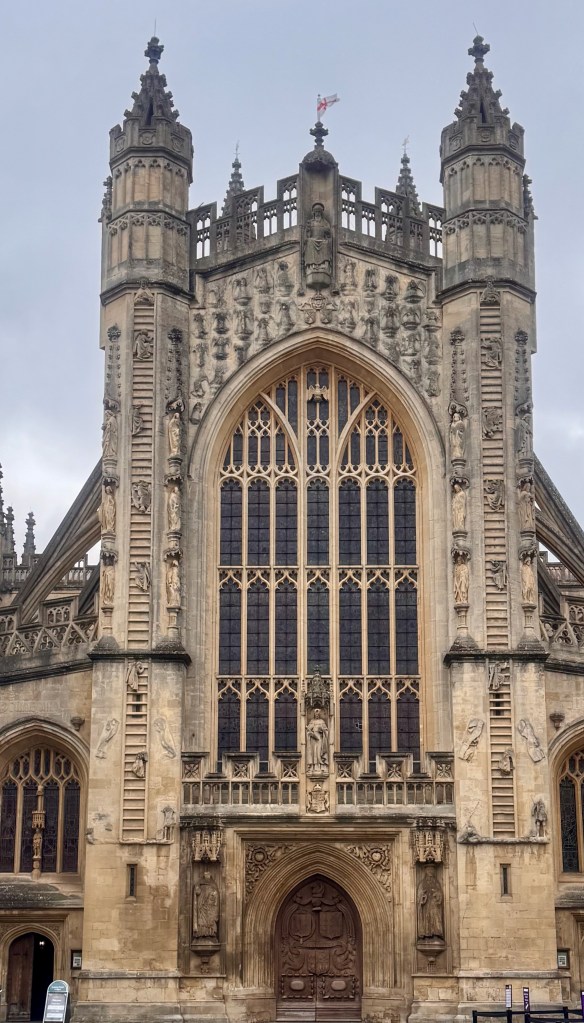
By the early modern period, visitors returned to a recovered Bath. Some for religious reasons, some for health, some for riches. With the Abbey Church of St Peter and St Paul replacing the earlier cathedral, with its wonderful depiction of Jacob’s Ladder on the exterior, religious officials and the faithful returned.

When Queen Anne visited in 1613-1614 to have the waters of Bath help her gout, others took notice. Within a hundred years, men such as “Beau” Nash (Beautiful Nash), arrived as visitors only to stay. Nash, an Oxford drop-out who saw a potential fortune to be made by luring English aristocrats who didn’t mind parting with their money at the gambling tables, became the “King of Bath” as he promoted Bath as a leisure resort for the rich and wealth. The perpetual traveler on 18th century English roads, even John Wesley visited Bath. Nash tried to stop Wesley from “scaring people out of their wits” by his preaching. To no avail.
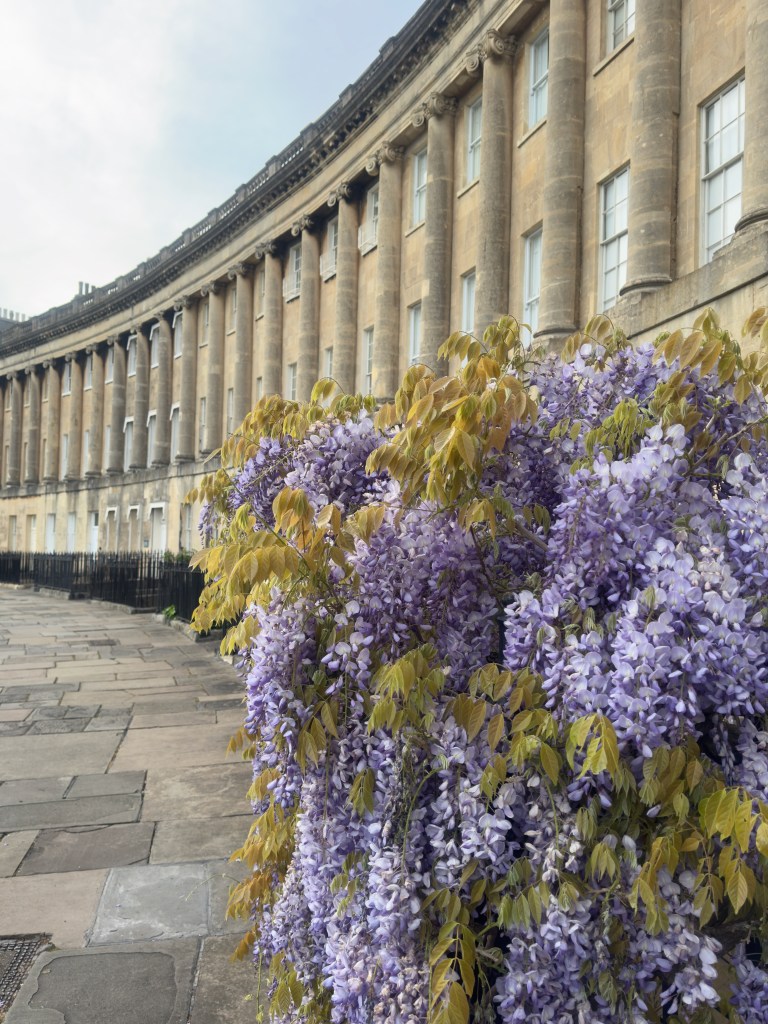

From the 1700’s into the 1800’s, Bath became “the” city. Beautiful Georgian buildings, known for their symmetry and classic elegance, were built throughout the city. More visitors with their own motives came. Jane Austen’s father, a Vicar, retired here. As his daughter Jane Austen wandered the streets and talked with people, she found the inspiration and the material to write Persuasion and Northangar Abbey. William Wordsworth visited several times, for example in 1841 for his daughter’s wedding. Charles Dickens visited and use Bath in his The Pickwick Papers. Mary Shelley lived in Bath and wrote a major portion of the classic Frankenstein in Bath.


Of course, not all the visitors were famous. Some came from London and elsewhere as wealthy gentleman or as “splendid fellows” who could “take, hold, and enjoy” their drink. To show their wealth though, these gentlemen and their ladies had to be carried around the city. No walking for them.
Time brings changes though. Although Princess Victoria visited Bath in 1811, she never returned. By the mid-1800’s visitors no longer desired mineral waters of Bath, rather they desired the salt water of Brighton and the English Channel.
Time brought other changes. Although King Haile Selassie of Ethiopia resided here in exile during WWII, Germans visited the city with bombs during the “Baedeker Raid” of April 1942. The Germans picked numerous three-star Baedeker British tourist cities upon which to drop their bombs. Definitely unwelcome visitors!
Of course, there are the locals who aren’t impressed with any of the visitors to their cities. They have more important things to keep on top of, or simply to take a break from their work.


So, I’m simply one of many visitors to this wonderful, walkable city. So many different visitors; so many different motives. Oh, and of course, there are those who don’t come as visitors; there are those who call Bath home.
 Journeys: Explorations in Body, Mind, and Spirit