
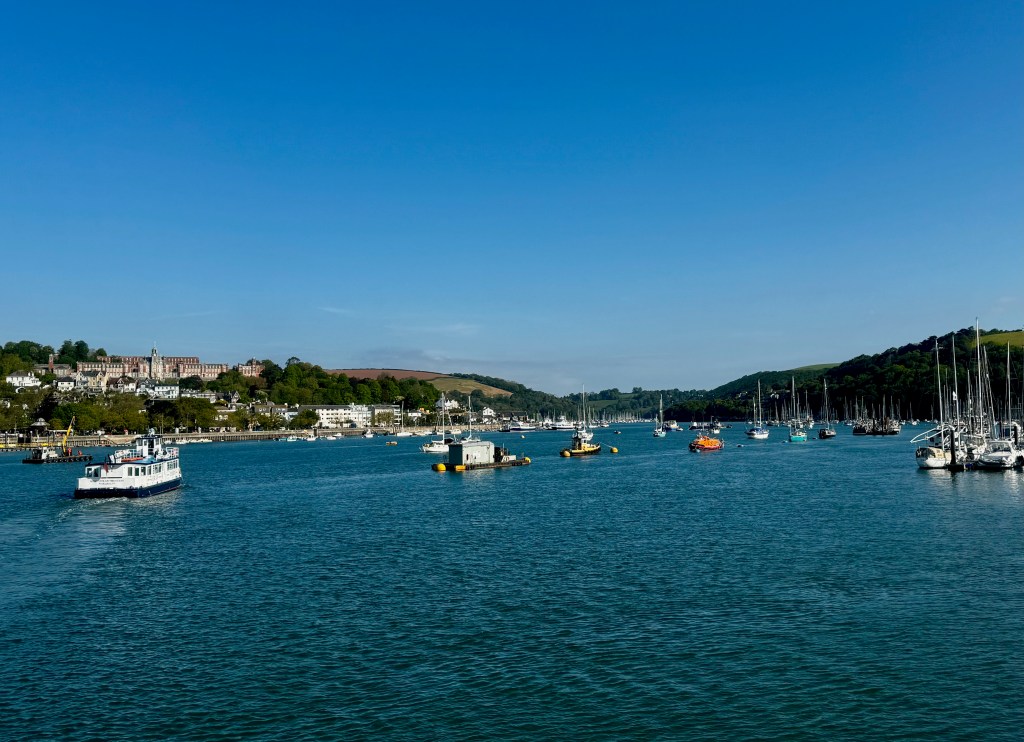
Since I’m walking, I’m not paddling or canoeing. I’m not paddling down the Flint River here in Georgia; I’m not canoeing down the Mississippi. Yet, I have my encounters with water. While I haven’t had to bushwhack, I have to figure out how to cross rivers and estuaries. Probably one every two or three days. Unlike my other walks (except for the memorable crossing Italy’s Po River on Danilo’s ferry), I find that many of these crossings can’t be accomplished with the help of a bridge.
The River Fowey. The River Looe. The River Tamar. The River Erme. The River Avon.The River Yealm. The River Dart. The River Exe. These I can name quickly. If I bothered to look, I’m sure that I crossed several others.
Because of the lack of inexpensive accommodations, I like other walkers, stay with a BnB host who is several miles inland. The host usually cautions me about the river crossing the next day. In Wimberly, my host warns me: “If the walker crossed the river that day, they almost always here arrive wet. I ask them how far did they get? They’ll always say ‘I was only 10-yards from the bank, then I fell.’” He chuckles and continues: “That is where the channel deepens! Gets them every time.” The next morning I arrange for a taxi to take me several miles to the other side of the river, no wading for me. Of course, that morning I watch as another fellow successfully walks across the river without falling!
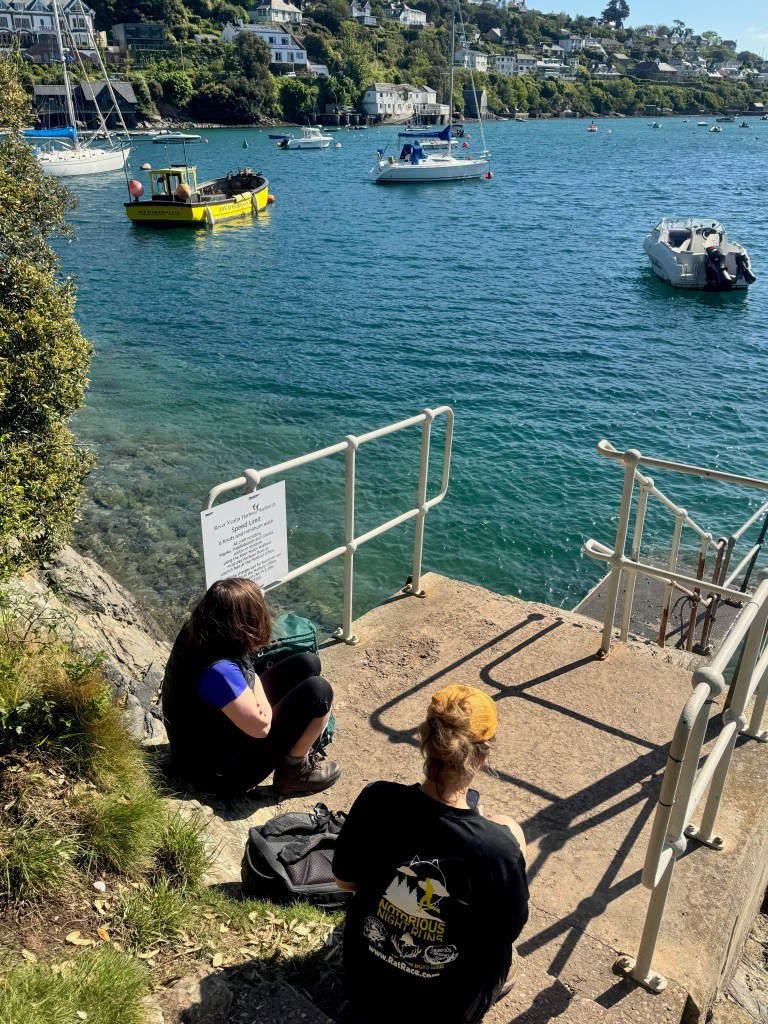
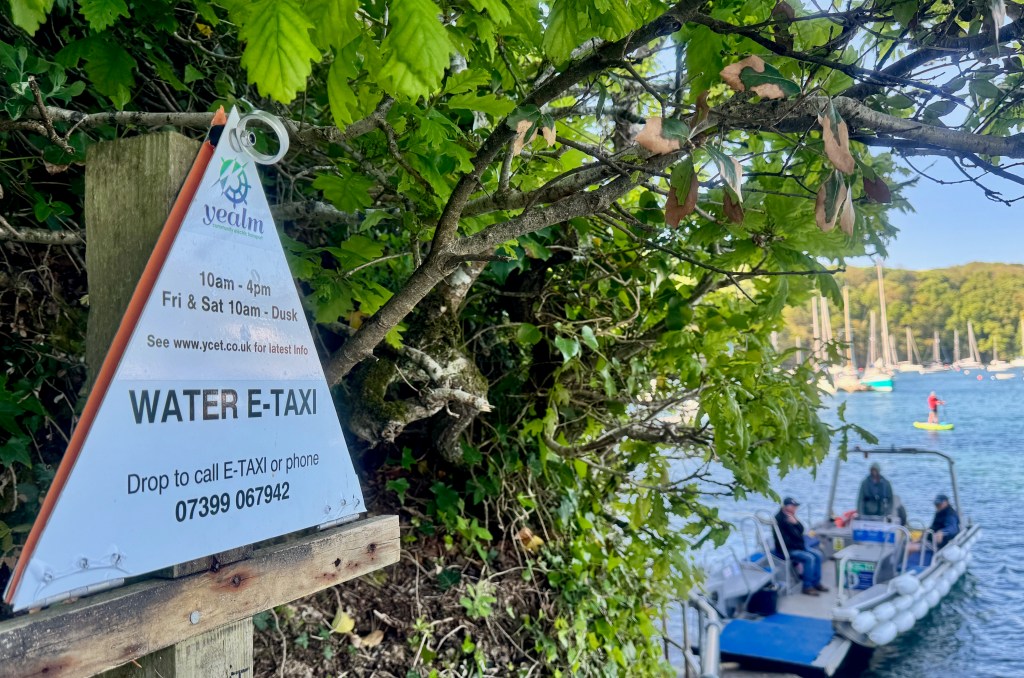
I find the ferry crossings interesting. There is no assurance that a ferry or “water-taxi” is running. In some cases, I have to arrive during high tide or an hour before or after high-tide. If I don’t arrive during high-tide, I simply wait. In some cases, I flip a large triangular or round sign to show the ferry operator on the other side of the river that I need a ride. In order to cross the River Avon, my guidebook says “Clang the bell, shout, and wave your arms.” Unfortunately, the bell didn’t have a clapper so I had to do a lot of waving.
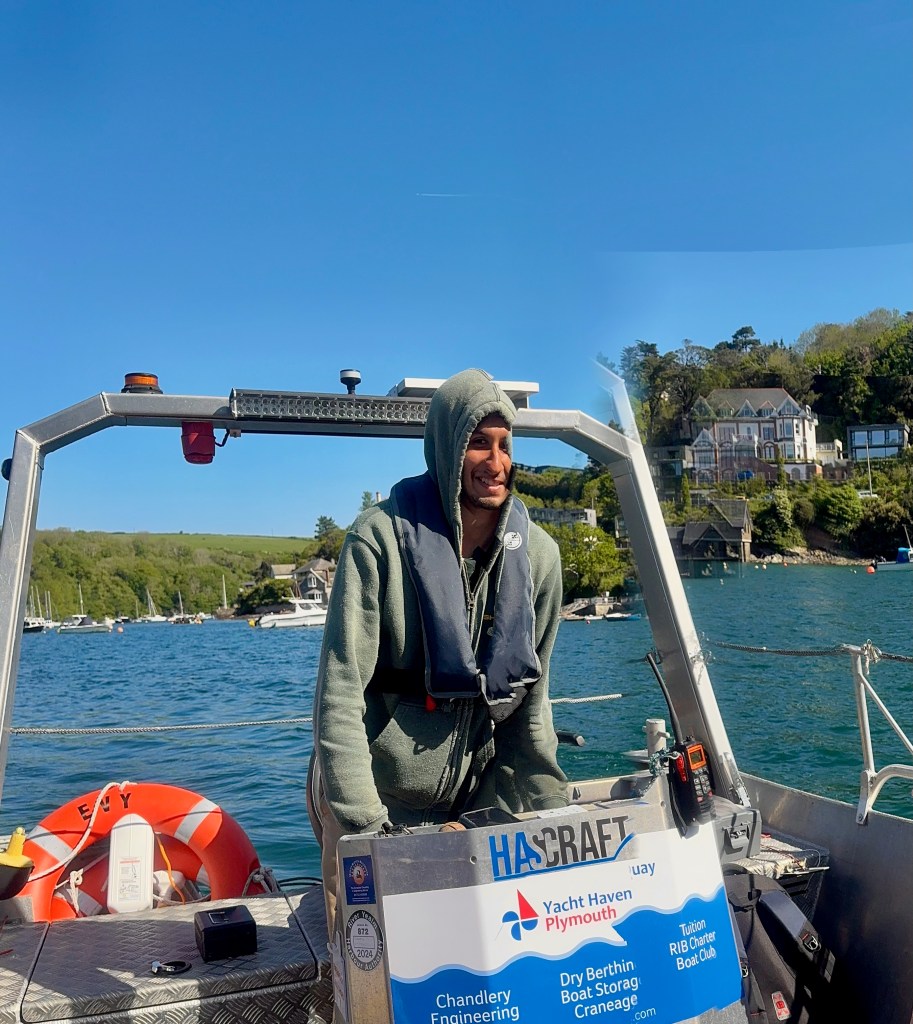
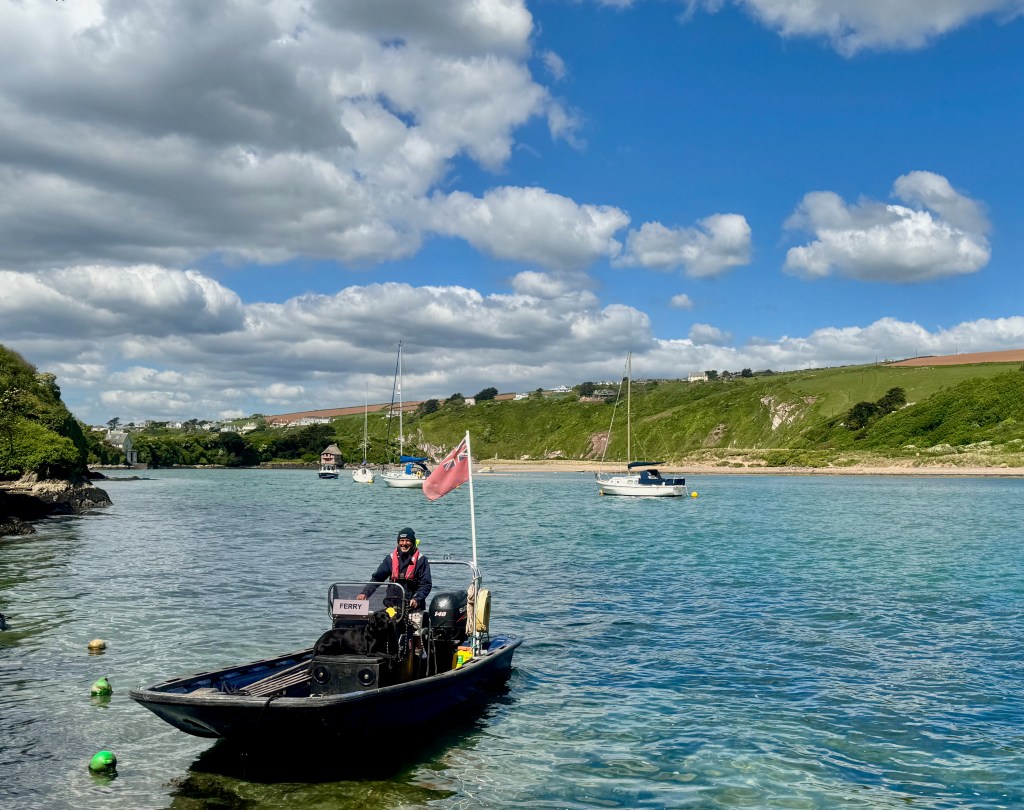
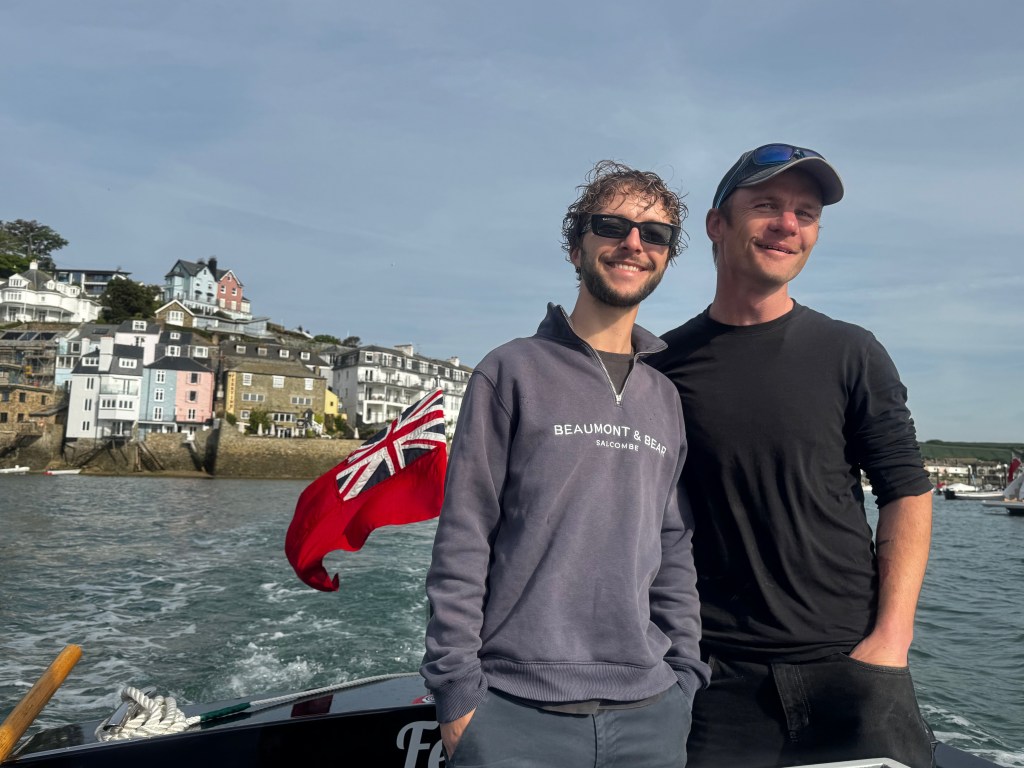
I find the smaller ferry operators interesting. One ferryman looked as thought he was 18. I thought: “Okay. I guess that he knows his stuff.” Another ferryman picked me up on one side and took me to the other side, the main topic being his question “Where are the other women who were with you when you rang the bell?” I have to tell him that they were simply local women walkers who helped me get his attention!
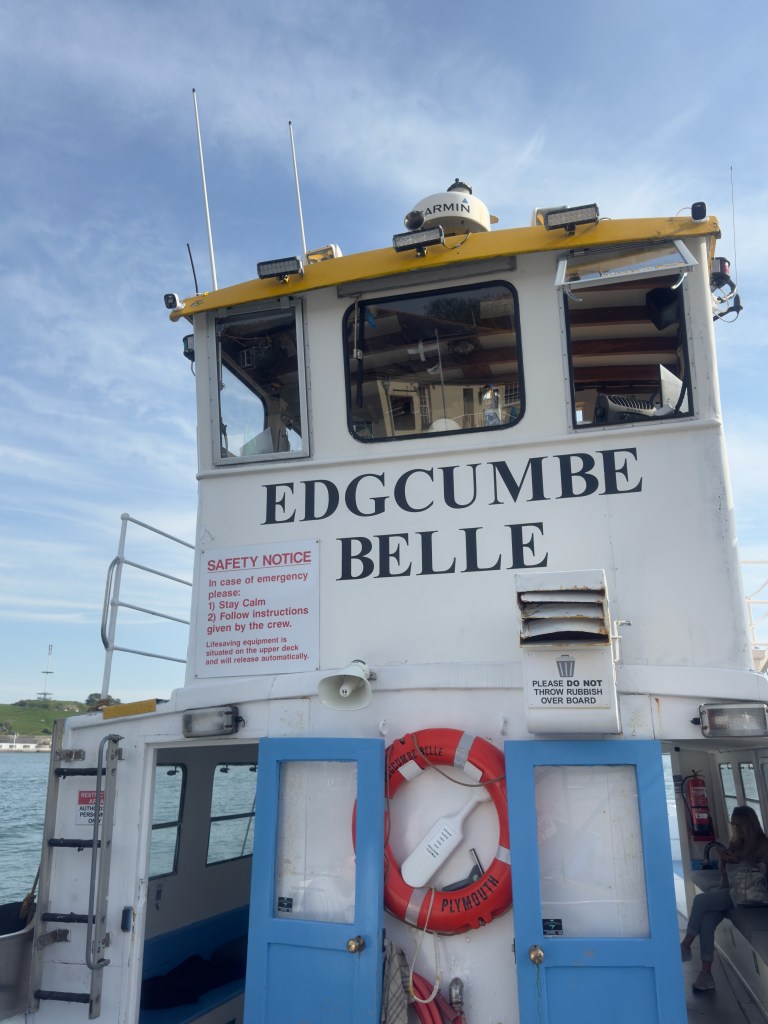
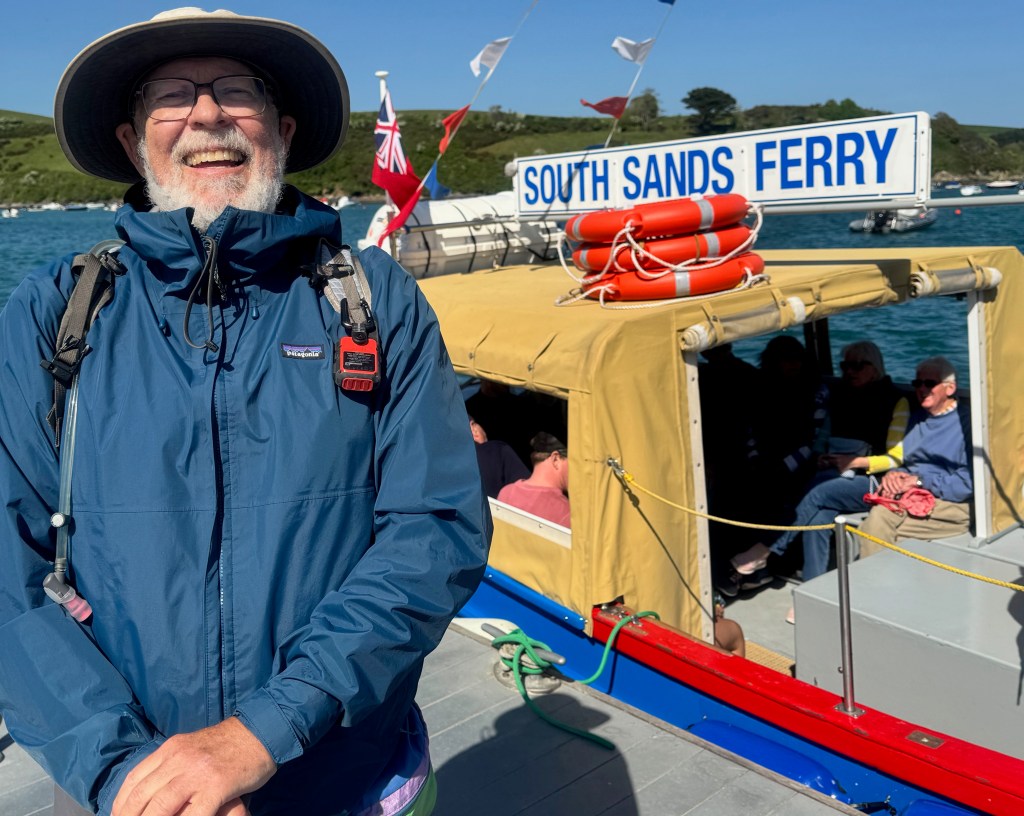
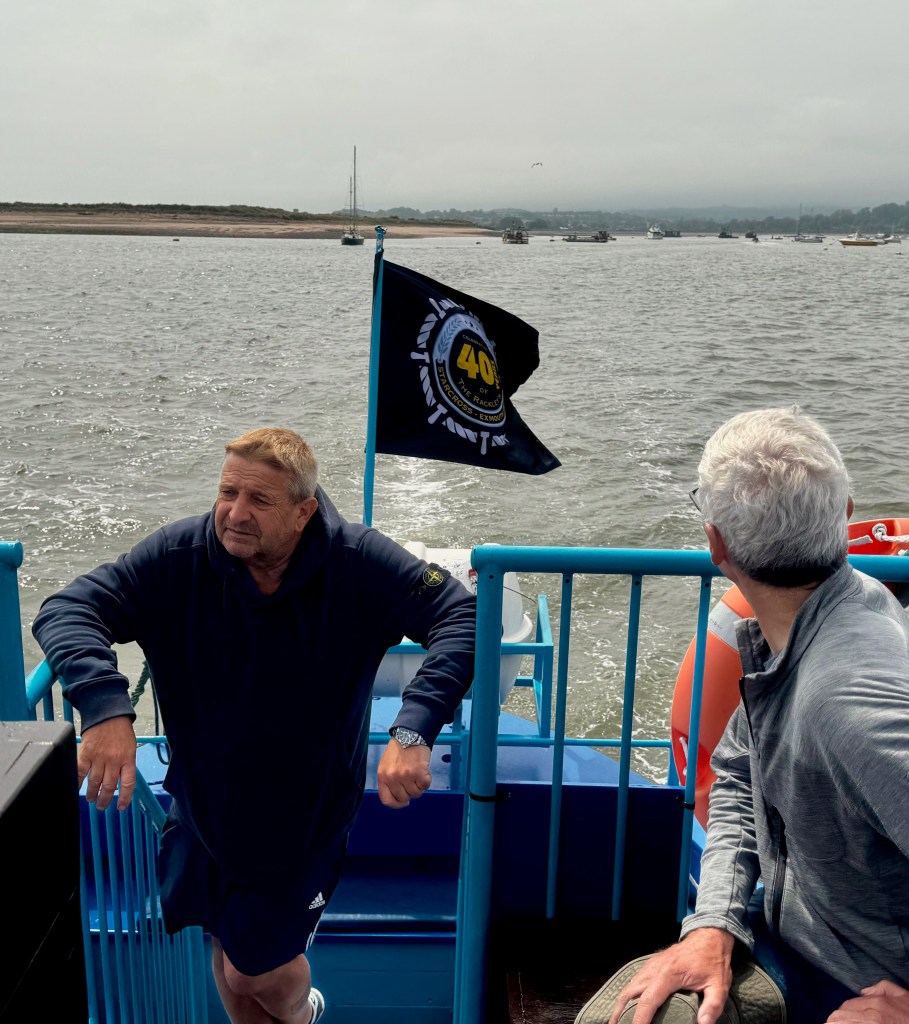
When I’m in a sizeable town, then I usually don’t worry. Because of the number of regular customers, these ferries run on listed schedules. At Dartmouth, the three-minute ferry across the River Dart carries vehicles and runs from 6:30 AM to 11:00 PM. Nice! The ferryman over the River Exe spoke proudly about his family having the ferry license since 1985. “My license means that I begin operating in April. So few people that I don’t make any money until late May. The cost of business though!” While more convenient, these larger ferries usually don’t have the charm of the smaller ferries. No talking with interesting boat operators. No stories about other walkers.
I often find the sensation of taking a ferry strange. After walking for hours, I get to sit. Sit and be moved toward my destination. But there is something more. While I see the English Channel everyday, I’m never actually on that water. For a few minutes, these crossings allow me to have a closer connection to the English Channel water that is my everyday, visual companion. At times, I’m even tempted to take a dip! But, then, I come back to my senses!
 Journeys: Explorations in Body, Mind, and Spirit