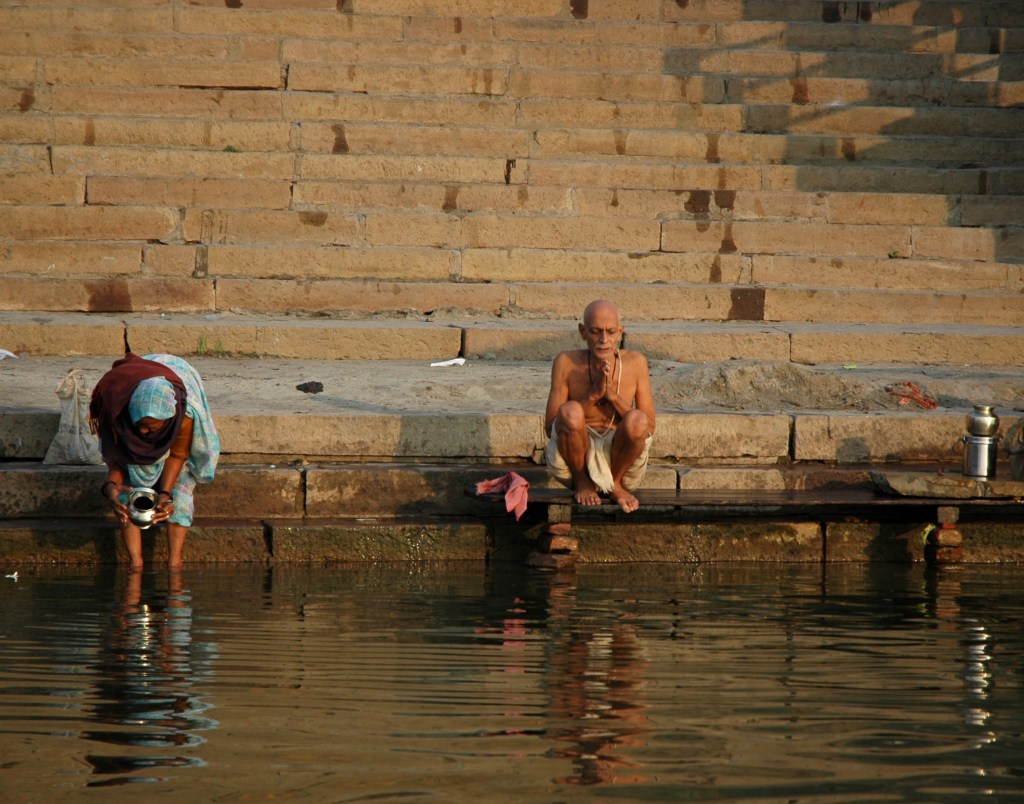
Visitors are pulled to Varanasi for the ghats on the Ganges River. For probably five miles, there are numerous ghats, stone steps which enable the thousands of Hindu worshipers to reach the river. Because the Ganges is at flood stage, Carl and I do not see as many bathers and worshipers as we expected. Yet, we see much. Individuals ritually bathing themselves. Pilgrims lifting lighted candles to the morning sun as an act of devotion. A sadhu painting the mark of Shiva on the forehead of a young man.

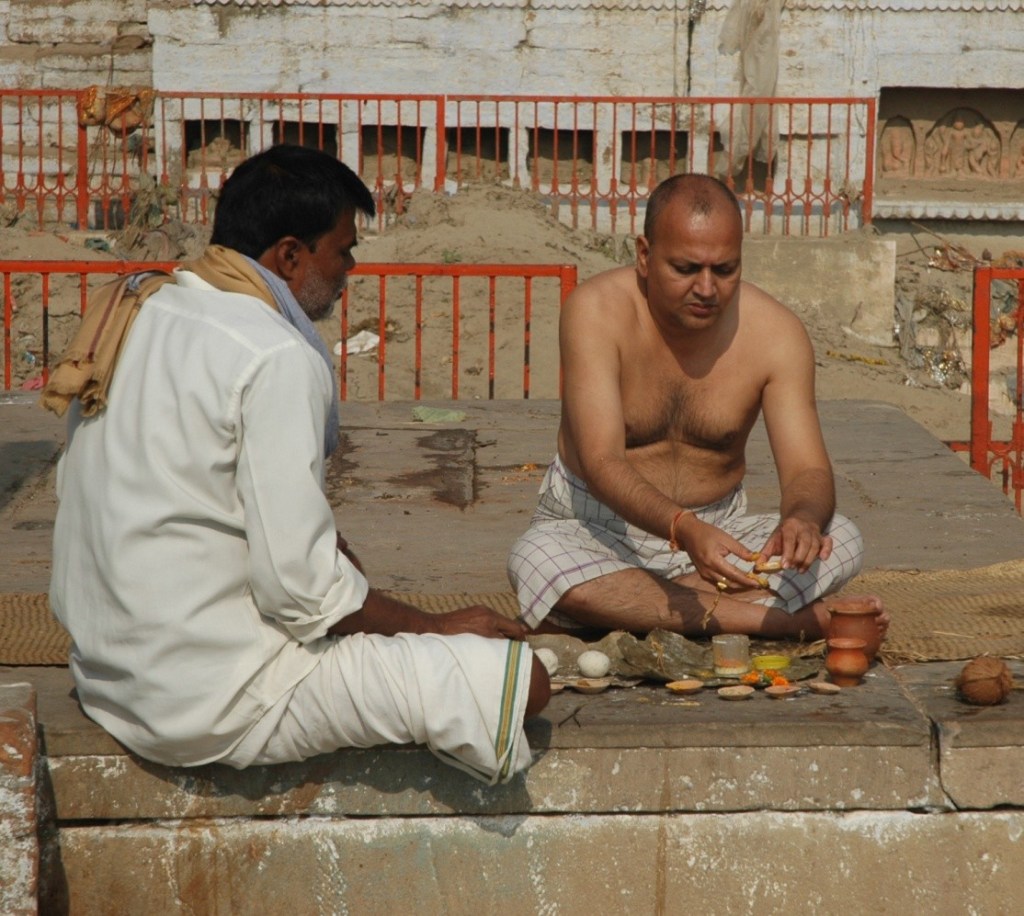
Priests proudly sitting underneath large umbrellas waiting for persons to pay for a recitation of Vedic prayers. During our visits, we don’t see many westerners. We do catch a conversation between one western college-age young man and a police officer. He is explaining to the police how his boat had capsized. Neither he nor anybody else on the boat drowned; however, he had lost his backpack. For all of us, the Ganga acted as a magnetic force pulling us toward the river, over and over again.
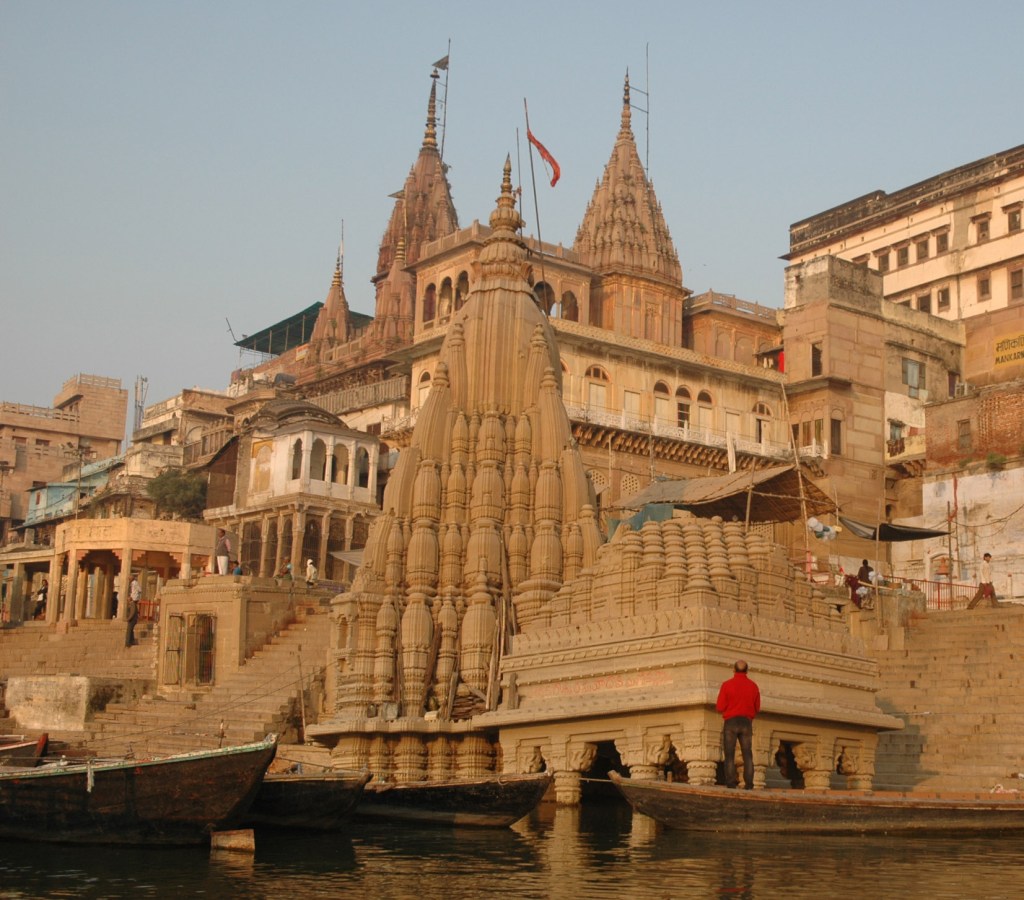
We see reminders of death everywhere. One funeral procession reminds me of a New Orleans funeral procession. Several musicians precede the men carrying the body on a litter. Another funeral procession on the way to the Manikarnika cremation ghat passes us as we stepped out of their way in the narrow street. Within a minute, we see the men with the litter abruptly halt, and do a U-turn almost spilling the body off the litter, and begin racing toward us. Somebody realizes that they had made a mistake! At other times, we see cloth-wrapped bodies on top of a car and even sticking out of motorized rickshaws.
The visits to the Manikarnika Ghat are unforgettable. It is one of the primary ghats for cremation. As we walk from the alleyways and not along the ghats, we see stacks of wood and scales. As a precious commodity, the wood must be imported to Varanasi. The more expensive the wood, the more expensive the cremation costs.
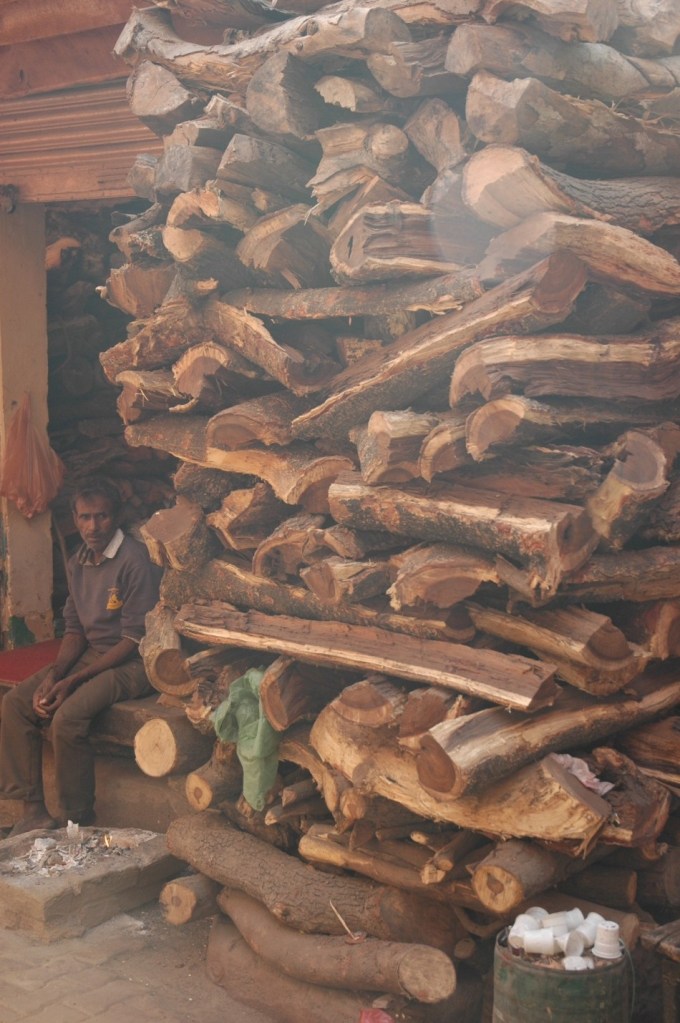
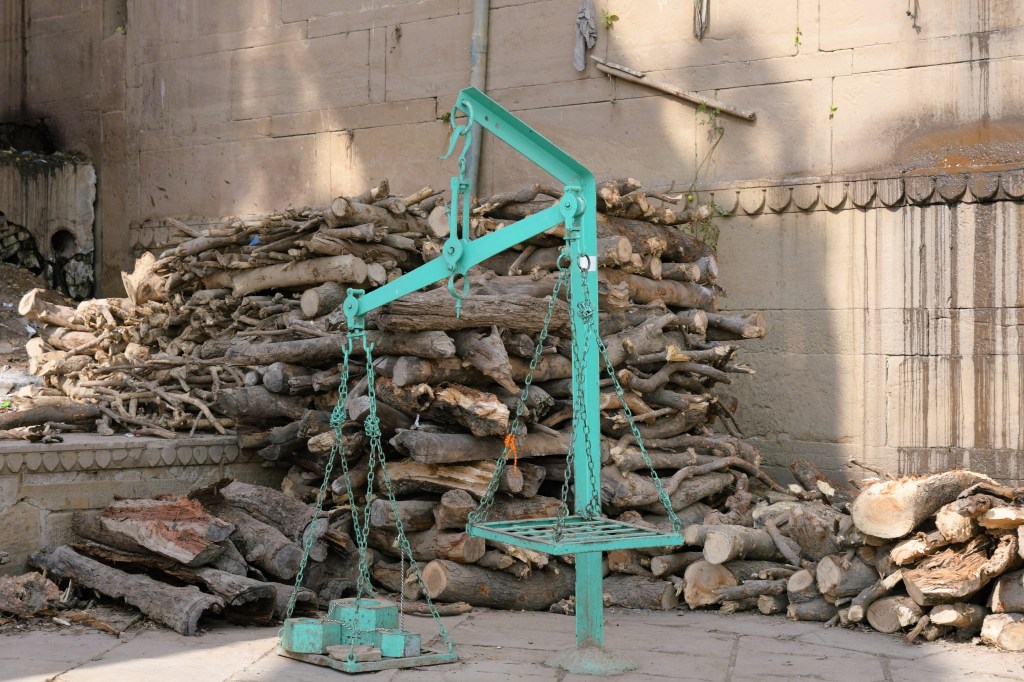
On each visit, we see several large fires. Each fire has a body, some just being lit, some already burning for quite some time. Persons of the Shudra caste perform the work of cremating. They use Himalaya wood although the government forbids its usage since it is ecologically destructive. In other cities, the cremation grounds are outside the city. The presence of death makes the cremation grounds inauspicious, death conveys pollution. In Varanasi, the cremation grounds are at the center of the city. Why?
While in Varanasi, I look for answers by reading Diane Eck’s Banaras: The City of Light. According to this Harvard professor, if a Hindu dies in Varanasi, then that person is released from the cycles of rebirths. Varanasi offers a new way of facing death. Here death is longed for because it frees one from these endless cycles of birth, death, and rebirth. As Hindus confront the certainty of death, the Hindu belief systems allow for various ways of confronting that reality. Fascinating!
 Journeys: Explorations in Body, Mind, and Spirit