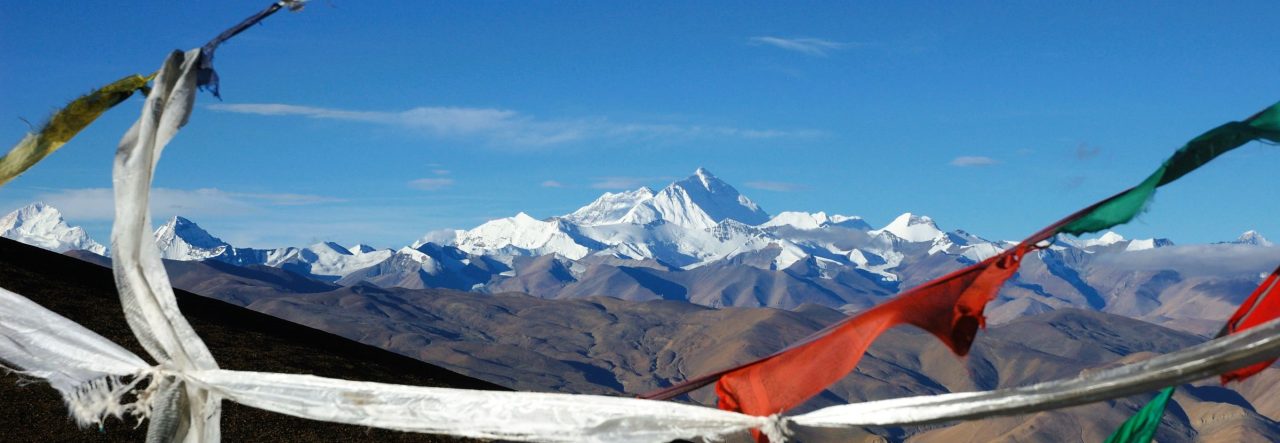
I’ve met Hindus. I’ve met Muslims. I’ve met Christians. I haven’t met a Buddhist. My experience is not unique.
Professor Raman reminds our seminar of Buddhism’s connections with India. Born in Lumbini (present day Nepal), Siddhartha Gautama lived his life in northern India during the 6th-5th BCE. Raised Hindu, Siddhartha rebelled against this life as a young adult. As a result of “enlightenment” experiences at Bodh Gaya, he challenged Vedic and priestly orthodoxy. After his experience at Bodh Gaya, Siddhartha, now the Buddha, walked 150 miles to Sarnath where he offered his first “sermons.” There he “sets in motion of the Wheel of Dharma.”
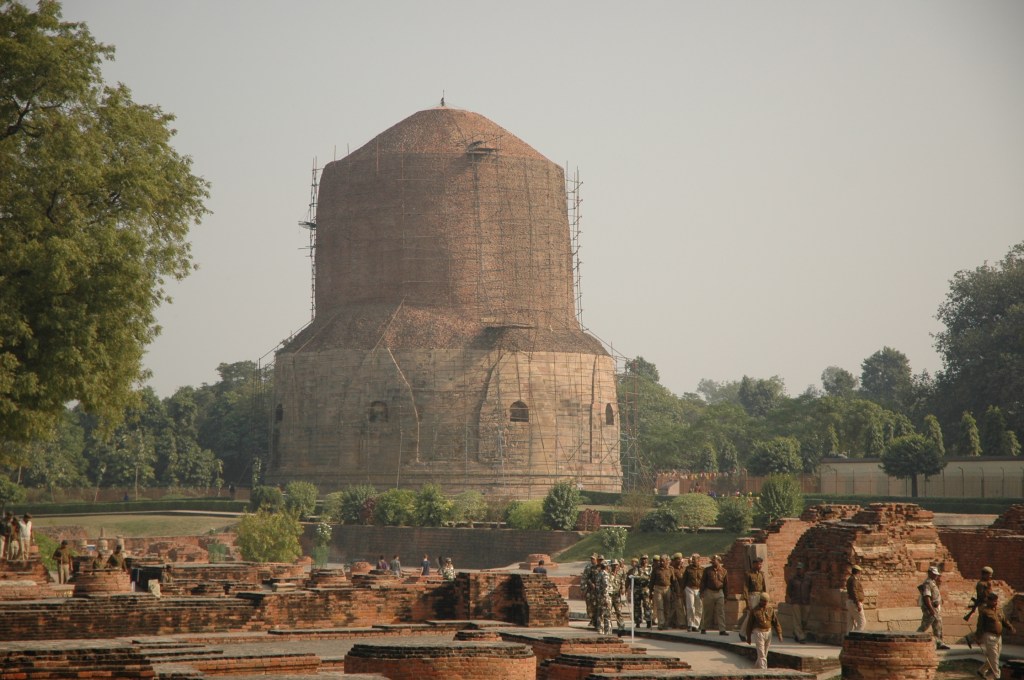
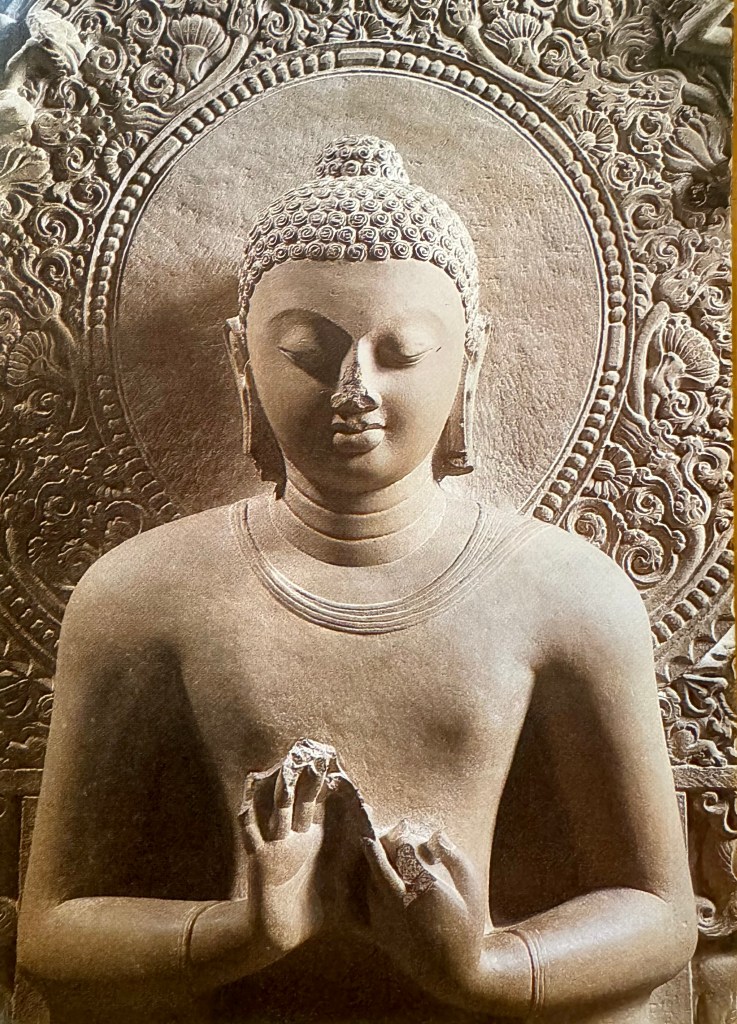
Sarnath provided us a “physical” association with Buddhism. While Carl and I visit Sarnath’s Deer Park after the seminar’s conclusion, we both agreed that Sarnath conveys a sense of the Buddha. Both the hundreds of Buddhist pilgrims from around the world and the museum with one of the most beautiful sculptures of the Buddha, make it a place where we want simply to sit or slowly take in the site.
Professor Raman also recounts the traditional stories about Ashoka, the ruler who famously converts to Buddhism. Ashoka lived from 304-232 BCE as an Mauryan Emperor. After a series of bloody battles, he became so disgusted with the killing that he converted to Buddhism. Rather than military conquest, he wanted “dharma Vijaya” or “conquest by righteousness.” Not only did he convert, but he promoted Buddhism. During his reign, he placed on stones and pillars the “Edicts of Ashoka” which prescribed a Buddhist code of conduct; he built stupas and the Mahabodhi Temple in Bodh Gaya to commemorate Buddha’s enlightenment; and he supported Buddhist missionary expansion at home and abroad.
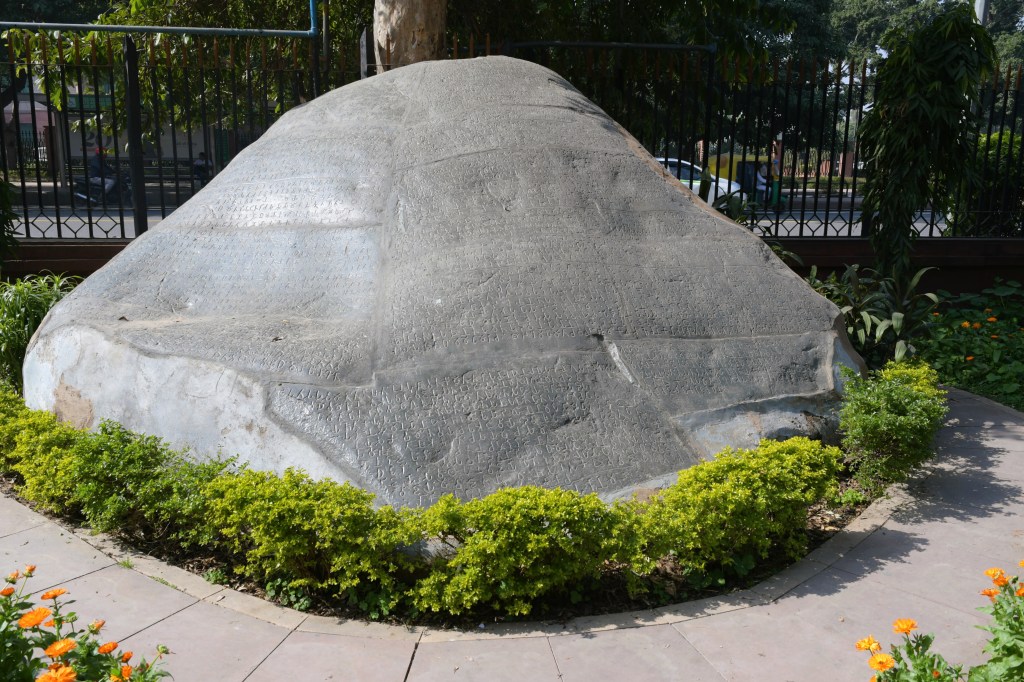
There are a few tangible reminders of Buddhism’s presence. Outside Delhi’s National Museum I look at an Ashoka stone filled with inscriptions for ethical behavior.
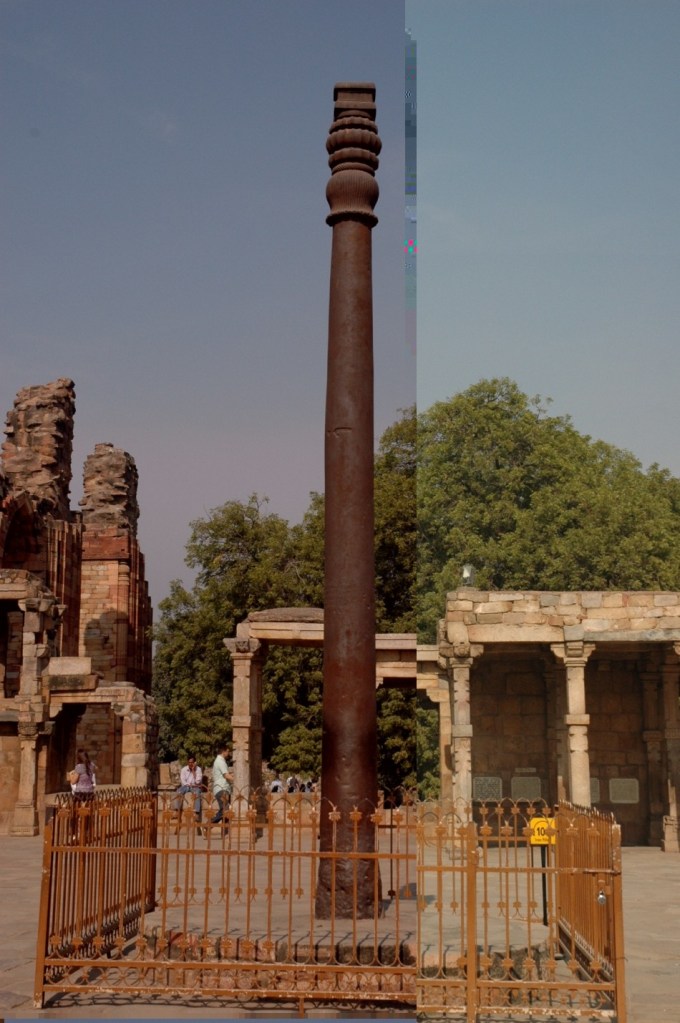
Furthermore, at the Qutb Minar complex outside Delhi, there is an Ashoka Pillar. Without rusting, this two thousand year old iron pillar promoted the rule of “dharma” within the empires.
There is a final reminder of Buddhism’s’ relationship to India. On the Indian flag is a wheel, the Ashoka Chakra (Wheel of Law) which is part of Ashoka’s lion-headed capital at Sarnath. Nice!
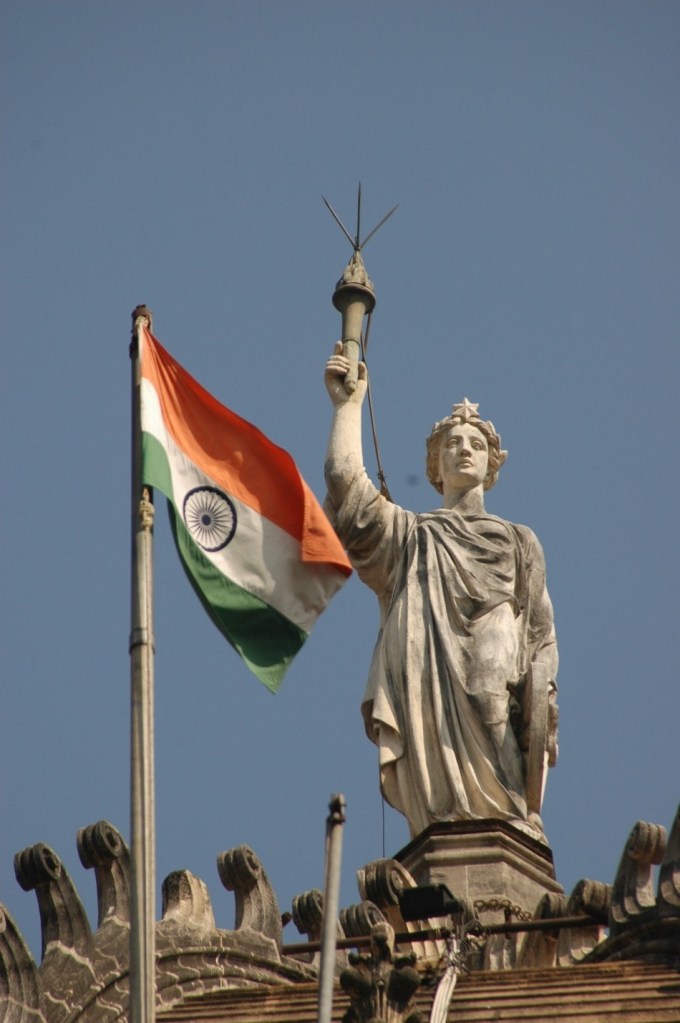
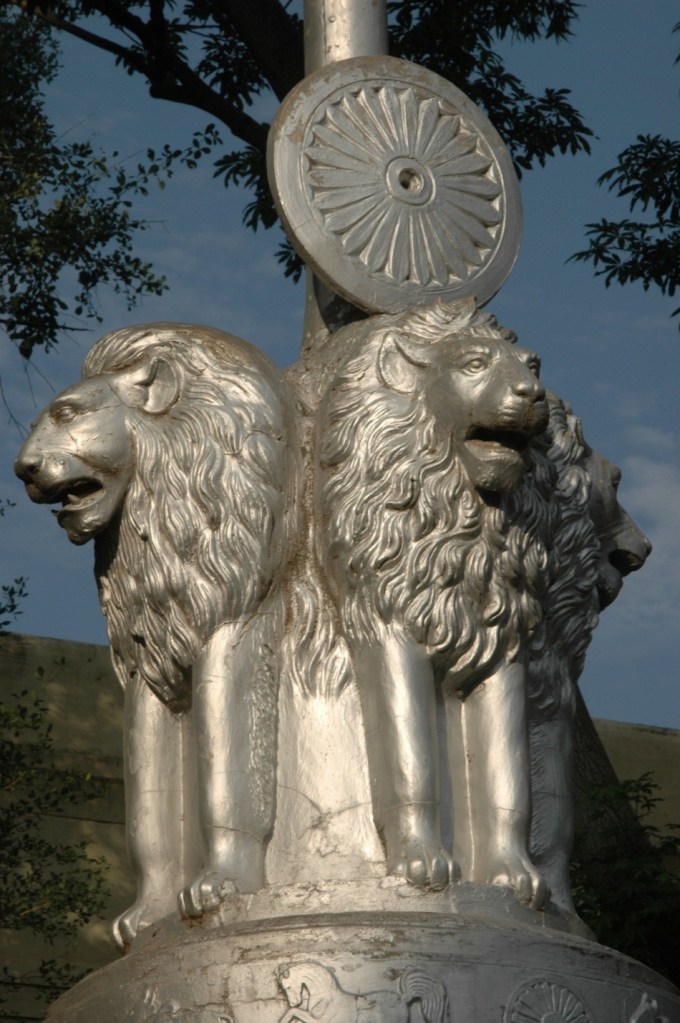
These visual reminders left me “incomplete.” With a religion that is spread globally, that is growing in the USA, that is vibrant in numerous other countries, I want to explore more of India’s Buddhist legacy and presence. The surprising reality is that while there are a number of historic Buddhist sites in India, there are not that many Indians practicing Buddhists in the land of its birth.
 Journeys: Explorations in Body, Mind, and Spirit