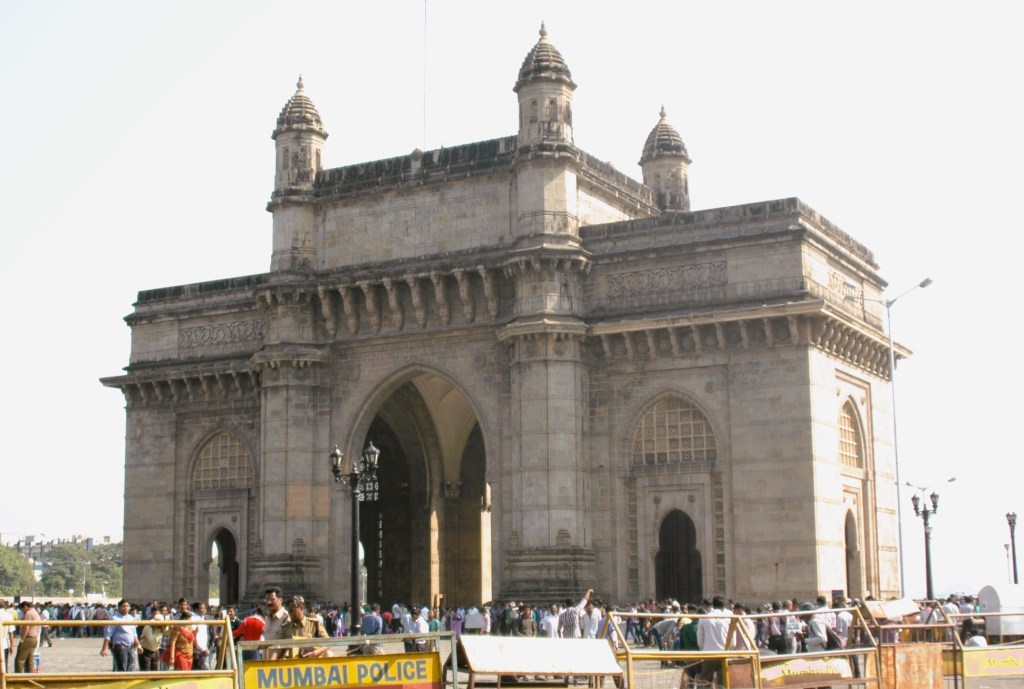
We reached Bombay (Mumbai). The seminar is ended. Besides last meals and conversations together, we are asked to work on our individual projects. I take time to reflect on my experiences, then, and now years later.
An image captures my experiences in and of India. My first impression of India is that I am paddling upriver in order to understand the various religions of India, especially Hinduism. By the middle of the trip that image change. Now, I’m in an ocean, surrounded by water everywhere, and whichever direction I paddle, I find Hindus, Muslims, Buddhists, Christians, and so many other religious individuals. By the end of the trip, I fee; as though I am in a river trying to survive a monsoon. These religions not only surround me, but the whole culture and society seemed inextricably mixed with the monsoon rains that pour from the sky, carrying anything and everything.
The images may relate to five realizationsfrom this India trip. First, my own experience of traveling proves exhilarating. I love India. There are some difficult times. Being sick upon arrival and getting medications from a hotel doctor. Feeling as though I and others have five minutes more of life as the taxicab drivers played car tag on a highway. Hassling and hassling and hassling over money. Yet, despite these occasions and feelings, I know that I am addicted to visiting India in specific and traveling in general.
Second, I feel that attraction to the “different.” Since leaving a DePauw fraternity because the fellows, good fellows, are too much like me, I’ve realized that the world is more complicated than my own current experiences and thoughts. One way to move toward a more truthful appreciation of the world is to encounter the differences that lie “out there” or even “in there.” Of course, to do so, I feel anxious; however, I know both not to get myself into harmful situations, and also to not let those anxieties overwhelm my other experiences and judgments. As much as I and other seminar participants criticize our lodging, staying at Delhi’s Hotel Claridges and Madras’ Choa Sheraton, because we feel as though we were like the colonial British escaping to their “hill-cities.” By the end of the trip, we need those brief places of escape.
Third, I, like everyone else, notices the massive suffering. Our seminar is organized to expose us to that suffering, the poverty, the malnourishment. However, I value that the seminar sought to show two additional features. On the one hand, we meet people and organizations who sought to alleviate that suffering. Obviously, Gandhi, but also the ICRISAT and the Working Women’s Forum to name two organizations. I am being shown that by separating the types of suffering, I could also see Indians trying to reduce the causes for suffering, at least for some. On the other hand, despite this massive suffering, there is a weight and grandeur to classic South Asian culture and history. Criticisms abound. Yet, for an North American who thinks the world begins and ends with the United States, I recognize that others have a pride in their history and culture. A necessary antidote to excessive cultural nationalism.
Fourth, my understanding of India’s religions increased exponentially. Reading classic texts is good and necessary. Texts lead to people pictures a world and living into that world. The trip to India allows me to move beyond texts to glimpsing ways in which people of various religious communities live into their world. Needless to say, I’ll never forget that India is a pluralist religious world, various types of Hindus, various types of Muslims, various types of Christians, Buddhists, and on and on.
Finally, because the advantage of learning while traveling is that it marries “book” learning with observing actual devotees of that learning, I’m hopeful to understand some of the Indian religious communities around Atlanta. I’ll probably be surprised by some of my religious neighbors!
Visit India again? I’ll be back.
 Journeys: Explorations in Body, Mind, and Spirit