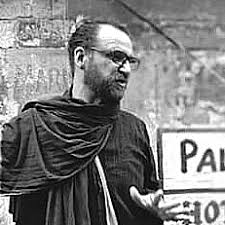
I’m eager to return to Varanasi. On this return, I’m booking two through Varanasiwalks with “Jai,” Jeremy. What a story he has!

Born in Minnesota, grows up an evangelical Christian, he leaves a Bible college after three years. Working for AmeriCorps, he spends two summers in Atlanta preparing for the ’96 Olympics. Something still doesn’t seem right to him. With a puzzled look on his face, he says “What should I do?” Laughing and answering his own question, he says “I’ll go to India. I’ll find myself and make a difference in India.” Ah, the classic reasons for westerners to come to India! He continues laughing “so I arrived in India in love with punk rock and bearing ten body piercings.”
He marries an Indian Christian woman. It ends in divorce. He then buys an old English Enfield motorcycle and travels India. Settling in Varanasi, he follows the familiar path of other westerners; he teaches English for a living. Eventually, since he is fluent in Hindi by now, he begins to show visitors around Varanasi. Looking relieved because he has been in business for three years, he jokingly says, ” If I can survive the summer months, May, June, July, and August, then my business will survive!” I like “Jai!”
During my 1990 visit, I see the Varanasi which is within a hundred yards of the ghats. I don’t see the rest of the city; I don’t even understand that part of Varanasi near the ghats. Jeremy helps me understand what I see.
Jai describes the city’s layout. Despite the buildings looking as though they’ve existed for centuries, some of the buildings are much newer. When the Mughals took over the city, they destroyed many of the older Hindu religious temples. When the British colonized the area, they also destroyed many of the buildings and the small alleyways in order to layout broader streets. British “city development!”
Jai explains other features of the city. Despite the apparent homogeneity of the city, there are differences. There is a section primarily Bengali, another section primarily of South Indian Tamils, another section primarily Muslim. In each of these sections, we would hear different languages and dialects.
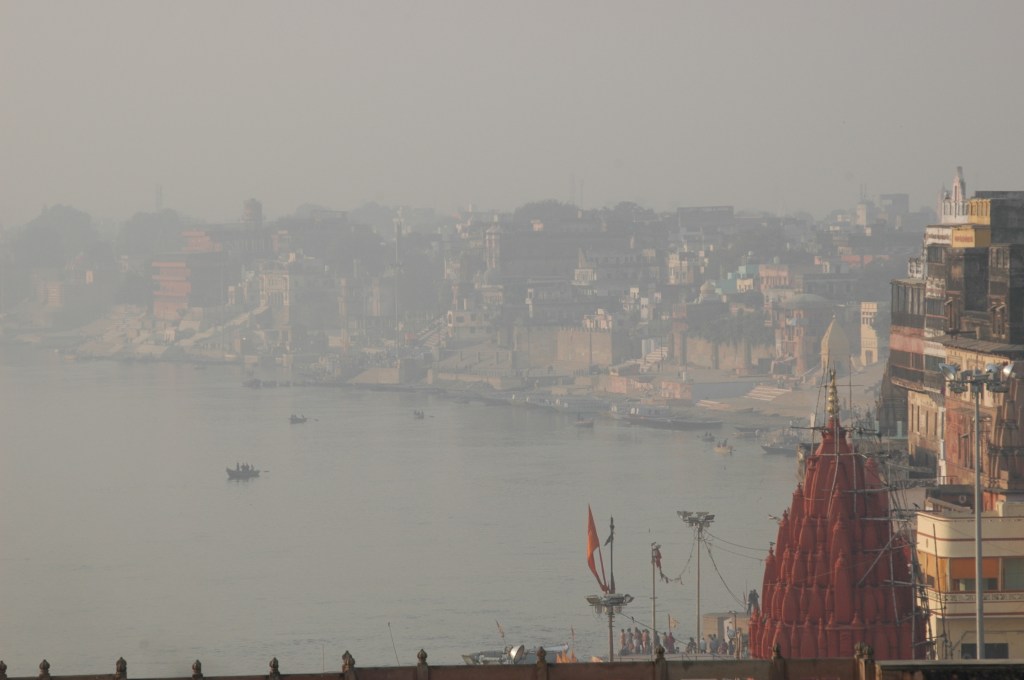
He also explains why when I look at the other side of the Ganga River from Varanasi, I basically see rural India. “I’ll tell you the religious reason. There is always a religious reason!” Continuing, he says, “The ancient Vastra Shastra principles state that a temple is never to be overshadowed by another building. So, there is nothing upon the other side of the Ganga because the sacred ghats would be made inauspicious.” He smiles when he says: “ Of course, the other bank is so far away that the buildings would have to be huge!” Jai explains the more realistic reason, that area is a floodplain. Buildings would simply wash away during the monsoon rains!
Jeremy has his own perspective on India. When I mention that when I visited in 1990, I, like other Westerners, was aghast at the widespread poverty. “Are there actions to ameliorate those conditions?” I’ll remember the multiple answers he gave to that question.
He starts by stating that there are recent governmental sponsored assistance programs. Strikingly, non-governmental charitable and relief organizations are a relatively recent phenomenon, many formed in the 1960’s and 1970’s. Because of my 1990 visit to the Working Women’s Forum in Madras aligns with that period. He then discusses a traditional Hindu religious perspective. In his view, “Hinduism is a religious system built around merit, a person approaches actions in a utilitarian manner.” Continuing, he claims “What is the benefit for me in doing X or Y? How will I gain merit? How will I gain better karma? How will I gain moksha?” From his perspective, traditional Hinduism offered no deep, abiding motive for compassion. “There is no merit in helping others; there is no justification in helping the needy. At the temples, some food might be offered to the beggars; however, there is a certain acceptance or callousness toward the needy’s plight.” A rather rough treatment of traditional Hinduism.
In Jai’s opinion, 19th century Hindu reformers began to challenge the older dynamics of traditional Hinduism. Jai claimed that “Giving to others did impact my merit, giving to others could improve my karma.” However, Jai’s observation is that there is a real limit to this interchange. There are beggars near many temples. In his opinion, those Hindus who help beggars usually limit their help to those around and near the temple; only a few begin to move toward more systematic changes.
When I ask him why this is the case, Jai shrugs his shoulders and admits that he doesn’t know. “Maybe the traditional notion of darshan. Because Hindus visit a temple to be “seen” by the gods, maybe the gods have to “see” your helpful deed?” A possible explanation? Regardless of the explanation, Hindus help the beggars by giving them gifts; the beggars help the Hindus by giving them the means to gain merit. Whether accurate or not, a tidy explanation.
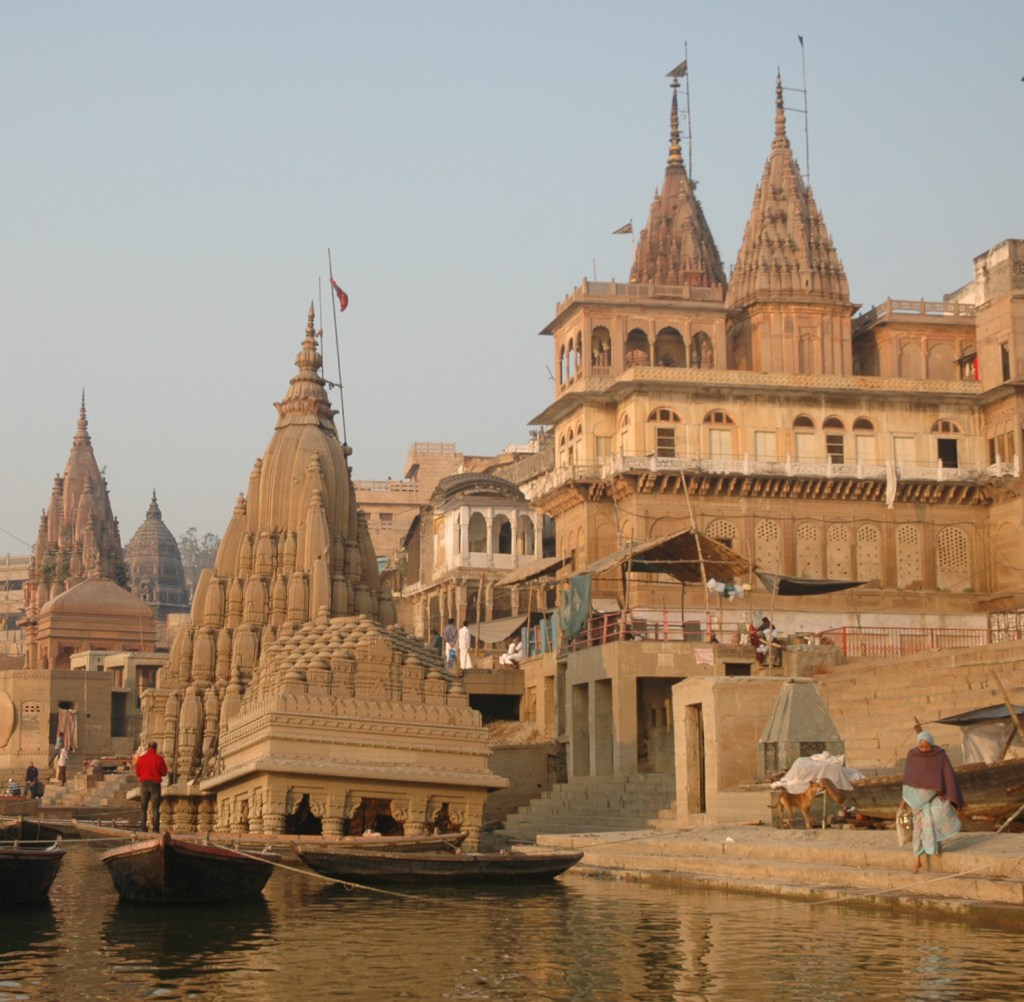
As we pass and enter temples, Jai explains some of the hidden dynamics of the temples and ghats. Apparently, the control of temples are often by hereditary Brahmin families. A similar situation pertains to the traditional ghats along the Ganga River. These families’ priests and the ghat priests act as “religious brokers.” They are the intermediary between the pilgrim interacting with the god. The priests know the right words, the right chants, the right-hand gestures, the right incense to burn. They perform the necessary religious rituals to assure an interchange between the pilgrim and the god. They exist in a position of power and influence! Another interesting explanation.
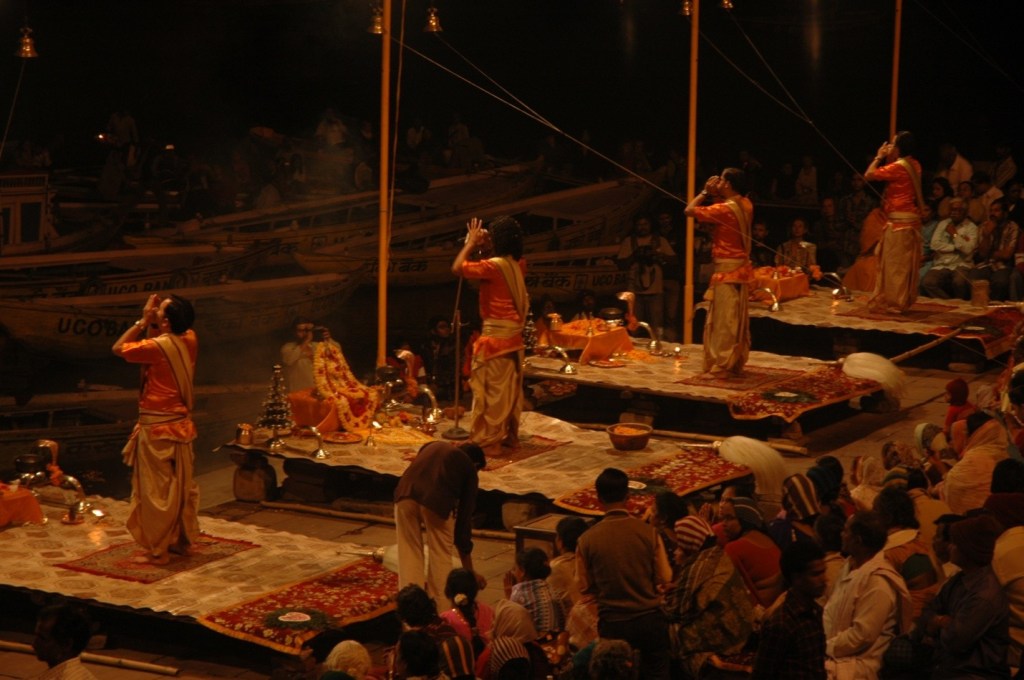
I ask him “What goes on then among the families and priests?” Jai responds, “It can be very rough and tumble! Very crass at times!” Since the exchange between pilgrim and priests always involves money, one priest may get a higher percentage of money, of the temple profits, than other priests. Or, a son of the primary Brahmin family, gets more than a nephew. Younger priests will try to retire, in effect remove, an elderly priest because the younger priests are envious of the older priest’s income.
During the tours, we stop and have chai several times. He greets friends; friends shout a greeting to him. After giving to one beggar, a woman holding her child, he says “I have to give to her. She has never asked for anything from me.”
There is much to the Varanasi ghats; there is much that a westerner doesn’t see or understand. Jai helps to describe some of that Varanasi life; he even offers his own explanation of some of that life. His last piece of advice at the end of one tour: “Varanasi is ever changing. You can see the changes simply by going out at different hours of the day!” I may not understand the changes, but I can, at least, see them!
 Journeys: Explorations in Body, Mind, and Spirit