Jai inspires me to see Varanasi beyond the ghats. Both with and without his presence, I wander around sites off the usual visitors’ path.
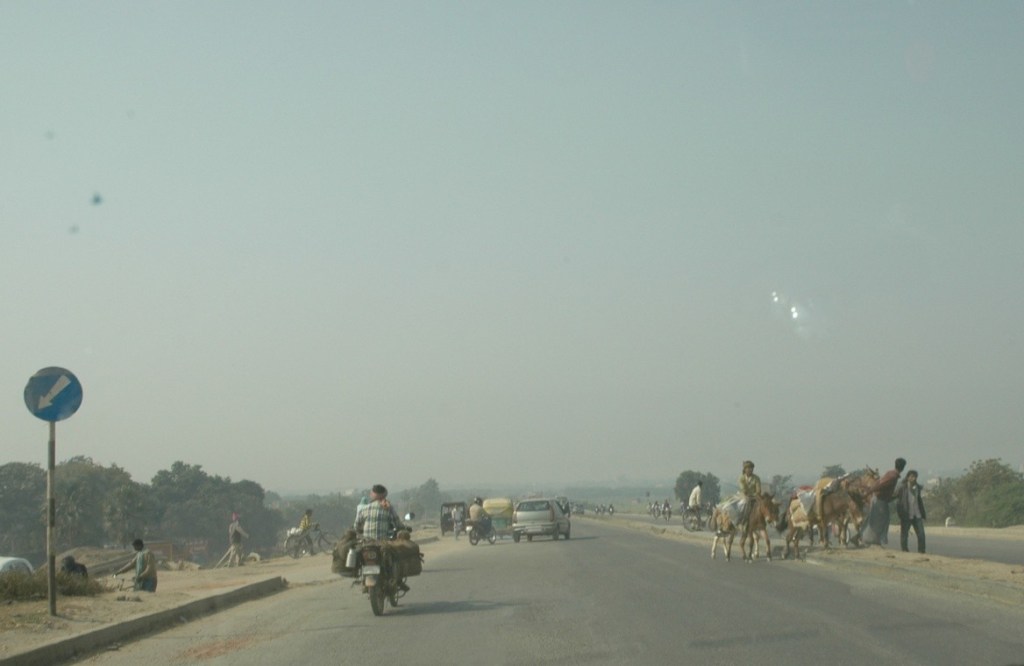
I hire a tuk-tuk driver to take me to the Ramnagar Fort. Built in 1750 by the ruler of the Varanasi region, fort is south of Varanasi and on the other side of the Ganga. The drive to the fort is not a highlight of the day! Because the road is continually flooded, the road serves as a connection between large potholes. To cross the Ganga, we used the Kolkata-Delhi-Mumbai National Highway. Wow! The road’s entrance ramp is packed with walkers, cows, bicycles, motorcycles, cars, buses, and trucks. The guard rails have collapsed. Fortunately, we arrive safe and sound. So much for a premier Indian highway!
Despite the fort being open to the public, it is still one of the residences of the “Maharaja of Benares.” Because the fort is above the flood plain, it has survived through the centuries. Since the fort’s museum is open, I wander through an old collection of swords and rifles. Not exactly my cup of tea. Unfortunately, since the morning is hazy, my view of Varanasi is limited. Unlike this day though, the fort must offer striking views of Varanasi as I read that it has been used as a location for several movies.
On the return trip I visit Benares Hindu University. Little did I know that the university originated with the theosophist Annie Besant’s Central Hindu College. In 1916, ownership was transferred and Benares Hindu University became established. Today, the university is one of the largest residential universities in Asia.
Einar, one of my college roommates, studied as one of those “residential students” in 1971-1972 during his “junior year-abroad.” Always soft-spoken, Einar returned bearded and wearing sandals throughout the year, even during Indiana winters! Besides wandering around the campus, I visit the museum with its collection of manuscripts, paintings, and textiles. I particularly enjoyed the work of Swiss-born Alice Boner who made Varanasi her home for 40 years.
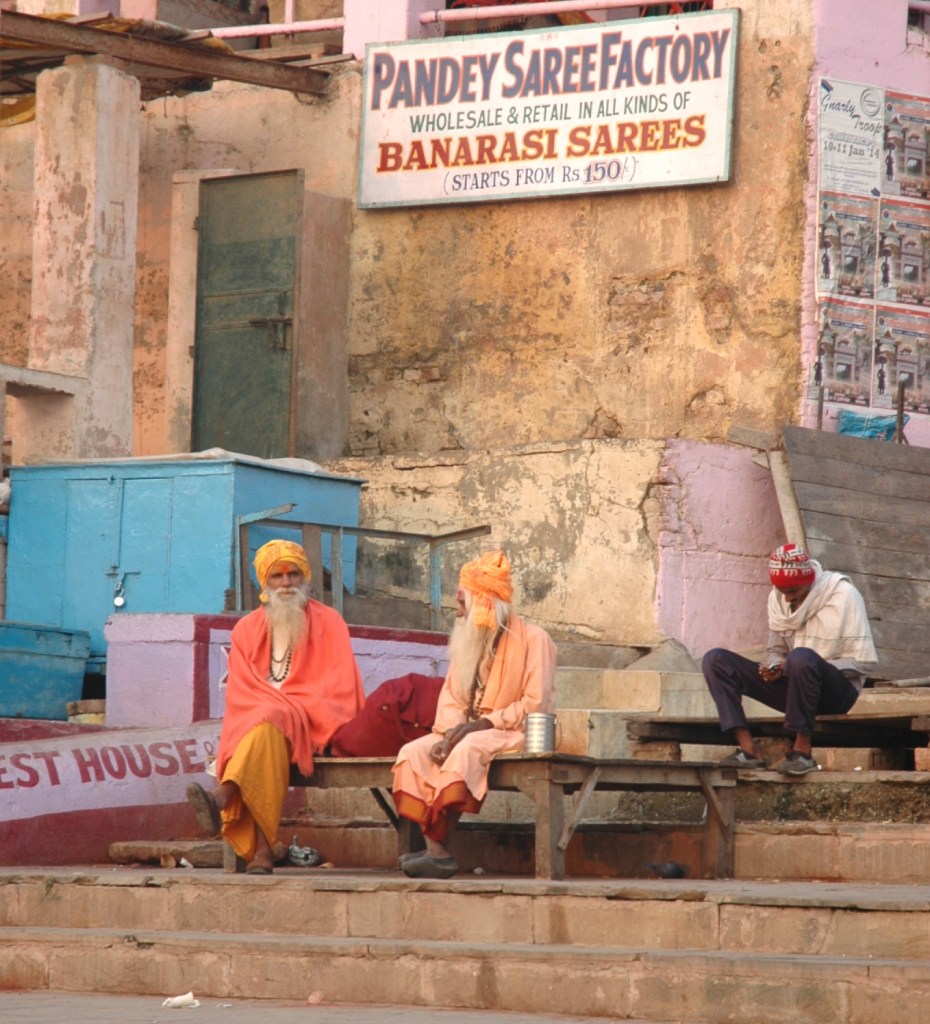
On another walking tour with Jai, we visit a Varanasi Muslim section. In one courtyard, he introduces me to a family making cloth, dying the fabric, and drying the fabric. The Muslim family sells the cloth to Hindu merchants who make “Banaras Saris” for Hindu women. Muslims helping Hindus by making saris; Hindus helping Muslims by buying those saris. A nice interdependence where both parties win!
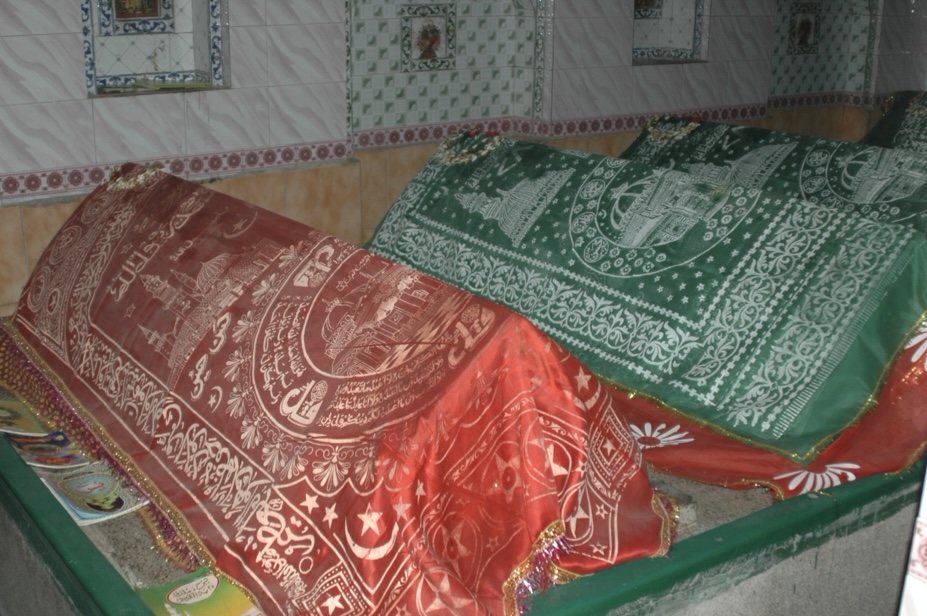
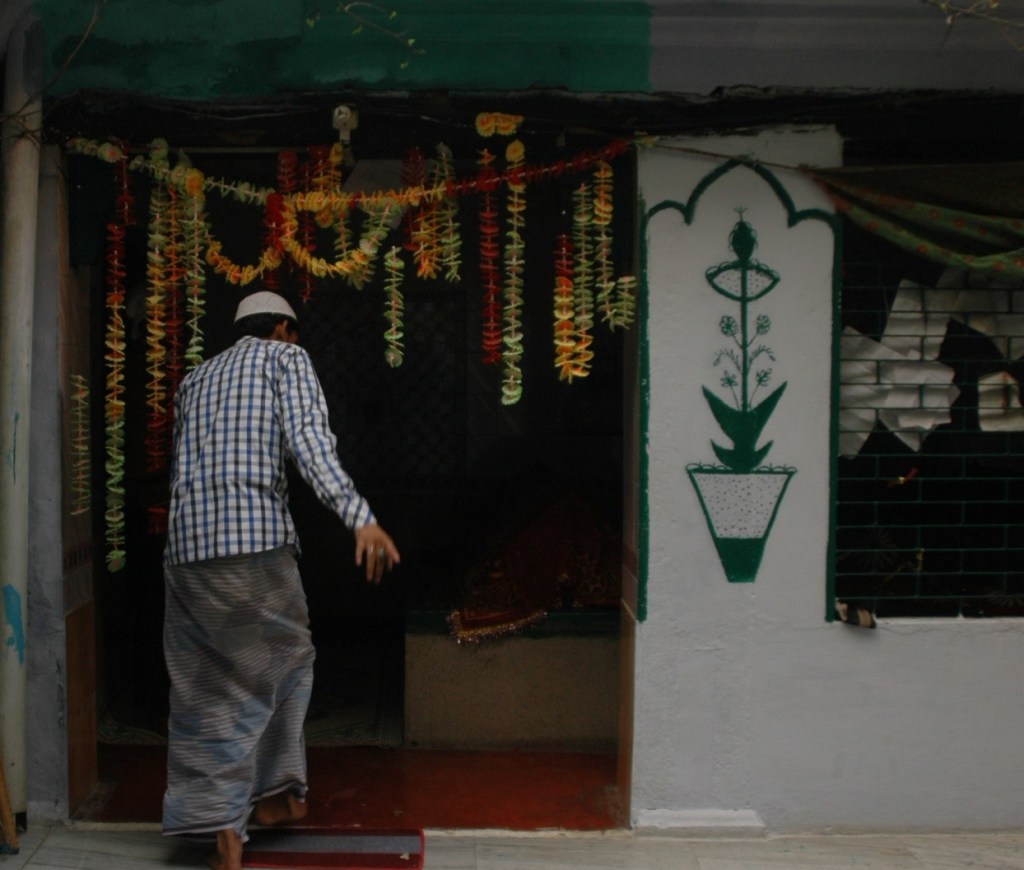
In the same area, Jeremy takes me to a Muslim mosque and shrine. Jail wants me to meet a Hindu who is the mosque’s “gatekeeper.” When other Hindus want the elderly Hindu gatekeeper fired, the Muslims all say “No. He has been our faithful gatekeeper for decades.” There is some surprising inter-religious cooperation, even in the face of internal religious conflict.
There are many ways to travel. In my previous trip to India, I relied on Indian academics to shape what I “saw.” Here, I’m being reminded that guides such as Jai, and his walking me around all sorts of Varanasi alleyways and buildings, provides another indispensable aid to my “seeing.”
 Journeys: Explorations in Body, Mind, and Spirit