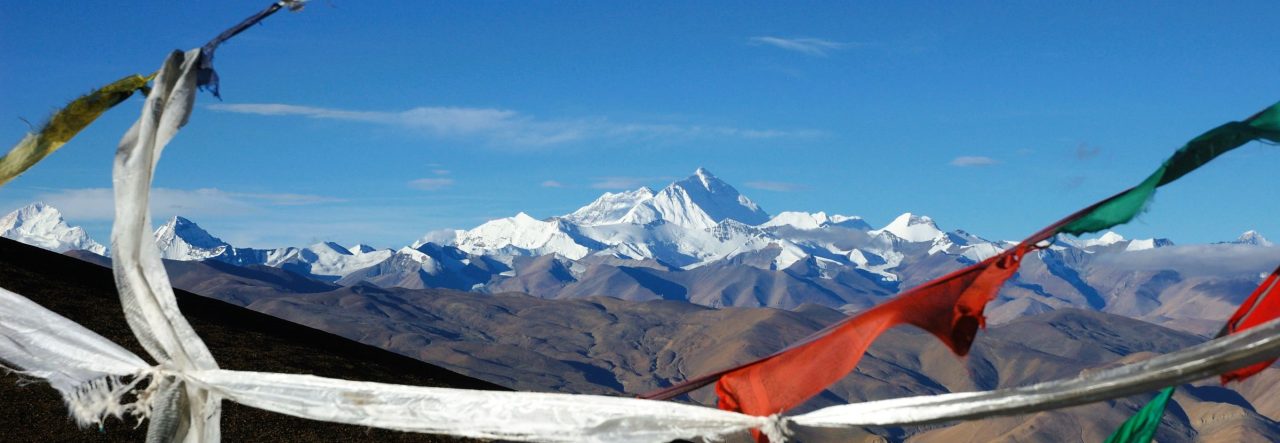
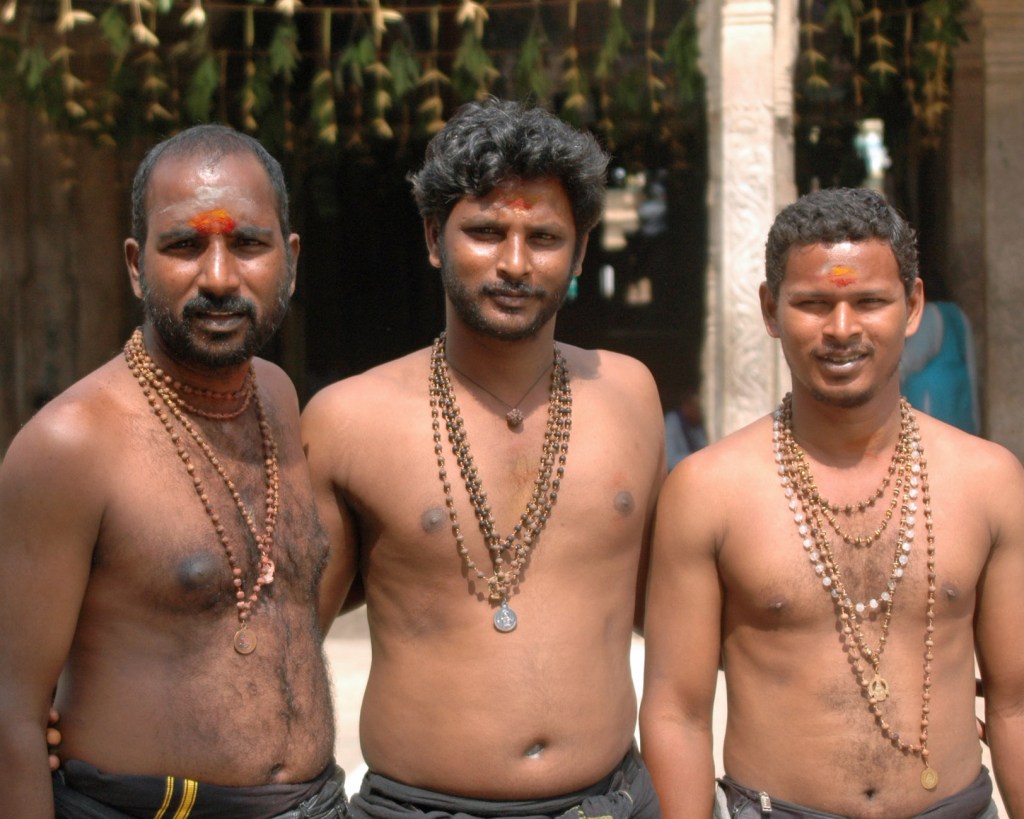
I see pilgrims from Haridwar in the north, to Rameswaram in the south, from Kolkata in the east to Mumbai in the west. I ask myself: What to make of all these Hindu pilgrims and pilgrimages?
There is the classic question: “What is more valuable, the journey or the destination?” In classic Hindu fashion, I’ll respond “yes.” From a Hindu perspective, both seem important. While the journey and the destination are important, I want to notice the neglected feature. The person. It is the person who goes on a journey, who reaches a destination.
The person. Distinctive in comparison to other religious communities, many practicing Hindus worship in their home. There is a clean space for a small altar with pictures of a particular deity or deities, a lamp, incense, fruits, flowers, water, and other ritual elements. Each day, the Hindu devotee walks to this small altar and offers prayers. A journey to a destination, even a short distance in one’s home to a very near sacred place. The Hindu devotee takes these few footsteps in their home to a destination within that same home.
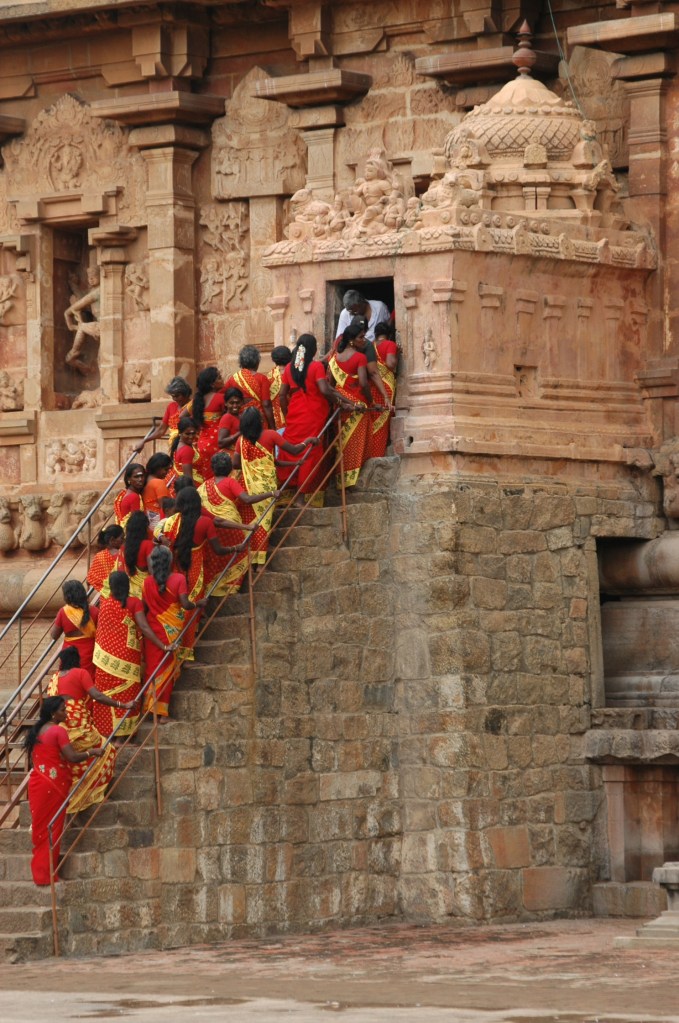
In my observation, Hindu pilgrims are of every age. Young children, young teenagers, young married couples, settled married couples, older adults, and aged adults all go on a pilgrimage. The ones that I see go further than an altar in their home to a destination, at times, unknown to me. Hindu pilgrims may walk, take a bus, or fly in a plane. Hindu pilgrims may go to the closest temple, or they may go across the country. The types of journeys are so varied; the destinations are innumerable.

What can I say about the journey this person undertakes? I see many pilgrims getting off buses, and getting on buses. Yet, no matter how they travel, there is something noteworthy about the journey.
The journey allows for a special time. As a “slow-walker”, I know that after the second week the journey becomes more than a painful, lonely walk. By that point in time, I’ve walked through the bodily aches of the first week; I plow ahead handling the emotional ups-and-downs of the second week. By then, I experience the journey as an alternative to my usual rhythms of home. Those usual rhythms of life are disregarded. During a time of journey, new people are met, new food might be eaten, new sites viewed, new challenges overcome. In this time between leaving one’s home life, and before arriving at the destination, I’m in that “in-between” time.
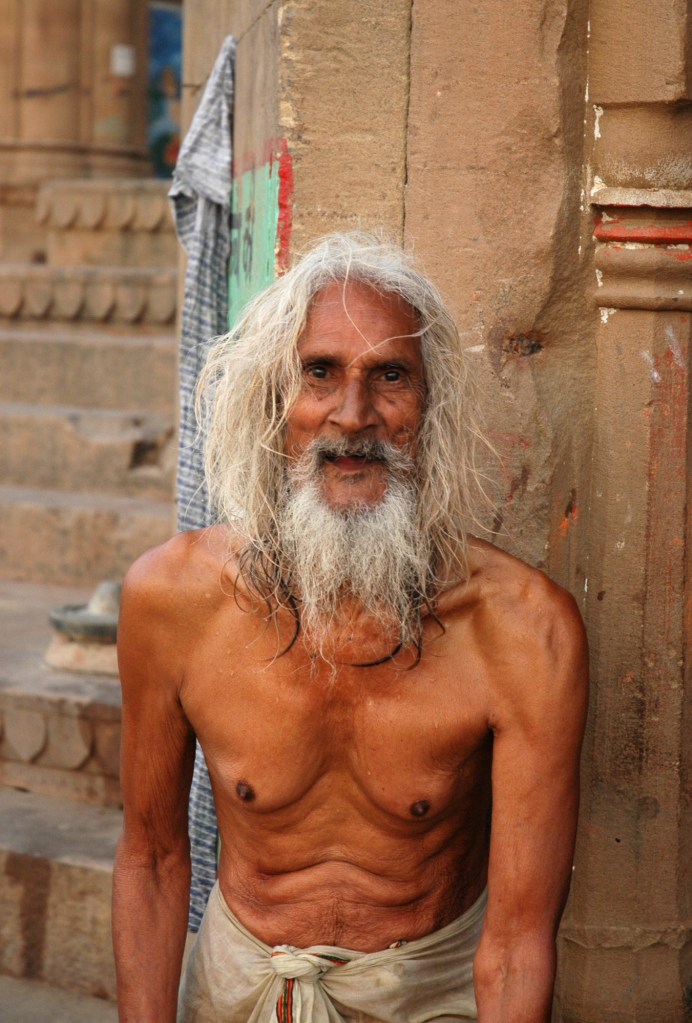
Diana Eck in India: A Sacred Geography makes a wonderful observation and connection. In the Hindu tradition, the “perpetual pilgrim is the sannyasin (455).” She continues: “the sannyasis have ‘cast off’ from settled society, indeed they have ritually died to that life, in order to live a life of renunciation.” The sannyasin seeks moksha, removing attachments in this life in order to be at one with the divine. This person renounces in order to find. They are the “perpetual pilgrims.”
Diane Eck claims that these ordinary pilgrims that she has studied, that I see, “temporary sannyasins.” Not as extreme as the sannyasin’s journey, this ordinary pilgrim faces difficulties. Adjusting to a new routine. Handling the uncertainty of transportation. Wondering about the food, the nightly lodging.
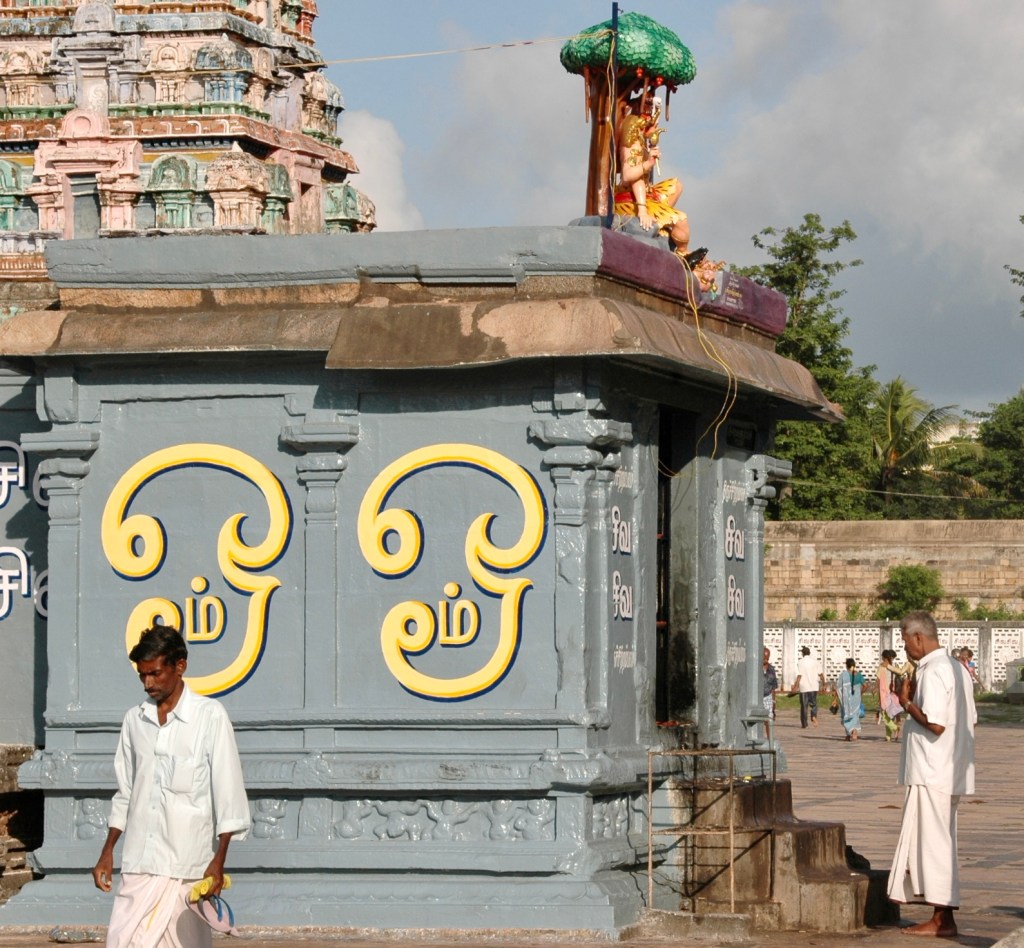
These Hindu pilgrims who journey don’t wander; they move toward a destination. As I’ve illustrated in other blogs, each temple destination is considered worthy of being a destination because of sacred stories. India is a “storied landscape (447).” Since some temple destinations have a deep concentration of stories, these spaces become especially favored destinations.
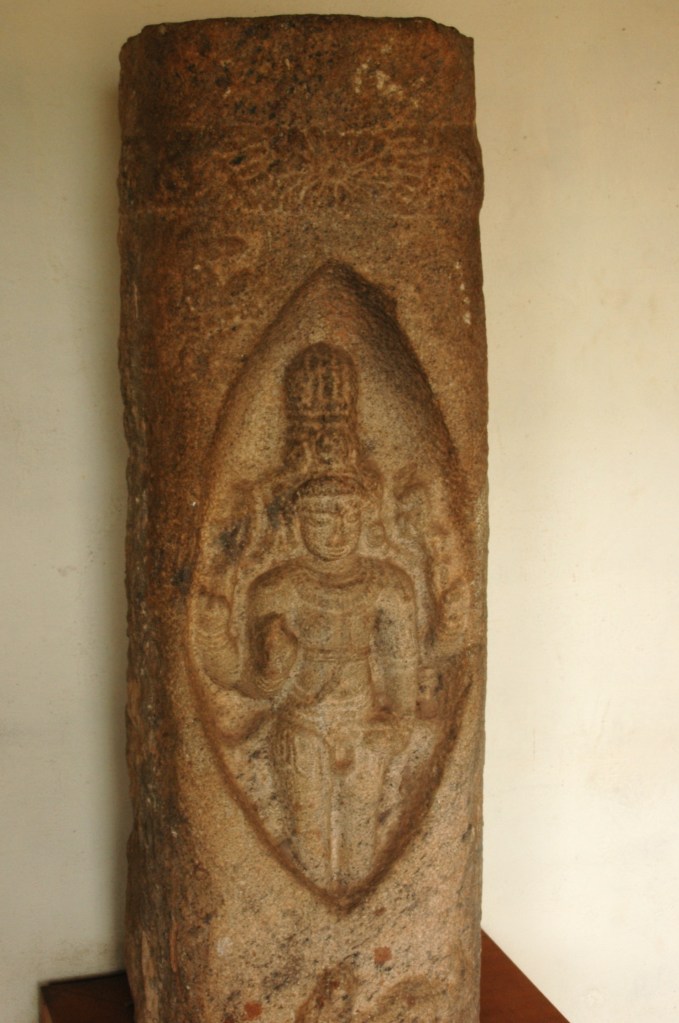
Upon arrival, there is a further destination within the temple, the inner sanctum of temples. Here is the most important shrine. It is here that the person seeks and finds darshan, to be “seen” by the god. The Hindu acknowledges “You are here sacred.”
In so doing, the Hindu pilgrim discovers a paradox. While the destination is alive with the divine, with the sacred, this divine is not exclusively present at only this destination. This pilgrim has probably sought darshan in other temples. The pilgrim can say that the sacred is also present in many other local sacred temples. Other temples share in the presence of the divine. When the Hindu says, “You are here divine;” the Hindu can also say “You are there divine.”
In addition, the pilgrim can say that not only is the sacred present in these temples, in these “storied destinations,” the pilgrim can also say that the divine is present “in the rough (453).” The sacred is found in the hills and mountains, the rivers and the oceans. The sacred spreads throughout India, even throughout the world beyond India.
The destination suggests a mystery. Is it by simply reaching that destination that the person achieves their goal? No. Eck quotes the humorous insight from a Hindu, “If merely going to a tirtha (a crossing between this ordinary world and the sacred) is enough to purify, then the fish in the Ganga and the birds who roost in the temple towers would be instantly purified (454).” There are qualities of the person that is both the goal and the requirement. The pilgrim seeks, in seeking the goal of darshan and moksha, to find humility, truth, charity; the pilgrim is required to exhibit “truth, charity, patience, self-control, celibacy, and wisdom (454)” in order to find that goal. A circular mystery!
I’ve come across pilgrims everywhere in India. Persons journeying to a destination. In the end, the important feature is the actual person that journeys to a destination. Carol Eck ends her work India: A Sacred Geography quoting a passage from the fourteenth-century devotional poet Lalla. “I, Lalla, went out far in search of Shiva, the omnipresent lord; having wandered, I found him in my own body, sitting in his house.” A person journeying far to find what is near! Strange!
 Journeys: Explorations in Body, Mind, and Spirit