Moving around and about India isn’t for the faint of heart. I walk, ride a rickshaw, hire a taxi, make arrangements for a private vehicle and driver, jump on a bus, navigate a subway system, reserve seats on trains, and fly on AirIndia.
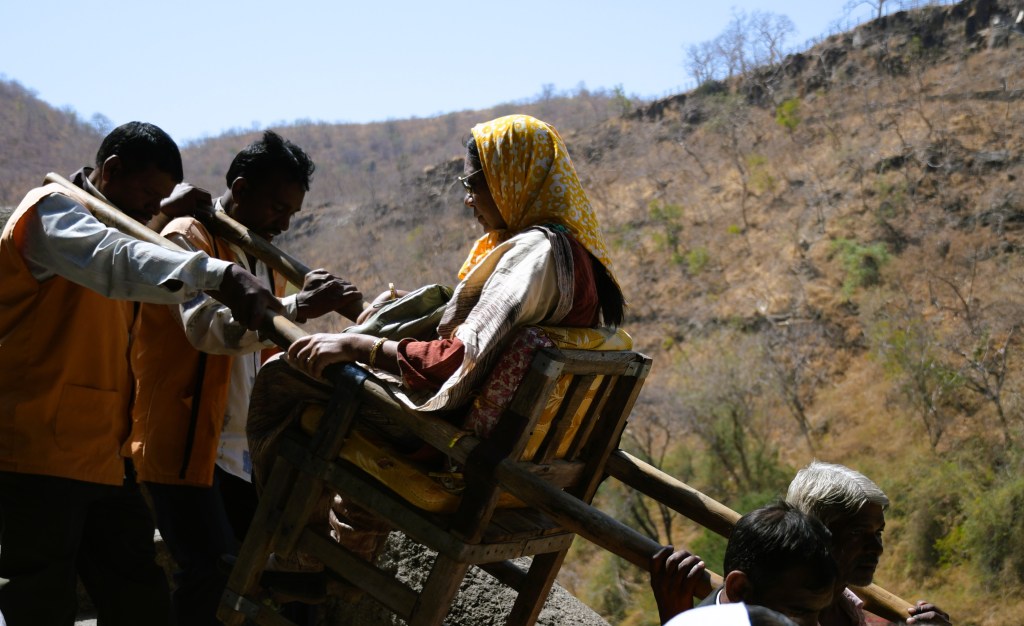
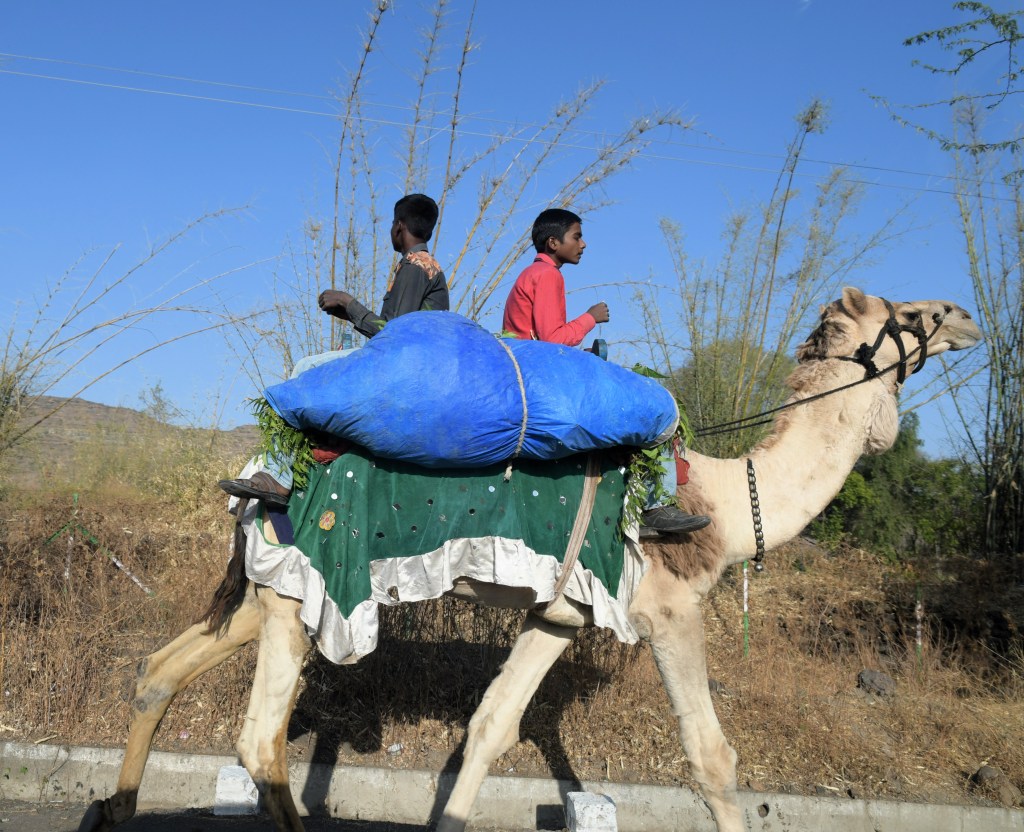
I have my limitations though. I’m not carried by porters on a chair, I don’t ride a camel, I don’t pedal a bicycle, I don’t rev up a motorcycle, and I don’t swim across the Ganga River.
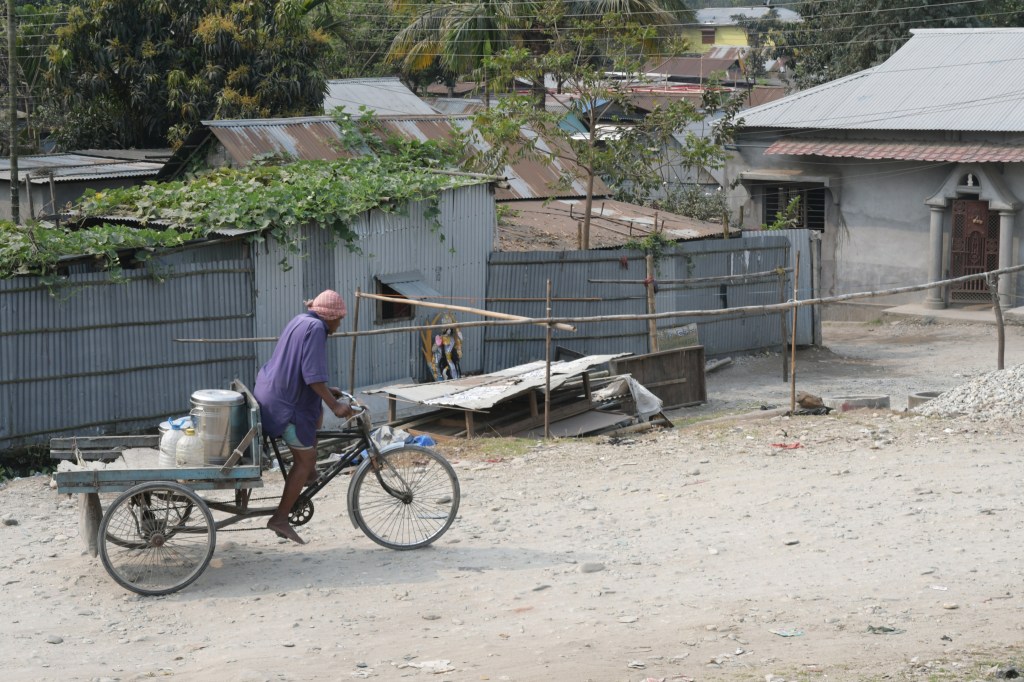
Our mobility helps define our modern life. Compare our journeys with journeys in 1850 and 1860. Google informs me that in 1850, a person could expect a journey of 4-6 months because the route involved sailing about the Cape of Good Hope. By 1860, a person could journey 4-6 weeks because of the adoptions of steamships and the “overland route” through Egypt. What a deal! Not for us now!
Several experiences are unforgettable. In Delhi, I use their fairly new metro rail (this blog is about 2013) for several trips to Chandne Chowk, to Qutb Minar, and to the Saminarayan Temple. The metro certainly is easy to use. Cheap. Clear route and station maps. Folks in Delhi seem to agree with me as the metro is always packed. A question arises though: what about the caste restrictions? As I am unavoidably jostled on the metro, I make physical contact with those around me sometimes. Since caste restrictions limit the physical interaction between people, how did this apply to the metro? Will these physical interactions reduce or increase a sense of caste and its taboos? I surely don’t know!
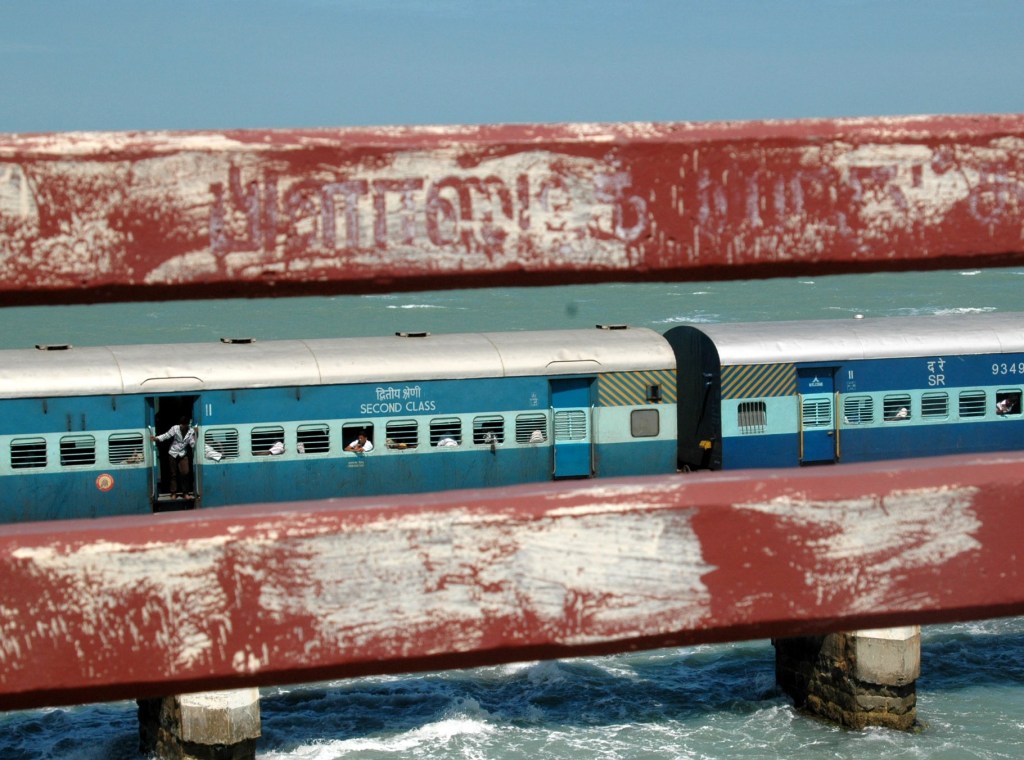
While I fantasized about train rides after reading Around India in 80 Trains by Monisha Rajesh and her traveling almost 25,000 during four months, I know that I have no interest in undertaking that phenomenal amount of train travel. One of my train rides is unforgettable.
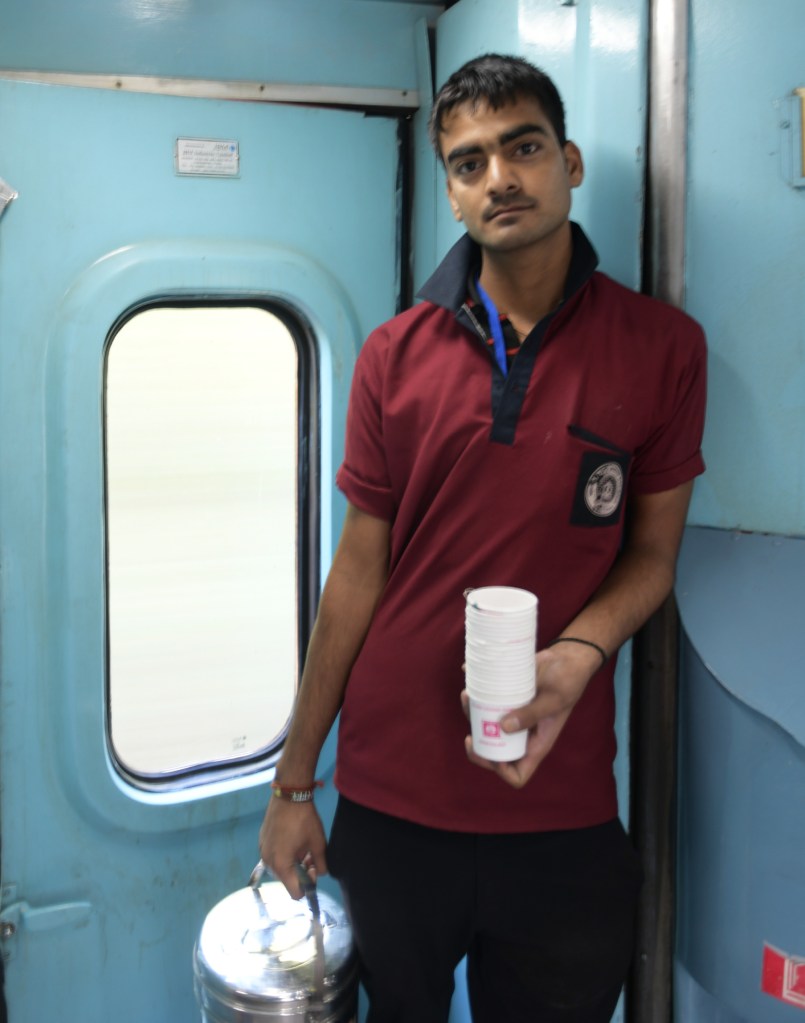
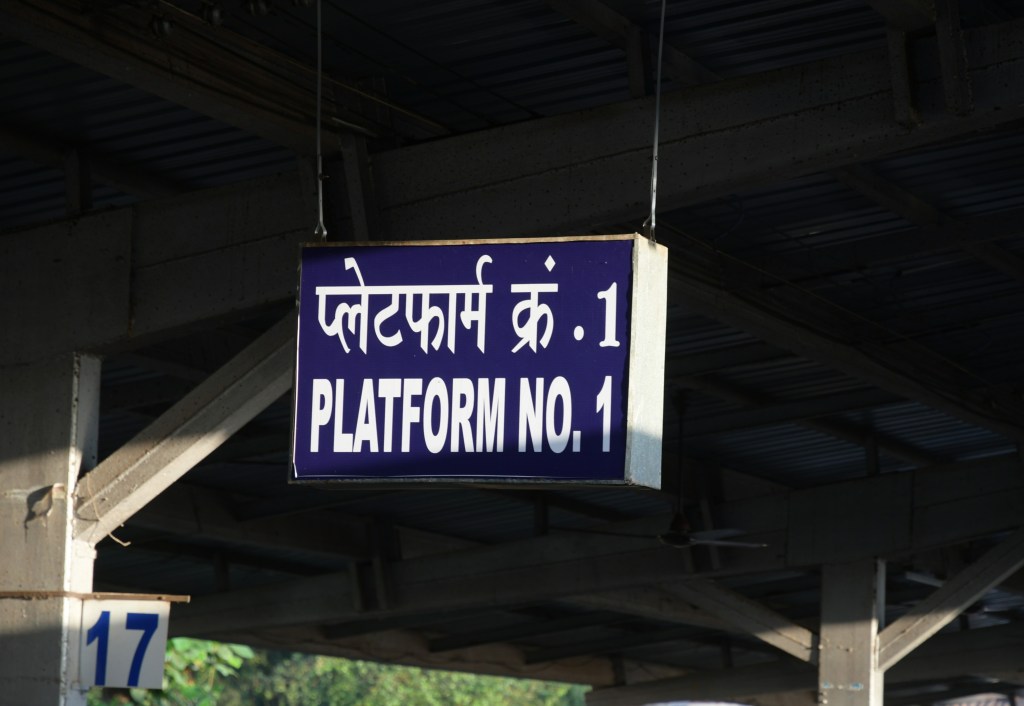
I arrive at Gaya Junction train station after traveling the 10-15 miles from Bodh Gaya. It’s night. In rural India, night sems especially dark. As I’m traveling overnight train from Bodh Gaya to Varanasi, I’m somewhat anxious, but at least I already have my ticket. When I arrive, the porter takes me to the right platform. Nice! Unfortunately, the train is late, and late, and late.
While waiting, I talk with a young man in his mid-30’s who is living in the southern city of Bangalore. He’s not going to Varanasi; instead, he and his uncle are traveling to Delhi. They need to assist his 76-year-old mother whose husband, his father, had died earlier. Because he is a rural worker in Bangalore and the crops are planted, he has a week to help his mother. Interestingly, his name is Sherpa; he is Tibetan. As the train pulls into the station, he even helps me find the right coach and the right seat. A very, very kind fellow.
I can remember my anxiety before talking to him and my more relaxed feeling afterwards. I can also remember imagining a population chart and a wealth chart. Such charts would show that Americans probably comprise 5% of the population and 50% of the wealth. The same chart would probably show that Asians are 50% of the population and, possibly, 10% of the wealth.
The statistics play in my head. There in the middle of the night, rats scurrying along the rails, bodies curled up in a fetal, sleeping position, newspapers, blankets, coats covering those sleeping, I have that feeling that I’m different from everybody else in that train station. This feeling “different” didn’t create an intense sense of fear. Instead, I simply feel different. Because of my financial wealth, I’m free from needs. I’m free to pursue dreams such as this India trip. I am rare compared to so many. Importantly, I’m sure that part of my not feeling threatened is due to Sherpa’s kindness.
Since our 1990 taxi tag-team NASCAR racing extravaganza, I’ve always found traveling by taxi or private vehicle and driver an interesting, at times harrowing, experience. Although driving with Annamalai was safer than those taxi drivers, I had my moments. He never uses a cellphone while driving; however, he always closely drafts larg trucks, no matter their speed, no matter day or night. Yikes.
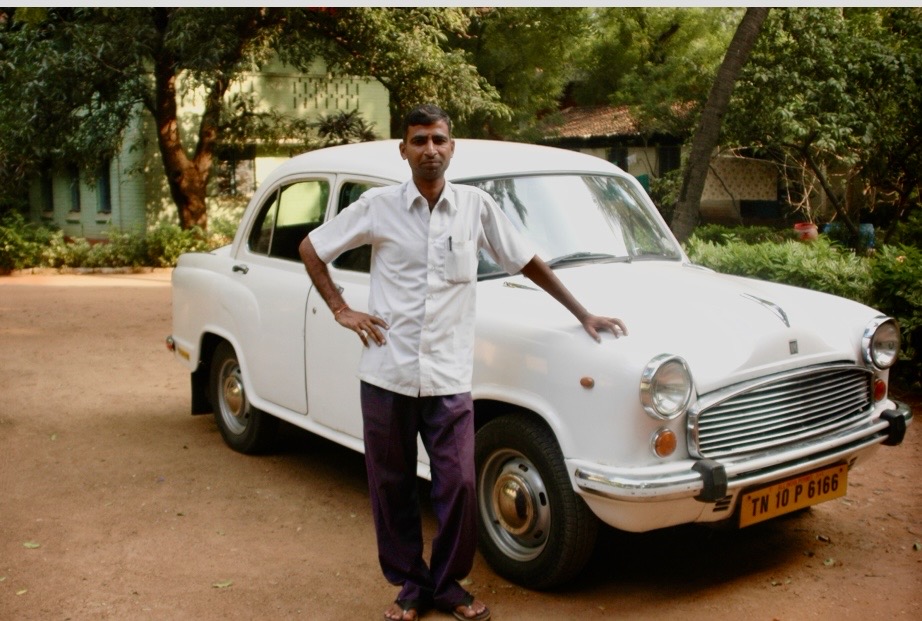
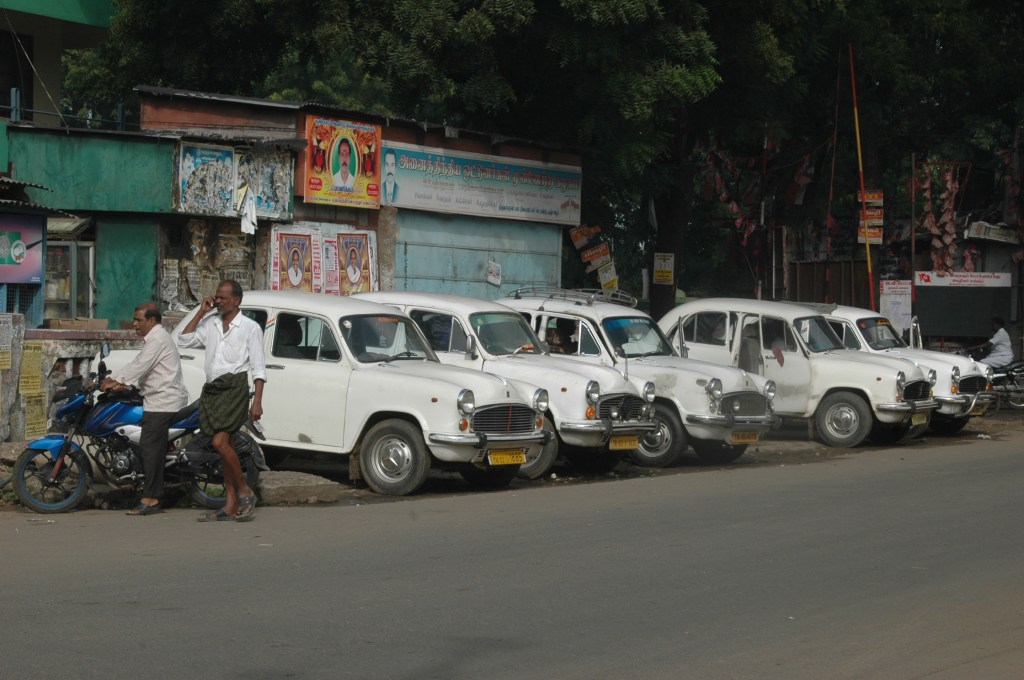
Since our 1990 taxi tag-team NASCAR racing extravaganza, I’ve always found traveling by taxi or private vehicle and driver an interesting, at times harrowing, experience. Although driving with Annamalai was safer than those taxi drivers, I had my moments. For example, we always closely drafted larger trucks, no matter their speed, no matter day or night. Yikes. Here is how I summarize his “Rules of the Road.”
- Know your inches, visually.
- Be prepared for anything to enter your path. People, dogs, goats, cows, water buffaloes and carts, scooters, motorcycles, buses, vans, trucks. They may be coming toward you on your side of the road. They may simply move in front of you. Let them
- Know how to use your horn, “I’m coming. I’m bigger.” “I know you are coming. And, I’m honking first, get out of my way.” “I’m see you. You are bigger than me. I yield.”
- At night drive with your brights on. It intimidates others.
- At night, drive without your lights on. It saves money. It surprises others.
- When in doubt where the road goes, keep driving.
I acknowledge that I only saw two accidents in my six weeks in India. One is two cars scraping each other. The other is a scooter who hits a pedestrian crossing a road. I’m not sure of the injuries. My driver doesn’t stop.
Flying AirIndia can also be an interesting experience. Departing from the Chennai airport for Mumbai, I am dropped off at the airport with plenty of time for my flight. I go to the check-in counter. “You’ll need a security tag for your bag. You’ll need to go that line.” After standing in line and obtaining a security tag, I return to check-in. The agent weighs my bag. “I’m sorry sir, but your bag is overweight. You’ll need to go that line.” After leaving the check-in counter, I move to the side to rearrange my bags in order to avoid the weight restriction. I carefully, well maybe not so carefully, remove items from the to-be checked in bag and place them in my carryon bag. Completing the process, I return to the check-in line. I’m hopeful until I hear. “Sir, you’ll have to still pay an overweight fee, the line is over there.” Once again, leave the line and join a line of others having to pay an overweight fee. Another agent weighs my bag; I pay 1000 rupees. Return to the check-in line, the agent hands me my boarding pass. While the requirements were understandable, I never saw a single explanatory sign. The process could be improved!
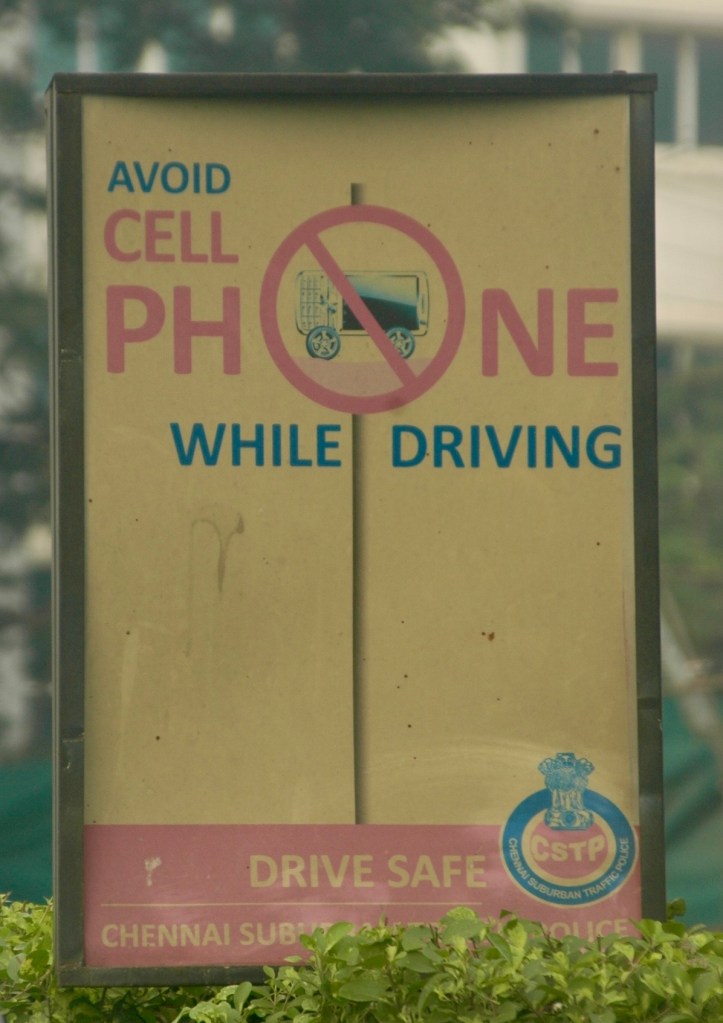
Annamalai closely drafts large trucks, no matter their speed, no matter day or night. Yikes. Here is how I summarize his “Rules of the Road.”
- Know your inches, visually.
- Be prepared for anything to enter your path. People, dogs, goats, cows, water buffaloes and carts, scooters, motorcycles, buses, vans, trucks. They may be coming toward you on your side of the road. They may simply move in front of you. Let them
- Know how to use your horn, “I’m coming. I’m bigger.” “I know you are coming. And, I’m honking first, get out of my way.” “I’m see you. You are bigger than me. I yield.”
- At night drive with your brights on. It intimidates others.
- At night, drive without your lights on. It saves money. It surprises others.
- When in doubt where the road goes, keep driving.
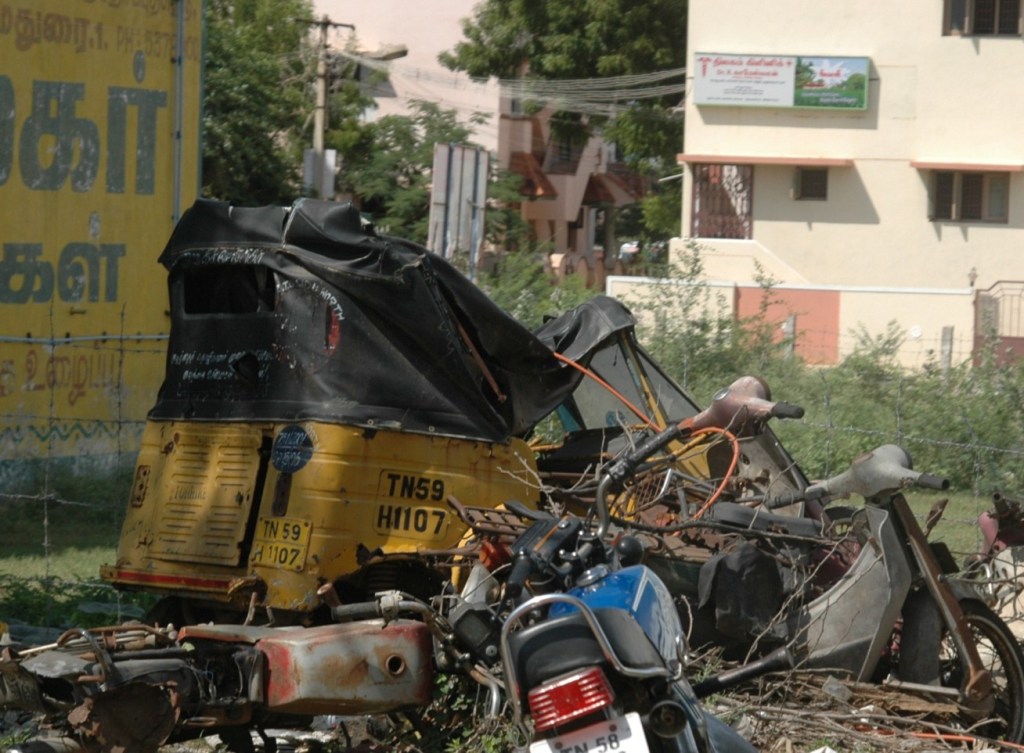
I acknowledge that I only saw two accidents in my six weeks in India. One is two cars scraping each other. The other is a scooter who hits a pedestrian crossing a road. I’m not sure of the injuries. My driver doesn’t stop. The destroyed tuk-tuk shows me that there are obviously more accidents that I don’t see!
Flying AirIndia can also be an interesting experience. Departing from the Chennai airport for Mumbai, I am dropped off at the airport with plenty of time for my flight. I go to the check-in counter. “You’ll need a security tag for your bag. You’ll need to go that line.” After standing in line and obtaining a security tag, I return to check-in. The agent weighs my bag. “I’m sorry sir, but your bag is overweight. You’ll need to go that line.” After leaving the check-in counter, I move to the side to rearrange my bags in order to avoid the weight restriction. I carefully, well maybe not so carefully, remove items from the to-be checked in bag and place them in my carryon bag. Completing the process, I return to the check-in line. I’m hopeful until I hear. “Sir, you’ll have to still pay an overweight fee, the line is over there.” Once again, leave the line and join a line of others having to pay an overweight fee. Another agent weighs my bag; I pay 1000 rupees. Return to the check-in line, the agent hands me my boarding pass. While the requirements were understandable, I never saw a single explanatory sign. The process could be improved!
As I recall my travels, I am grateful that these various modes of travel allowed me to travel safely and to an amazing number of locations. I’m aware that my travel also raises questions. In Delhi’s metro system, like riding Marta in Atlanta, I wonder how some impersonal encounters might change us into treating all encounters as impersonal. At Gaya Junction, I experienced the feeling of being “different” as one who stood out economically and socially. I wonder how we should respond to these inequalities linked to differences. Surely more recent responses of hate are self and socially destructive. As my driver Annamalai drives me through Tamil Nadu, I experience that fundamental reality of the car. I’m in a metal box that allows me to go places that I can’t even imagine; I’m in a metal box separate from everybody else on the road and the villages we pass. I wonder how to travel in a way that allows both the opportunity to see new places and actually to meet new people.
I’m also aware that these modes of travel share similarities and differences with how my English and Swedish grandparents traveled. They also had many questions. How do we handle face-to-face encounters? How does our migrating to the United States involve a degree of financial power that others don’t have. Someday, I hope to return to reading and reflecting more on our “mobilities revolution.” (as described by John Urry and others) He has many questions about our systems of travel and their impact upon us.
One result of reflecting upon my modes of moving around. Since traveling in India and elsewhere by car, train, and plane, I’ve returned to the oldest form of human movement. I’ve returned to walking, slow-walking as it is called today. The Camino Francais. The Camino Portuguese. The Via Francigena. The South West Coastal Path.
But back to traveling in India. Traveling in India isn’t for the faint of heart. But it sure is something special!
 Journeys: Explorations in Body, Mind, and Spirit