I’m exhausted. It has been a long series of connecting flights to Delhi. The passport and baggage claim goes smoothly, but lengthy. The driver gets me to my BnB without any difficulties. Then, after paying him, I realize that I don’t have any rupees left. Not good.
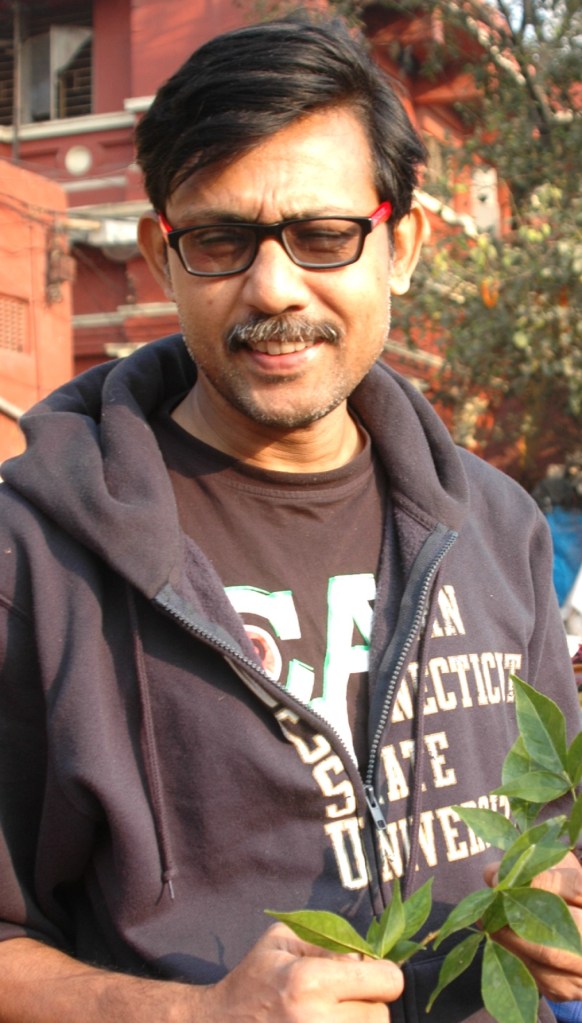
Pravin, my BnB host, comes to the rescue. “Here is enough for tomorrow until you get some from an ATM.” The next day, he even drives me to the nearest metro station so that I know the immediate area. A very kind and thoughtful host.
I don’t speak Hindi, Urdu, Bengali, Tamil or other languages of India. I don’t recognize signs or graffiti; I can’t say at a restaurant “Chai please” in Hindi or even ask a person on the street “Is the metro station near here?” I’m basically helpless when it comes to the languages. However, not to belittle myself too much; here is an overwhelming fact. The Indian Constitution recognizes 22 major languages with another 121 major languages spoken. Talk about linguistic diversity! Even Indians might have difficulty understanding each other!
By the end of my travels, I can make one claim. My BnB hosts such as Pravin, my drivers, and my guides make my trip. The trip has been wonderfully informative and interesting because of their patience, persistence in offering explanations, and their all-around kindness.
I understand why some visitors will book a packaged tour. A packaged tour is convenient and may offer unparalleled conveniences. Yet, it will probably be offered in a way that keeps visitors separated from ordinary Indians. Mark Twain probably didn’t take a packaged tour in 1896.
My guides walk me through ordinary India. Charvi and Molly, my two women guides, confidently show me not only southern Delhi with its backstreets and alleyways, but also the jostling crowds of Old Delhi. They love these contradictory parts of Delhi. Jai has me try Varanasi street food; however, only after he asks “How long has this been in the oil?” He introduces me to a Muslim friend and we talk about why there are notes on the Muslim shrine’s fence; he introduces me to a female Hindu friend and we talk about women’s lives past and present. On a Varanasi walking tour, Mayank helps me understand the difference between northern and southern ghats. Visitors and pilgrims cremated in the northern ghats; residents in the southern ghats. How would I know that distinction? In Kolkata, Rikwick spends a day patiently showing and telling me about flower markets and Belur Math. He introduces me to a monk who was born 30 miles from where I live here in Georgia, and to another monk with whom I talk Kant and Heidegger. Neither are experiences that I anticipate! In Mumbai, Dava not only shows me the Dharavi slum, but also his intense determination to move out of his poor financial condition to a more stable life. So many examples. So many more!
Of course, I hold my questions and replies at times. In Haridwar, I think to myself: “This local guide’s English isn’t great. I won’t ask that question.” A guide in south India proudly declares “This is the largest and best Hindu temple in the world.” I think to myself: “I need to do some fact checking here!”
I also know that my drivers and guides come with their own assumptions, about me and my interests, and their own perspectives. I never know exactly where and how those assumptions and perspectives begin to influence what they say to me. When Mayank says “The family that runs this ghat are like a mafia.” I wonder, “What else are you saying besides this family controls the area?” Occasionally, probably rarely, I wish I had an additional person to confirm or deny their statements. Biases and unsubstantiated opinions exist in all of us.
Besides these Indian “insiders”, I learn about India through other means. I find “outsider” readily available. My 1990 Fulbright seminar provided excellent lecturers. I’m still upset for not going with three other seminar members to R.K.Narayan’s home for tea and conversation. What a dummy! I love reading authors such as Amitav Ghosh, William Dalrymple, Diana Eck, Wendy Doniger, and dozens of others.
Yet, I keep returning to the hosts, the drivers, and the guides. Through their passion for India, through their divulging part of their own personal life, I sense India, not as a country which overwhelms or threatens, but as a country which invites visitors into mystery after mystery. Kudos to my hosts, drivers, and guides!
 Journeys: Explorations in Body, Mind, and Spirit