
Lucca, a Roman founded city, is an unanticipated gem. A city that simply allows one to feel as though one is living centuries ago.
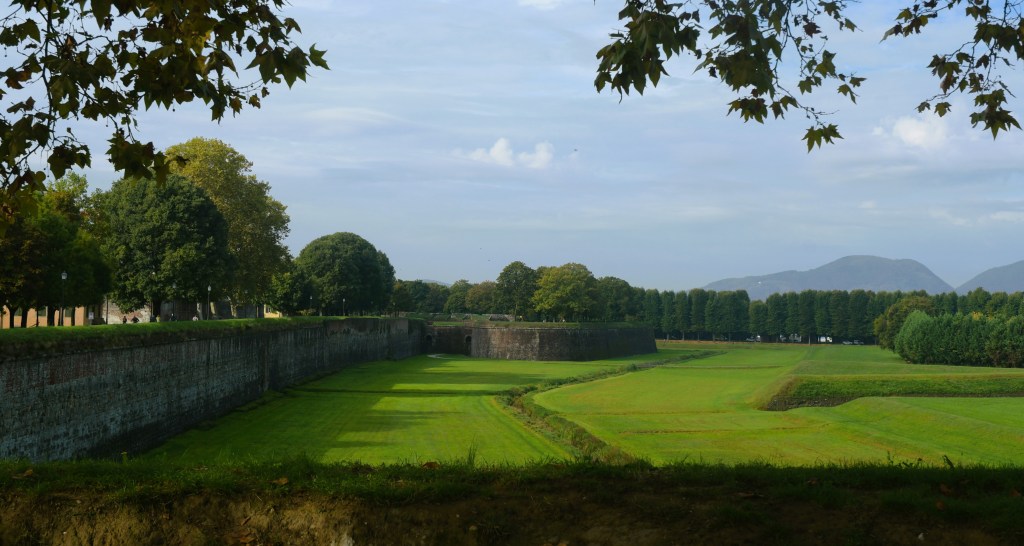
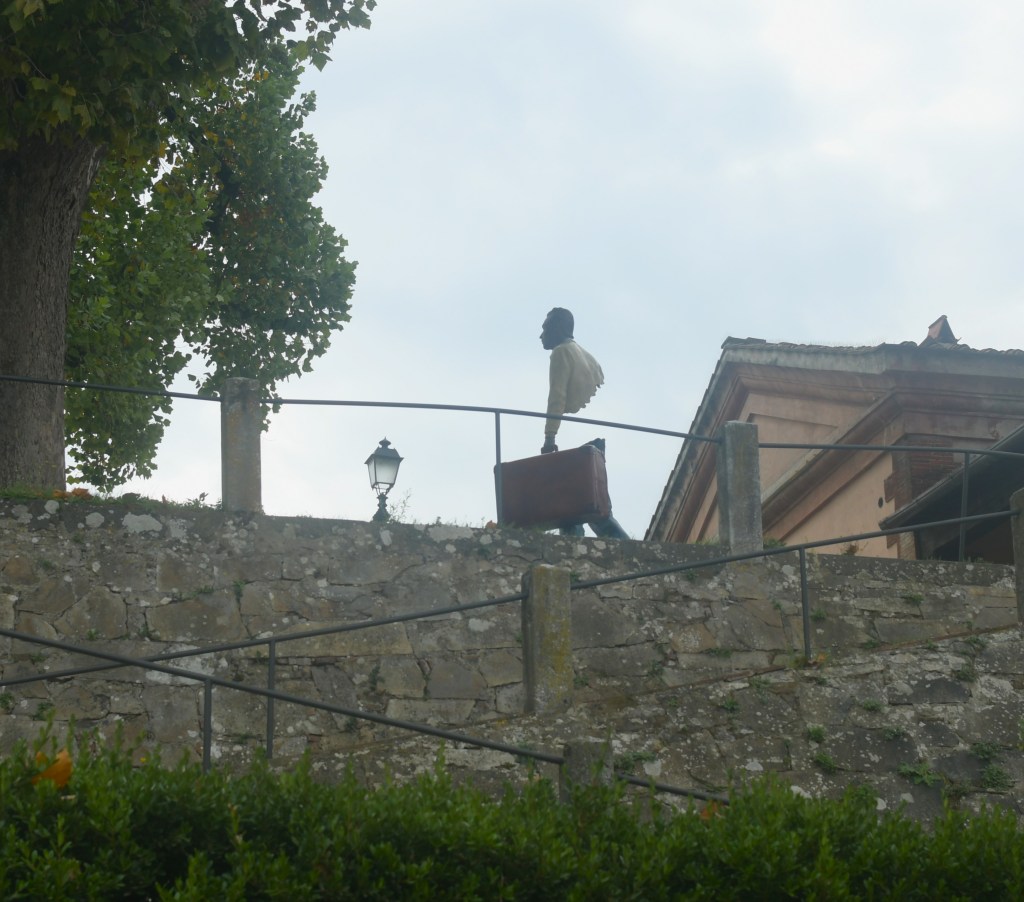
I have a rest day in Lucca. A day for exploring though! At first, I walk the massive, Renaissance city walls. The city walls, 2.6 miles in length, are the second longest in Europe. Since the walls were so successful a deterrent, Lucca was never attacked. These walls are so broad that a “royal” walkway was created on the top of the walls with mature oak, elm, and plane trees shading the path. Even a sculptured figure wants to walk along the walls.
The views outward toward the surrounding mountains remind me that I’m still in a rugged area. The views inward show that Lucca is packed with piazzas, churches, government buildings, and palaces. With many of the buildings only 3-4 stories, the churches dominate the town. Looking down from the wall, I see a flea market in one of the piazzas.
History. History. History. As elsewhere, the Romans laid out their city in a grid pattern with straight streets. The outline of their theater and amphitheater are still visible in two different piazzas. In 56 BC, Julius Caesar, Pompey, and Crassus, confirmed their first alliance. Big time folks in Lucca!
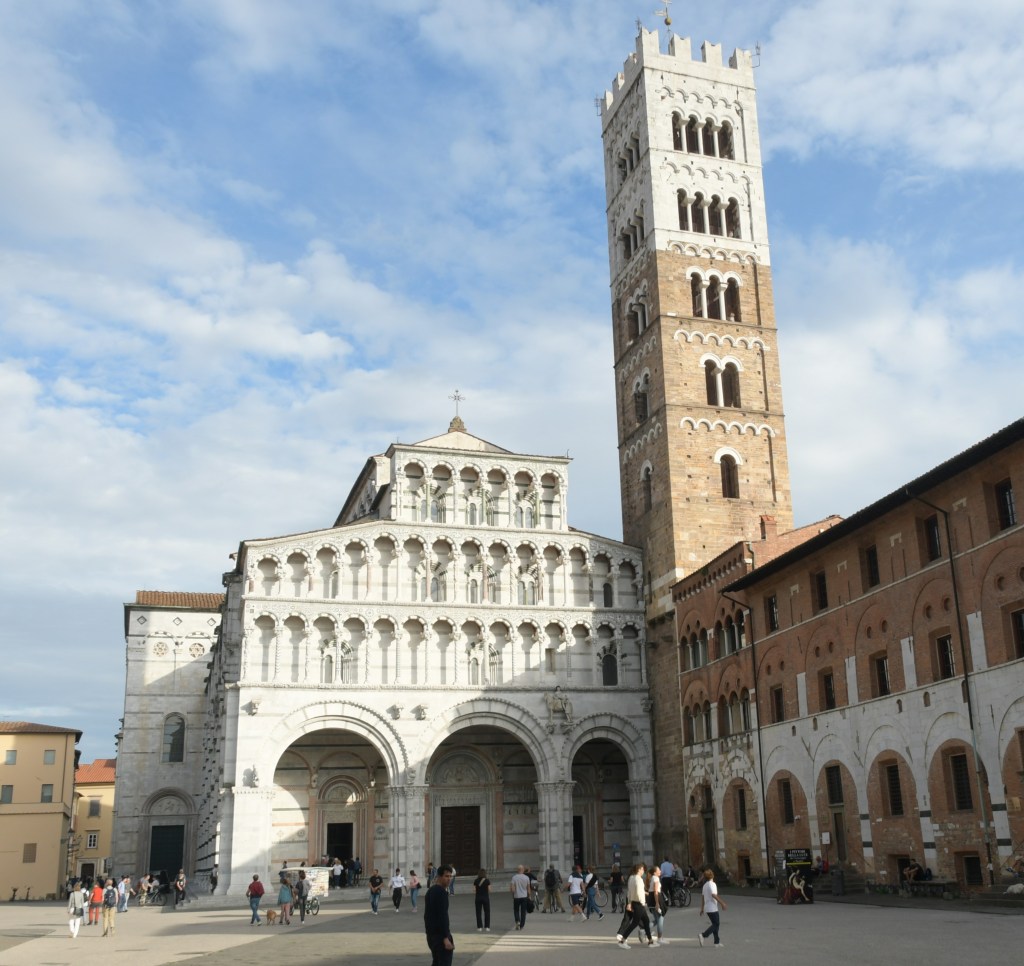
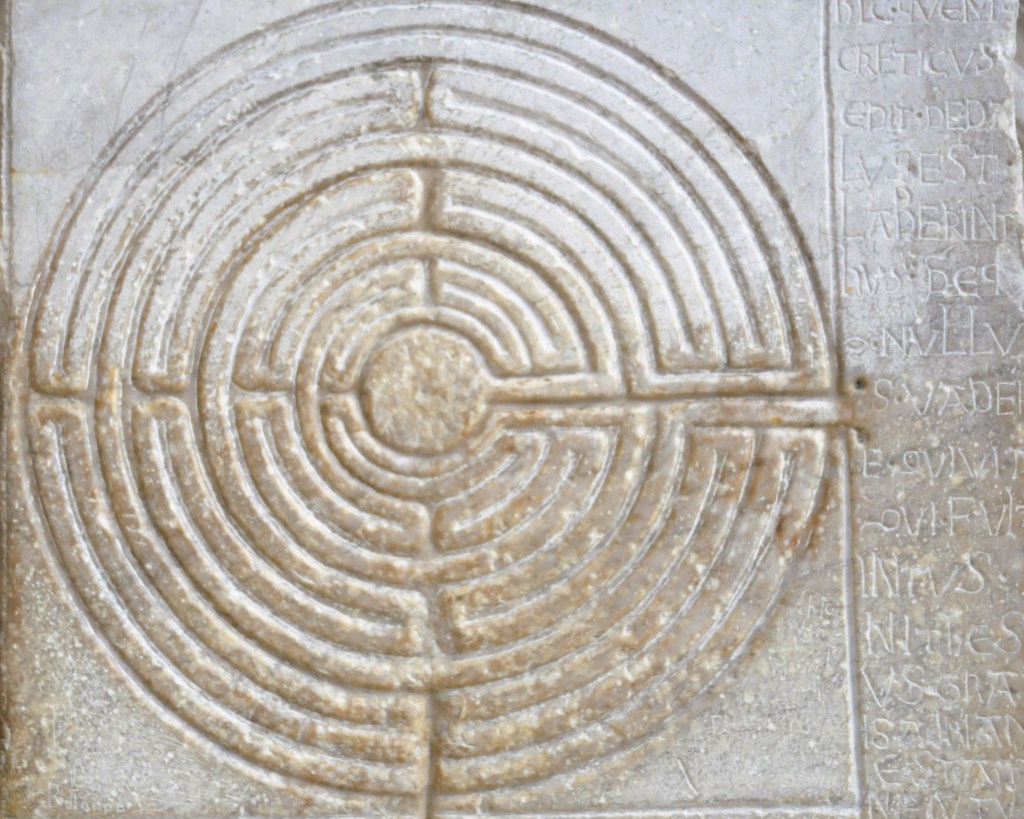
Christians have left their mark on Lucca. The Cathedral of San Martino is impressive in its own right as well as the famous labyrinth carved into one of the Cathedral’s exterior columns. How many fingers have traced the labyrinth’s path?
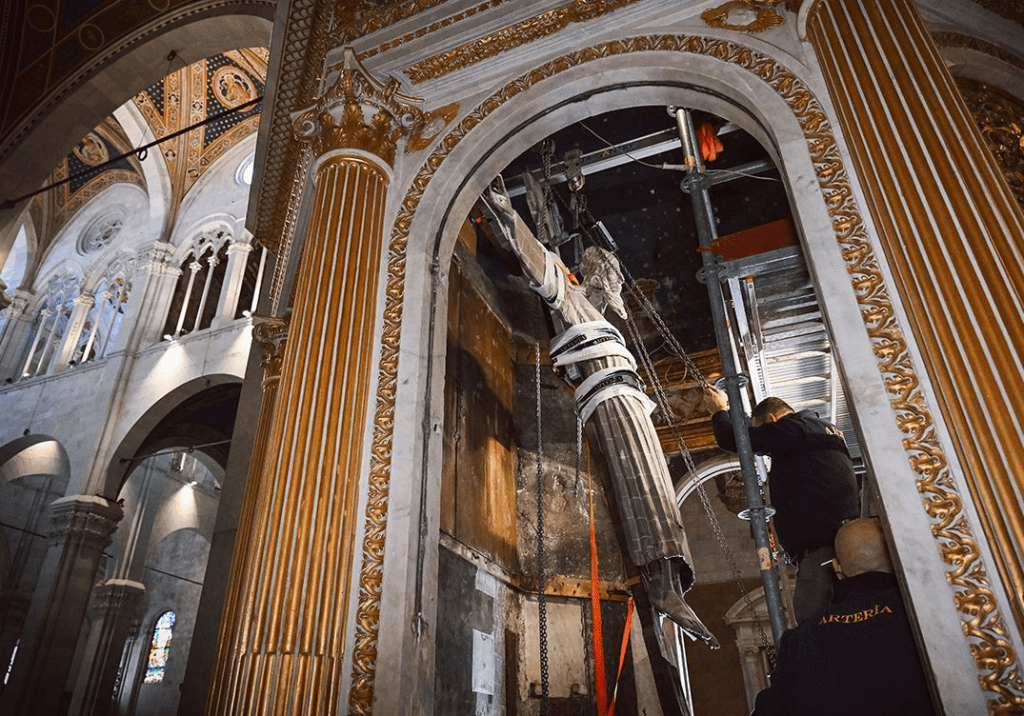
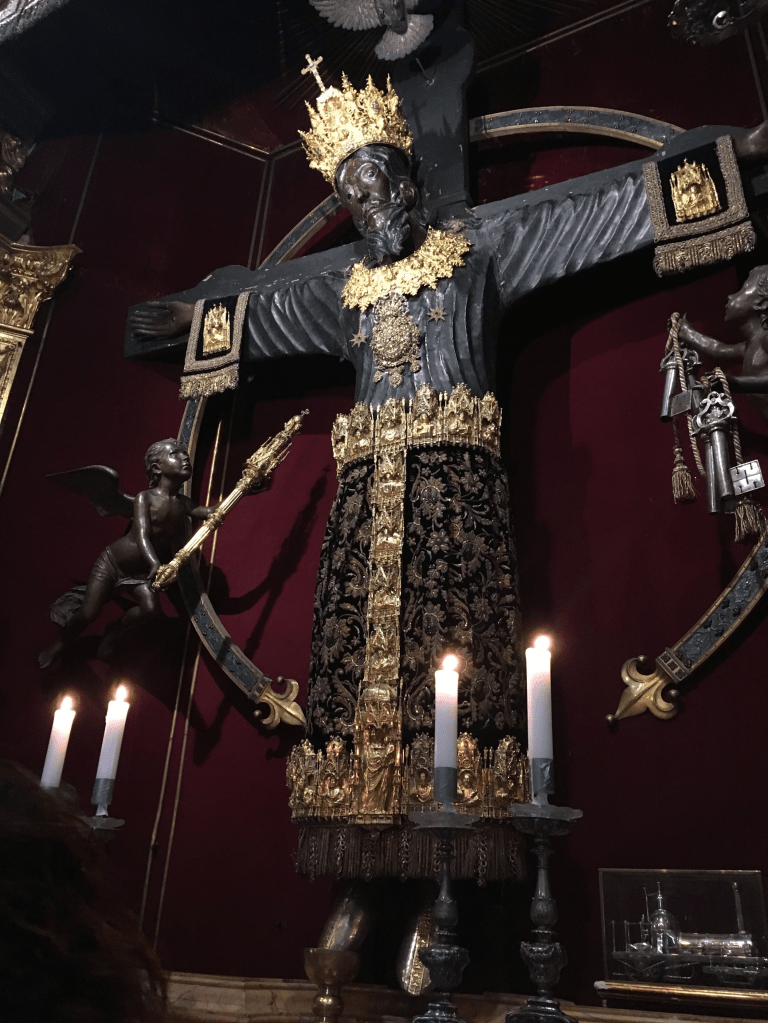
Before the construction of the Cathedral, an eight-foot wooden carving of the crucified Jesus arrived in Lucca. Legends claim that this “Holy Face of Jesus” was created by Nicodemus of the New Testament. The carving was known by Dante who refers to it in The Inferno, “Qui non ha luogo il Volto Santo! (The Holy Face does not take place here!).” Dating the wooden carving to around 782 CE, scholars have confirmed the carving as the oldest wooden sculpture in Europe.
Beginning in September 2022, specialists began a lengthy project to restore the wooden sculpture. Here are photos during the moving of the carving and prior to the move (both photos are copied).
Lucca has some noteworthy people from its past. Lucca proudly recognizes that Bishop Anselmo de Baggio, one of the reform leaders of the day, became Pope Alexander II in 1061 until 1073. In addition, Saint Zita, the incorruptible, was born nearby Lucca in the 1272 and declared a saint in 1696. More about her in a future blog!
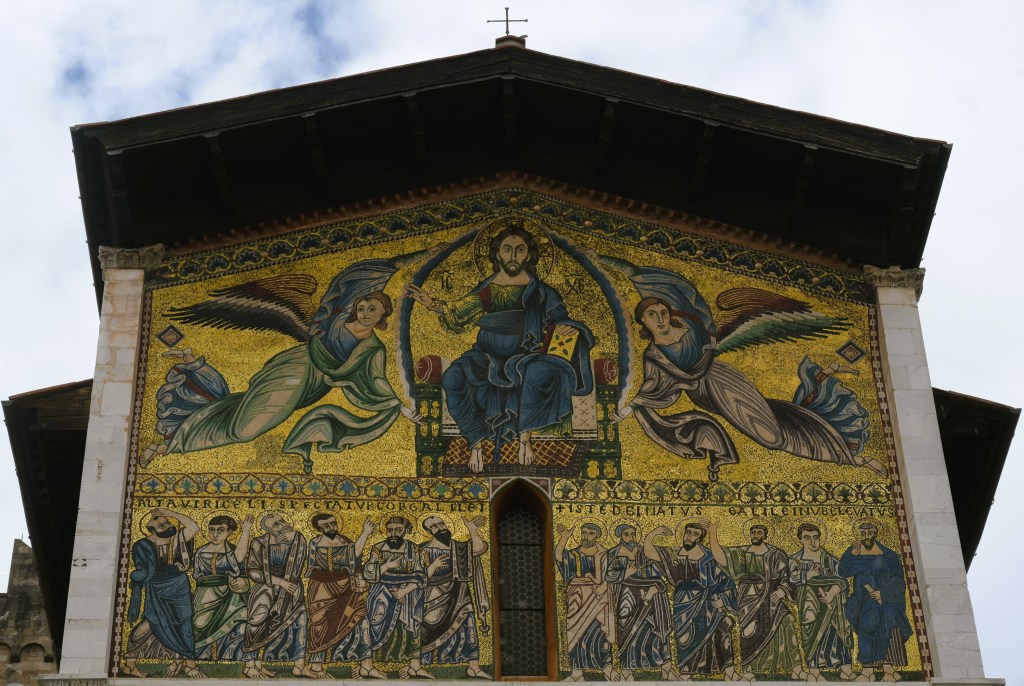
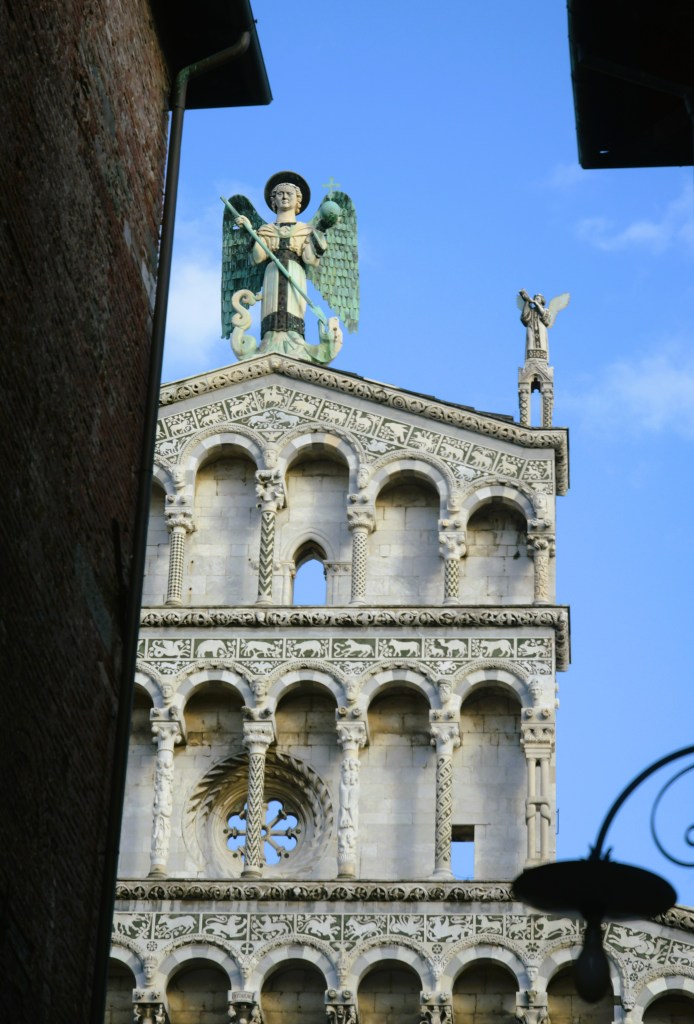
Besides the Cathedral, the Basilica of San Frediano has a striking golden mosaic of Jesus on its exterior front. The Church of San Michelle in Foro has a striking exterior with a narrow facade dominated by a sculpture of Saint Michael slaying the dragon.
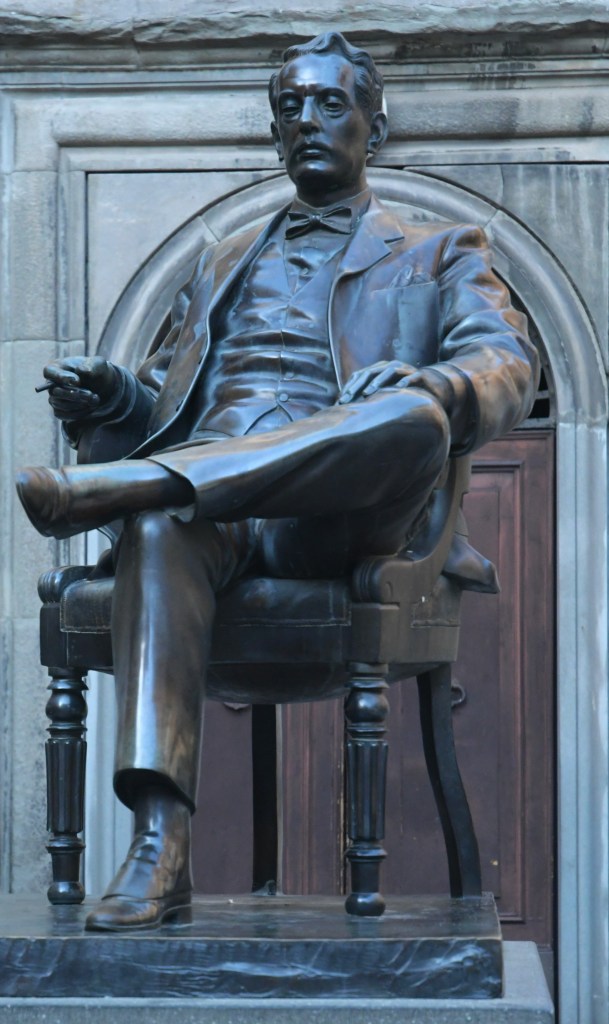
Besides its religious history and legacies, there are two other noteworthy features. Regarding political history, Lucca from the late medieval period through the Renaissance maintained its independence. No small achievement! Dante even spent some of his exile in Lucca! Regarding music history, every opera buff probably knows that Puccini was born and lived in Lucca.
I expect to find history in Rome. I expect to find beauty in the hills of Tuscany. I am surprised by the history and beauty of Lucca. So much history shows itself in this small and wonderful city of Lucca.

