
Besides walking this area of the Somme, I visited three museums and the Commonwealth War Graves Commission’s Center.
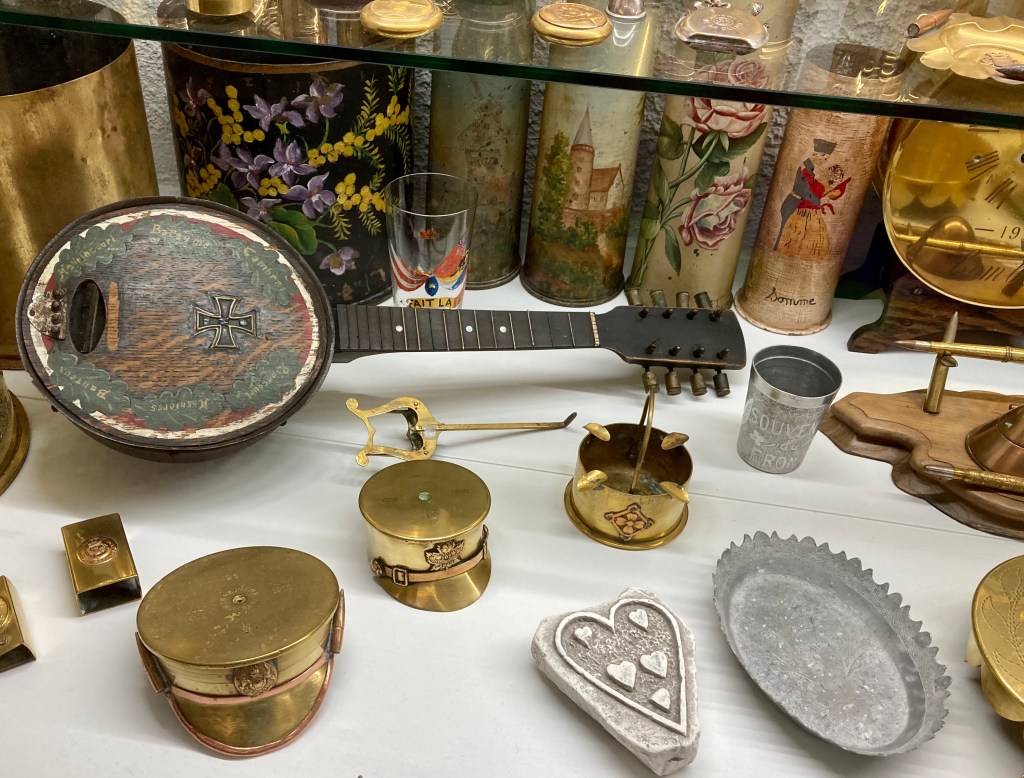
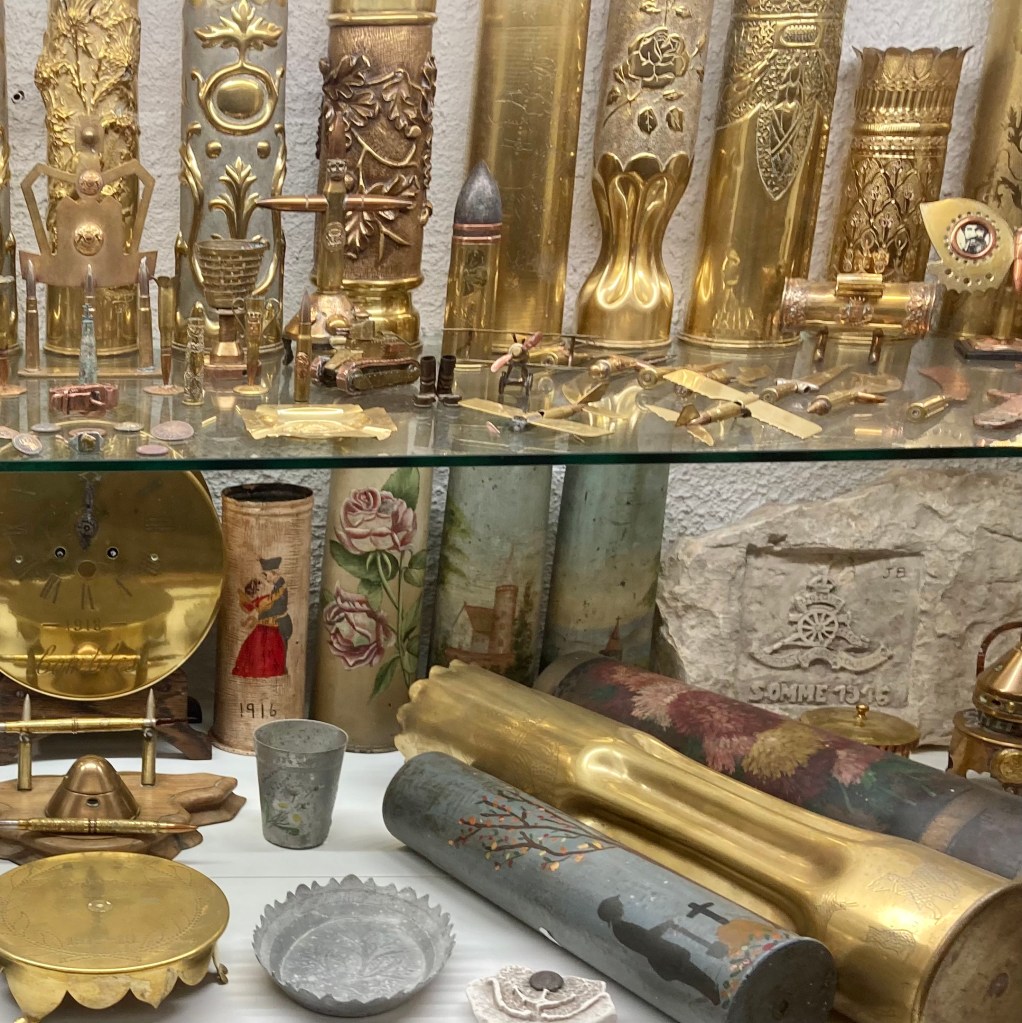
I forgot to mention in the previous post that soldiers had ways of dealing with boredom. Some of them made art in the trenches. Just as I like photographing artistic individuals, whether it be folk art, street art, graffiti art, high-culture art, I loved looking at some of the trench art.
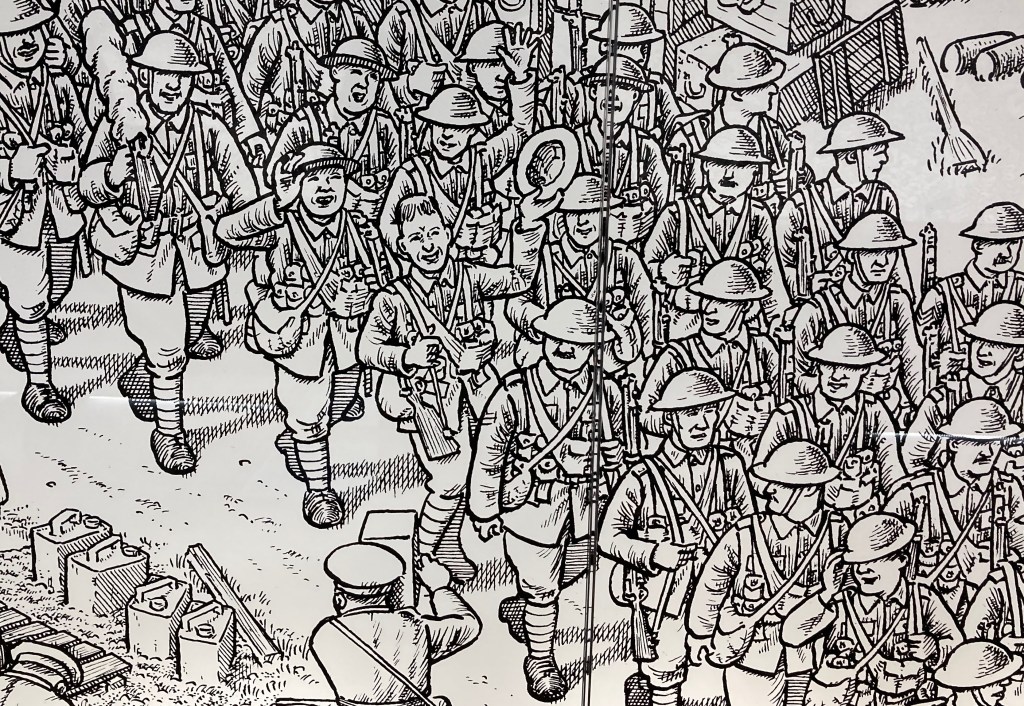
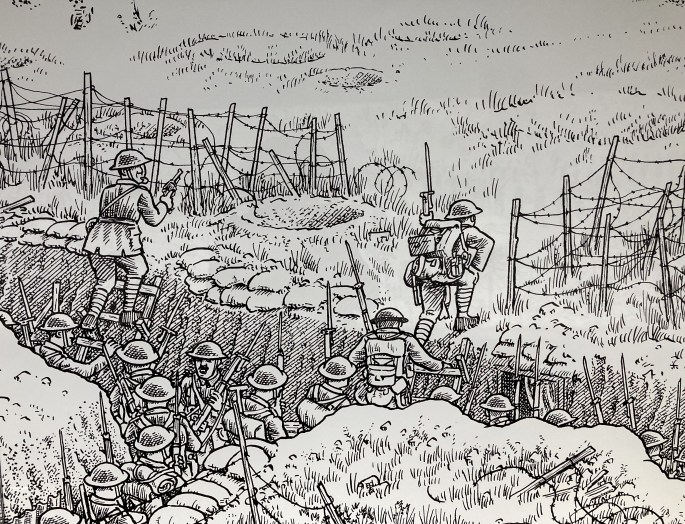
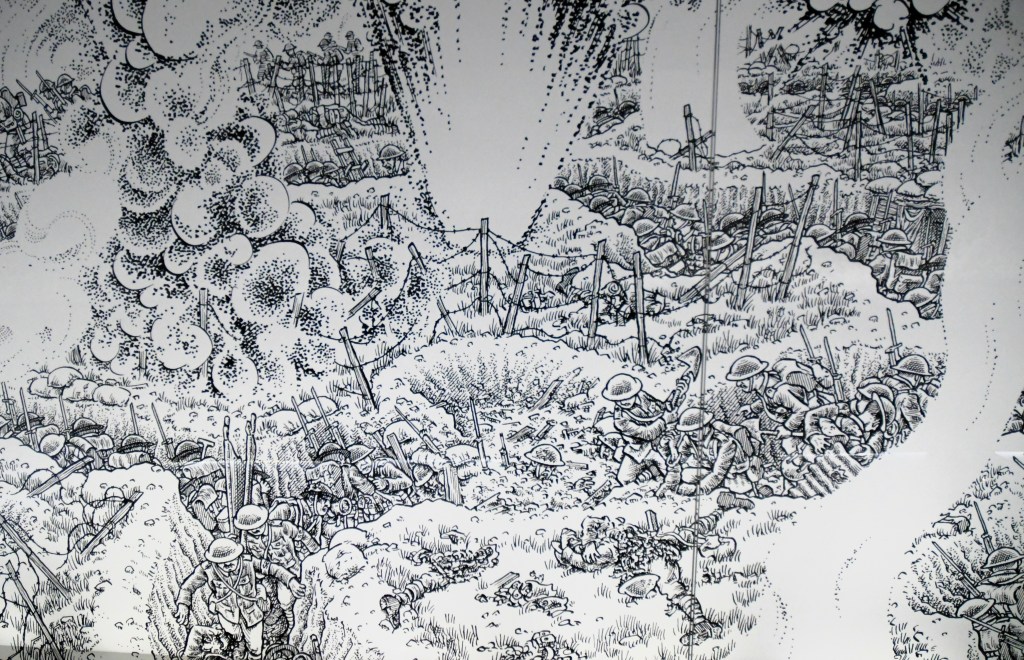
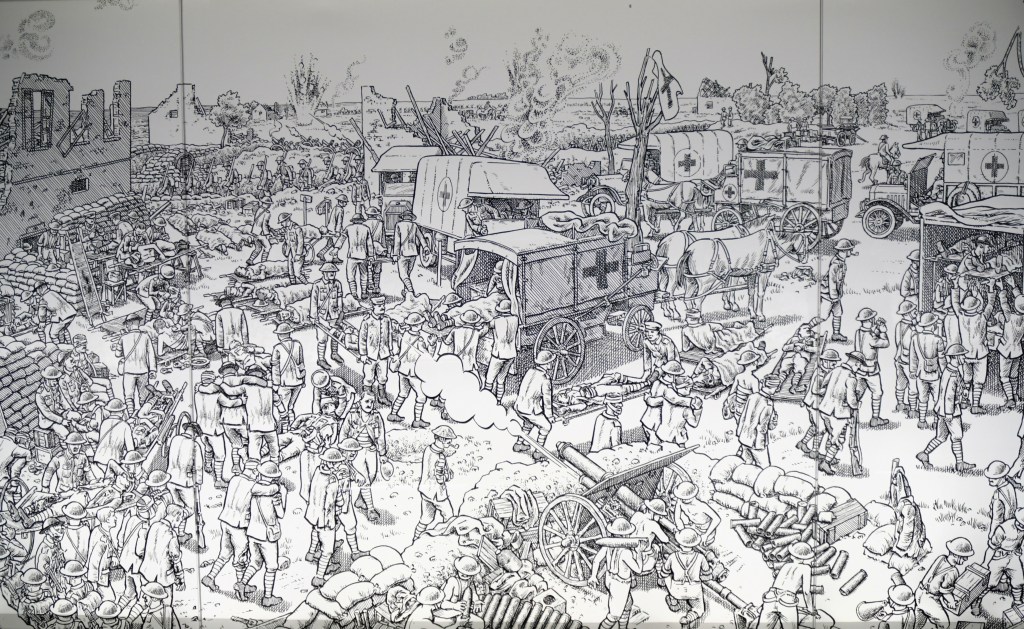
Also, as I mentioned in the post beginning with my paternal grandfather Lindquist and the Forward March book published by the Disabled Veterans of the War, I spent hours looking at the black and white photos. One museum had line drawings stretching both sides of a large room to convey the feelings of July 1st, the day of the first large-scale attack. It begins with jovial excitement; moves toward going over the trench wire; and ends with the utter shock of the day.
The Germans had their own “recorders.” Otto Dixon, a graduate of the Dresden School of Decorative Arts, served and survived the war as a German soldier. To help him cope and process his own experiences he drew fifty etchings that were then published in 1924.
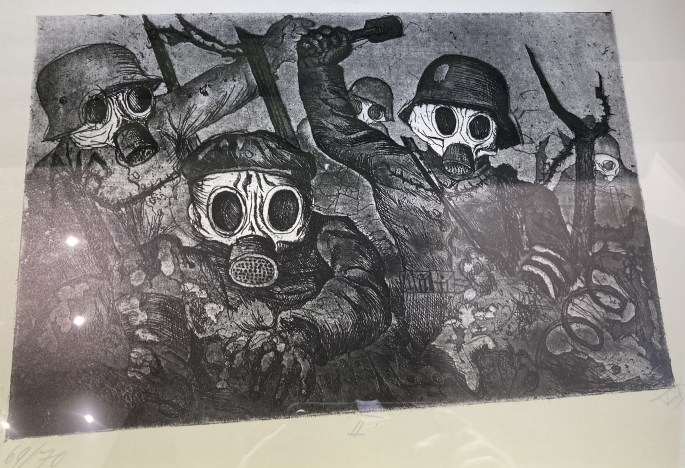
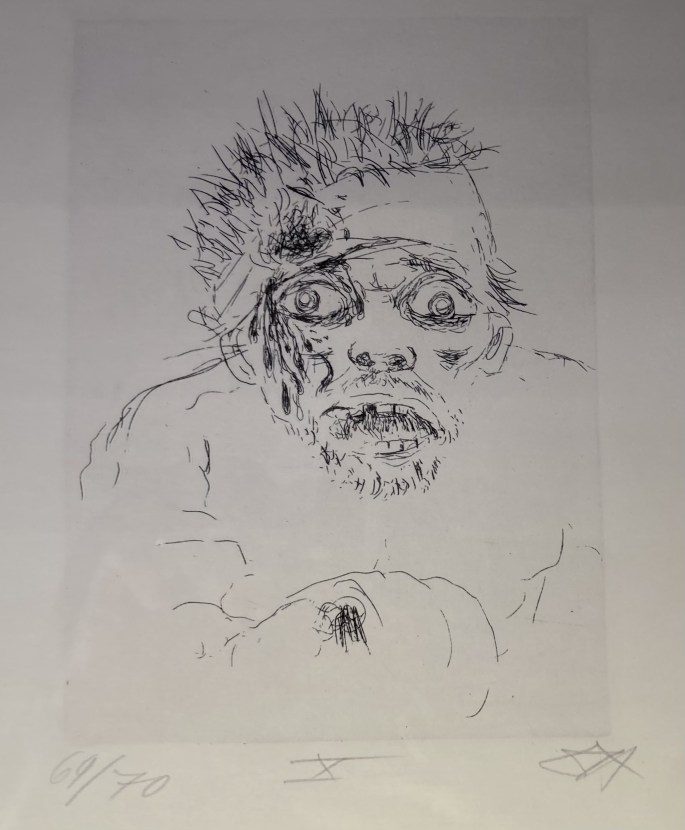
My grandfather’s book, the large drawings, and Dix’s etchings all show the pure horror of this war.

