Before the formal Fulbright seminar begins in Madras (Chennai), we learn about rural India. In our particular seminar “The Geography and Culture of India”, one of the major goals is to familiarize its participants with the people and the land of the host country. While we all have stereotypes of Indian cities and slums, approximately 75% of India is rural. According to 2024 statistics, approximately 60-65% is rural.
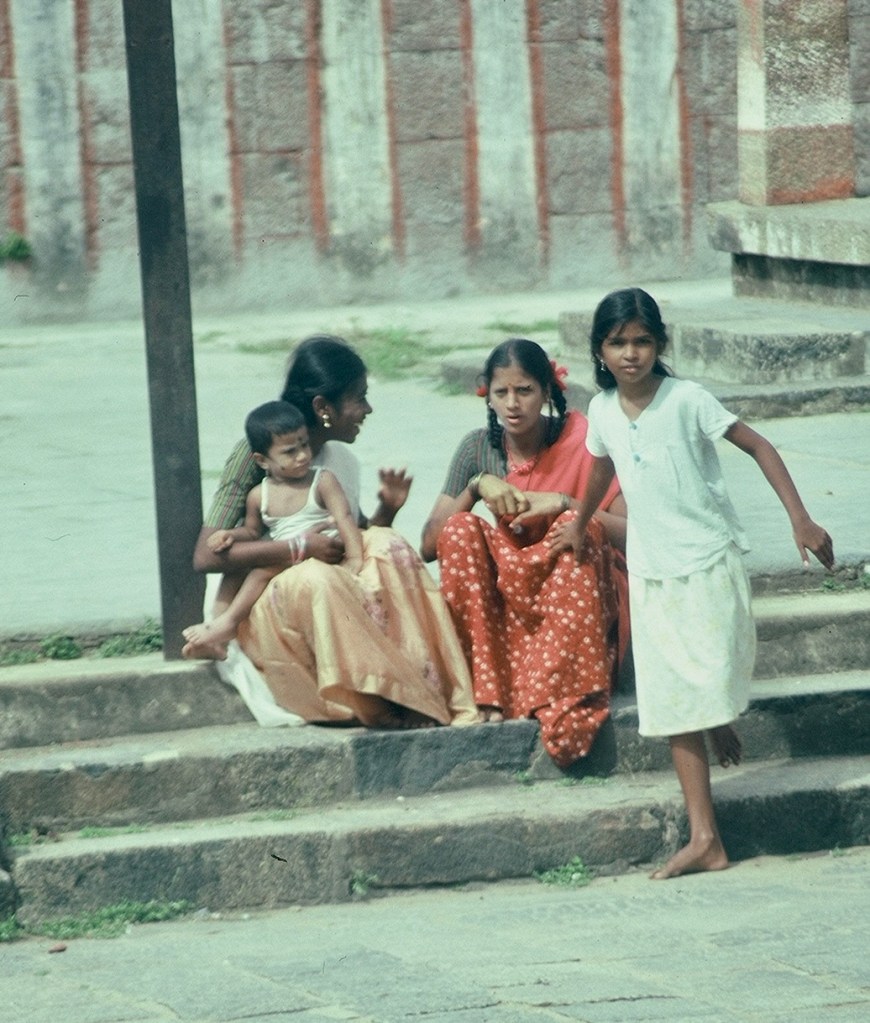
With Professor Subbiah, we visit Karunilam village, an hour and a half north of Madras. Professor Subbiah tells us “drive 100 miles from Madras or Delhi or Bombay, and you’ll pass through several centuries.”
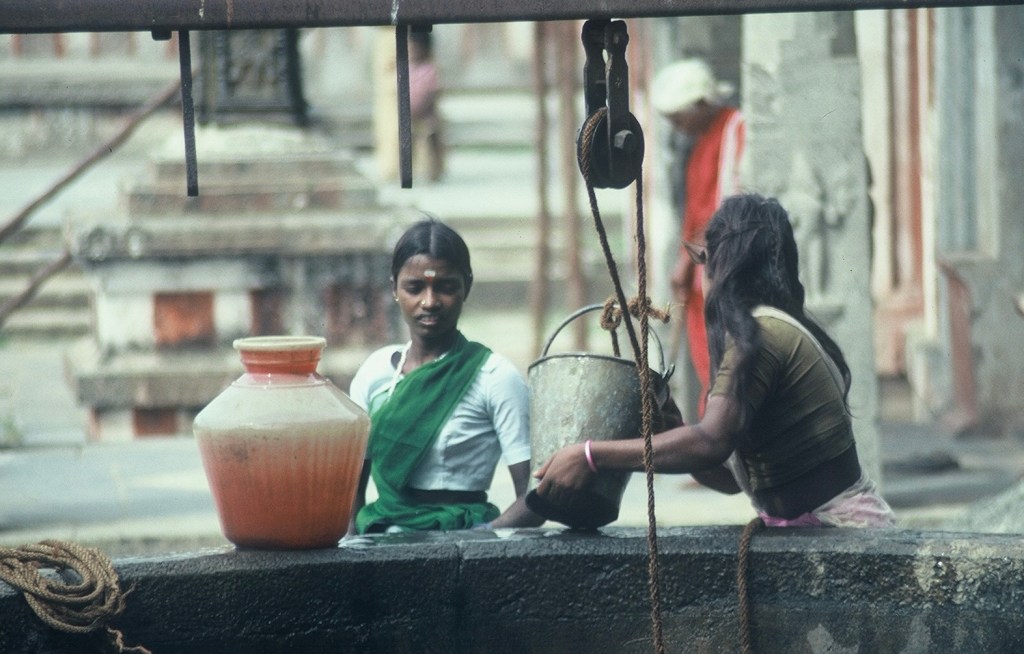
Water is essential for the villagers; especially in the years when the monsoons fail. The “dry” villages depend upon the seasonal monsoons for their water; the “wet” villages depend upon irrigation and wells which allow them to have two, maybe three, crops a year. Still a lack of water can be a problem even for the wet villages. Around Madras, thirty or forty lakes have disappeared because of both evaporation and the lowering of the water table. In the past, wells only had to be a few dozen feet deep; now, those wells may have to be two hundred feet deep.
At Karunilam village, “President Kanapanayu,” the “mayor” and main authority of the village, greets us at his home. As we sit on chairs and benches, he and fifteen other “important” men serve us coconuts. He takes great pride in showing us his home which is equipped with the latest technology. In particular, his stove uses methane gas derived from cow dung as his cooking fuel. Leading the way, he shows us the homes of various villagers of different castes.
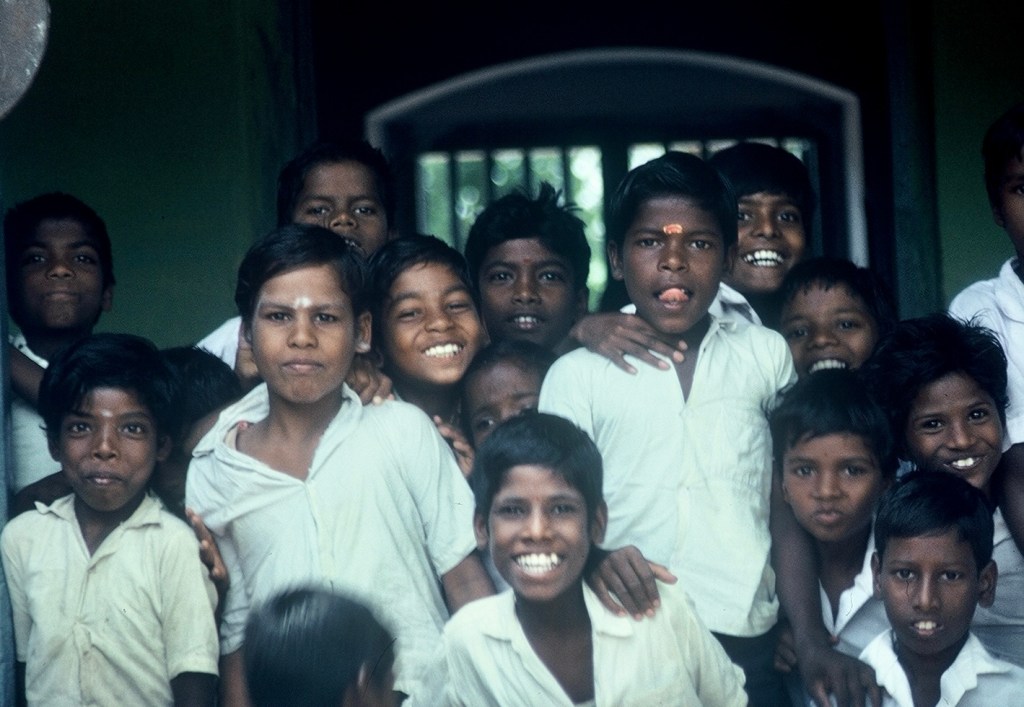
One of the last stops is the village school for approximately five hundred grade school children. At first, we see a school that is a model of polite, disciplined, children quietly sitting on the floor in neat rows. As we walk through a fifth-grade classroom, one young child jumps to his feet and nervously asks us “How are you?” “Where are you from?” He immediately sinks back onto the floor, and breaks out in a big grin! By the time we leave, these hundred of children wave and scream “good-by” to us. That is more like the kids back home!
 Journeys: Explorations in Body, Mind, and Spirit