My flight to Dharmsala lands roughly, but safely. Yeah! Before talking about the Dalai Lama and the Tibetan presence, the main reason for my traveling to Dharamsala, I want to describe my initial impression of Westerners and Dharamsala, my two interesting conversations with Westerners, and a reminder that Westerners had made Dharamsala their own home.
Westerners’ presence in Dharamsala doesn’t surprise me. Like Haridwar and Rishikesh, with their strong attraction for pilgrims and the 1968 Beatles retreat to Maharishi Yogi’s Ashram, Dharamsala cements itself into Western consciousness. In 2001, my alma mater Emory University formed the “Emory-Tibet Partnership.” While this partnership has grown in fascinating ways, it begins as a typical study-abroad program for students. This appeal for Westerners focuses on the Dalai Lama.
While visiting the Tsuglagkhang Complex, which includes the Dalai Lama’s residence, I noticed two tours. One is a tour of older people; the other a mixed-age tour of twenty individuals. Even from a distance, I can hear the guides addressing each group in English, and the participants asking questions in English. We Westerners do get around! Beyond the Dalai Lama, Dharamsala appeals to individuals who can find assistance in learning yoga and Tibetan meditation. Because of its status as a former British “hill-city,” individuals also visit Dharamsala because the cooler climate.
During my stay at my small hotel, I have two interesting breakfast conversation. Mark, attached to Cultural Affairs at Delhi’s US Embassy, and I chat one morning. As a career consular employee, Mark is in his second year in India; he’s previously served in Chengdu (China), and Taipei (Taiwan). Possibly showing his governmental work, Mark is impressed with the similarities between India and the USA. Both countries emphasize democracy; both countries emphasize entrepreneurship; both countries affirm freedom of religion. “There is so much that we share in common.”
Not really talking about Dharamsala, we continue our broader discussion of India. In his fairly brief time in India, he thoroughly enjoyed visiting the Wagah Border crossing between India and Pakistan. “A real show! Uniformed soldiers from both countries, goose-stepping, cursing each other, and basically insulting the other country! All with a controlled and pretended rage! Quite choreographed for the hundreds of visitors watching the show!” He suggests that I visit the border crossing.
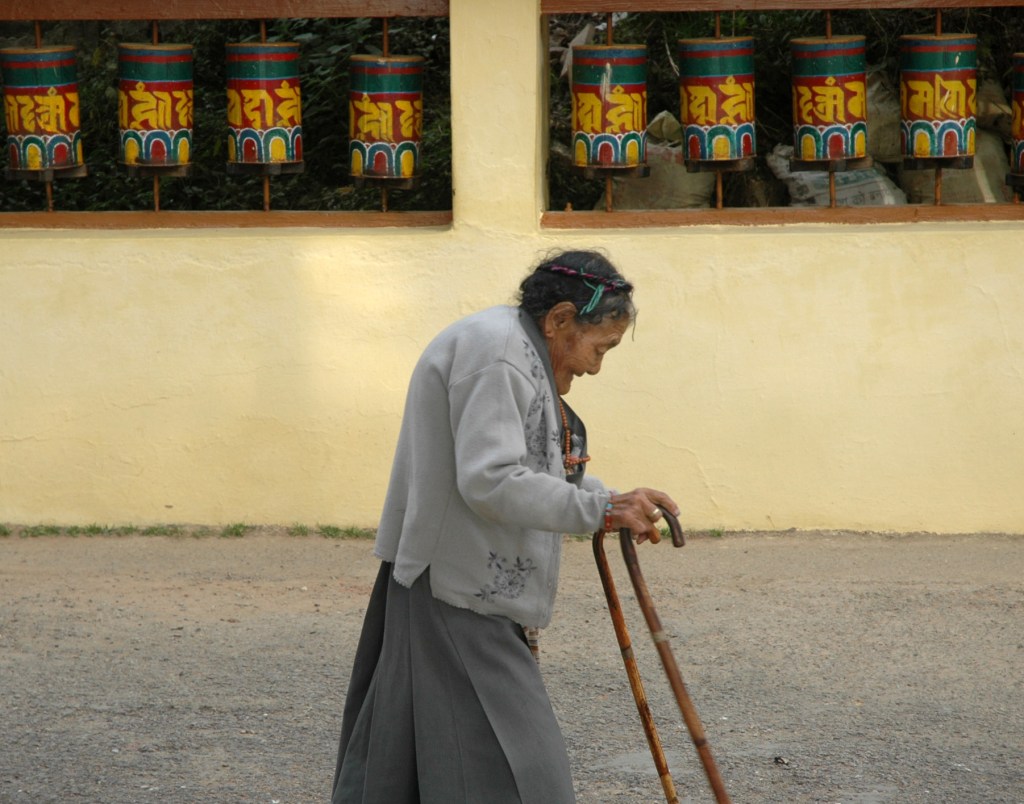
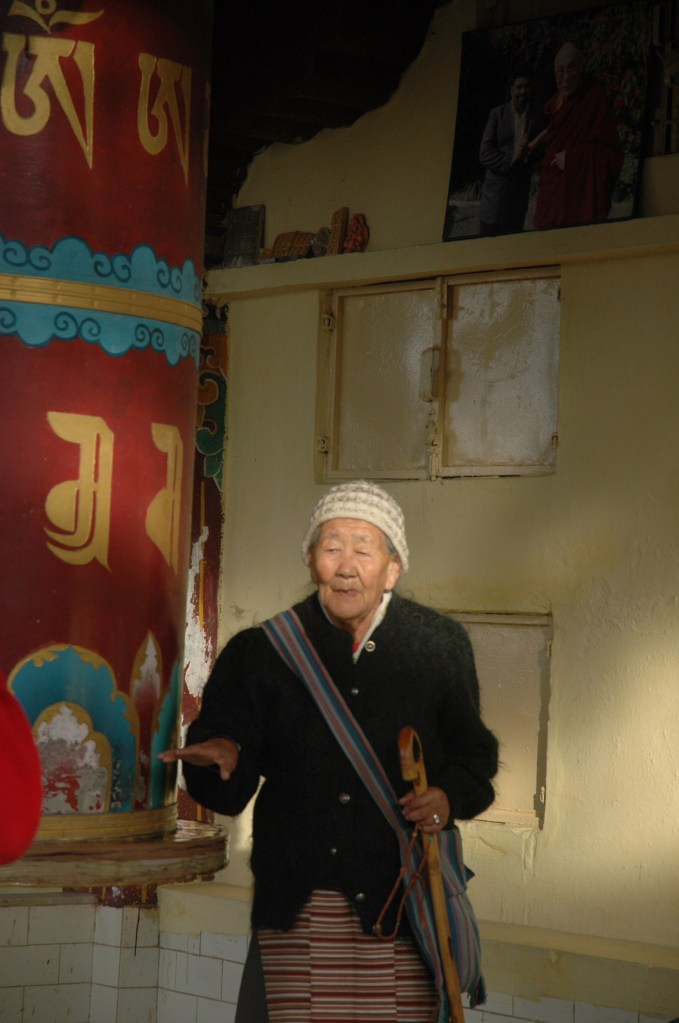
My other conversation partner one morning is David. While Mark and I don’t talk about Dharamsala, David and I only talk about Dharamsala! Although a former professor of anthropology, he has become a free-lance photographer. Making a trip from Germany where he lives, he leads several clients in a photography tour of northern India. “We have to be open to recognizing the Indians for who they are. They have their own ways of living, their own values, their own hopes.” I couldn’t agree more! When he asks if I wanted to meet the small group for a photographing session of pilgrims circumambulating the Dalai Lama’s residence and complex, I jump at the chance!
Other Westerners have made Dharamsala their home, if only for part of the year. I’m speaking about Dharamsala as a “hill-city” for the British. One afternoon, I take a tuk-tuk to St. John in the Wilderness Church. What a name! If you guess that the church was named for John the Baptist, you are correct. Although closed, I wander around the church grounds and talk with two other non-Indian visitors.
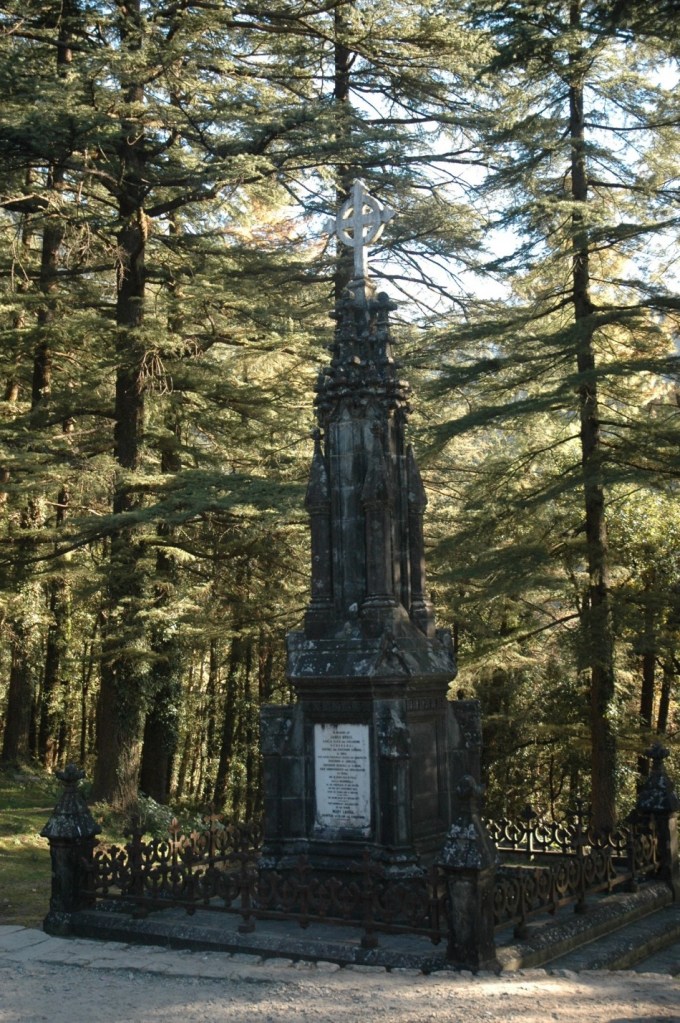
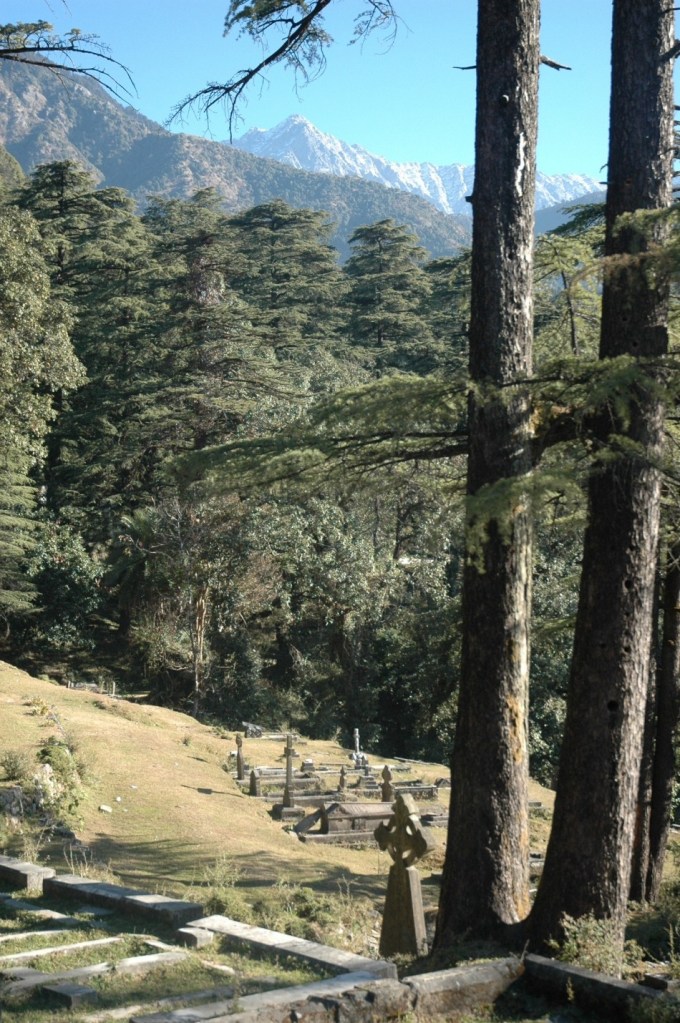
Built in 1852, the church, or more accurately the cemetery, has two memorable features. Lord Elgin, whose father purchased the “Elgin Marbles” of the Greek Parthenon which are found in the British Museum, served as the first Governor General and Viceroy of India during the British Raj. In 1863, he died in Dharmsala and is buried in this cemetery. In addition, the cemetery reminds the visitor that the British often experienced more than they expected in India. In this region, a 1905 earthquake killed almost 20,000 people. Strolling through the cemetery, I read numerous gravestones listing the names of young infants and children, military personnel, clergy and missionaries. One tombstone, describes a father and three sons dying within three days of each other in 1905, probably associated with the 1905 earthquake. Death happens to all, even Westerners in Dharmsala.
 Journeys: Explorations in Body, Mind, and Spirit