To be honest, I forget how I heard about the Tibetan Children’s Village. Regardless, I decided to stretch my legs and walk to the TCV.
Since the Tibetan Children’s Village is located “only” a mile outside the town, I say to myself “No problem. I’ll love a fresh walk in the countryside.” Well, the walk is exhilarating; the walk is also confusing. In looking at a map, it appears that a dirt and gravel road lead to the “village.” Somehow, I get lost. I turn onto a private lane which ends eventually at a private residence. Fortunately, a woman speaking some English points to a path. She utters those always fateful words: “Not hard. Much shorter.” Always be cautious when somebody says “Not harder. Much shorter.” I have to scramble up a cliff, and carefully crawl under barb wire! When the path intersects a paved road, I divert to the road. Surely, this road leads somewhere. I hope that the “somewhere” is the Tibetan Children’s Village.
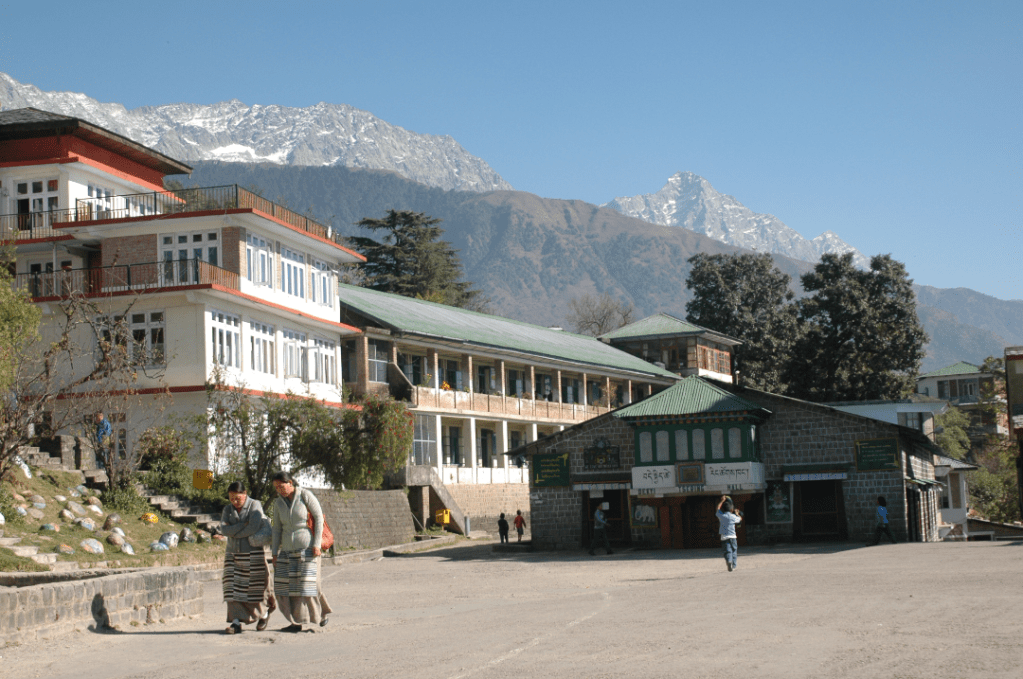
It does! Upon reaching the village, I find the main office. Surprised that a visitor from the USA is present, the office selects a staff member to show me around and tell me the village’s story.

The staff person tells me the backstory. After the 1959 arrival in Dharamsala, the Dalai Lama and his sister realized that children especially need help, and that these children would be the future hope of Tibet. With his sister agreeing to make arrangements to care for the children, the village is founded in early 1960 with 51 refugee children. Since the early 1960’s, approximately 16,000 children have been helped.
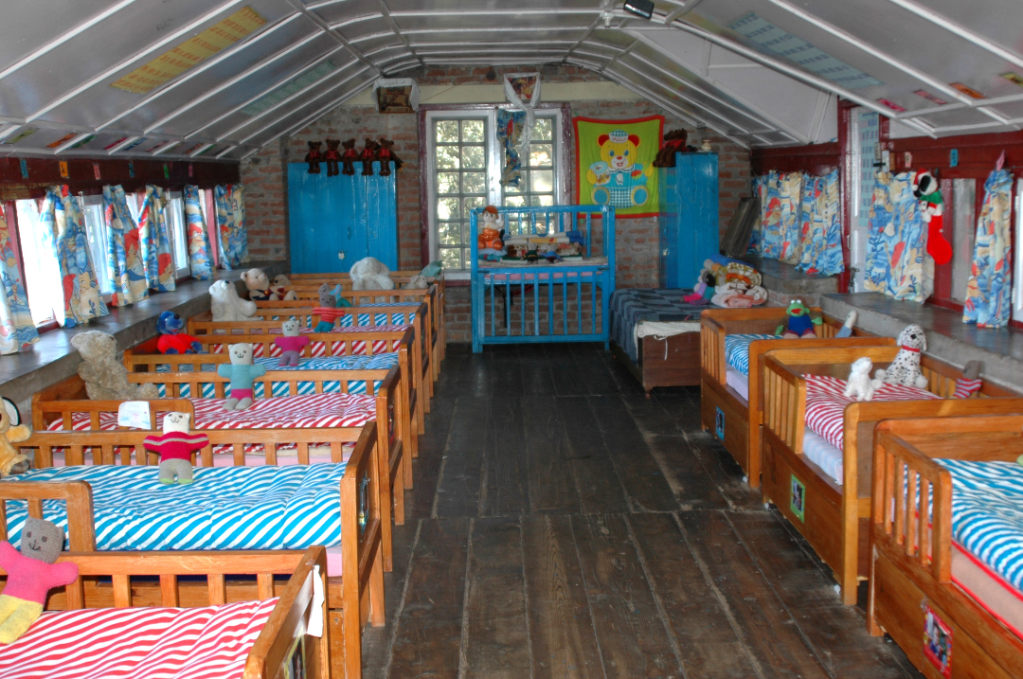
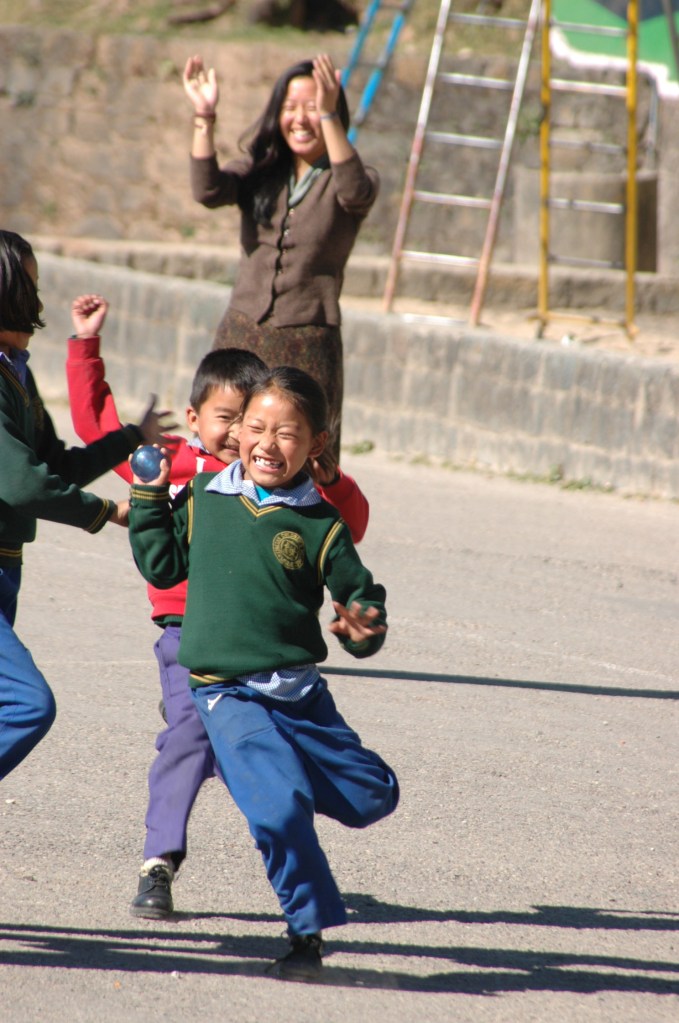
Much like the Decatur Methodist Children’s Home (or now the Wellroot Family Services) which helped orphans after the Civil War, the Tibetan Children’s Village consists of several “houses” staffed by foster parents. These parents receive 6-12 months of training, and usually spend their life working in one “house.” Their house may have up to 35 children from the ages of one to eighteen. The children are not only cared for, but also learn how to handle responsibilities such as sweeping and cleaning the house, preparing meals, etc. As the children grow older, the children are taught in the residential school. When we pass the playground, I can tell that I’ve arrived at the most important time of the day, recess!
While the Children’s Village originated to help orphans who had lost parents in the Chinese invasion of Tibet, the Village had to face a sad reality. Tibetan parents were smuggling their children to India. The parents despaired of any future life for their children in Chinese occupied Tibet. Knowing that they, as parents, might never see their child again, the parents hoped for a better life for the child free from Chinese rule. Wow!
Since the founding of this Tibetan Children’s Village, other Tibetan communities have been established in India. Located in about 35 refuge settlements scattered around India, approximately 100,000 Tibetans now live in India.
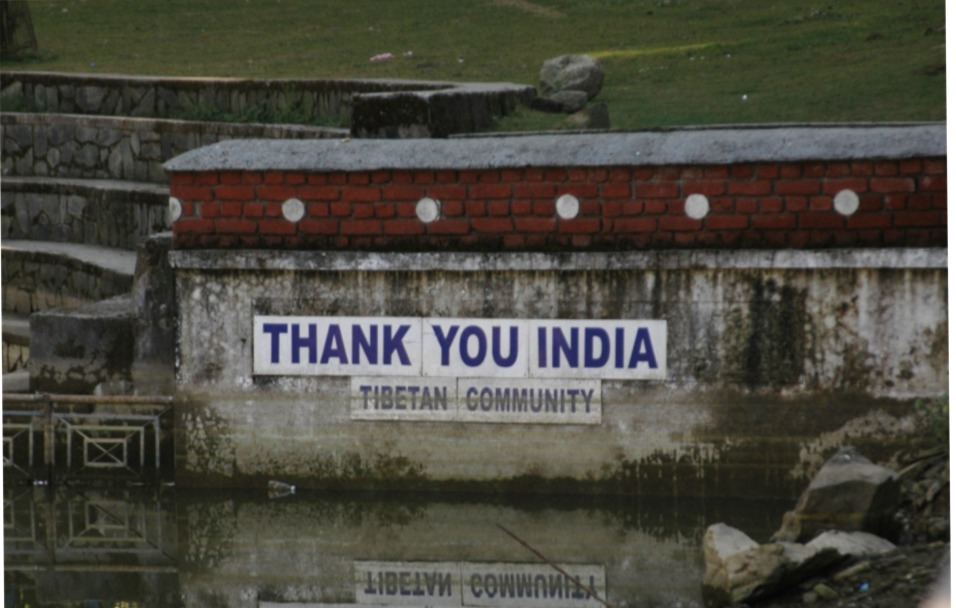
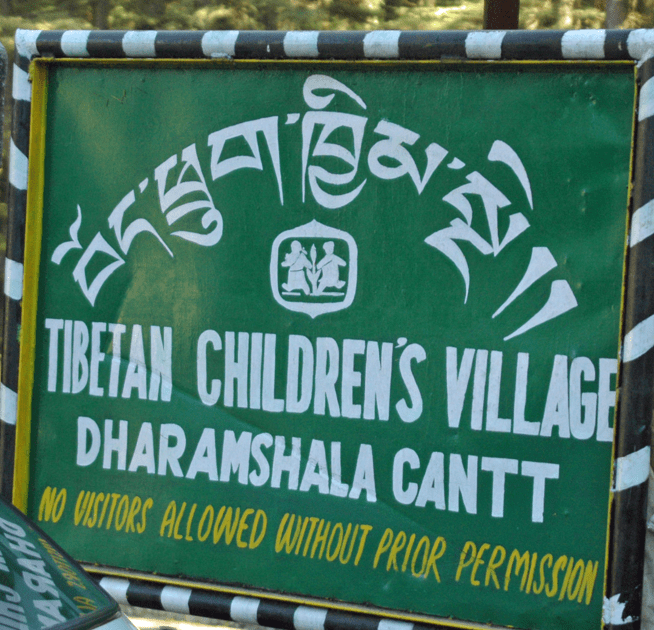
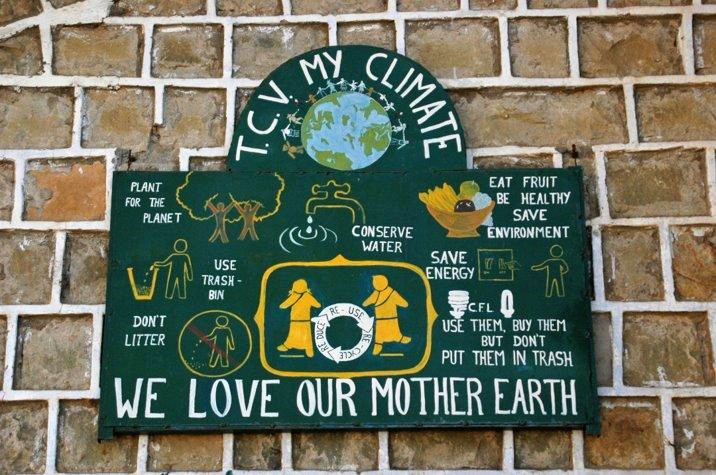
Earlier, I first know that I’m close to the Tibetan Children’s Village when I see the following sign!