
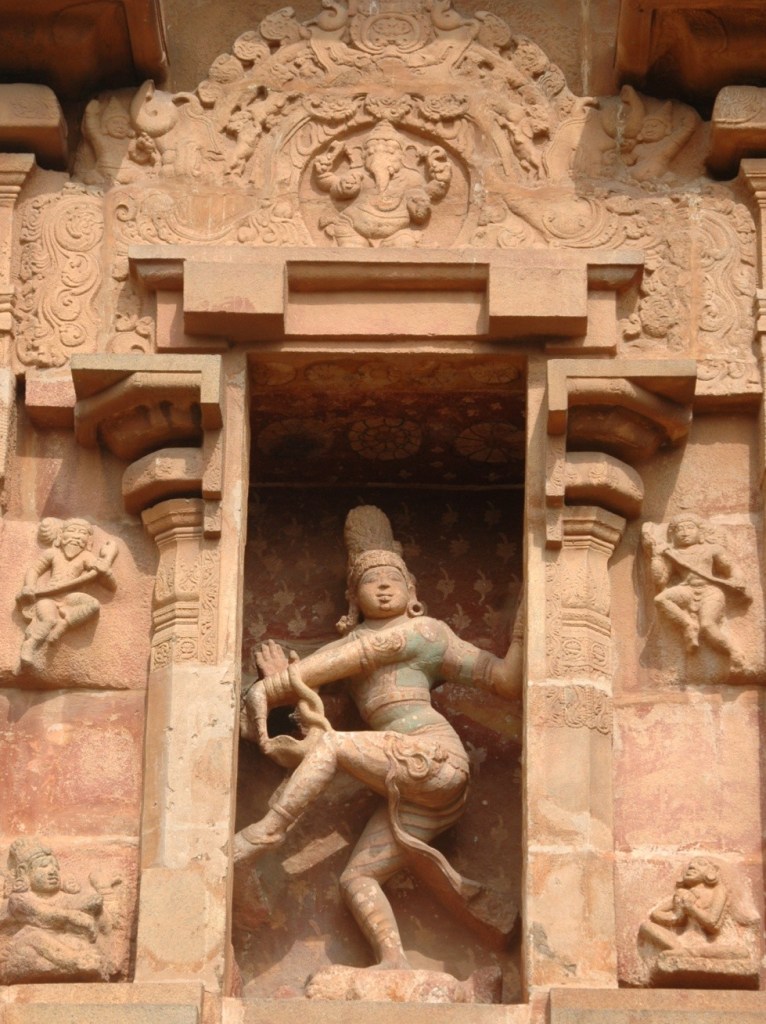
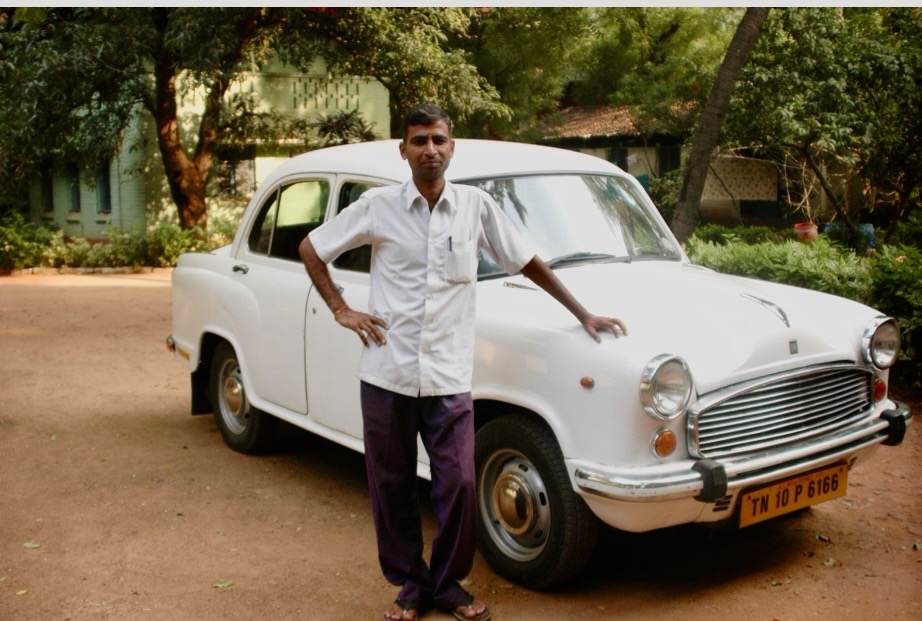
During our 1990 seminar’s three-week stay in Tamil Nadu, I am eager to return. So much to see! With the help of Annamalai, my driver, I want to view some historic temples in particular.
A few observations first from a non-Hindu. What are temples? Why do I see thousands of Hindus converge on temples? Why do I see people of all ages moving individually, but in a social and public way, toward the inner part of the temple? What’s the fuss? So, many basic questions.
In non-religious language, temples are known places whose history and stories matter to many Hindus. As Hindus move toward these places, they’ll bring all sorts of desires such as desires for the basics of life, health, family, wealth, family. They also bring more. They bring more ultimate desires such as a desire for freedom from this life and, in their eyes, other cycles of life. Through and with sights and sounds, not only do they act individually in the temple’s space, but also with many other Hindus, participate in a social and public manner in the temple’s activities. Special custodial individuals, the priests, oversee and guide, and especially in the temple’s inner and central room where a deity image is kept, perform by gesture and words acts which seek to offer assistance in the Hindu “being seen” by the deity. A mouthful. Hopefully, I can illustrate some of these observations.
Driving from Chennai to Tanjore, we visit three temples, the Chidambaram Nataraja, Airavatesvara, and the Brihadisvara temples. All built during the powerful and artistically creative Chola period from the 9th to the 13th CE. As the day progresses, two immediate questions pop-up, probably because of my own familiarity with Christian religious sites and my own recent experience in north India. Why these temples here? How are these temples different from those I’ve seen in north India?
Why are these temples here? For Protestant Christian religious sites, we locate a church because the people are there. Sure, there may be other associated reasons; however, the “First Church” located next to the state capital or the county courthouse demonstrates its prominent status. For Protestant churches though, the site really is determined by where the people are or will be. While several Protestant churches in downtown or intown Atlanta neighborhoods (First Baptist and Rehoboth Baptist) moved during the 1980’s, their membership had already exhibited “suburban flight.” In my reading, the Protestant churches minimize a particular “place.” Not so traditional Hinduism.
The temples that I visit, the dozens of temples that I pass, are located in “a profusely storied landscape.” In her perceptive study, Diane Eck continues that this “storied landscape” is “thickly so, intensely so” (India: A Sacred Geography, 448).So, these temples that I visit have stories, innumerable, overlapping, founding legendary stories or a deity primarily associated with that temple, to so many more. I’ll mention some of these stories.
The other question bouncing around in my head: what is the difference between these south Indian temples and the northern temples? As my time traveling through India passes, I begin to answer this question. For these southern temples, I don’t simply walk through an entrance gate and enter the temple. These temples want me to know that I’m entering a special space. Viewable from a distance, the temple area is marked by large towers, gopurams. Large walls enclose a temple area; this temple area contains not simply the main building, but possibly a dozen other important buildings, water tanks, flag poles, and more.
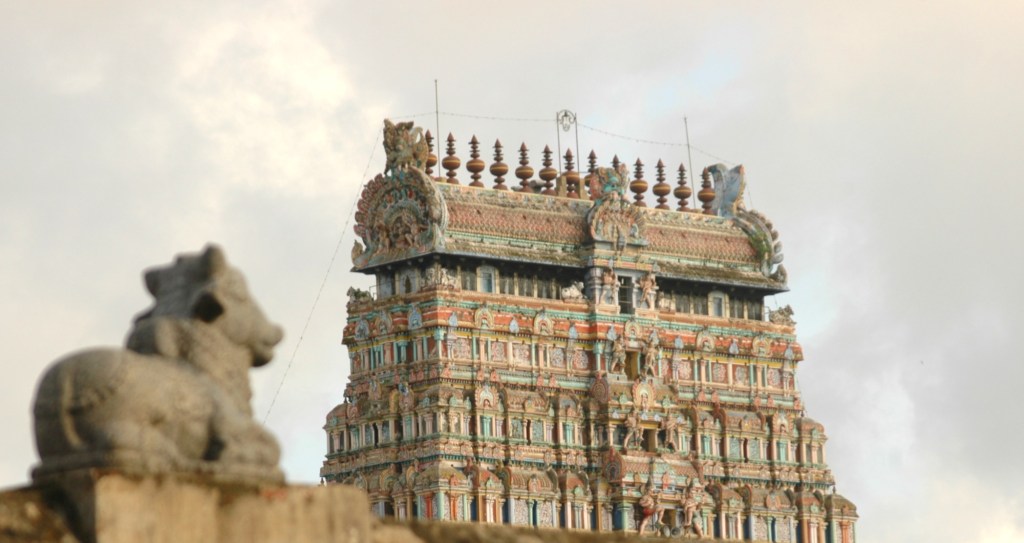
Here are a few thoughts and observations from the temples. Chidambaram Nataraja is a massive 50-acre, Hindu temple complex. Outdoing medieval Christian cathedrals, the towers contain hundreds of sculptures illustrating numerous deities and their stories. However, the temple is primarily dedicated to the Nataraj, the “Dancing Shiva.” Of all the images of Shiva, this representation is my favorite!
What is the story? An early originating legend is that as a wandering ascetic, Shiva appears before two arrogant sages. After humbling them, Shiva makes this spot sacred by dancing his “cosmic dance” before them. What a wonderful “put down!” What a wonderful display!
Despite Shiva as the primary deity for this temple, this temple has, and other temples may have, shrines and sculptures to other deities. I see shrines for Devi, Vishnu, Nandi, Ganesh, Nandi and others. I learned my first lesson. Because south India in general, and this temple in particular, contains some of the highest quality bronze religious sculptures, I hope to get a glimpse of a very large Nagaraj in the inner sanctum. Alas! Since I am carrying my camera, I can’t enter the inner sanctum.
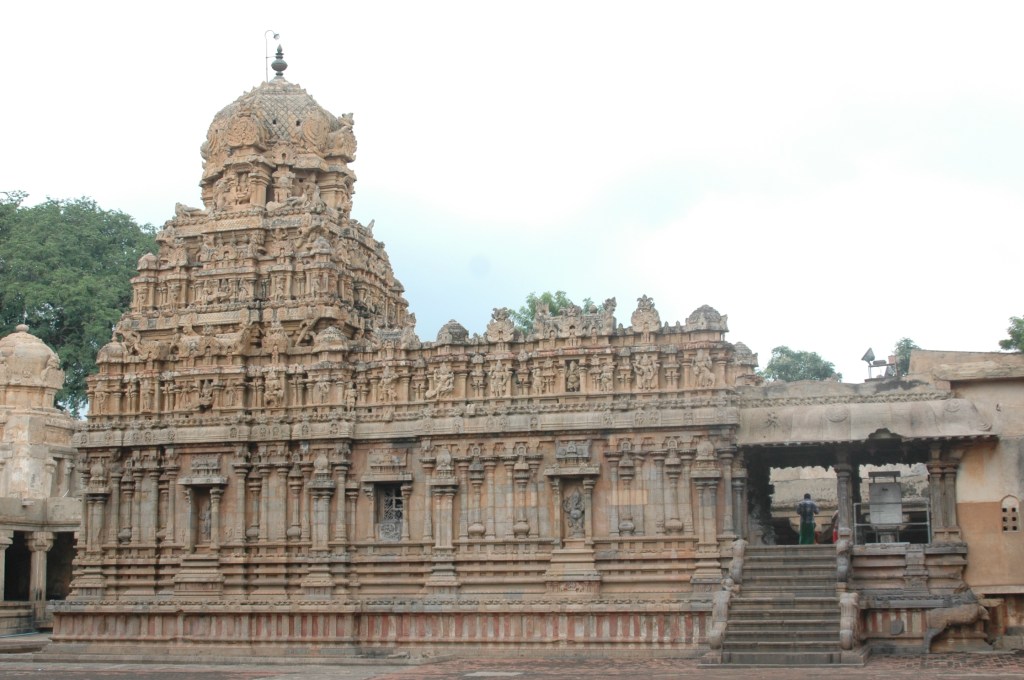
We drive to the Airavatesvara temple. Among the eighteen Hindu Temples in this area, the Airavatesvara temple is a UNESCO site and one of the “Great Living Chola Temples.” As I mentioned previously, the Chola empire consolidated much of southern India from the 9th to the 13th century and its rulers built a number of impressive temples throughout the region.
As I approach the temple, as expected, I find a rectangular enclosure which surrounds the stone temple. Although small compared to other temples, the actual stone temple is raised from the surrounding courtyard.
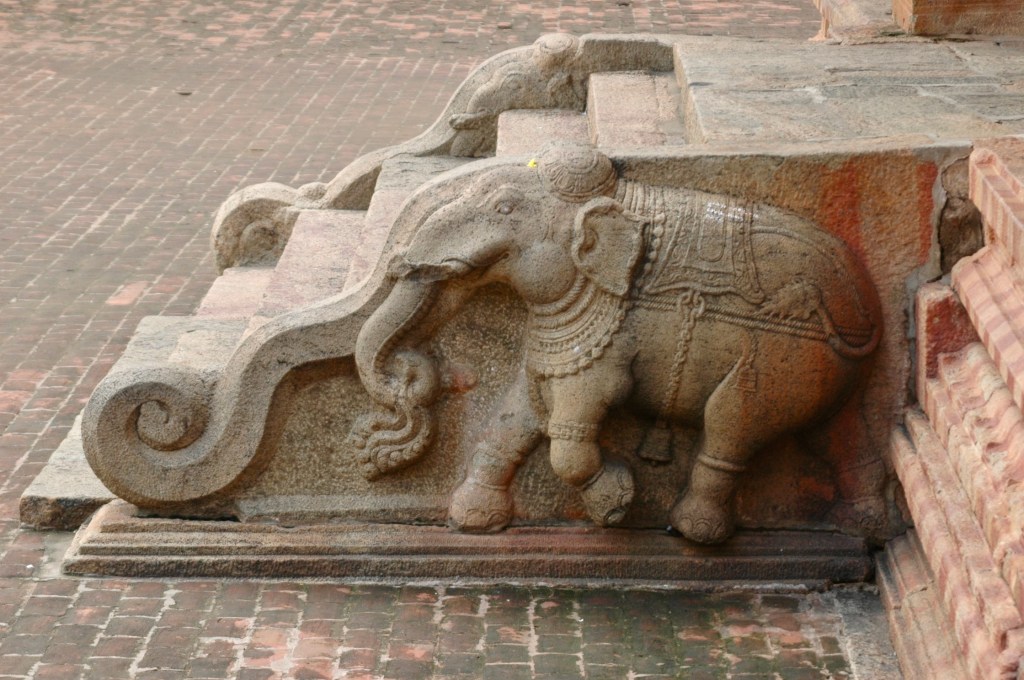
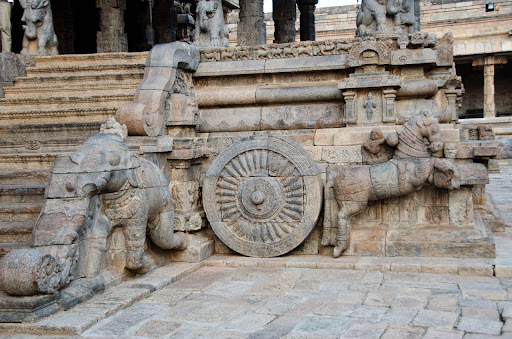
I could have spent hours studying the hundreds of exquisite stone carvings, from the numerous stone festival chariots, stone elephants, bhakti Tamil saints, the large stone carving of Nandi, and to the various Shiva forms. Again, the temple is dedicated to Shiva.
Why is this a sacred place? Among several stories, here are two. The god Indra has a white elephant, Airavata. Unfortunately, the sage Durvasa curses Airavata resulting in the elephant losing its white color. Fortunately, Airavata regains that color by entering a sacred tank in this spot. So, honor the place with a temple! Another legend involves Markandeya, a devotee of Shiva. Shiva gives Markandey’s parents a choice, either a “dull-witted” son who will live until old age or a young but virtuous son who will live only until 16. The parents choose the virtuous son. At 16, Yama, the god of death, comes to claim Markandeya. Instead of running away, Markandeya wraps his arms around Shiva’s lingham. When Yama throws a rope around the boy, the rope also encircles Shiava’s lingham. Sacrilege! Shiva bursts from his lingham as “the destroyer of death itself.” Acknowledging Markandeya’s act of fatih in the midst of death, he grants immortality and eternal youth to him. Where does this occur? At this very spot. Wonderful stories!
These stories illustrate two erroneous questions to ask about India’s “sacred geography.” If I ask, “Ok, but which is the most important story?” I’m asking the wrong question. As I’ve already mentioned, each site may hold multiple important stories. I would suggest that a Hindu mentality is to say “Heh, why shouldn’t there be multiple stories! More stories suggest the greater importance of the site!” If I ask, “Ok, but did these stories really happen?” Again, I’m asking the wrong question. A devotee might respond “I don’t know and care. The story could happen in another place and even another age. But, there is something truthful about this story.” While I’m not Hindu, I suggest that Hindus might approach the designation of sacred places differently than growing up in Georgia!
Another temple is the Brihadisvara temple, another impressive temple which is built of beautiful granite.
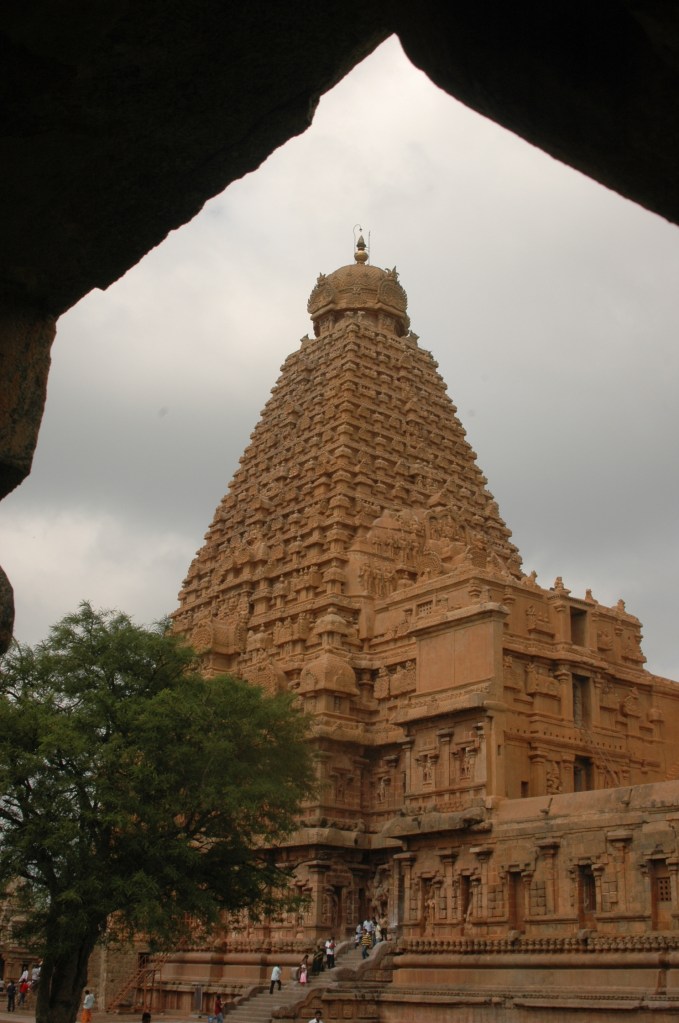
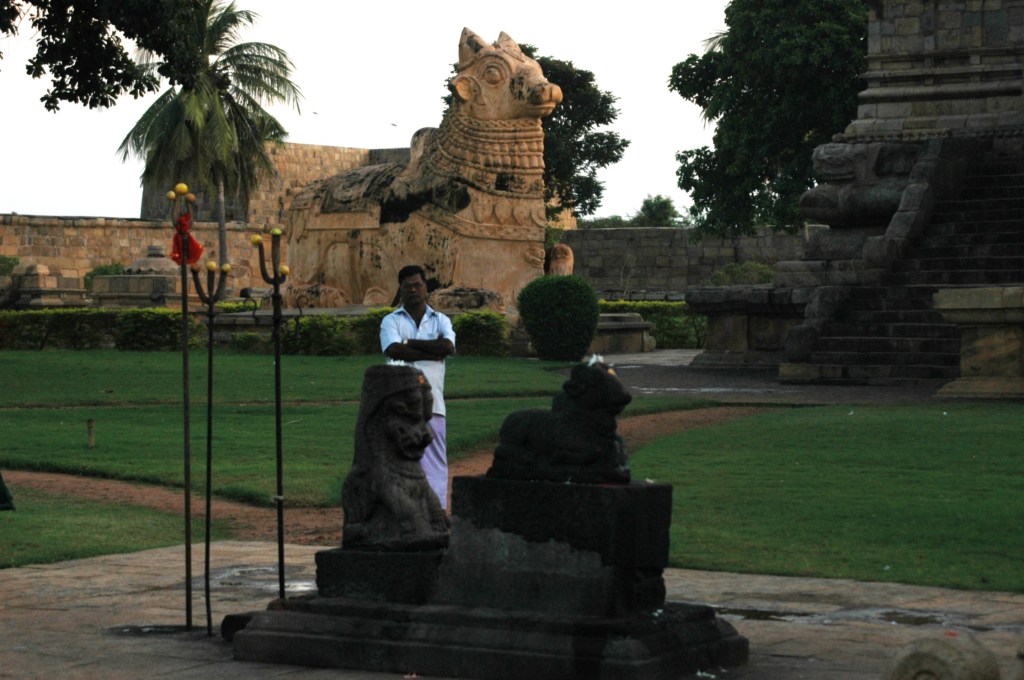
A 200-foot granite tower, an extremely massive statue of Nandi carved from a single stone, Shiva’s sacred bull, and dozens of sculptures showing various dance postures.
Like most southern India temples, this temple is dedicated to Shiva. Stating this becomes tricky for westerners like me. Because all the deities can be presented in different forms, the identification of a deity can get confusing. Like Vishnu and his avatars, or incarnations, Shiva can be represented in all sorts of ways!
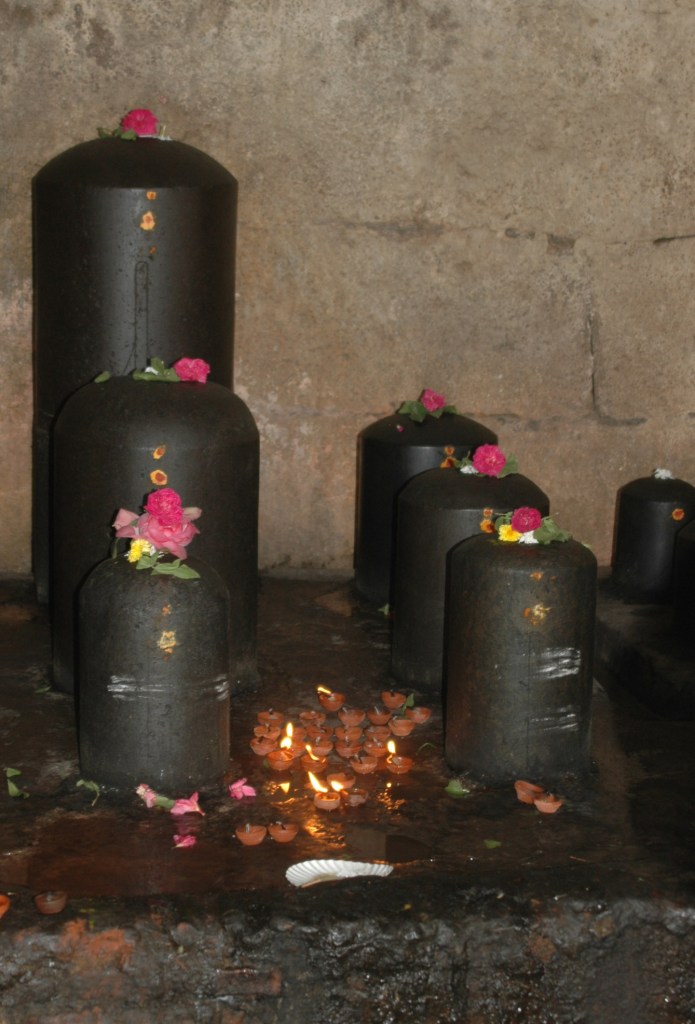
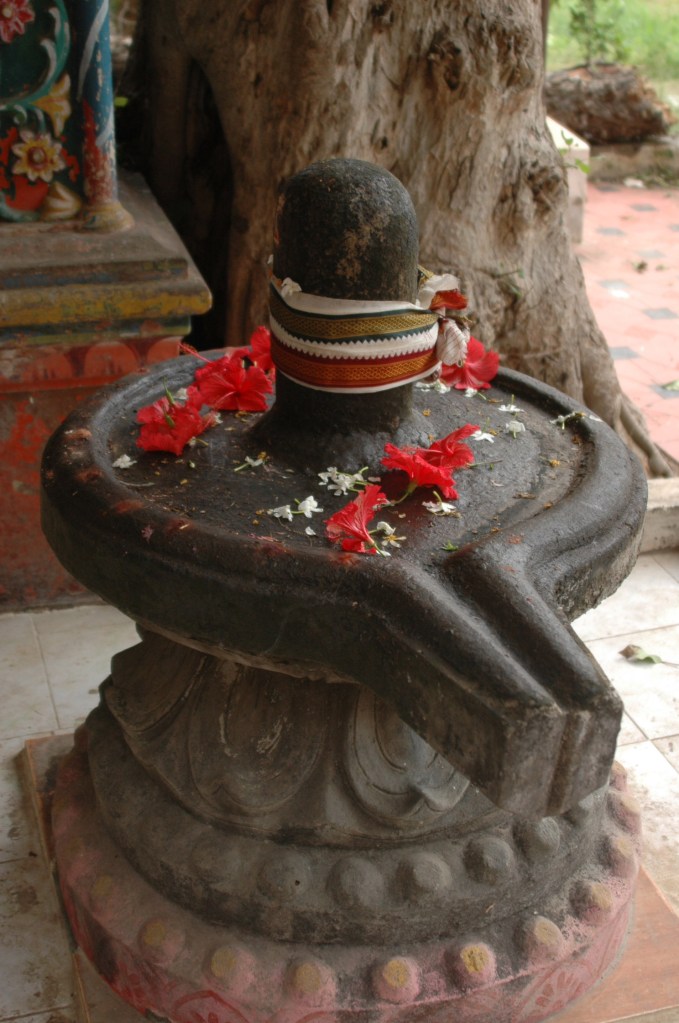
The most frequent non-personalized representation of Shiva is the lingam. I notice numerous lingams. As I mentioned early, my most favorite representation is the Nataraj, the dancing Shiva.
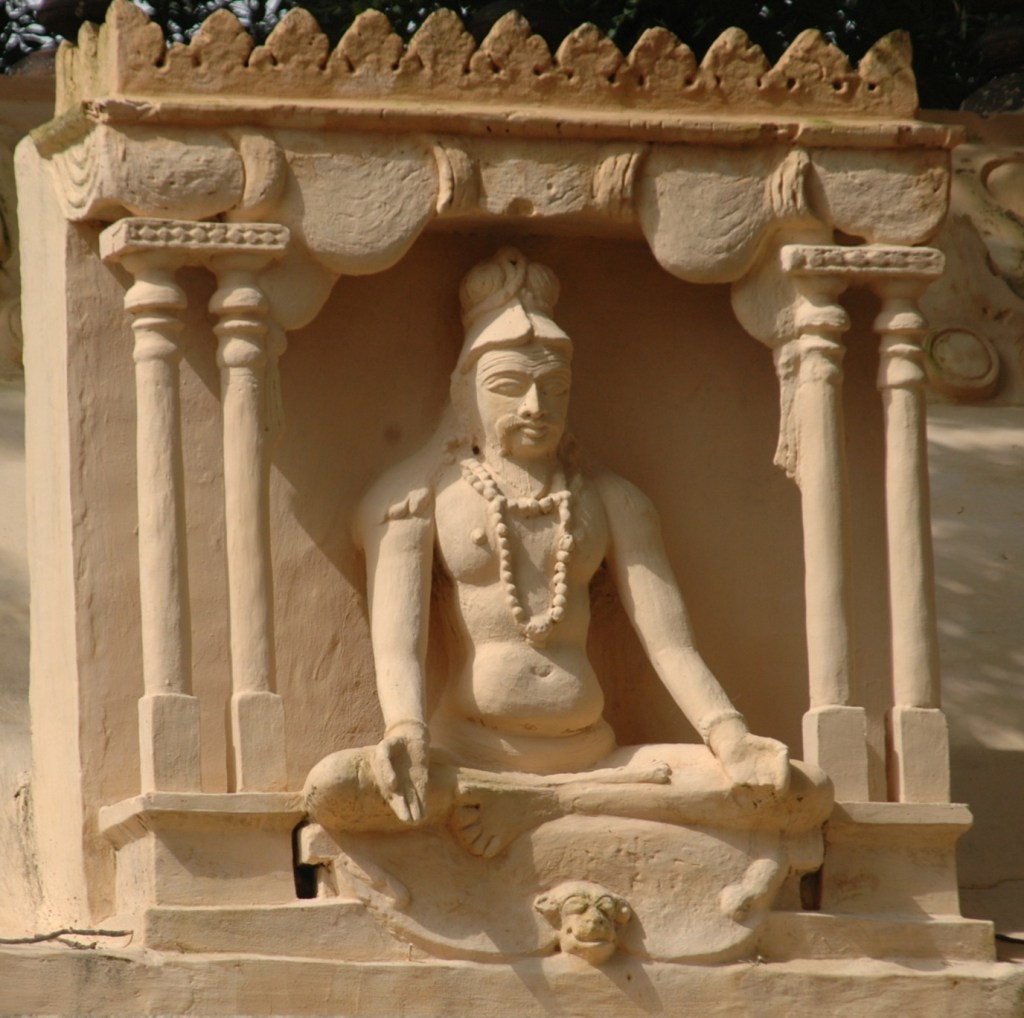
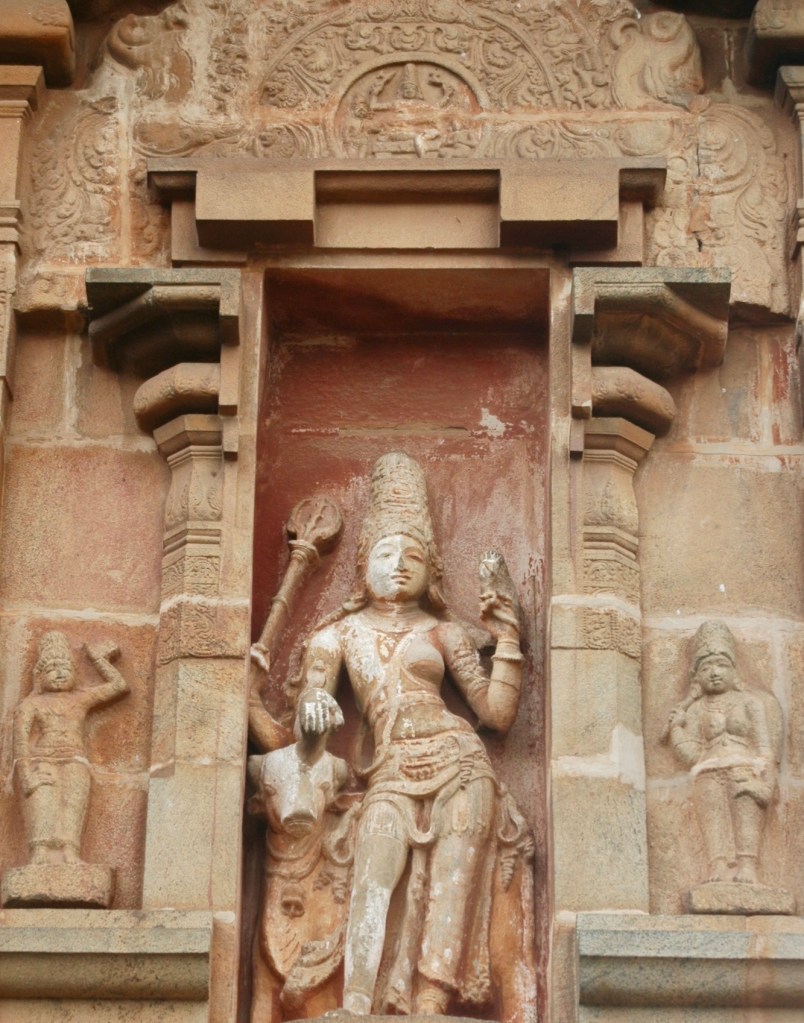
Two two photos above show other representations of Shiva, Shiva as Bhikshtana, the mendicant or ascetic teacher who renounces worldly desires and possessions, and Shiva as Ardhanarishvara, half male and half female usually described as “symbolizing the union of opposites.”
In my opinion, the genius of Hinduism is that it enables the individual pilgrim both to be in a very concrete and particular space and be part of the infinite sacred. Both are affirmed.
More about temple visits in my next blog.

