Yesterday from Kirkby Stephen to Keld, a walk shaped by clouds and fog. The ubiquitous gray. Family room, bedroom, kitchen walls painted a gray going out of style. The gray as close as the end of my walking pole. Little to be seen. Wonderfully eerie.
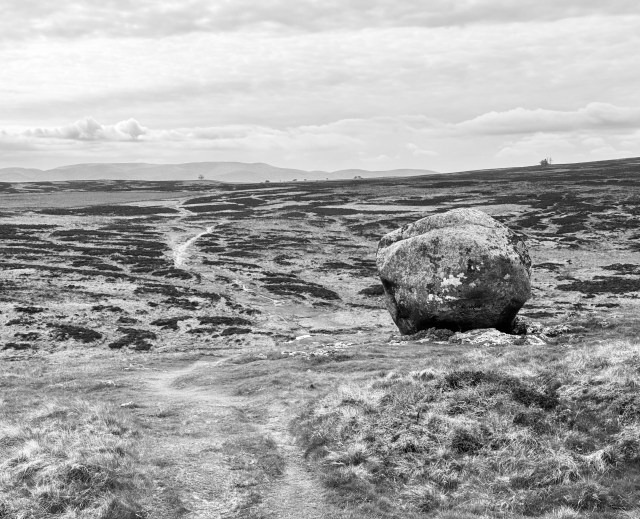
A gray day walking past the stones of Nine Standards. Bogs all around. Thankfully walking on limestone slabs that have been moved. Sinking into the bogs would have made me like the stones strewn about. Not moving. Attached to the landscape. These limestone slabs probably haven’t moved far. A large limestone quarry outside Kirkby Stephen showed signs of small operation. Even one of the slabs was a gravestone. From being a life-marker to a life-saver.
Today is a blazing sun. As if the sun wanted to make up for yesterday. The gray clouds far away; not even a white puffy cloud nearby. The sun saying “Today, I’m going to show you everything, expose everything for you and others.”
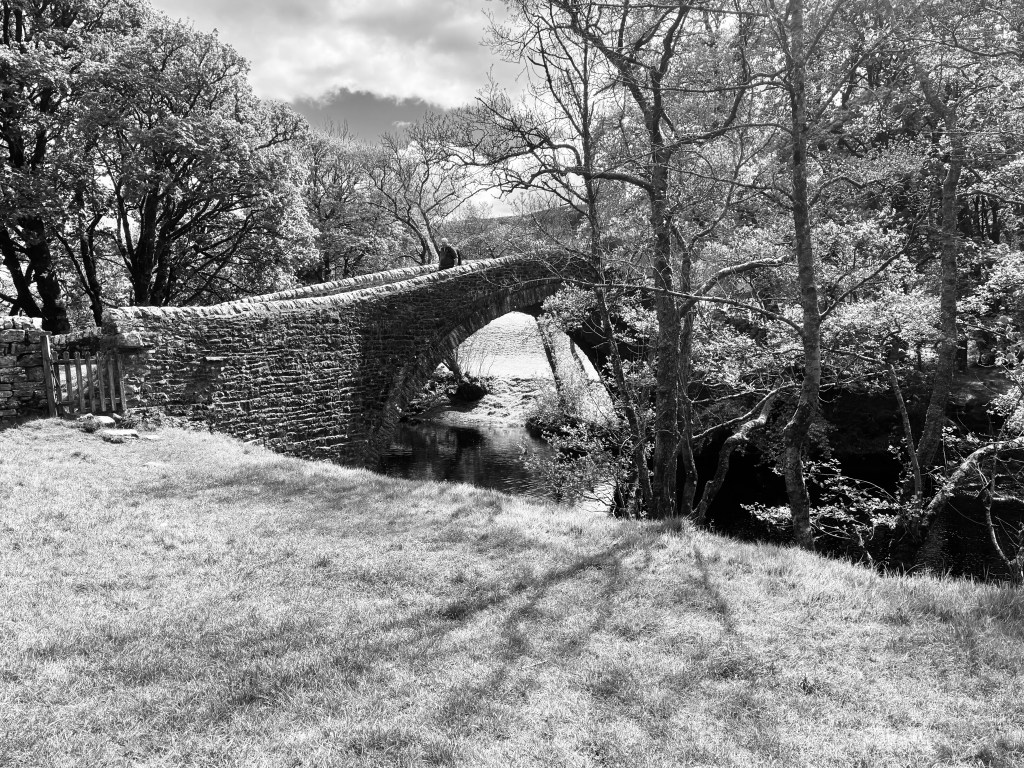
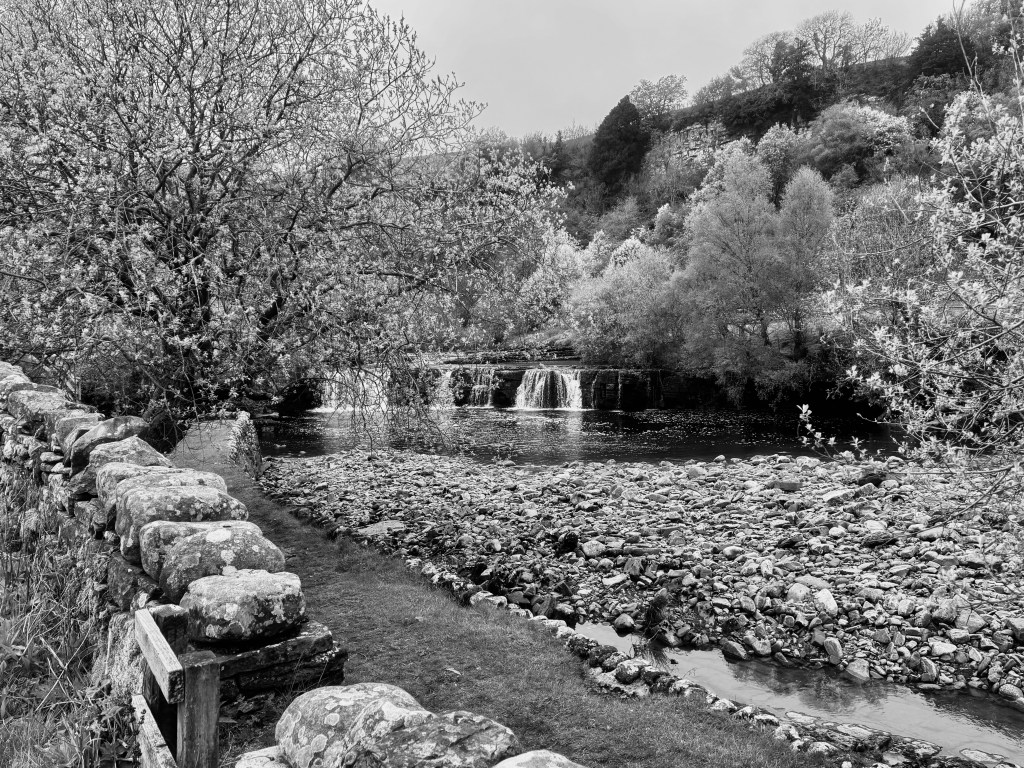
So I see a world of stone, a world shaped by stone, a world in which stone is used here and there, here and there, here and there. The strength of the earth shows everywhere. I walk on ridges of stone. I see sharp, formed at fault lines, cliffs of stone. I hear the gurgling stream, now a more assertive river tumbling over stones. I pause to watch as it playfully pours over a cliff ridge, “Heh, I can be a waterfall.” The Swale moves down the valley. The stones remain.
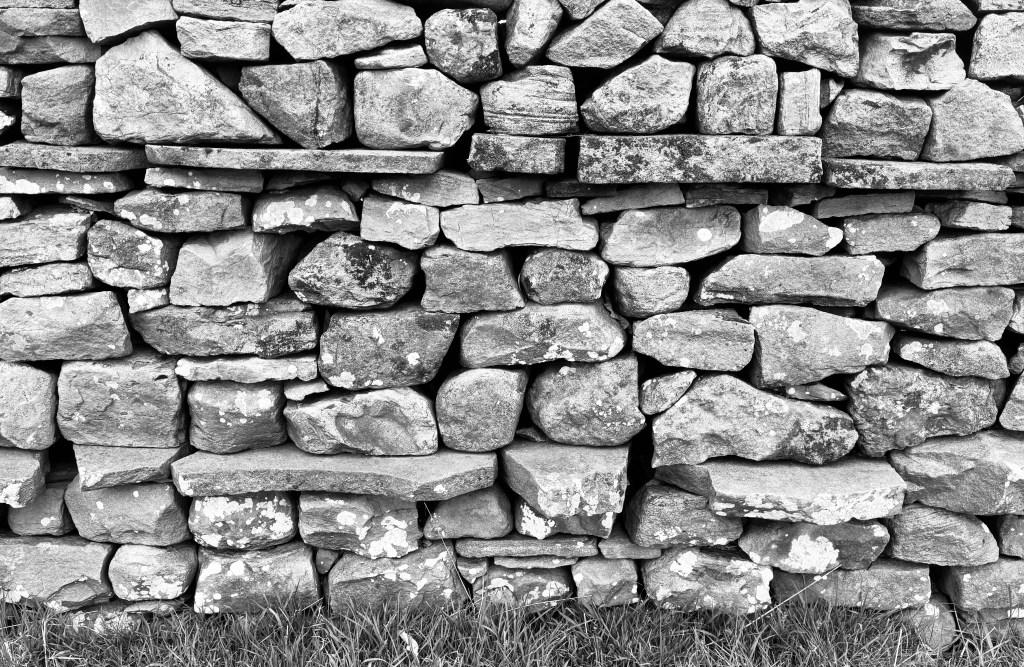
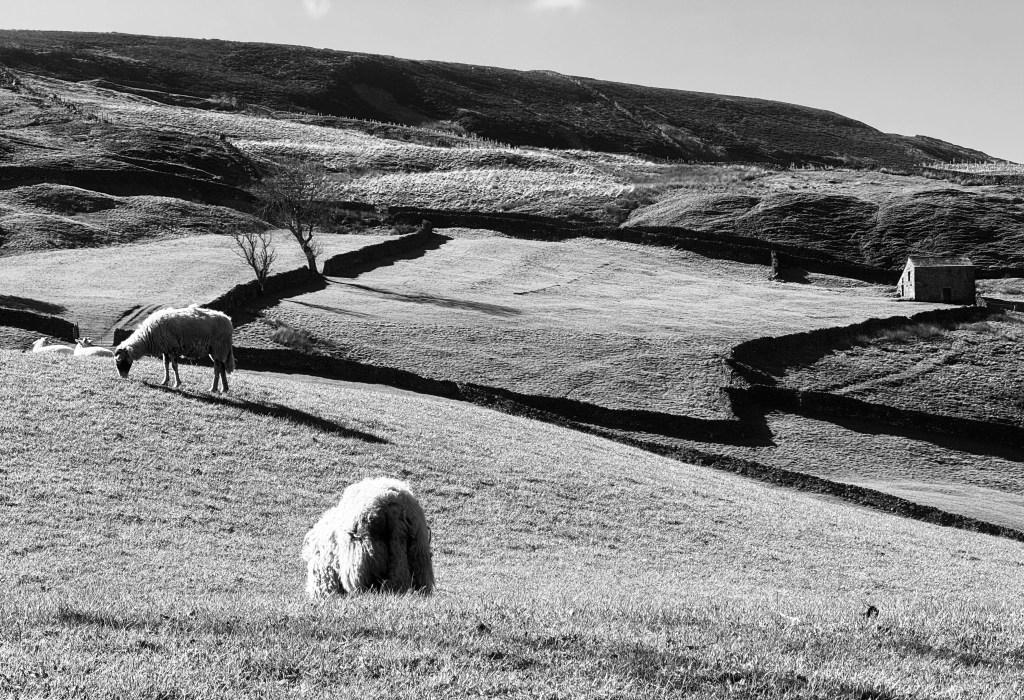
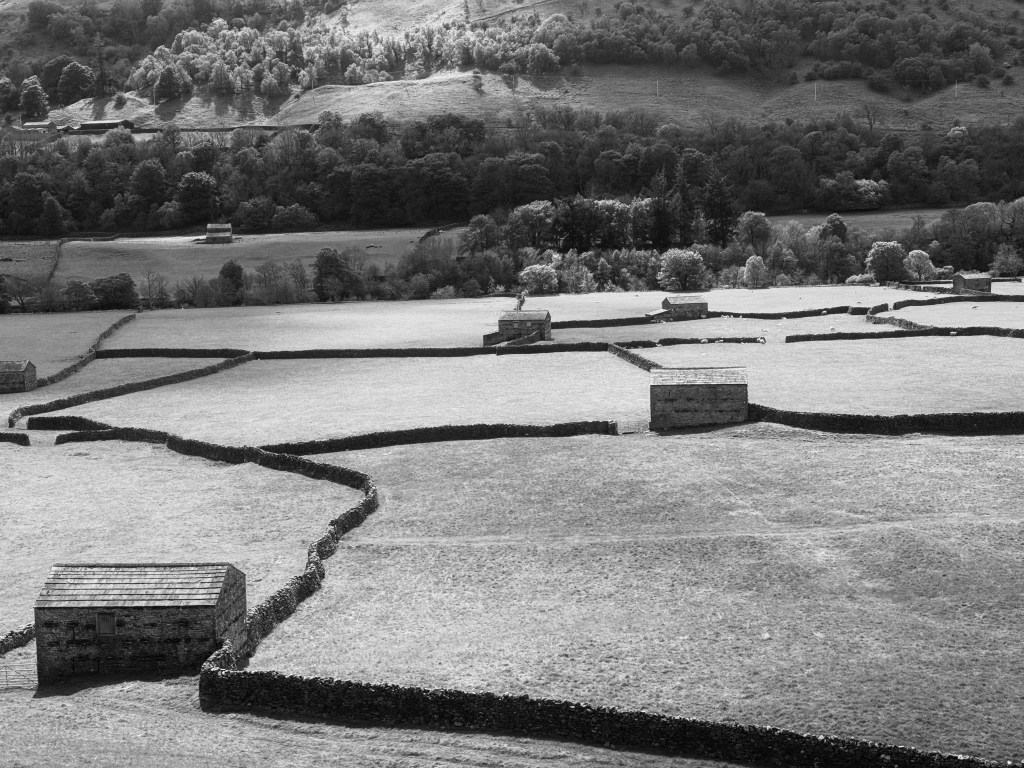
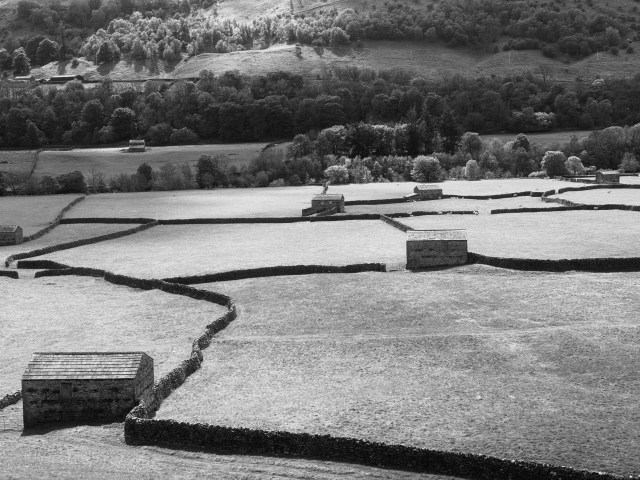
I see stone walls. For the life of me, I can not follow the reason for some of the walls ways. The straight stone walls I can understand.The stone walls that gradually move toward each other, okay I can understand their desire “Heh, lets get closer so we can chat.” Some stone walls simply zig and zag. I don’t understand them at all. They are like young frisky lambs. “Look how I jump! Look where I can go!”
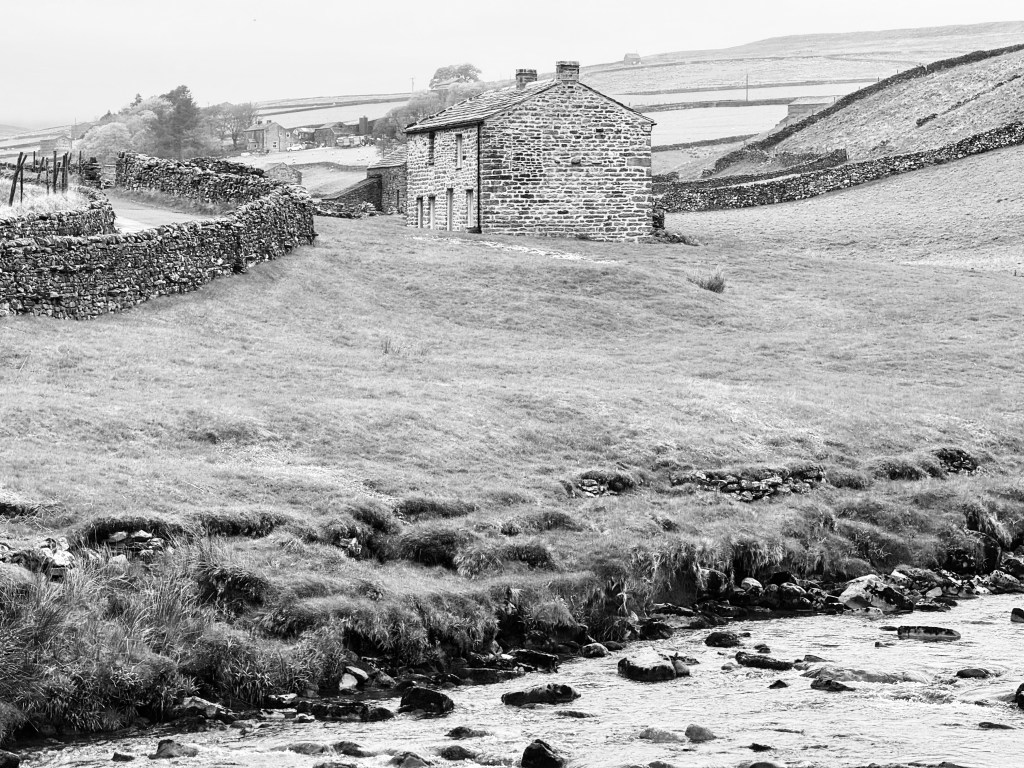
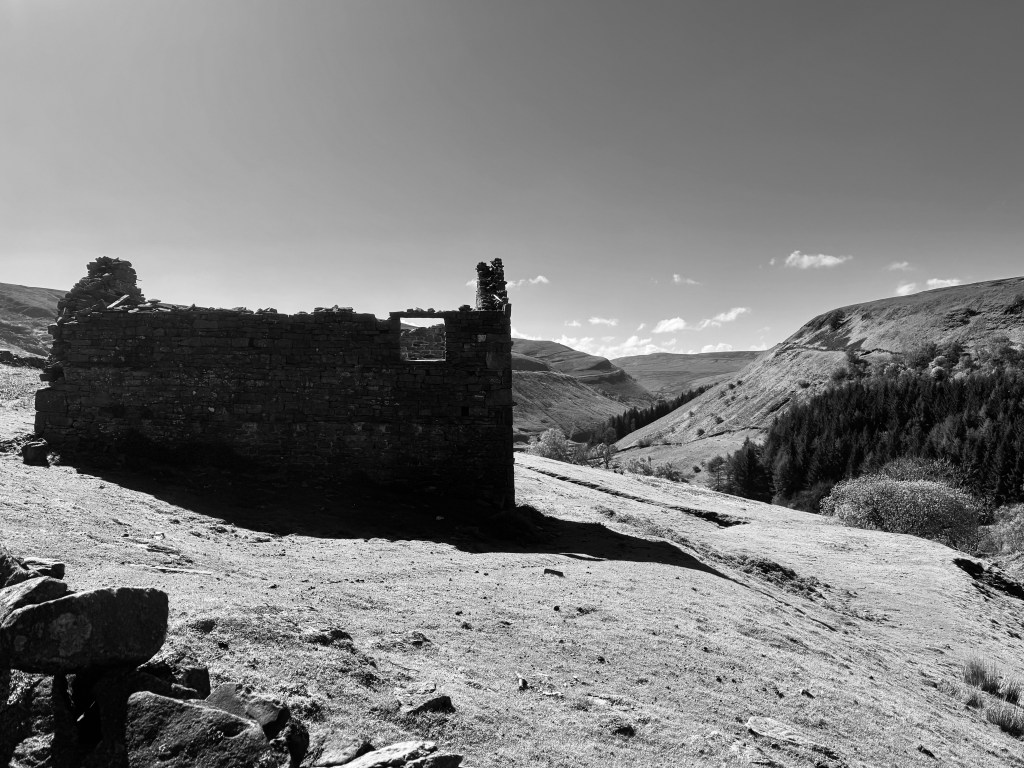
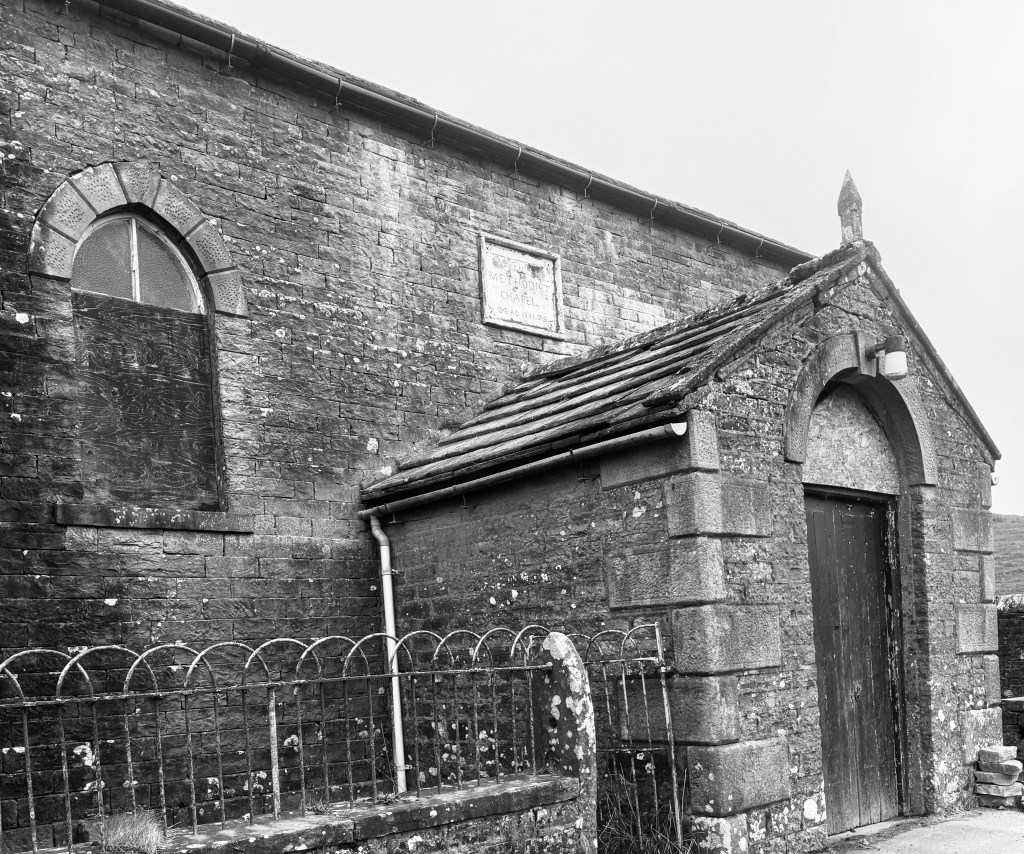
Then there are the stone buildings. Stone churches, a Wesley Chapel. Stone schools. Stone gathering centers. I visit the Muker “Literary Institutes.” WH Auden loved this small valley, apparently his most favorite Yorkshire valley of all. The film from James Harriet’s All Creatures Great and Small shot here.
There are stone houses. Not just the stone houses for us humans. The stone houses for the cows, “cow houses.” Where every family has some sons working in the stone mines, every family has some sons tending the animals. Even if only two or three cows, the milk and cheese bring in needed income. Small “cow barns” close to the hayfields, close to the manure much which is spread to improve the next harvest on the small stone-enclosed fields.
I meet Mr. Arnold Guy. First outside by a bench. “There is the Literary Institute.” A voice still showing strength, but with a touch of wistfulness, “We used to go there every day. School. Weekend music.” He chats with someone else, a friend or visitor. As I wander to the “Literary Institute” turned museum, I see photos of the Muker brass band formed in 1897. Men with instruments facing a camera. Another photo, men playing at a crossroad for the Armistice of WWI. The band members from Muker meeting band members from Gunnersdale half way along the road to celebrate. Each walking a mile and a half since gasoline was rationed. Regardless of the walking, the bands and the village folk walking to jointly celebrate the ending of a war that claimed even these isolated village sons.
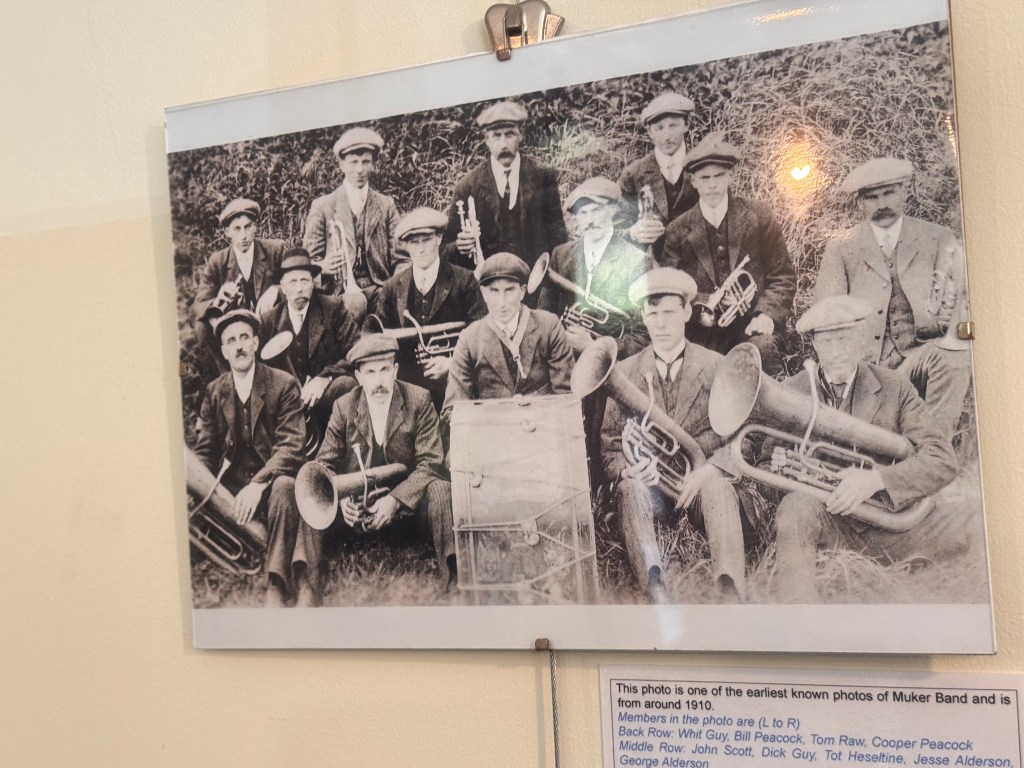
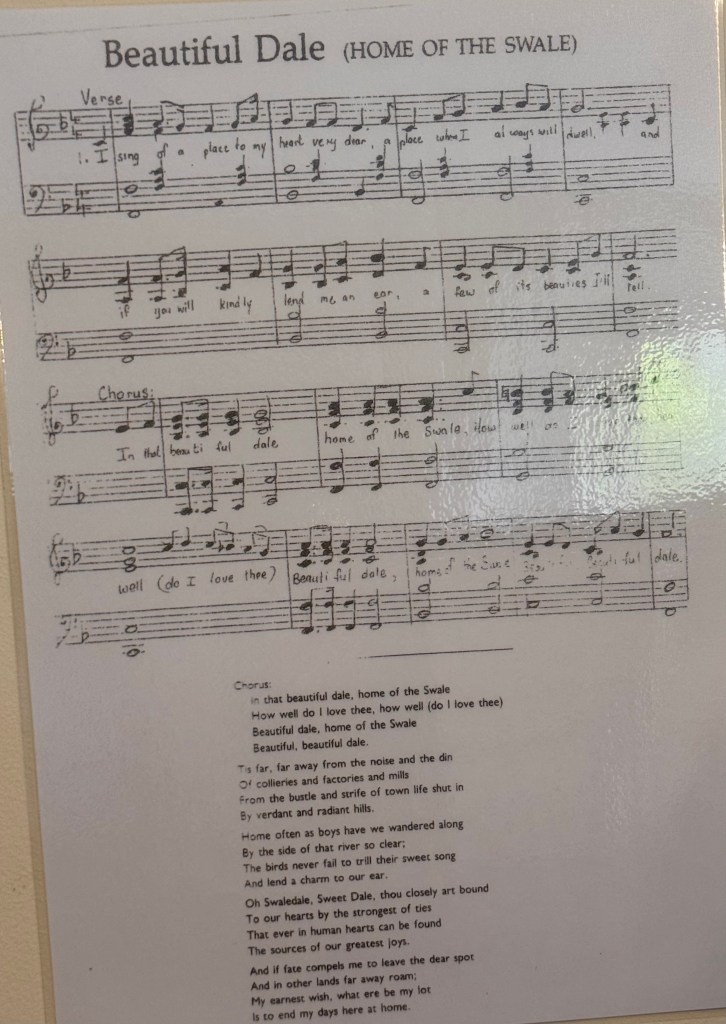
Mr. Arnold Guy points to various pictures in the one-room museum. “Here is my grandfather. Here is my father with the cornet. Here are my sons sitting on these stones.” He pauses, “One lives in Mexico now.” I wonder about his son’s story, leaving the stones of Muker and Swaledale.He doesn’t mention the other son.
I voice “Well, I must get back to walking the Coast to Coast to Reeth.” He thinks a second, “You could take the road, probably nine miles….but not so nice as taking the paths.” Mr. Guy is ninety years old. He’s always lived amongst these stones. He knows these stones. He, like these stones, hasn’t moved far. He’s attached to these stones. Attached to these stones in ways that most of us will never understand or sense.

