
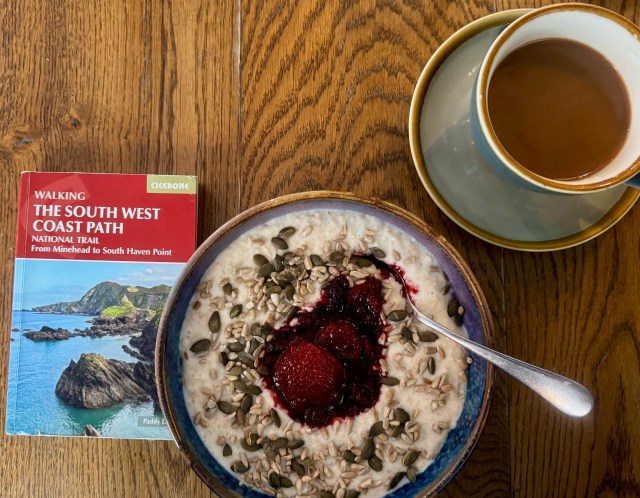
I’m enjoying breakfast in Winchester. I’m in that limbo period, post-walk completion, pre-Mary and cousins arrival. Since I have time to mull over this last walk in comparison with some of my other walks, I want to tease out my sense that this walk has been more of a “domestic” walk.
While each long-distance walk has a multitude of experiences, I can immediately mention some contrasts. I remember my first full Camino Francais as a speed-walking marathon. Hundreds line up at the starting line; the whistle is blown; and we are off! While my Via Francigena walk from Canterbury to St. Bernard’s Pass between Switzerland and Italy has memory after memory, I remember particularly the first week in northeast France walking through World War I battlefields. A Commonwealth cemetery with thousands of tombstones; a French cemetery Notre Dame de Lorette with over 40000 buried; a somber, tucked-away German cemetery. Reminders of violent death everywhere. I remember my two walks through Tuscany to end the Via Francigena. Church after cathedral filled with Fra Angelicos and Caravaggios; church after cathedral always having a person at prayer somewhere; a powerful and different sense of the importance of religious space for a Roman Catholic as compared to a Protestant. Walking the first part of the South West Coast Path, I remember the really rugged coastline, struggling to walk in a gale force wind and rain, and those elusive and haunting spots where one could sense a Celtic saint standing beside me.
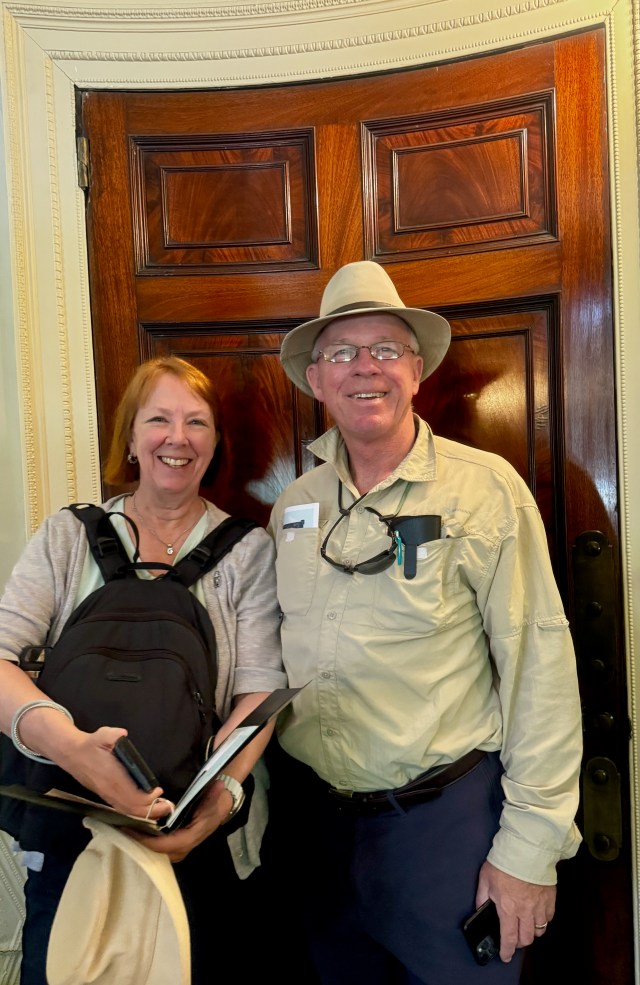
This walk is a “domestic” walk. Looking back over my photos, I’ve photos of all sorts of “recognizable” walkers. The couple from Florida who were enjoying Agatha Christie’s Greenway. The solitary young man who is walking the whole trail in the opposite direction that I’m taking; the couple who on the first day mentioned that their son has moved to Atlanta; the man who on the second to last day walking mentioned that his best friend’s son has just been accepted at Georgia Tech.
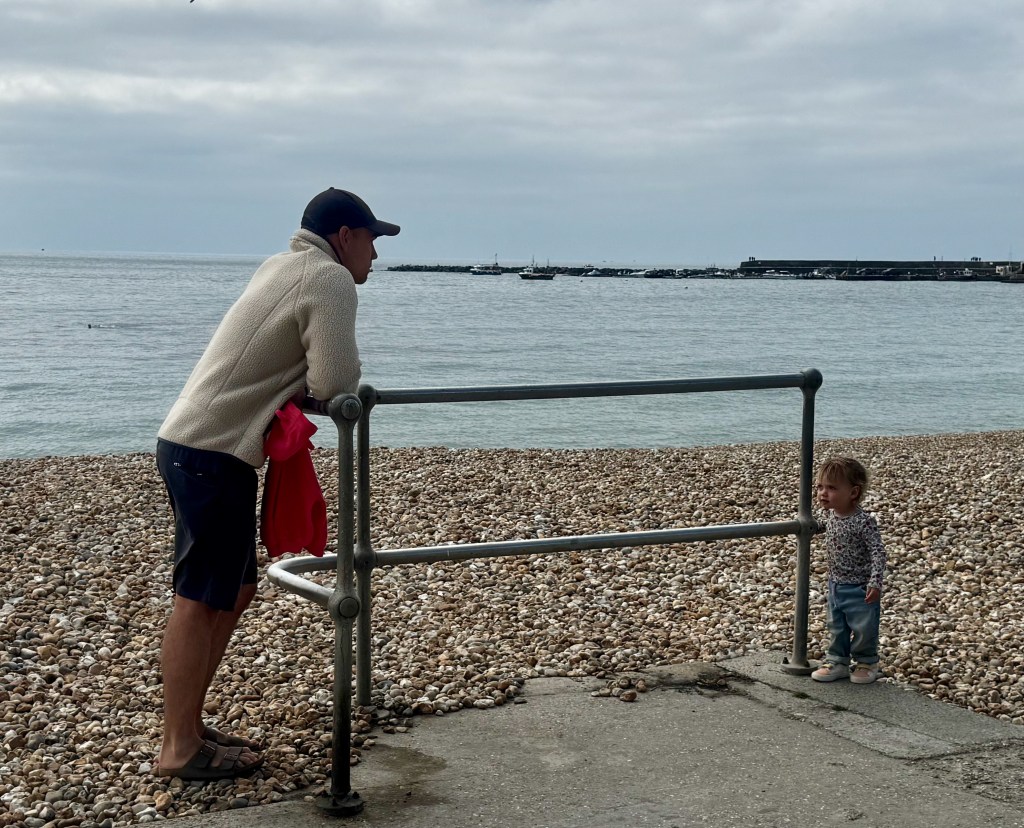
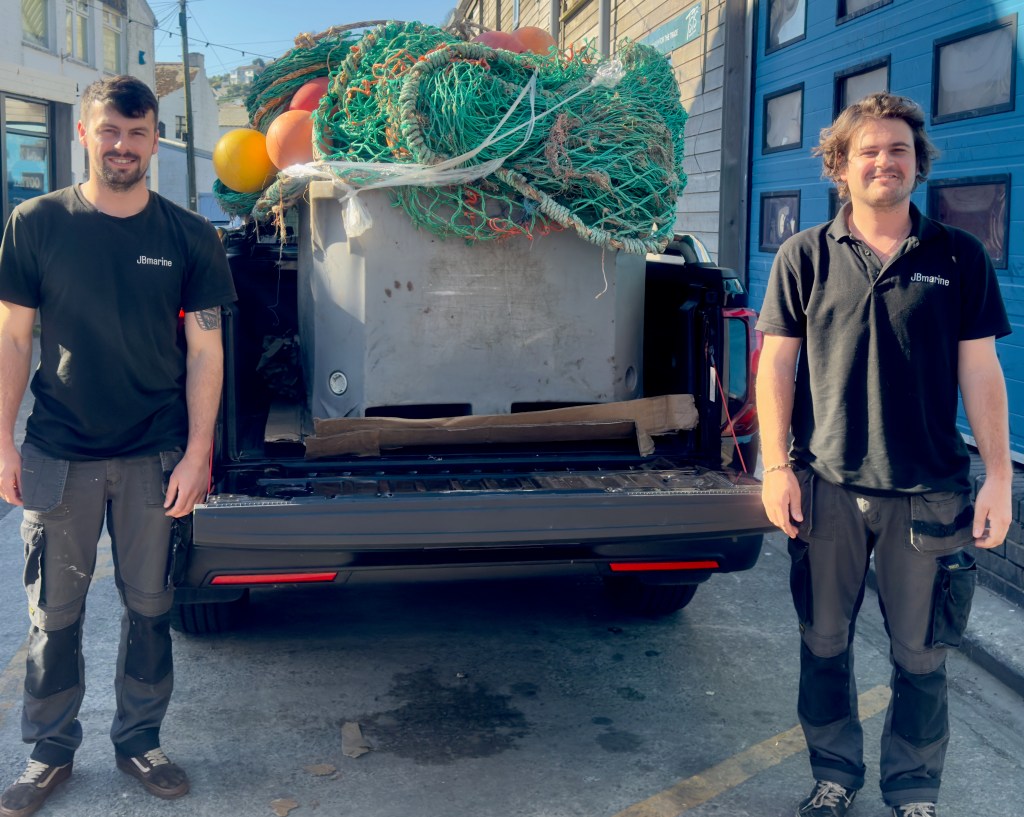
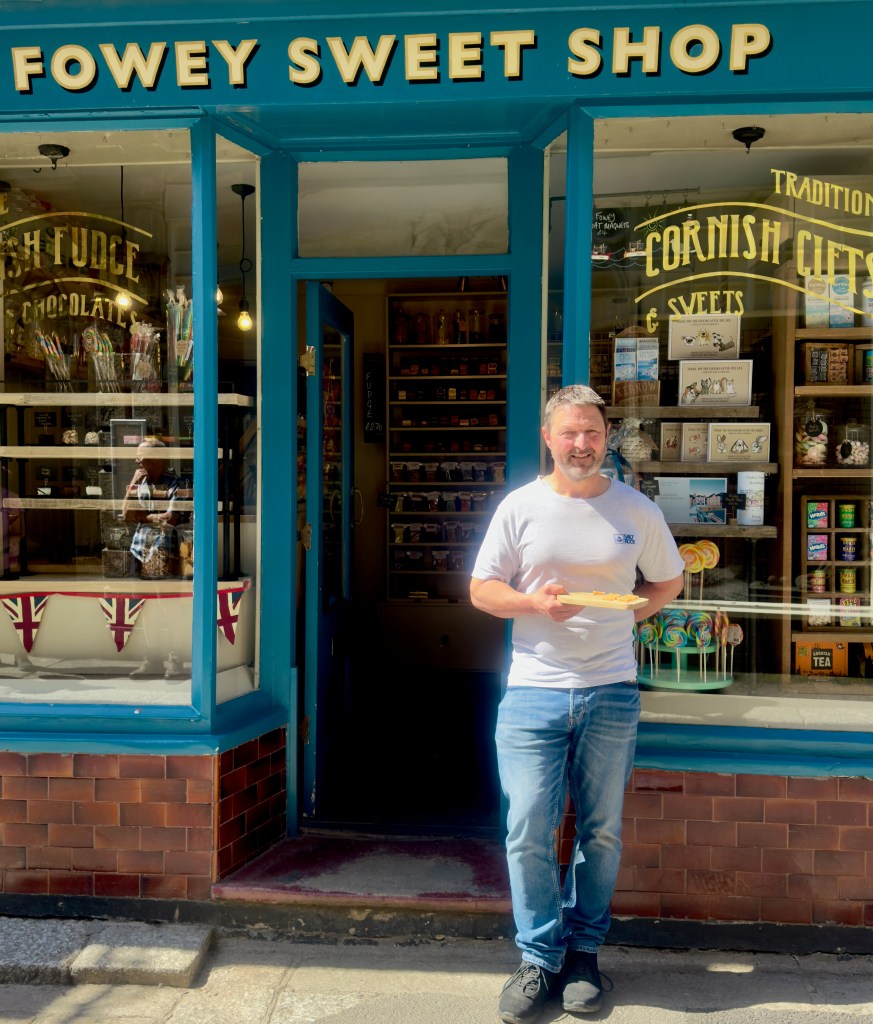
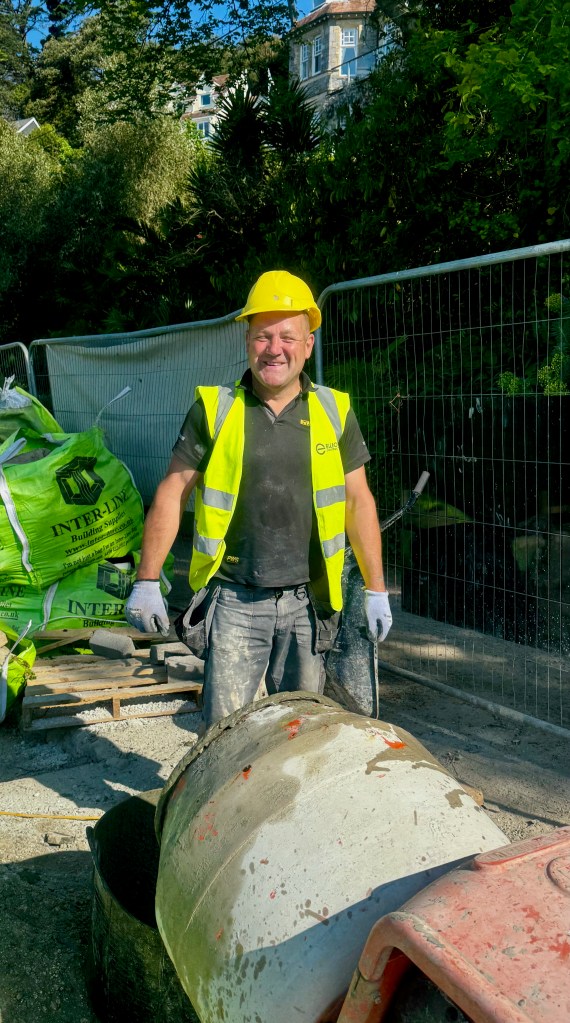
I’ve also photos of “non-walkers” going about their daily business. A young child and his father at the beach; children eating an ice cream cone. A young boy and girl holding hands as they sit on the grass. All the locals going about their daily work. Young men unloading a van loaded with fish; a small shop owner teasing us walker-byers with wonderful looking fudge; workers constructing a stone wall, an older woman almost being blown over by the wind as she walks to the local Tesco.
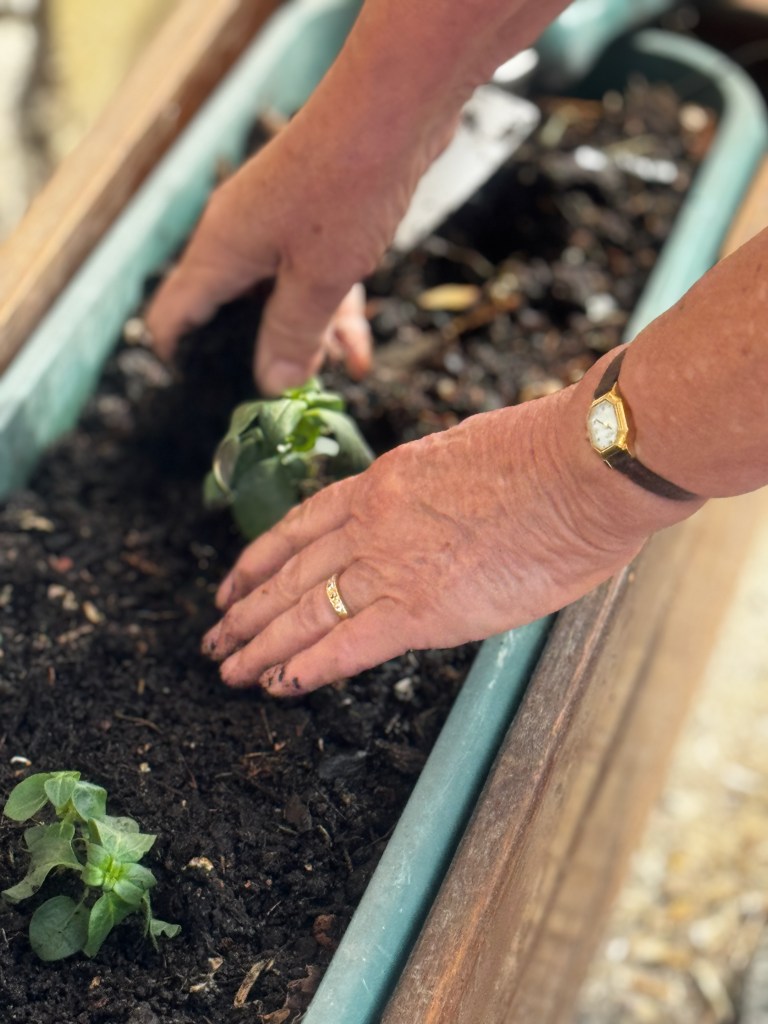
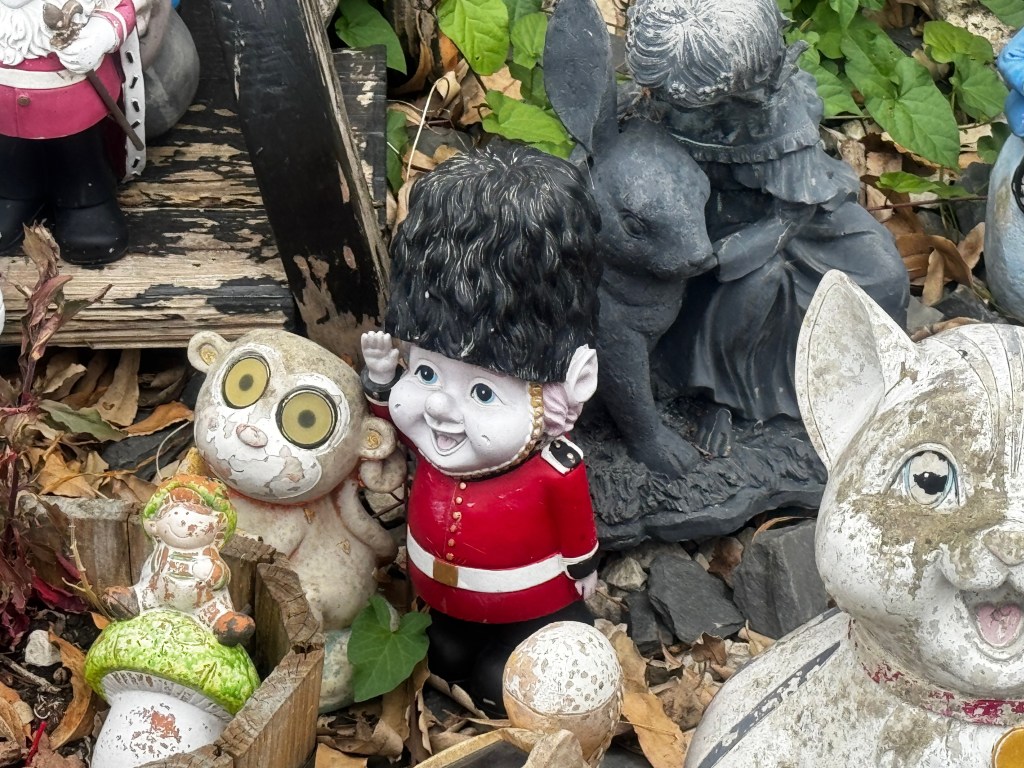
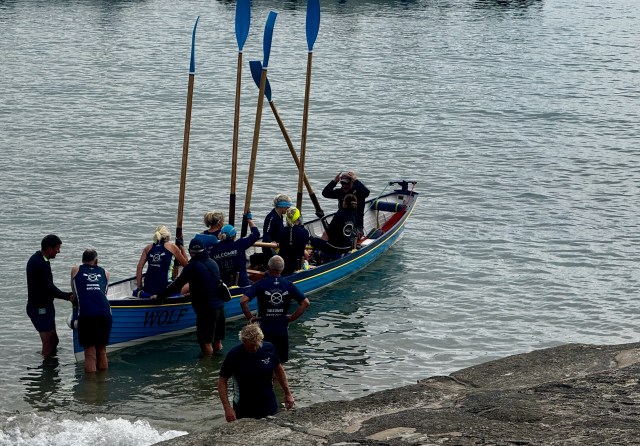
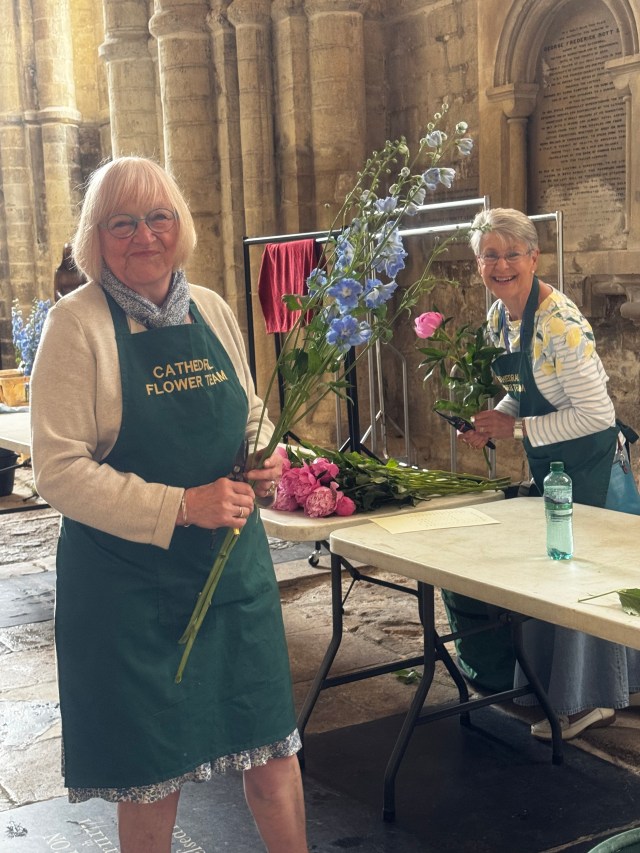
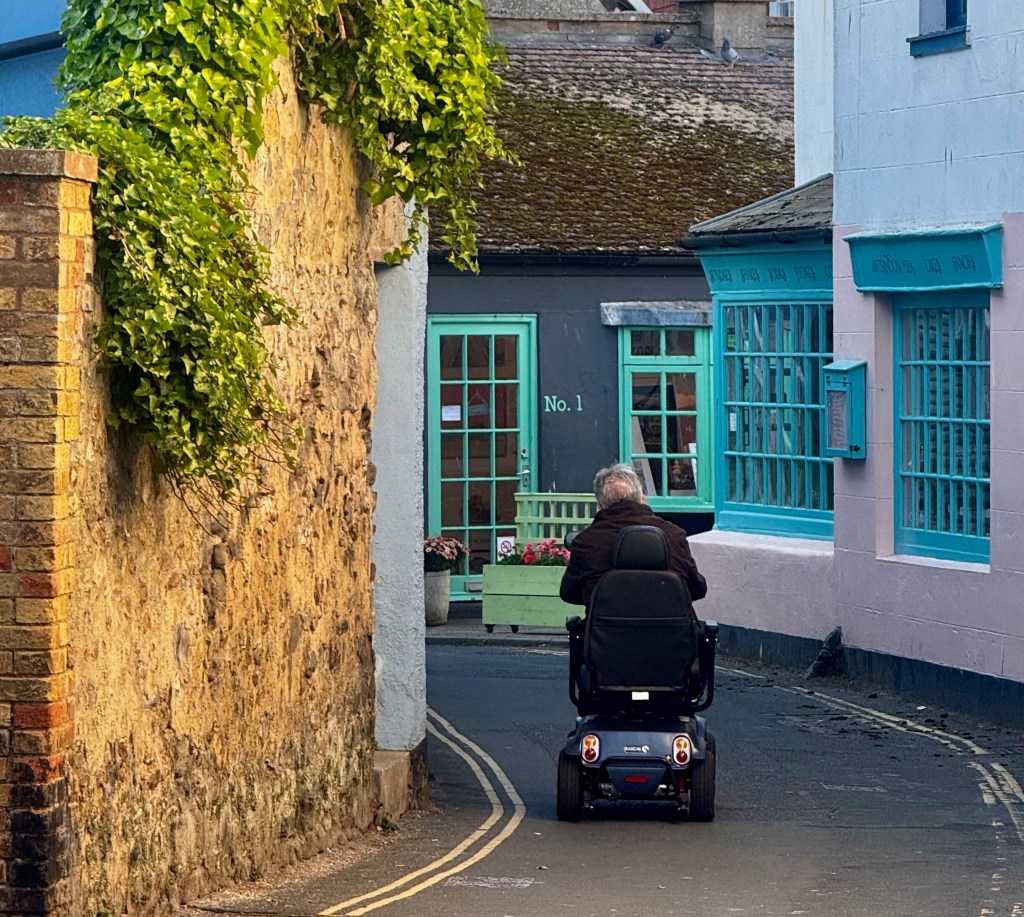
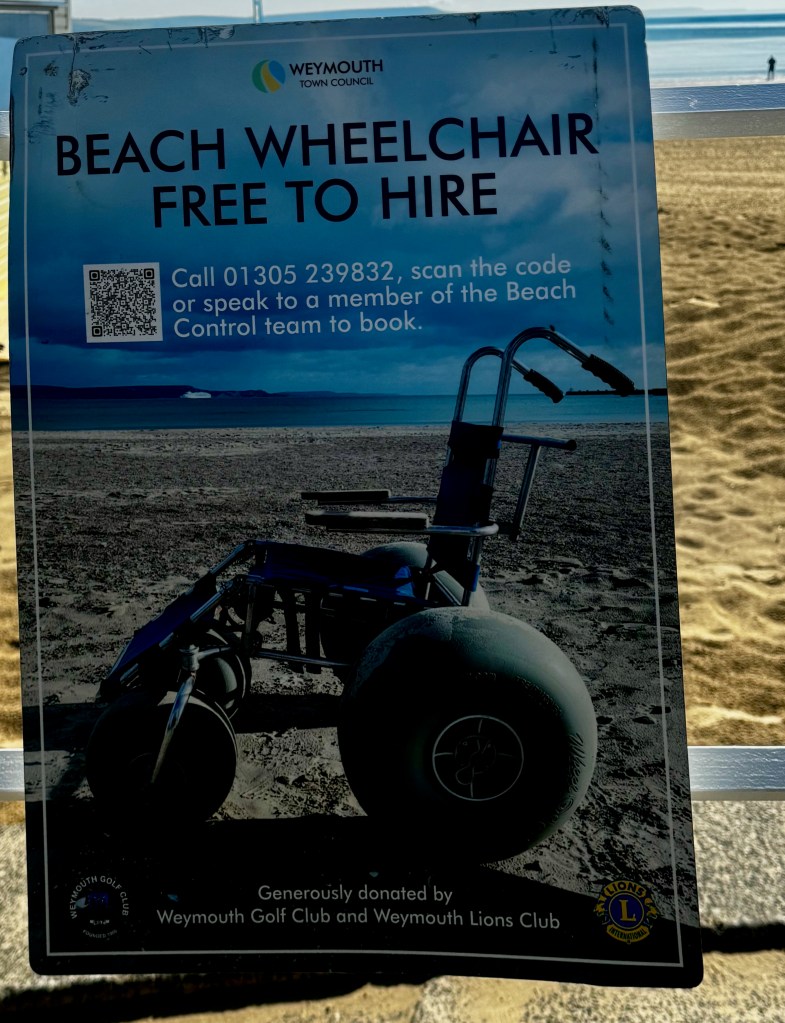
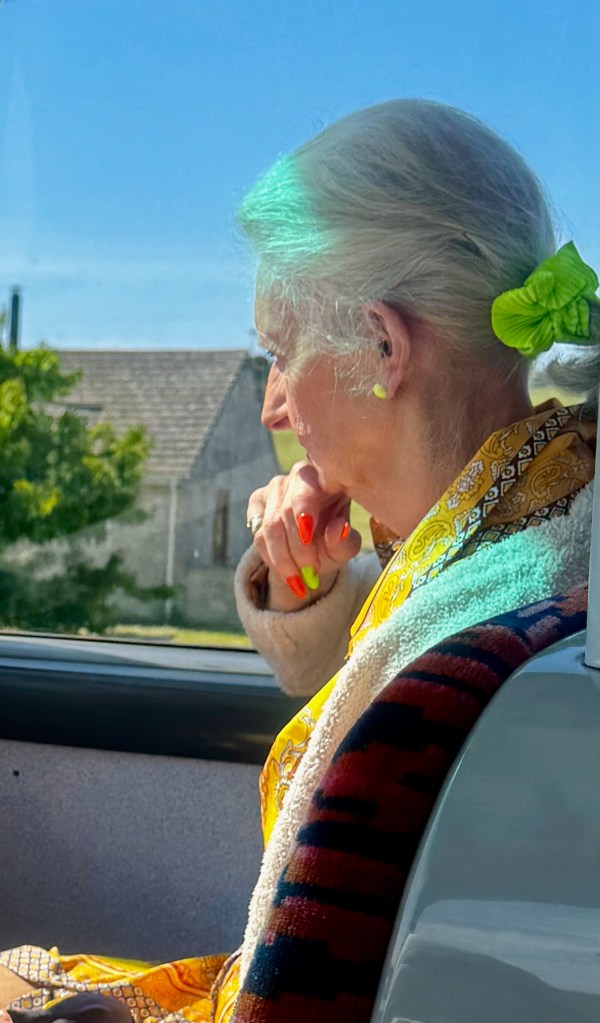
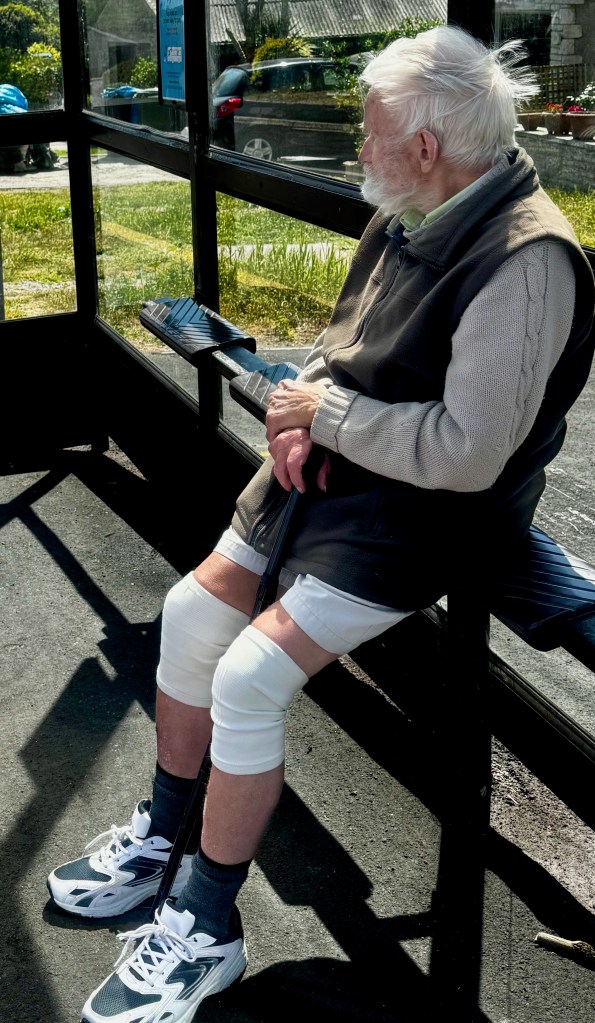
Then there are all the other everyday glimpses. A woman tending her garden. Garden ornaments. ”Pick Your Own Flowers” garden. Women decorating the Winchester Cathedral with flowers. A sculpture of a young man and a child at the entrance of a playground. Women participating in a rowing regatta. A wheelchair with wide wheels for those who couldn’t get on the beach in the past. A man in rural Cornwall with his classic black London cab. Two elderly people, an elderly woman with carefully manicured hands; a 90-year old man sitting at a bus stop.
Ever since I came upon Juliann Hartt’s affirming our “quotidian” world, before others began to sprinkle their writings with that term and before others as varied as sociologists, philosophers, and theologians picked up a desire to understand that world, I’ve been struck by our “ordinary and everyday” world. The world we inhabit consciously and unconsciously. Everybody, from farmer to king lives in this “quotidian” world.
There is a peaceful, surface permanency about this ordinary world. In this world, we “live and move and have our being.” For most of us, we walk out of this world when we walk out our front door; we walk into this world when we walk to church or the Publix grocery store.
The weight and the glory of this ordinary world is in its particularity. How many different tattoos can individuals have? How many shades of red and green and blue can color one’s hair? How many ways can a full English breakfast appear on the plate? How many ages of stone masons’ work, from Roman to Norman to modern, now appear in this church and church wall?
I say “peaceful, surface permanency” without any heavy Buddhist overtones of the “impermanence of all things” (although that is “almost” right). It appears peaceful. But I know that some reality is disguised. After enjoying breakfast, the elderly man leaves the table to go to his scooter outside the café, the elderly wife says to me “He’s dying. His next heart attack will kill him. But he knows that he can’t sit at home and mope.” It appears “permanent.” Ever since seminary, I’ve had my two cups of coffee every morning; here in England, I’ve alternated my morning drink with two cups of tea. Yet, I know that both coffee and tea only became popular in Europe in the 1700’s through British “trade arrangements” with south and east Asia. I remember my mother, like most women in the USA, talking about elections and voting. How quickly we might forget the struggle for women to gain the right to vote. There is always a history to that which appears “permanent”. It is always more of a “surface permanency.”
This walk has had its share of reminders of all the walkers. The English are a rambling people. It has its share of reminders of a violent past, from pirates named pubs, to statues of Lord Horatio Nelson, to “Gardens of Remembrance” for those who gave the ultimate sacrifice in war, to glorious beauty from Great Nothe to Durdle Door, to moments of quiet peace inside and outside parish churches at Lyme Regis or St Catherine’s Abbey. But, most of all, I’ve walked into a very domestic world, a very recognizable and comfortable world. A world to be affirmed; a world that is broken; a world that is filled with hopes and desires.

