
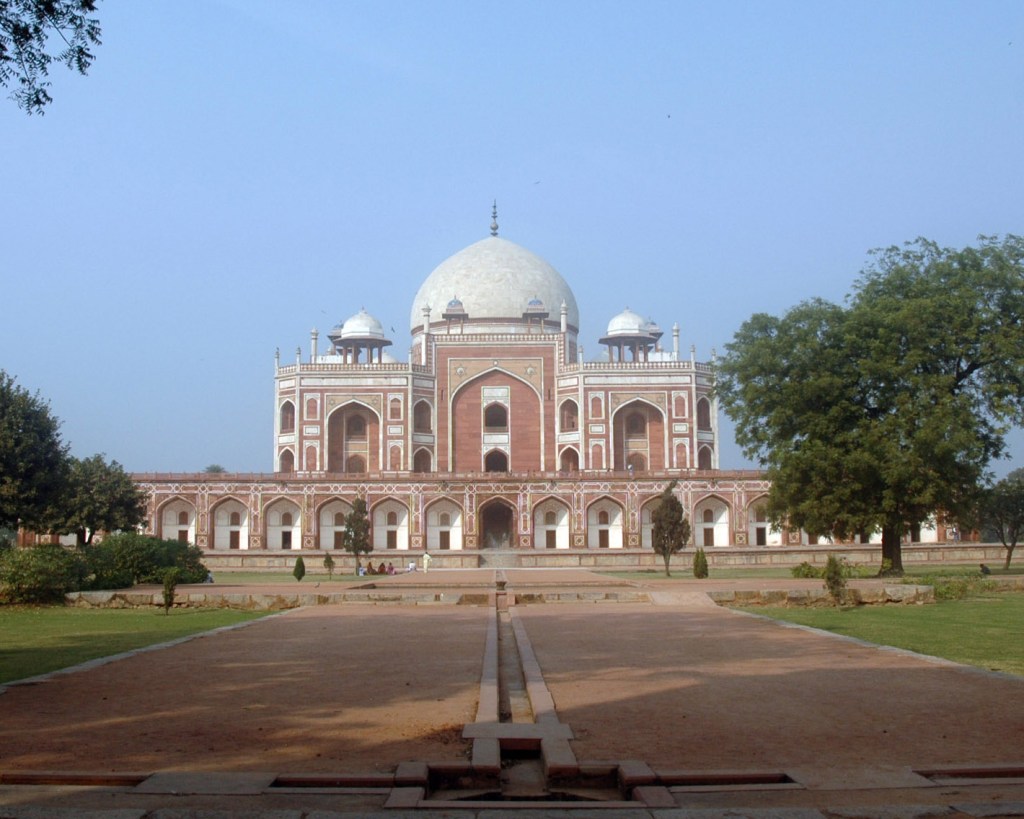
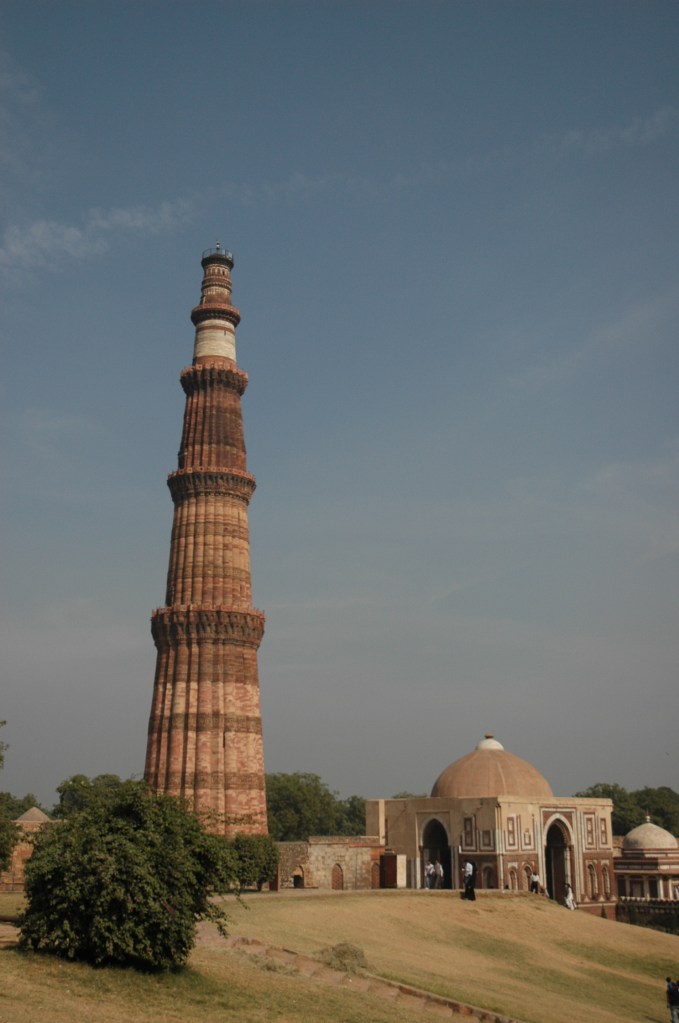
We arrive in Delhi. Our first days are primarily to adjust to India. Hotel Claridge’s is only a few blocks from Humayans Tomb. As a group, we visit Qutb Minar and the Red Fort.
Whether sightseeing or walking on the street, street sellers, and individuals hanging around tourist sites, want to sell us anything and everything, for any price. Beggars, who see us as rich individuals, as uncomfortable individuals in the face of real poverty, approach us. Already self-conscious because I am a visitor from the USA, I hear people think: “He must be wealthy since the USA is a wealthy country!” We are all self-conscious about shopping, about exchanging money, about having money!
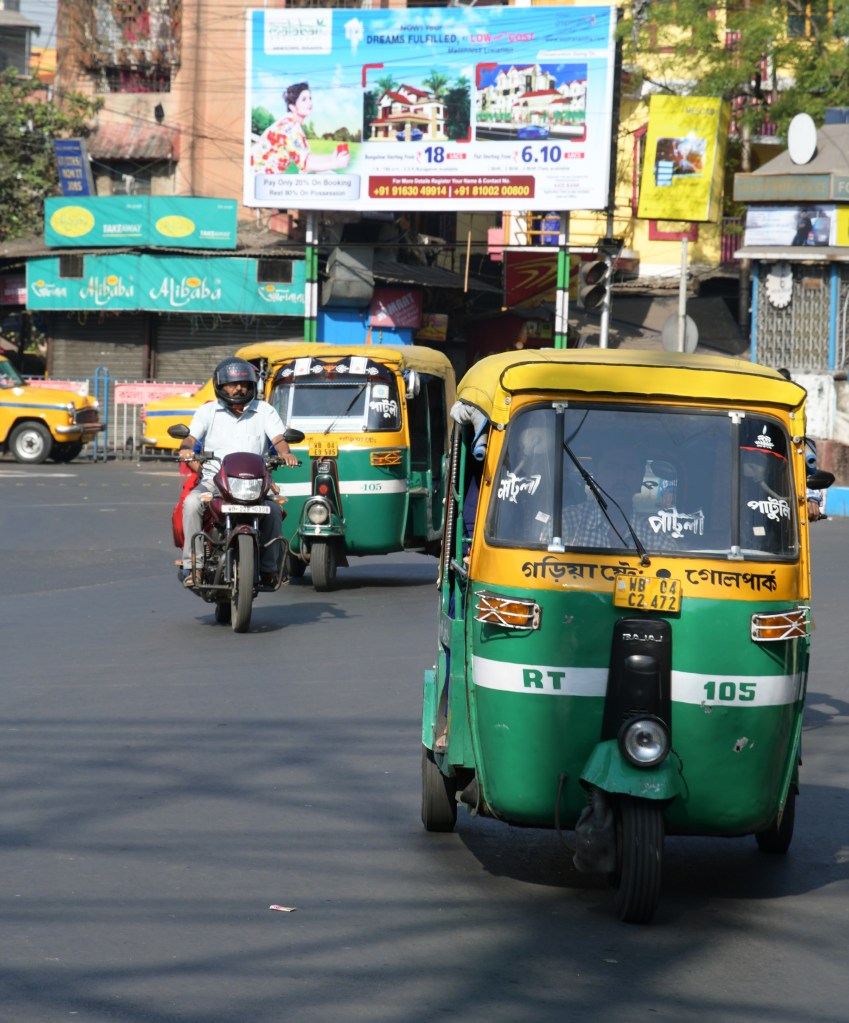
Although I am allergic to shopping, I undertake my first solo shopping excursion. After two days, I realize that my clothes are too heavy for the June heat. I decide to buy some cooler Indian clothes, a kurta shirt and pajama pants made from cotton sheeting. As I walk to get a tuk-tuk, I remember the sage advice given to us by Rajgopal, our Atlanta friend who arranged some pre-seminar cultural instruction. “Always bargain!” So, I begin bargaining with the tuk-tuk driver: “I’ll give you five rupees to drive me to Connaught Place (one of the main sections of New Delhi for shops).” “Ten rupees.” I reply “Seven.” With a different tone of voice, he says, “Ten rupees, I not cheat.” All of a sudden, I’m ashamed. I’m haggling over approximately fifteen cents. Really Lindquist!
I jump in the tuk-tuk. We are off to find my kurtas. Hanging on for my first tuk-tuk ride, we zip through the traffic of New Delhi. Since most shops are closed on this Sunday, he finally finds an open store in Connaught Place.
I enter and immediately feel anxious again. The shop is the size of a small living room in an American home. Seven or eight individuals stare at me. None of them smiling. I realize that I’m the only westerner in this small shop, in a section of town that I didn’t know, and with nobody in the American group knowing where I went because I didn’t bother to tell anyone. Oops.
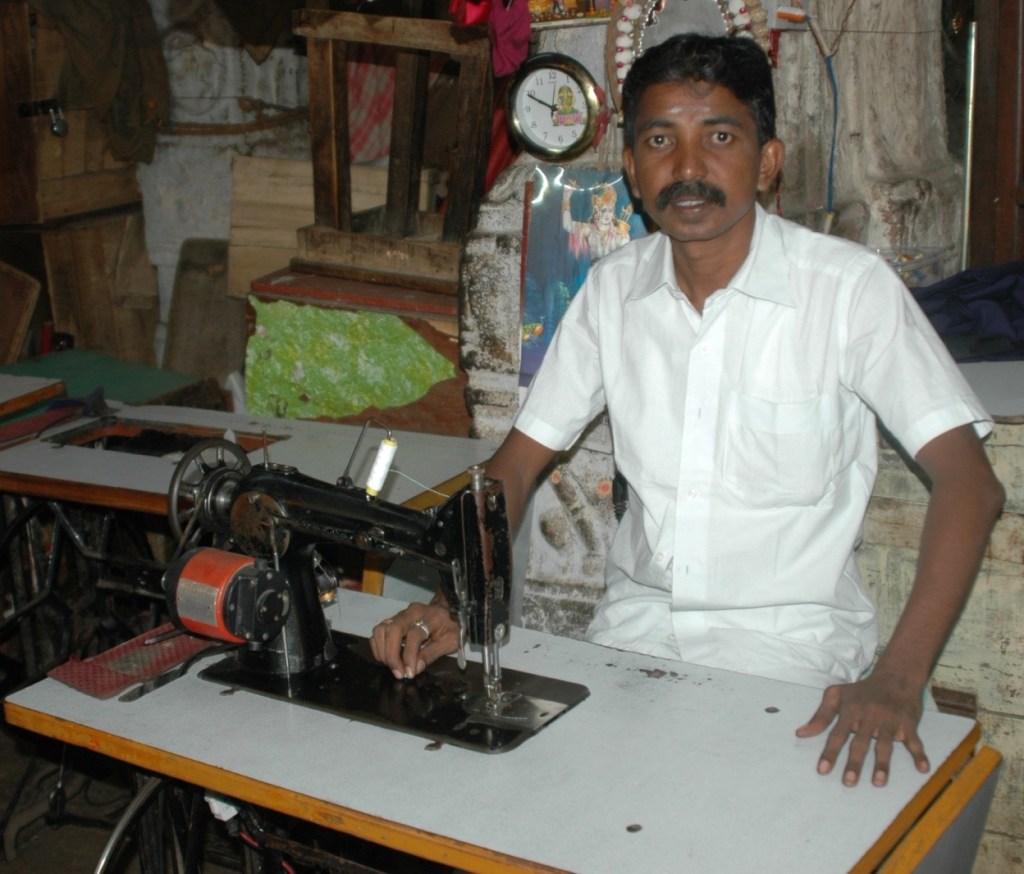
The shop owner asks me what I want. “No problem.” He hands me some sample clothes. There is no private room to change in so I peel off my shirt and then my pants in front of everybody. A bit awkward! The first kurta shirt and pajama bottoms are too tight. “No good.” He reaches into the drawer to show me some other ones. Since these are too loose, I say “No.” Undeterred, he states, “But they look fine.” “No, too big.” “I’ll get my tailor to cut them to your size then.” He leaves for only a few minutes, then returns with the altered clothes. While I change into them, I hear some of the other men talking, and then laughing. I get defensive. I demand “What are you laughing at?” I don’t remember the answer, but I know that I want to get out of there as soon as possible. Without bargaining over the price of the clothing, as I was instructed to do in “every situation,” I grab the clothes and find the waiting tuk-tuk driver. Another inauspicious moment!
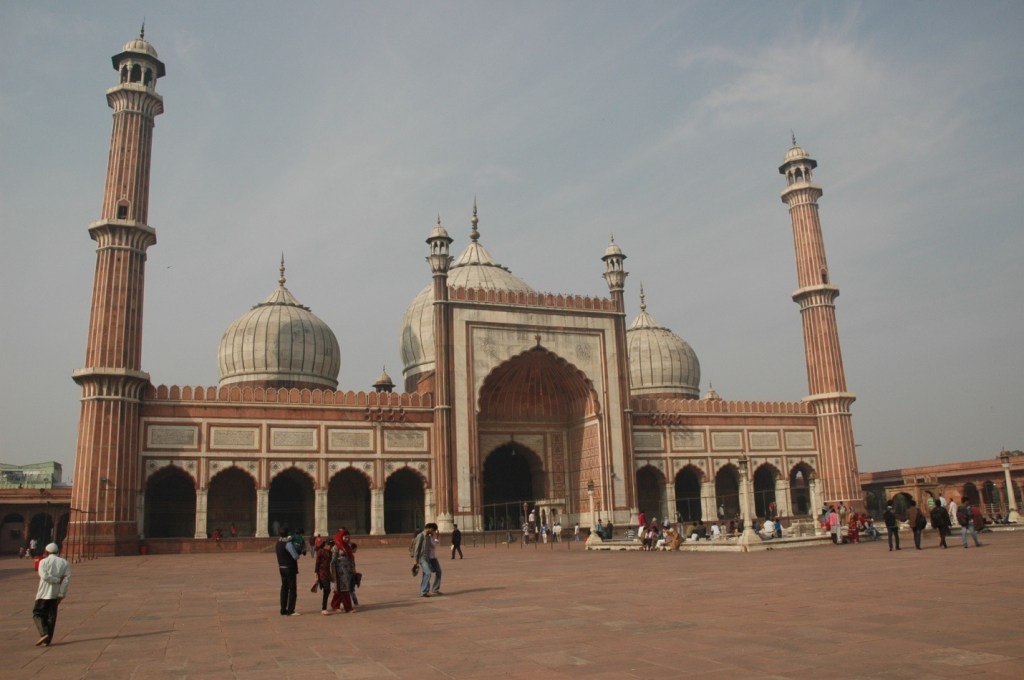
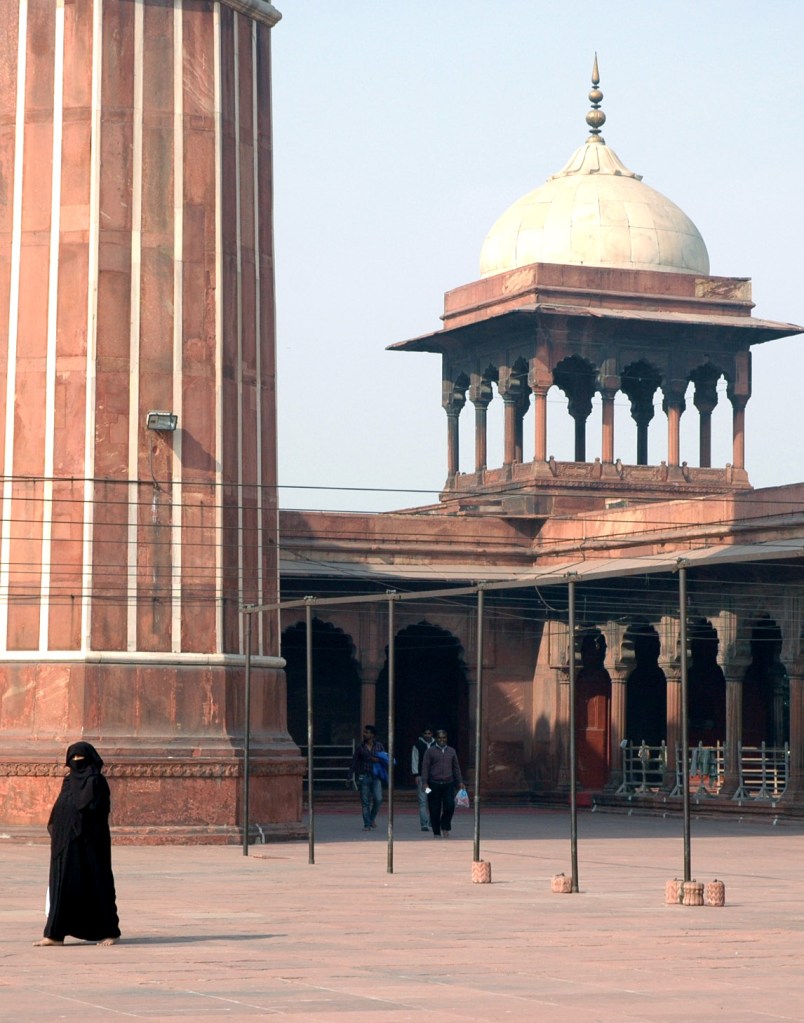
Feeling anxious, with a bit of embarrassment, I didn’t want to return to the hotel in such an agitated state. Probably unwisely, I ask the tuk-tuk driver to take me to the Jama Masjid, the largest, open-air mosque in New Delhi with a capacity for 20,000 worshippers. After another harrowing ride, we arrive near the mosque. I walk to the entrance, take off my shoes, and enter the mosque. I hope that my shoes will be there when I return.
Not sure what to do, I make my way to a stone ledge at the back of the mosque where I see several people sitting. While I’m sitting there, two occurrences help me regain my sanity. The first occasion involves a lone elderly woman. She is sitting not far from me, in an out-of-the-way area, away from the larger prayer area. She is simply sitting, very devoutly praying. Upon finishing her prayers, she opens her Koran, and with the same single-minded intensity begins to read. Her intention is obvious; she is not begging for money; she is not pestering me or others to buy something; she is not even looking at the few tourists who are strolling around the mosque. She is totally absorbed in her prayers.
The other mosque experience involves a pigeon. While a flock of pigeons flies around the mosque, inexplicably, one of the pigeons flies directly into the wall fifty feet to my right. The pigeon falls to the ground, motionless, probably breaking its neck. While I simply watch the pigeon, a young Muslim teenager immediately runs to the pigeon, picks it up, carries it to a water fountain, finds a container and tries to help the pigeon drink. No luck. The pigeon has already died. Like the woman in the chapel, he is oblivious to others around him, whether fellow Muslims or tourists like me. He has acted spontaneously to help the injured pigeon.
Prior to seeing these incidents, I have some definite, unbecoming feelings. I imagine that all Indians are out to take advantage of me. Before even talking with the tuk-tuk driver, I think: “This man is going to try to rip me off.” As a result, I think: “I’m prepared. I’m not the average bumbling tourist.” So, I’m suspicious of him, before I even met him! What should have been my state of mind? I should have dropped my erroneous stereotypes and my sense of superiority.
Furthermore, upon arrival at the clothing shop, I feel fear and anxiety. Being in a different situation, confronted by other men whom I don’t know, I’m more insecure and nervous than I’ve been in a longtime. At that moment, the last thing I’m ready to do is to talk, let alone be kind. What should I have done? I should have been willing to engage in small talk; I should have appreciatively looked at the variety of clothes already displayed; I should have simply said “I like your merchandise, but I can’t buy anything today.” In my insecurity and nervousness, I feel threatened when there were no real grounds for that sensation of being threatened! As a result, I’m not able to acknowledge their presence in any way. I certainly didn’t show any respect for them as Indians and their social customs.
Instead of the day ending disastrously because of my attitude, the events in the mosque alter my feelings. I realiz that I, “Curt, the tourist,” is not always an object of curiosity to the Indians around me. Letting go of some of my egocentricity, I could see Indians going about their own life, being who they are, oblivious to my presence. In the process, I learn something about them. In the woman who worships very intently, I see an Indian woman completely absorbed in her prayers. In the young man, who races to help the pigeon, I see natural and spontaneous kindness. He isn’t calculating anything; he simply runs to the pigeon to help. Inadvertently, he and the woman help me. I’m shocked into confronting my fears and my stereotypes. Maybe now I can see the individuals I’ll meet in a more open-minded manner. I even learn about myself!

