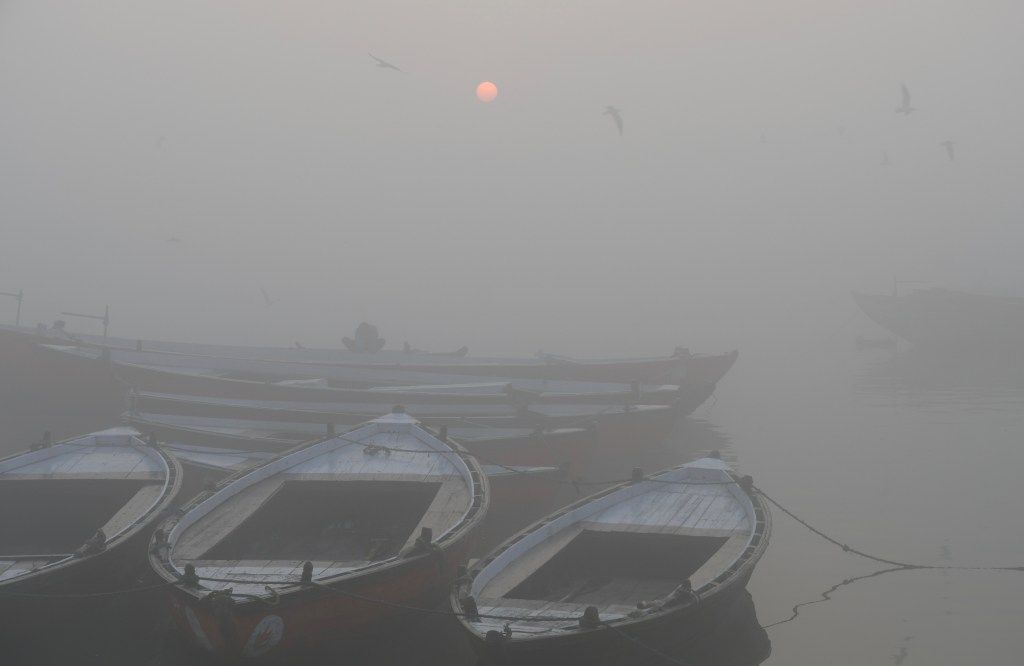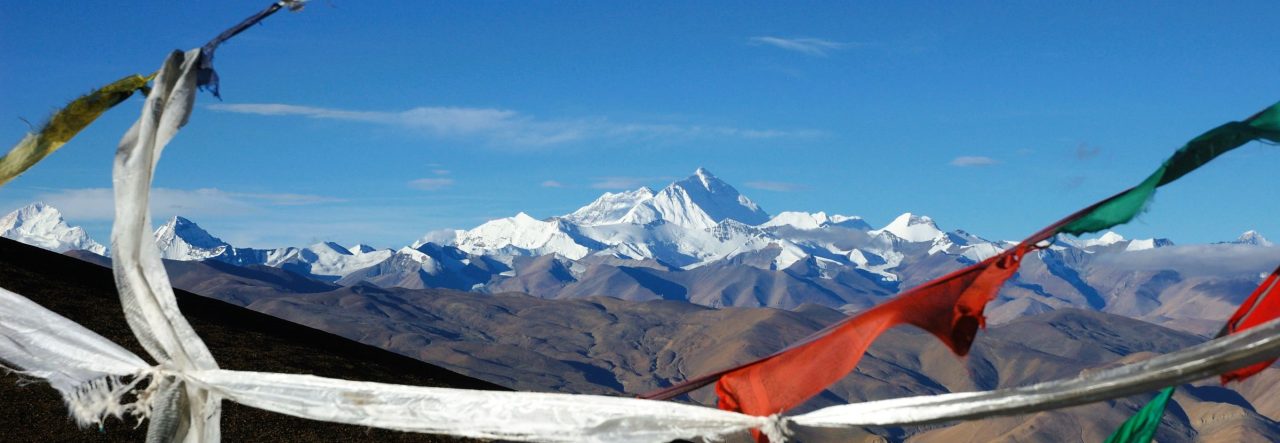
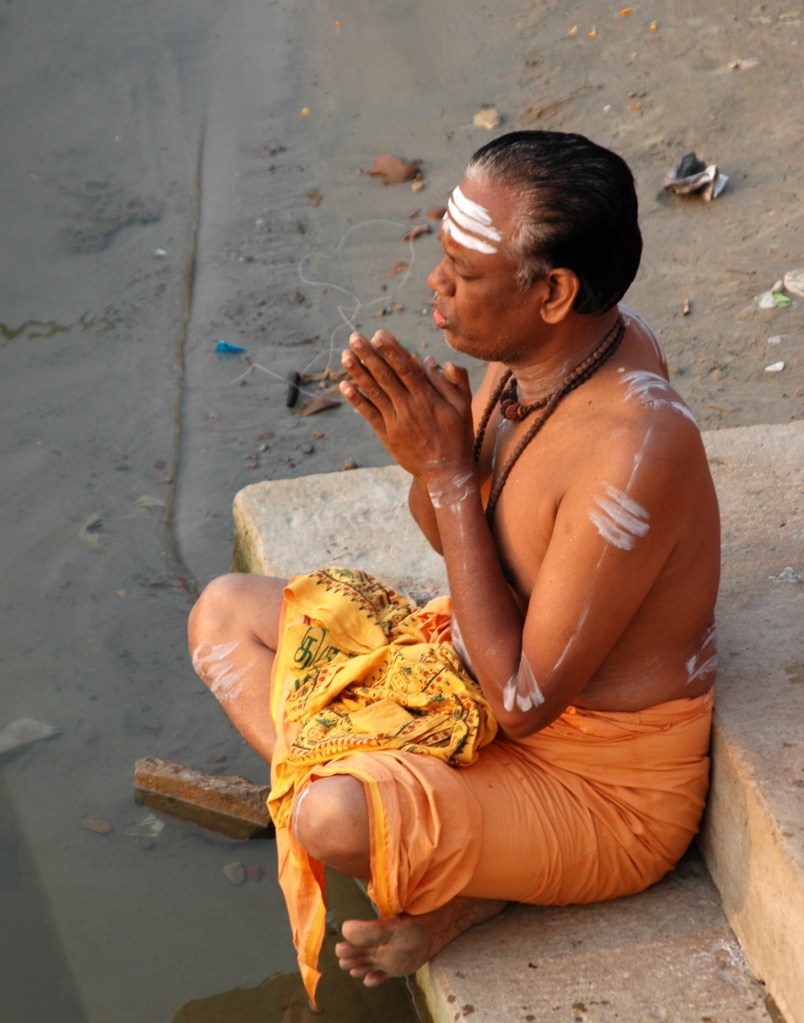
Varanasi is the city of Shiva. Everywhere I went there were images, statues, temples to Shiva. While statistics show that Vaishnavites outnumber Shivaites throughout India, I have to believe that most Hindus in Varanasi are Shivaites. For an outsider like me, I can tell a person is a Shivaite if they have three horizontal lines stretching across the forehead.
For Shaivites, Shiva is a god that is the highest god in the pantheon of gods. In the Puranas, a story occurs which begins with Brahma, the Creator, and Vishnu, the sustainer of the universe, arguing about which one of the gods is the greatest. The four Vedas are called upon to settle the question. Each of the Vedas answers that neither of these gods is the greatest. Instead, Shiva is. As the two gods stand in disbelief, a pillar of fire splits the earth between them and glazes through the sky. Astounded, Brahma and Vishnu decide to determine the source and extend of this brilliant pillar of light. Vishnu becomes a boar and burrows deep into the earth. Brahma mounts his goose and flies into the heavens as far as he can. Nevertheless, even after thousands of years, these two gods can neither find the bottom of the shaft or the top of the shaft of light. When they have returned to their starting place, Shiva emerges from the light. A wonderful story!
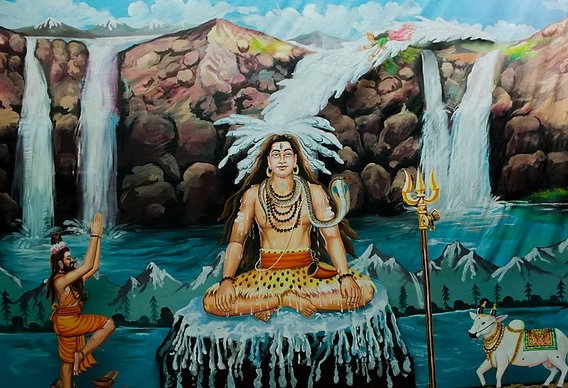
People from all over India make pilgrimage to Varanasi. For them, the city is Shiva’s permanent residence. Mythically, the city is posed on Shiva’s trident. When the Ganga poured forth from the heavens, Shiva broke the force of its fall by allowing it to fall onto his head. As a result, the city is located between heaven and earth. It is spared the destruction which occurs as the various Hindu ages change. In other words, Varanasi is an immortal city!
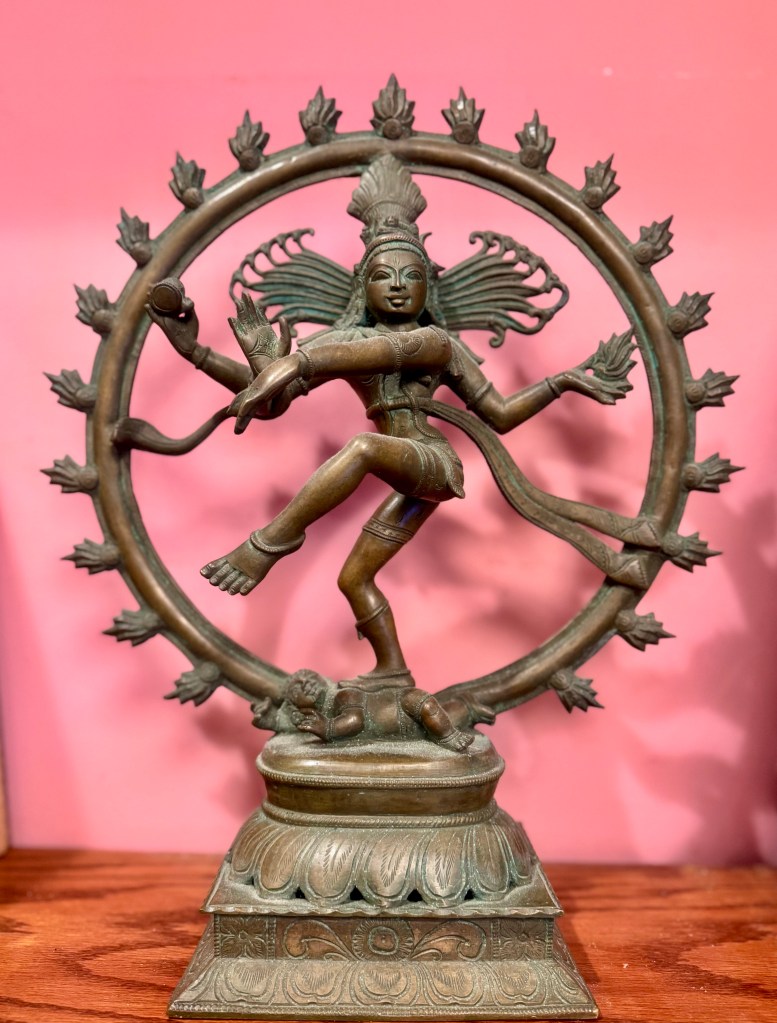
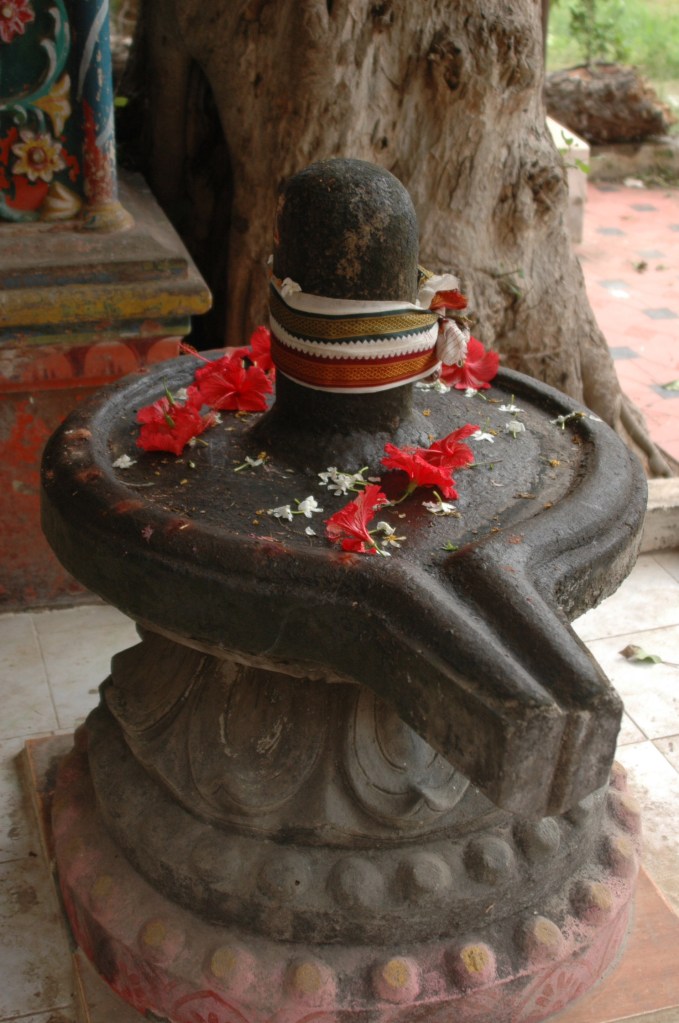
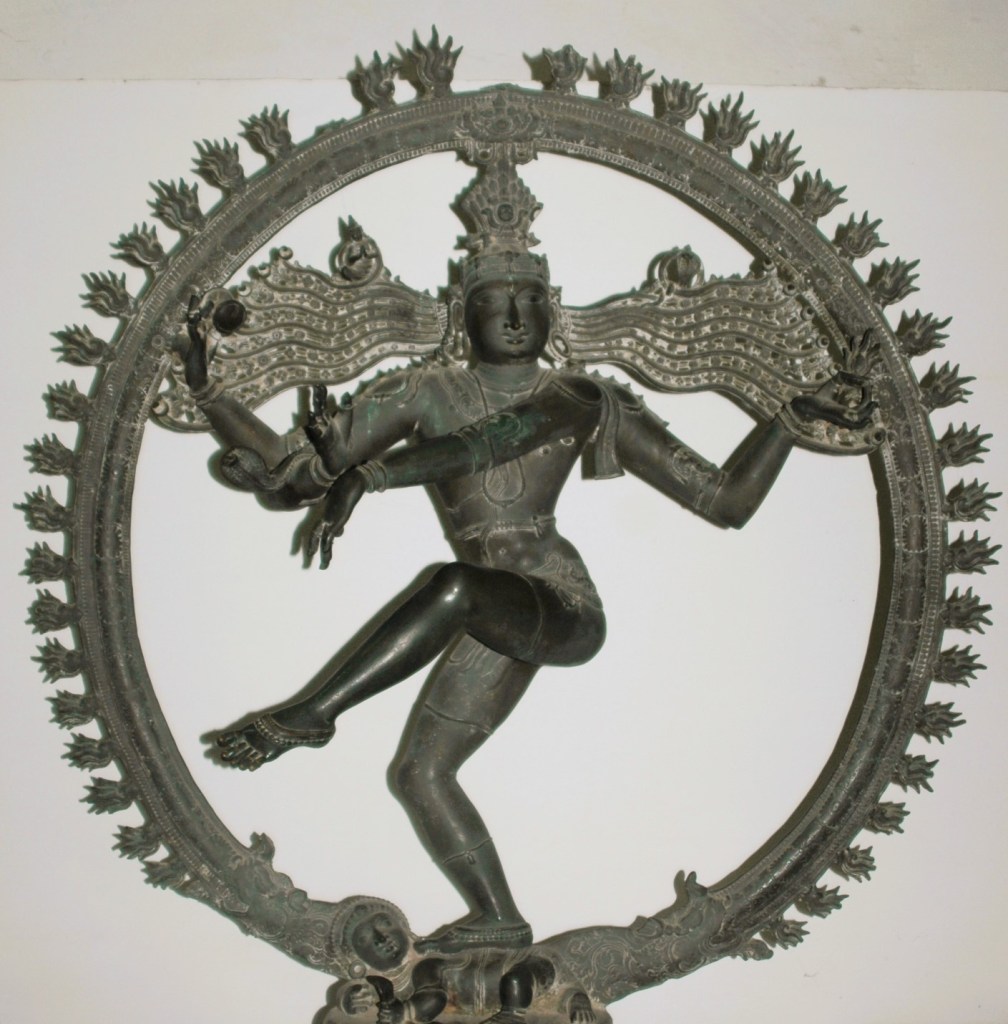
As Carl and I wander around Varanasi, we see different representations associated with Shiva. One is the Nataraj, the dancing Shiva is found everywhere in the city. I was so captivated by the Nataraj that I even bought a seemingly ten-pound sculpture and carried it all the way back to Atlanta. The other image is the lingham, a varied-sized column of stone upon a base, the yoni. For many, the apparent sexual representations direct one’s attention to the eternal divine process of creation and regeneration, and the union of the feminine and the masculine. Fascinating!
Shiva may be considered the god of opposites. He is an ascetic, but he also affirms conventional life by marrying Parvati. He is the Lord of Death, but he is also the destroyer of death and the giver of life. One of the many stories about Shiva is that individuals who die in Varanasi need not far death. At the moment of death, Shiva will whisper in their ears the sacred mantra which allows them to calmly face death. No wonder that Shiva is viewed as the heart and soul of Varanasi.