Who doesn’t know that there has been war between India and Muslim dominated Pakistan? Who doesn’t know that the Taj Mahal is built by a Muslim ruler? Who hasn’t heard of tensions in Ayodhya because Hindus believe that a Muslim mosque covers an original temple to Lord Ram? Unfortunately, for all that we learned about India, we did not have any direct lectures on Islam in India.
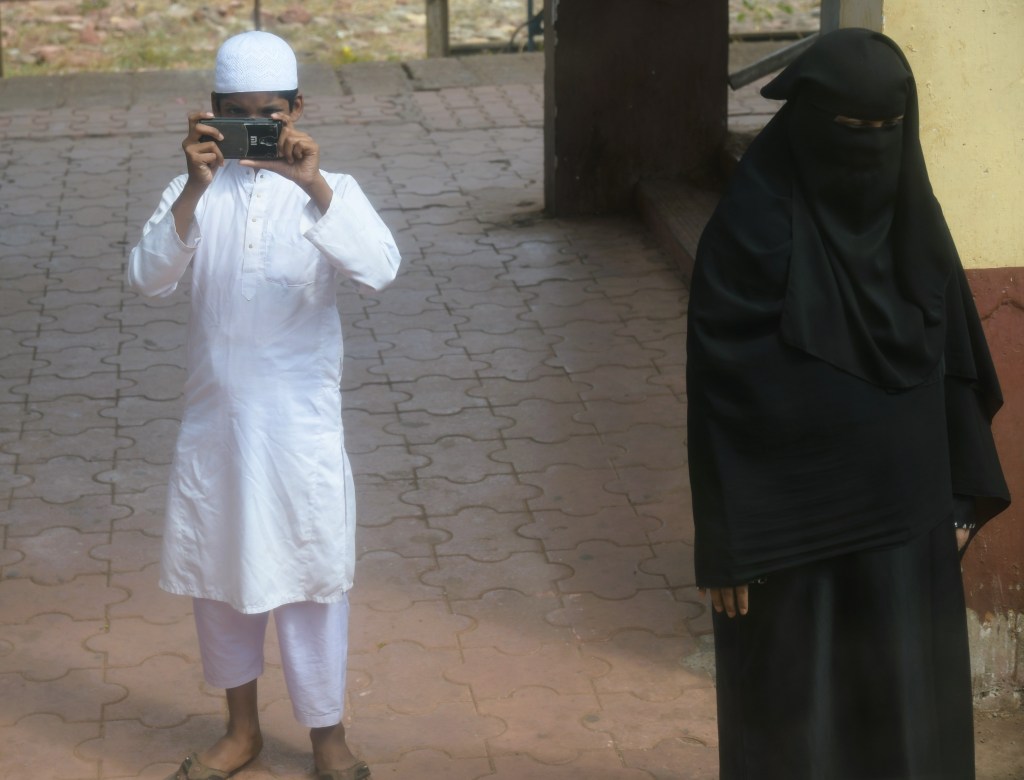
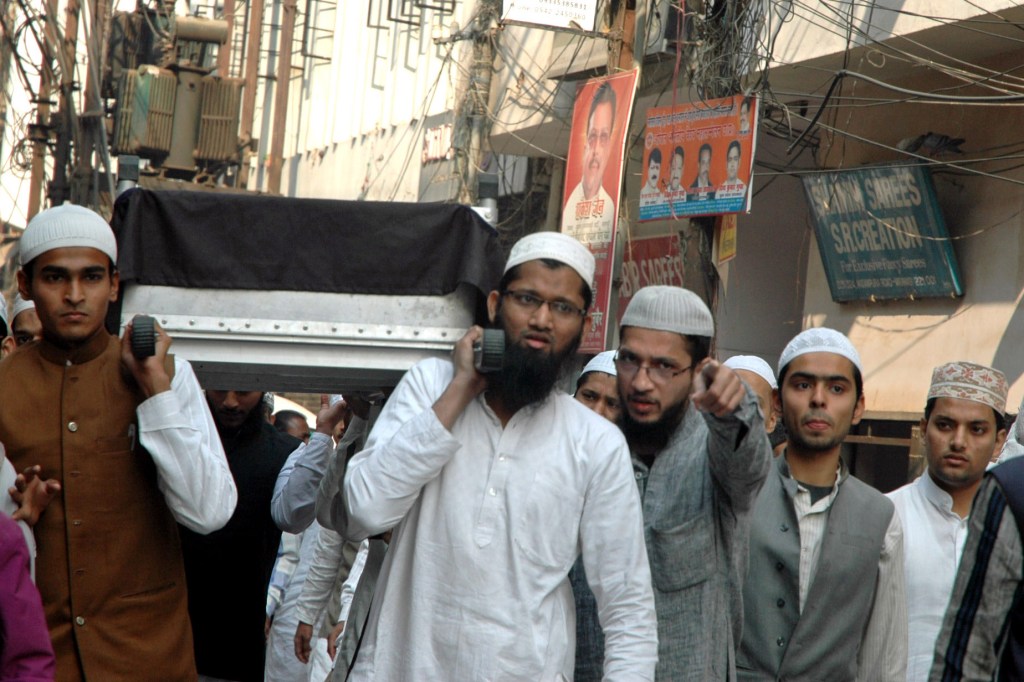
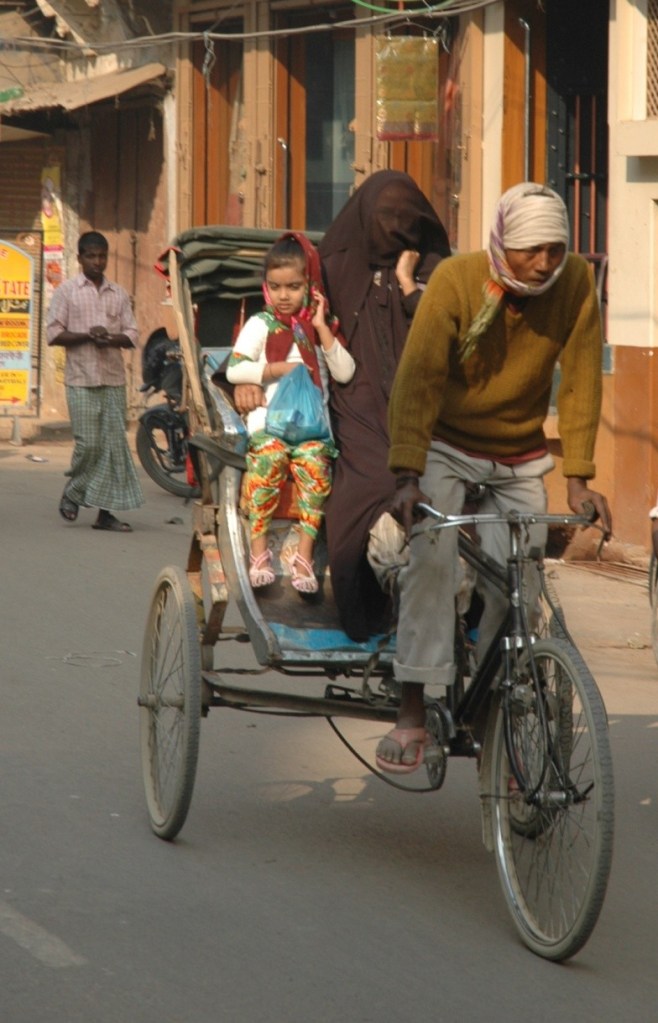
As a traveler though, I still saw Muslims in public. Carrying a corpse; riding in a rickshaw.
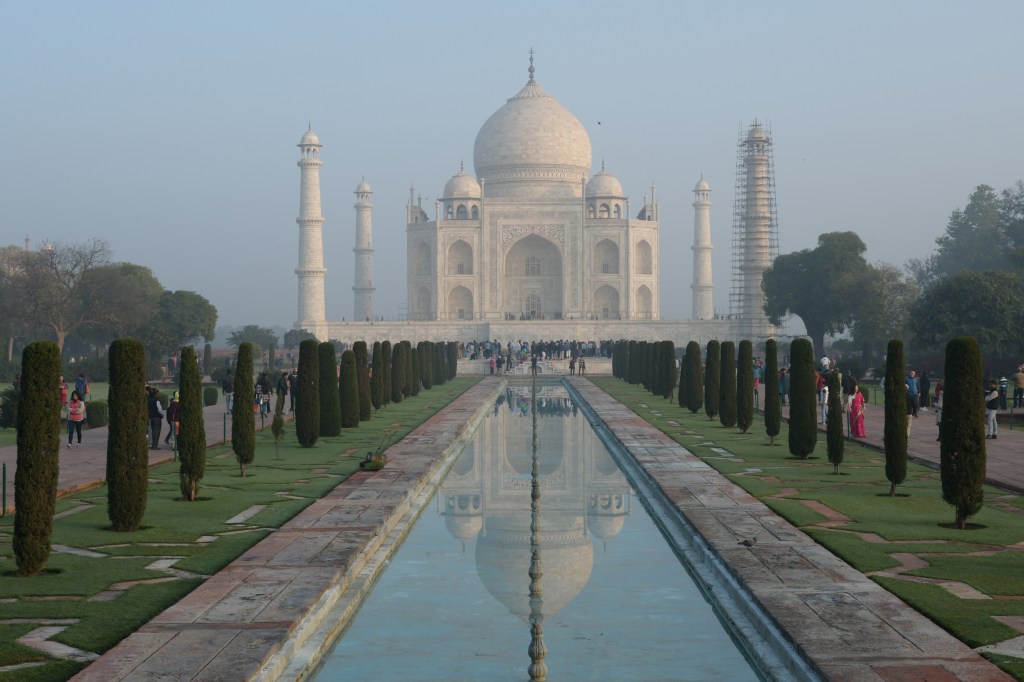
I also had several memorable experiences and impressions. Here are four. Since our first few days were in Delhi, Agra, and Jaipur, we visited one of the UNESCO sites and one of the “new wonders of the world”, the Taj Mahal on the Yamuna River. Symmetrical architecture; white marble with inlaid stones; romantic story of Emperor Shah Jahan constructing the Taj as a mausoleum for his for his favorite wife, Mumtaz Mahal.
The visit to the mosques. I’ve already described my early, “restorative,” visit to Delhi’s Jama Masjid. While in Hyderabad, we sought to visit the Mecca Masjid. When our group of twelve reached the entrance and started to remove our shoes, we were stopped. While I don’t remember the reason, an official signaled that the men could enter, the women could not even though they were wearing shawls to cover their head and shoulders. The other fellows and I entered, and exited quickly. The women stood outside, stares turning into glares. Whatever the reason, I remember we all grumbled after that occurrence.
A third experience occurred somewhere in the skies between Mumbai and Delhi. As the other seminar members flew from Delhi to Atlanta, Carl and I continued our India travels by flying from Mumbai to Delhi. After take-off, after the seat-belt sign went off, after reaching an altitude of 29,000 feet, an elderly Muslim released his seat belt, removed a prayer rug from the overhead bin, placed it on the narrow airplane aisle, lowered himself, and began praying. None of us, this elderly Muslim included, knew which direction was west toward Mecca! However, the accuracy of the direction didn’t matter, we in fact were going east away from Mecca. All he knew was that it was the time for prayer.
My final memory was in Varanasi. During our stay, we had two young men as our guides, one Hindu and one Muslim. One morning they suggested that we watch the Shiites commemorate Ashura or Muharram. On this day, they remember the martyrdom of Iman Hussein in 680 CE. Because he and his small group refused to acknowledge the Umayyad Caliph, they were killed at Karbala. The four of us found a somewhat inconspicuous, “out-of-the-way” vantage point to watch the procession. Everybody dressed in black. Everybody in the procession walking somberly. The young men beating their chest. Some young men using whips to flagellate themselves resulting in bloody backs. A part of Muslim practices that I had never witness before, a Muslim practice that I have not witnessed since then!
While I regret that our seminar didn’t offer any talks on Islam, I, like other travelers, certainly have impressions of Islam in India’s history and the presence of Muslims today.