
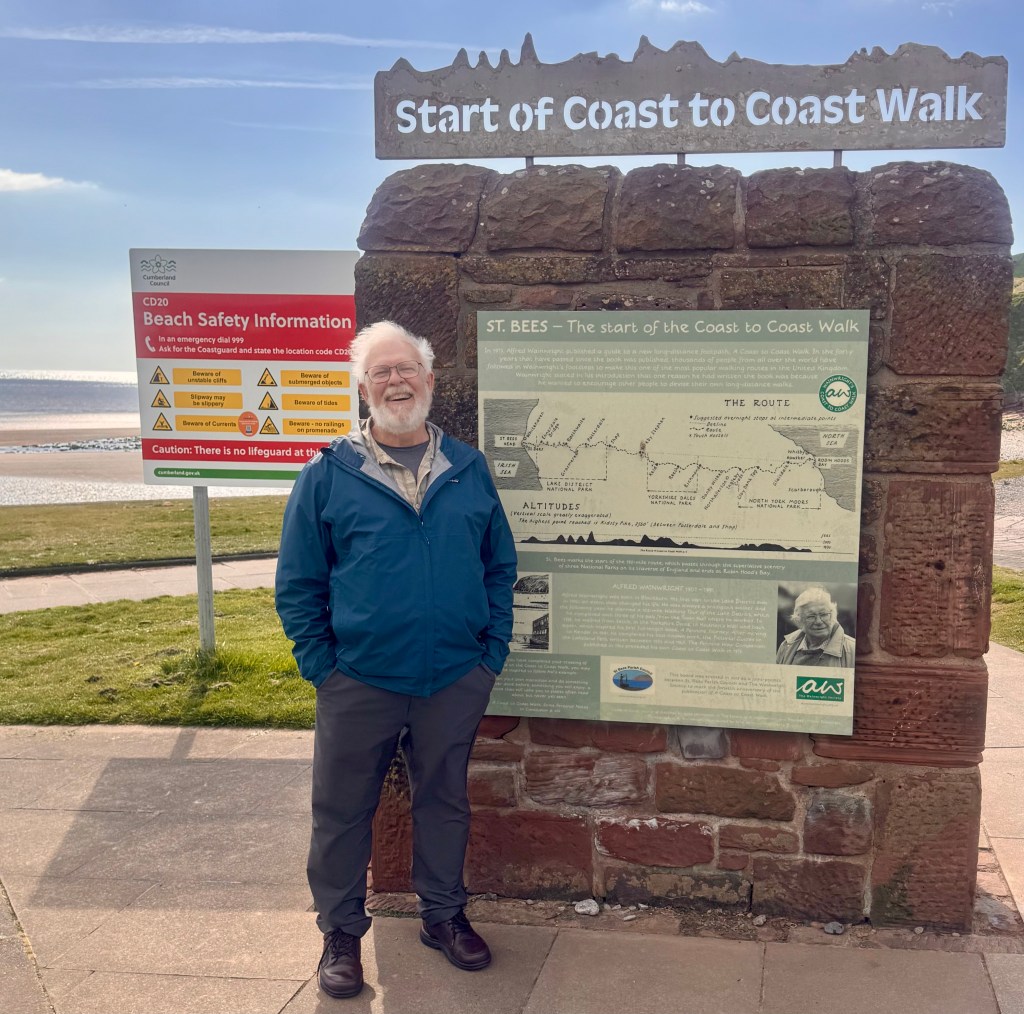
Well, well, well.
A diversion. I’m going to walk almost 200 miles and I don’t even get to start the trail in the usual way! The Coast to Coast Trail begins with a diversion. So much for walking along the actual coast as I did on the South West Coast Trail. Last December, a landslip took away part of the trail and left other parts precariously close to the ledge.
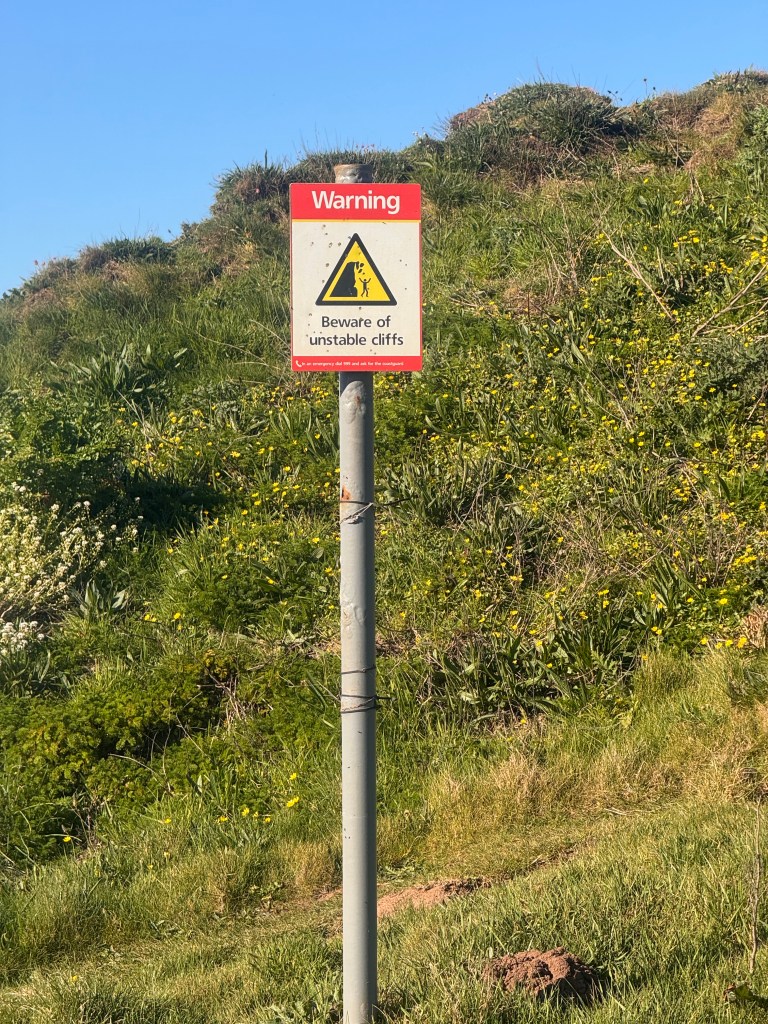
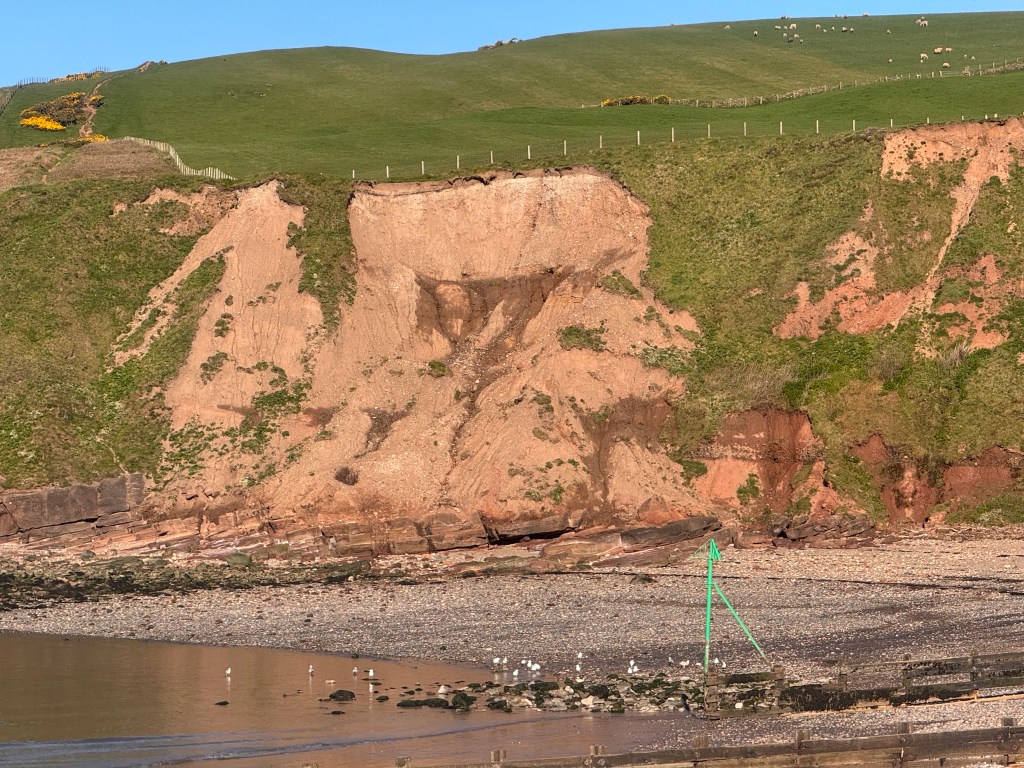
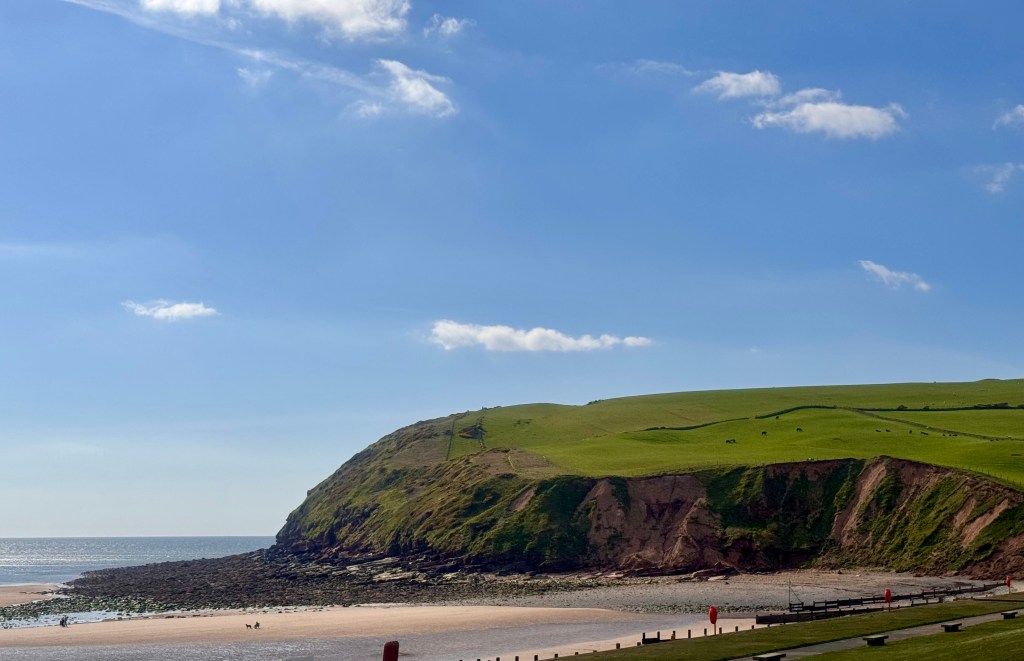
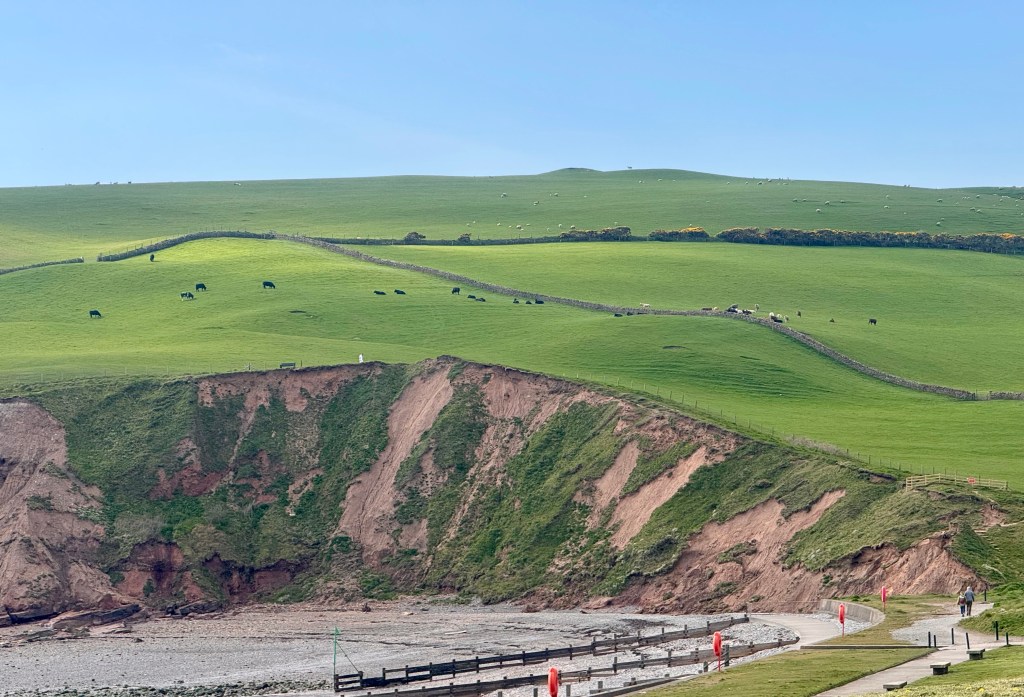
This morning, I talk with the front desk person at Seacote Hotel. “Two of us were working the morning after a heavy rain. We looked over at South Head. ‘Doesn’t something look different?’” “We looked, and she finally said. ‘I think part of the cliff has fallen.’ “ “We were right.” Knowing that the problem could be serious for walkers, the police quickly barricaded the trail cutting off the first four miles of the Coast to Coast. Trail monitors also quickly redirected walkers.
A distraction. As I made my way inland through the small town of St Bees, I get distracted. Up ahead is the local church, a building from 1120, built from red sandstone. I stroll through the gardens and the graveyard. Peaceful setting. Interesting carvings on the gravestones.
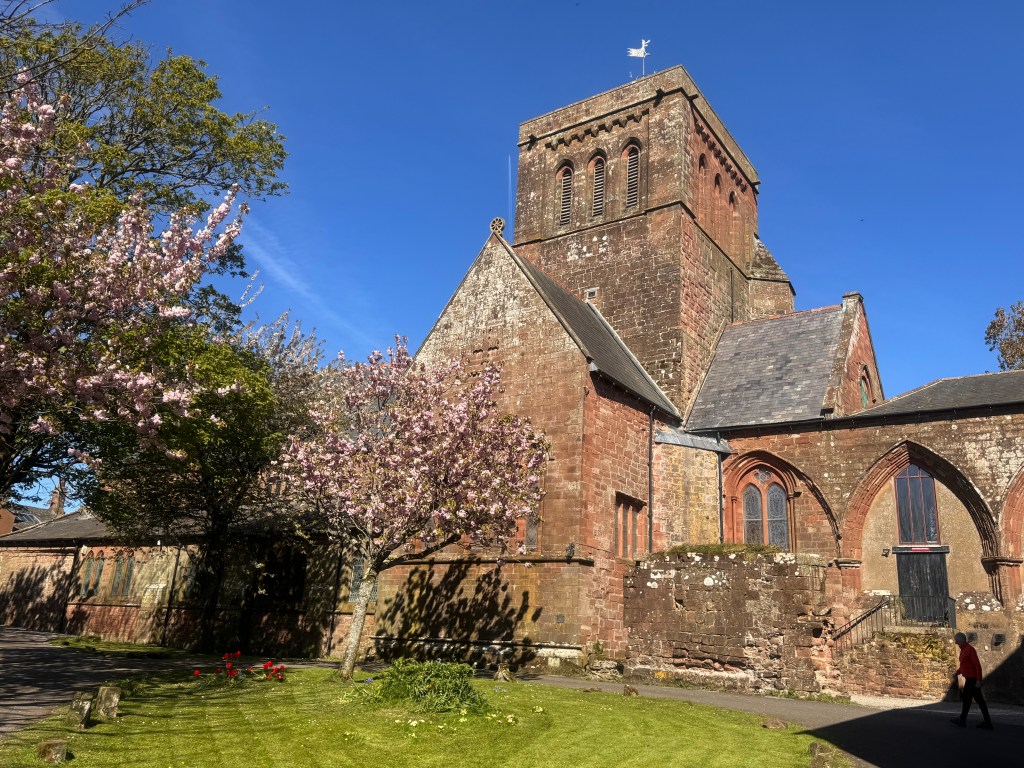
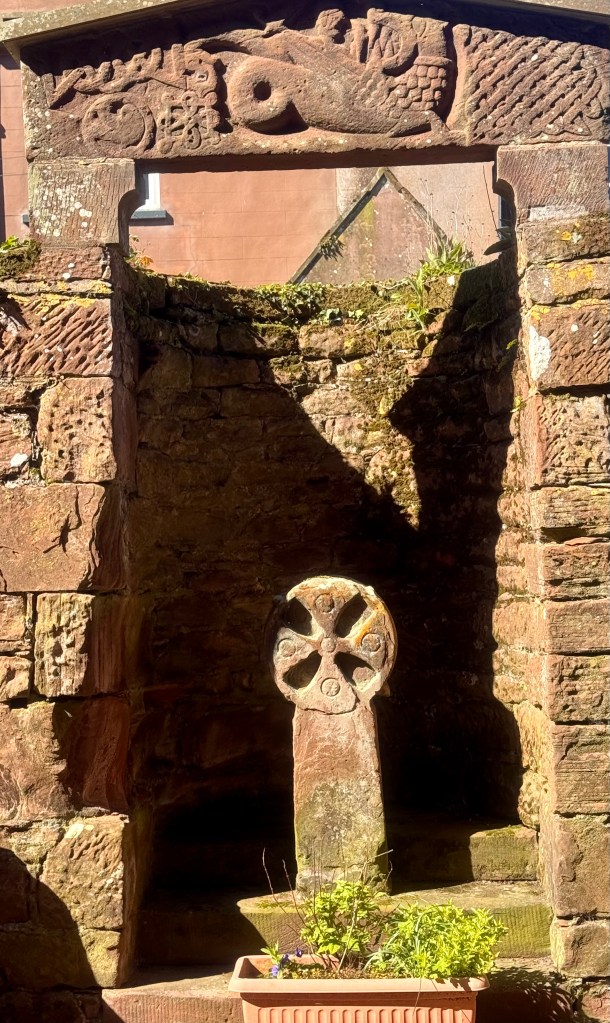
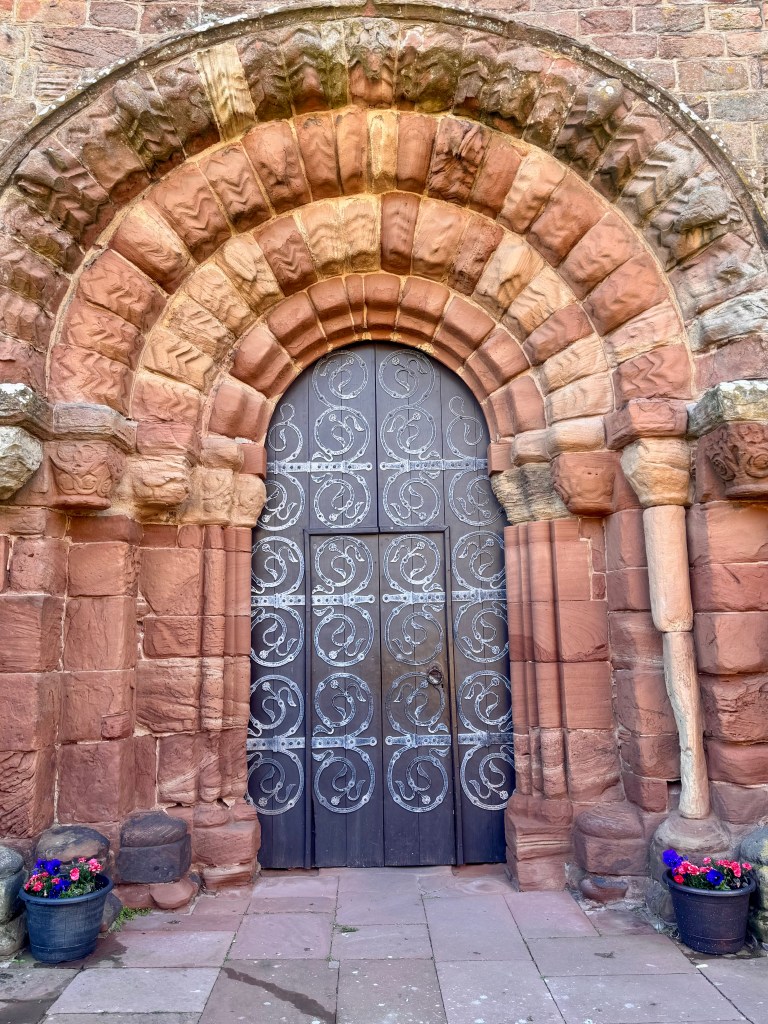
As I stand in front of the West end of the church, I can tell that the stones look quite old. The archway is actually the only remaining features of that 12th century building. Inside the church, I read the local history, about St. Bees, about the Priory, about the Priory converted to a theological college in 1817 training approximately 2600 priests for the Church of England.
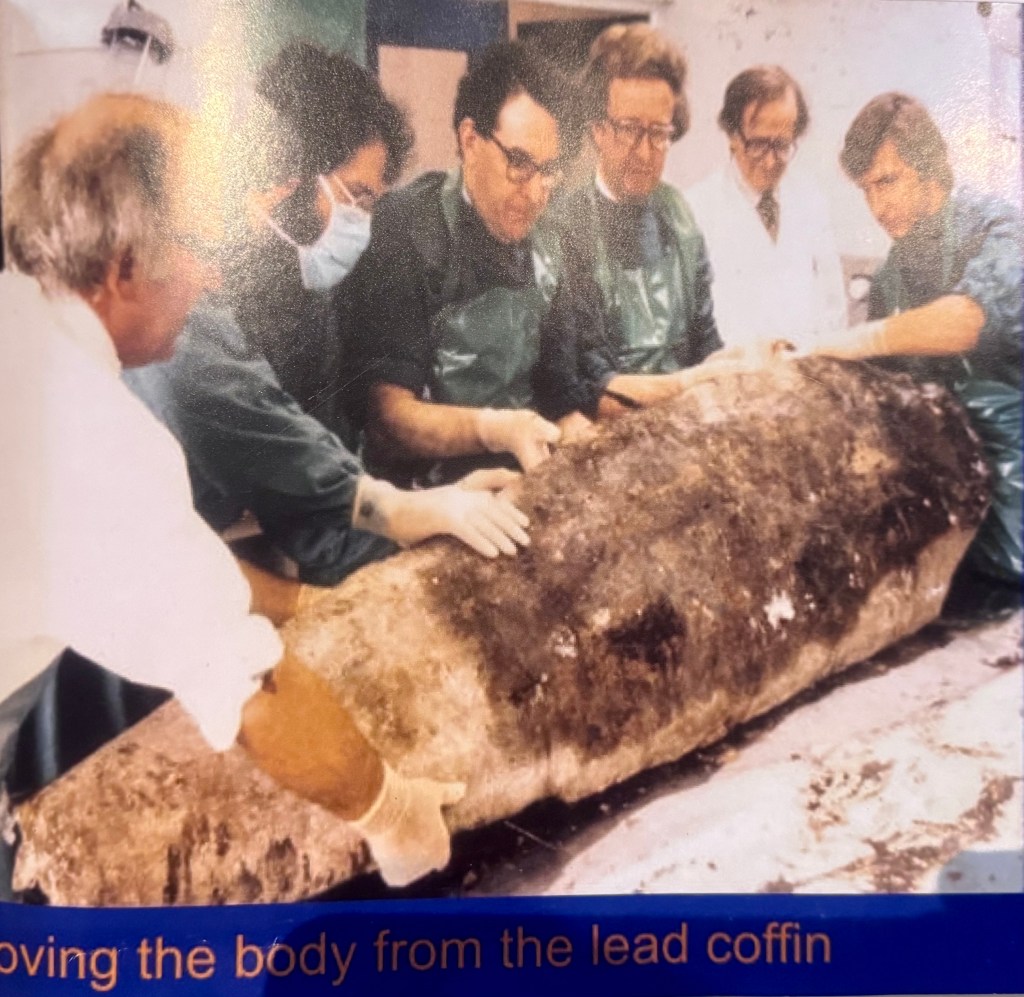
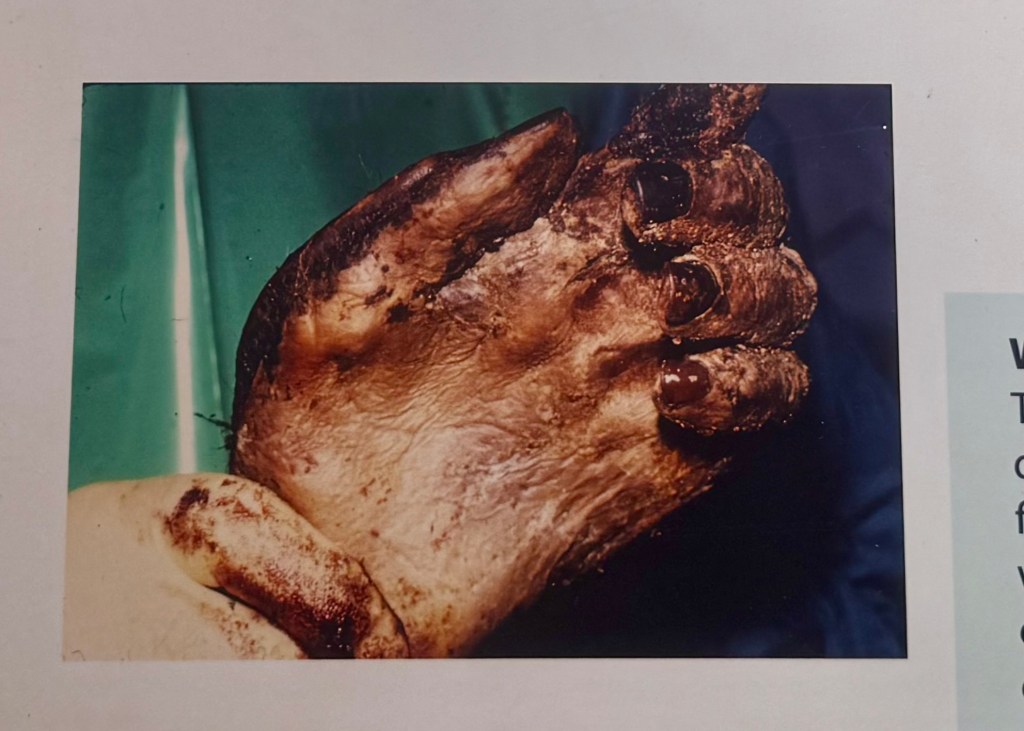
A further surprise awaits. I meet St Bees man. In the 1980’s a team of archaeologists are working around the church. Within feet of the church walls, they uncover both a skeleton of a woman and also a lead coffin. Thinking that they would find a skeleton in the coffin, they open it. They are surprised to find a cloth wrapped body. Taking the body to the local morgue, they are further surprised. Because of a very rare chemical process, the body has been partially preserved. Skin. Hair. Fingernails. Eyes. Internal organs. Even small amounts of liquid blood. The autopsy team determined that he was approximately 40 years old, killed by a fractured rib puncturing his lung.
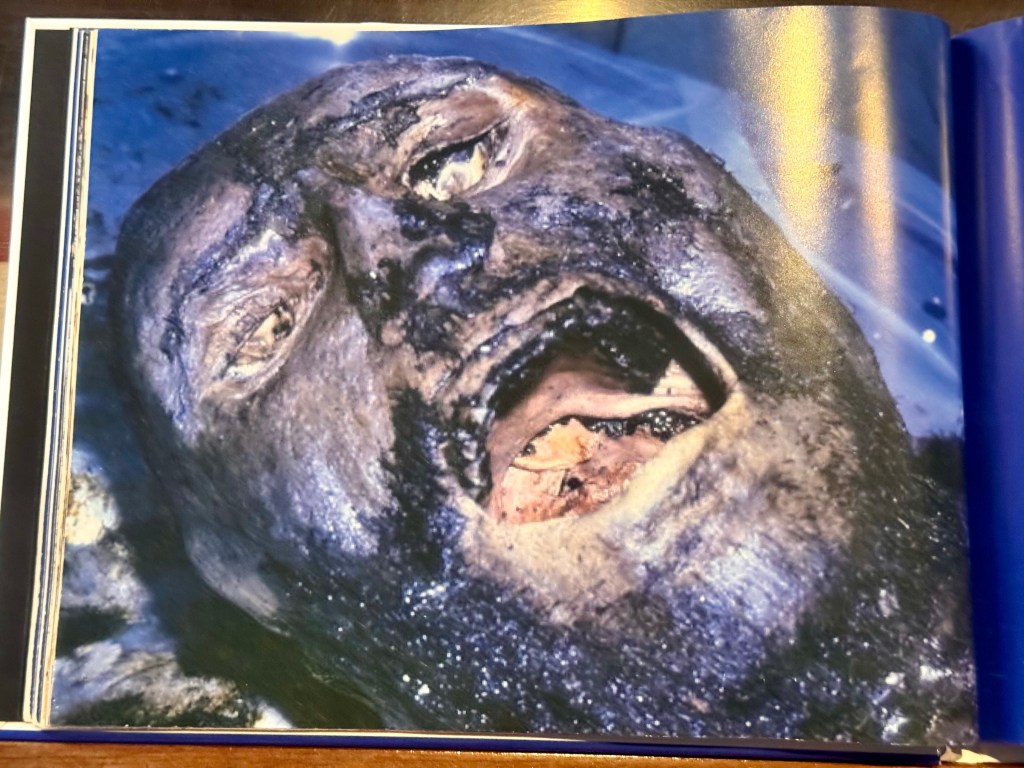
Who was he? How old is he? Researchers determined that he probably Anthony de Lucy Lord of Cockermouth and Egremont. From other records, researchers know that Anthony de Lucy was killed in 1368 in present day Lithuania during a Northern Crusade. As I find it eery simply reading about the St Bees man, I can imagine what the archaeologists felt! Staring into the face of a man 700 years old. Respectfully, he was required that year in the priory cemetery.
A distraction and a diversion, in the first hour of walking the Coast to Coast. What a way to start the trail! What a way to start the day!

