
Five miles north of my Robin Hood’s Bay finishing point, I decompress at Whitby, a town with a population of 10,000 which I never would have guessed. A good place to rest and recollect.
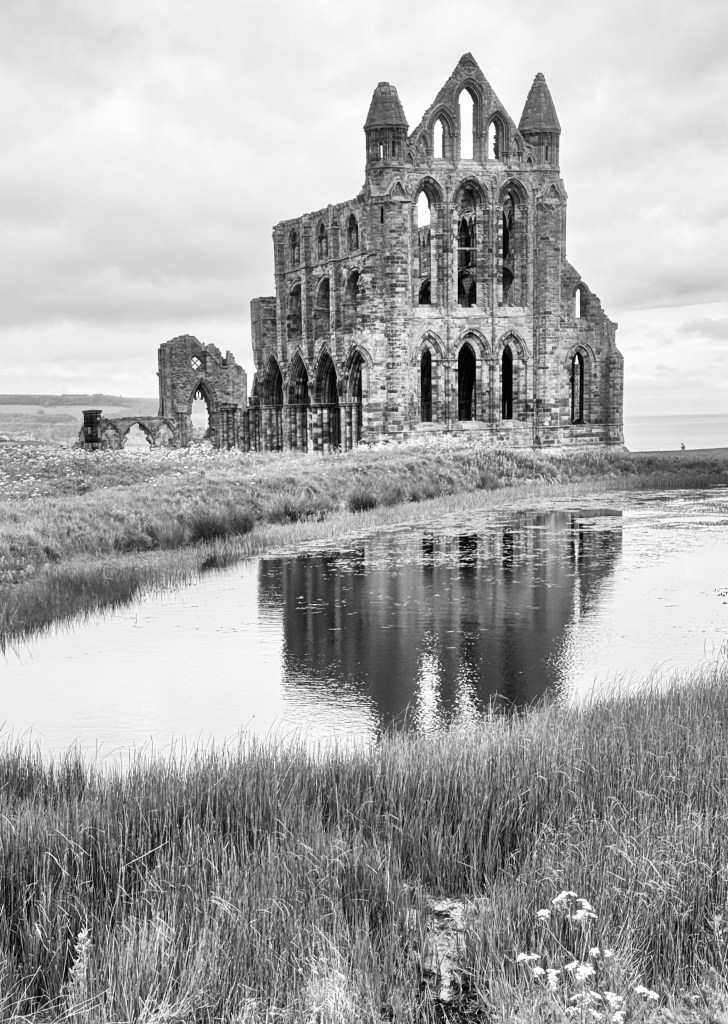
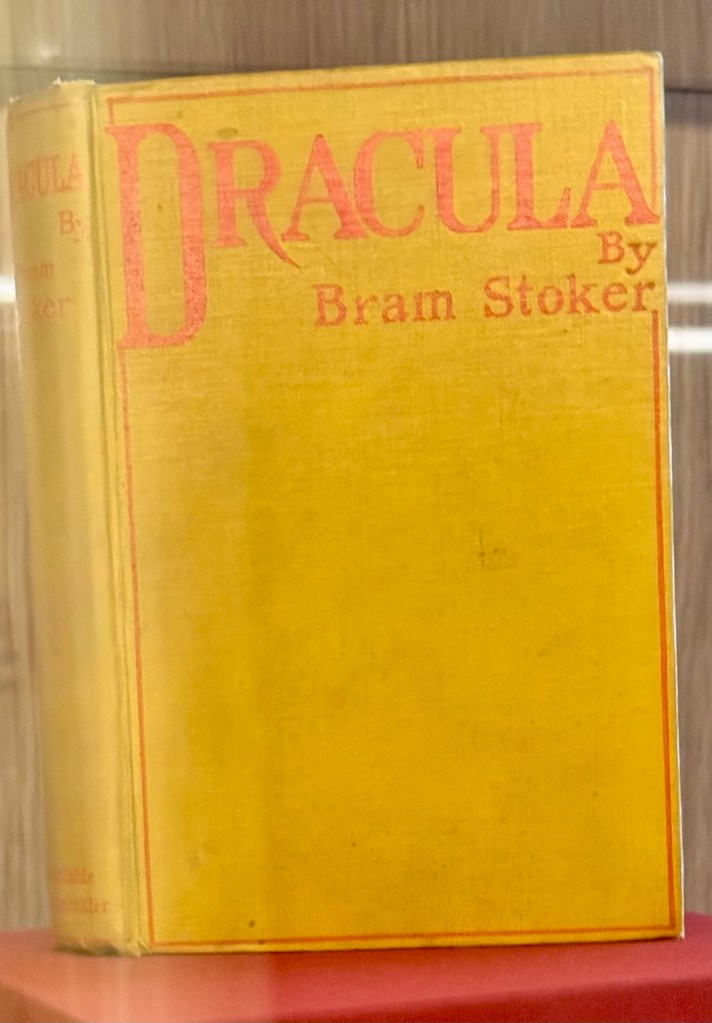
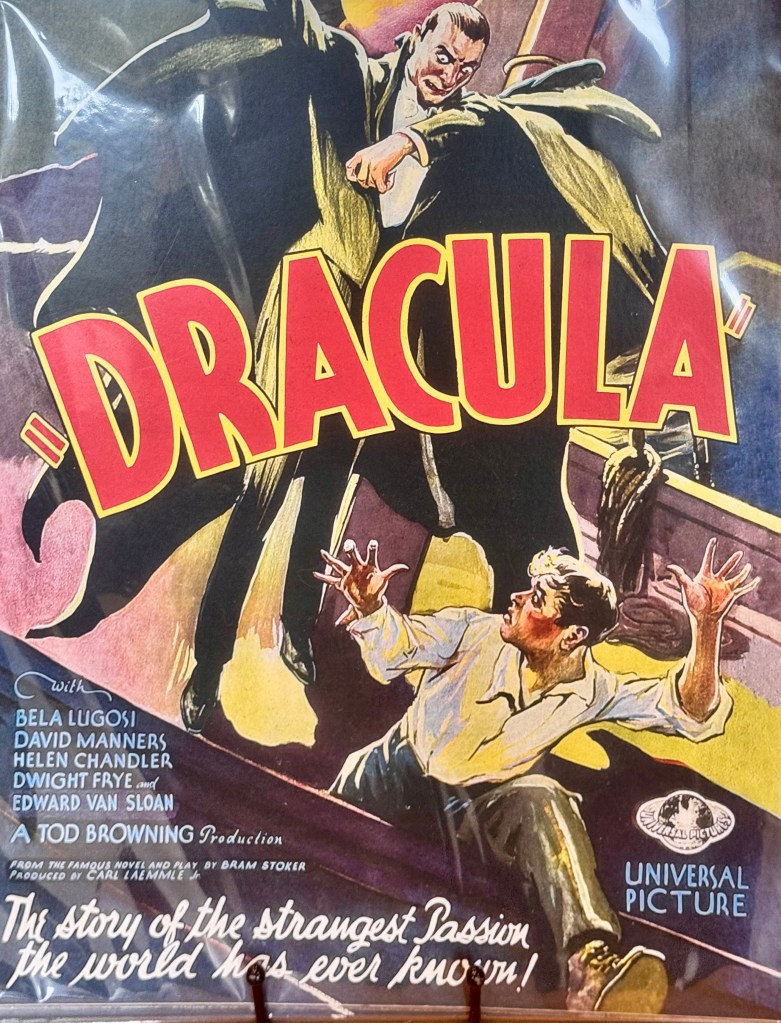
As it was historically larger than Robin Hood’s Bay due to its role as a small port for ships fishing the North Sea, I visit the East Cliffs and the West Cliffs. When I climbed the 199-steps to the east cliffs, I have to visit St. Mary’s Church. The most different parish church that I’ve seen. A three-tiered pulpit; pews labeled “Free” and “For Strangers.” Interesting! A hundred feet from the church, I visit the ruins of Whitby Abbey of dual “fame.”” It is the site of the 664 CE Synod of Whitby which led to the adoption of Roman Christianity rather than Celtic Christianity for England. And, for Gothic lovers, the site is better known as the inspiration for Bram Stroker’s “Dracula.”
Yet, the West Cliffs and the Whitby Museum on the western side catches my real attention. This small museum, picture a museum the size of one-fourth a Publix or Krogers store. This small museum is representative of small town England. Let me explain.
To set the context further, picture visiting a 1950’s museum in the states. For me, I picture the Illinois State Museum. In my memory, that museum had the old wood and glass display cases. Different state flags, often of military units, hung in a corridor without any protection, except probably for the sign “Do not Touch.” The Whitby Museum is such a museum. But one more feature. Imagine an estate sale. Imagine a dozen estate sales together. The Whitby Museum is similar to all those estate sales giving your items to a museum to be displayed rather than to be sold. Anything and everything will be on display.
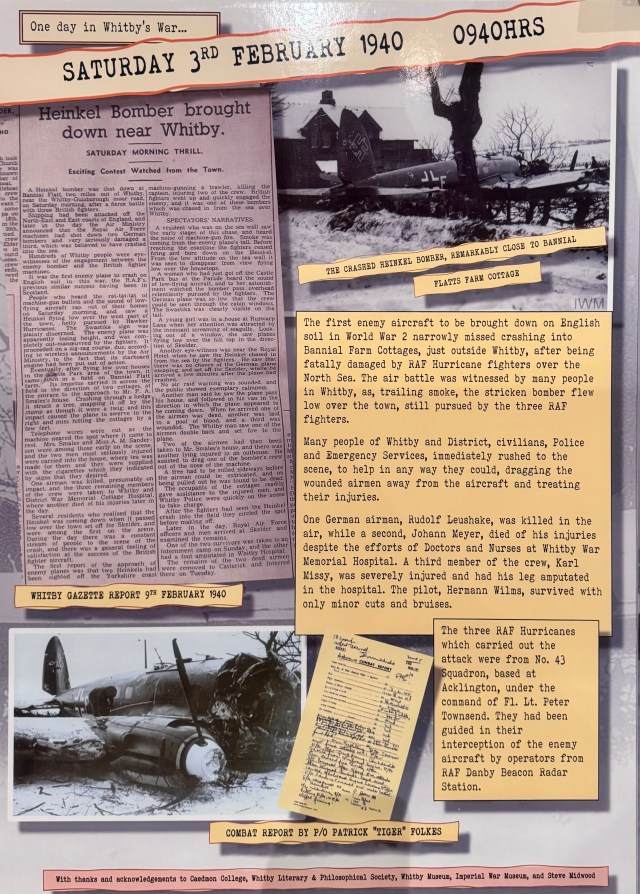
At Whitby, everything is on display. After paying a small fee, I walk into the “Military” section. Several display cases show the medals of local sons from World War I to more recent wars. An adjacent case shows muskets and swords from the English Civil War. A newspaper copy shows a crashed WW2 German bomber. The first bomber shot down on English soil and just a very short distance outside of the town. Oh, and there is a Japanese Samurai warrior that some resident donated.
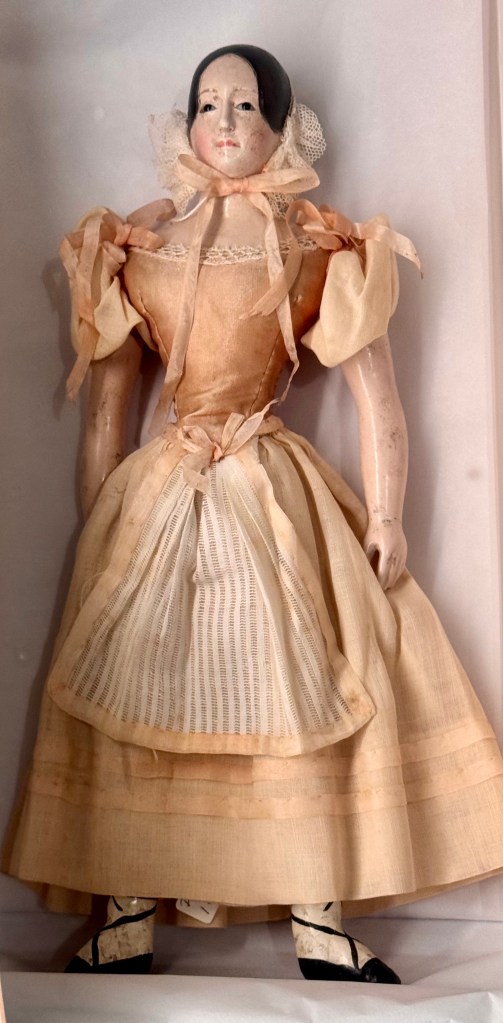
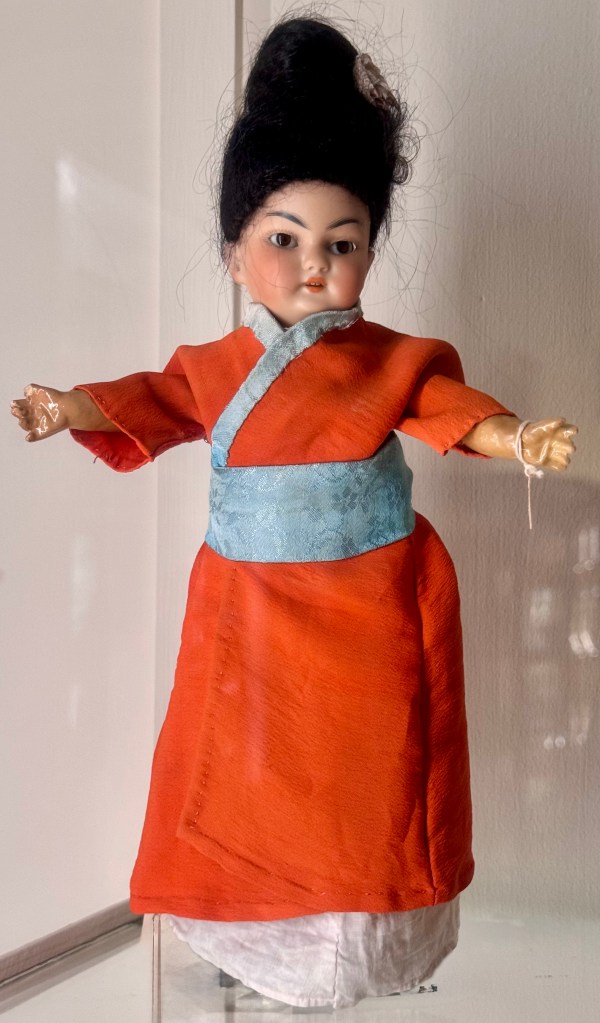
What is next to “Military?” Of course, dolls and puppets. Ceramic dolls, ballerinas, Asian inspired dolls. Puppets with strings still stacked.
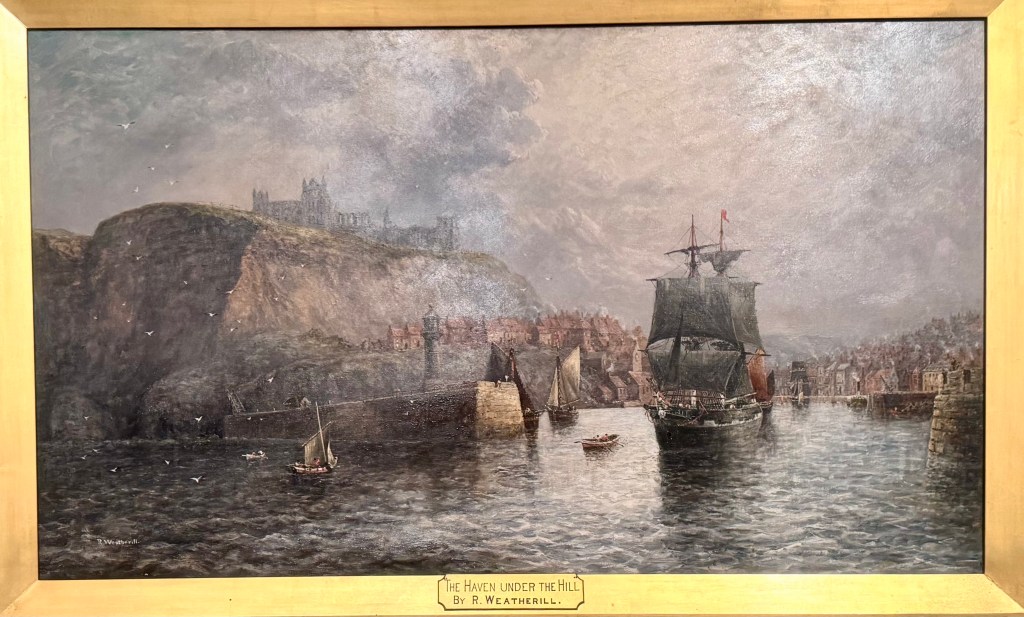
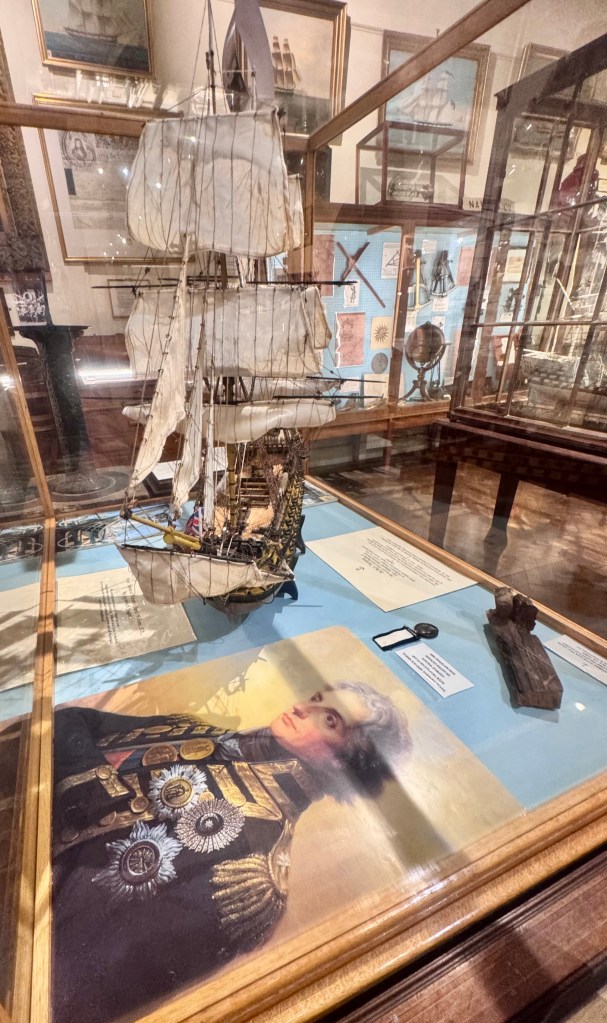
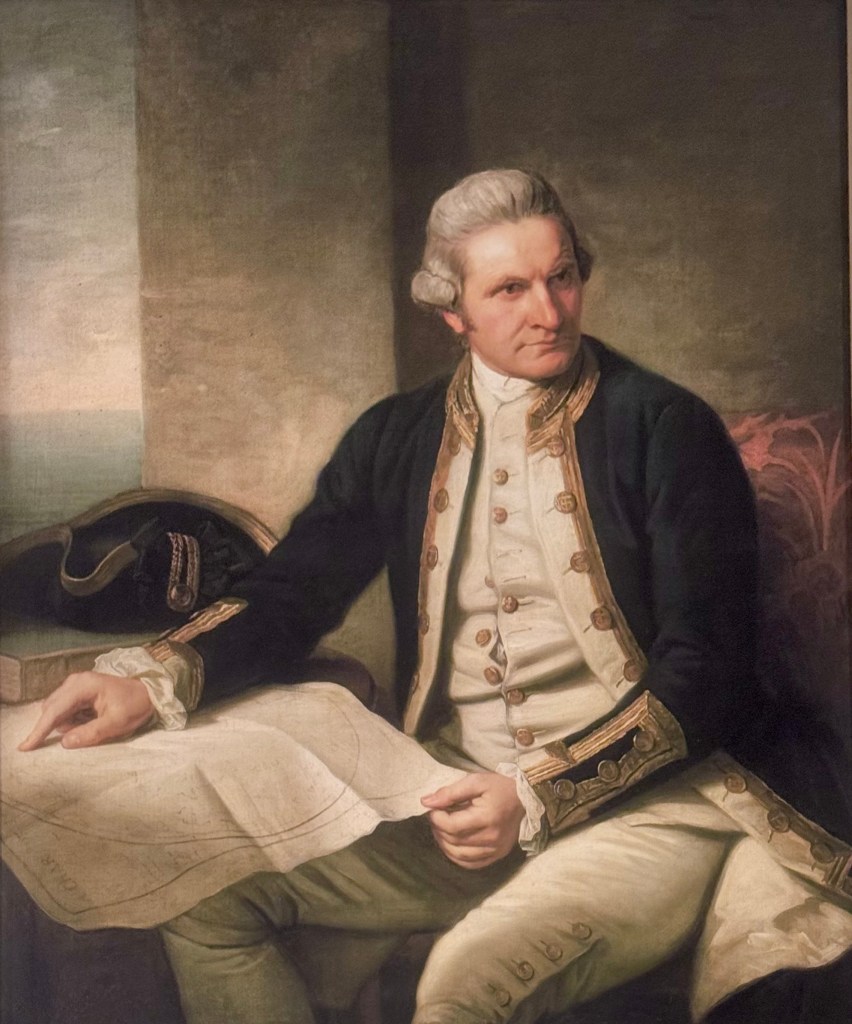
Next, I move quickly to a several cases depicting Whitby’s relationship to the sea. Ship building. Ships painted in Whitby’s harbour. Ship exploits of fishing and whaling. Ship heroics as endangered ships reach the harbor safely. And, while golf and train-spotting may be the hobbies for some English, miniature ship building is also a popular hobby. A dozen miniature, replica ships are displayed. From Captain Cooks Endeavor to Vice-Admiral Nelson’s HMS Victory to more modern trading ships such as the Cutty Shark.
Mentioning Captain Cook of exploring fame, since he was born only a few miles from Whitby and did his sea apprenticeship in Whitby, he is considered a “local lad.” There are several display cases detailing his voyages.
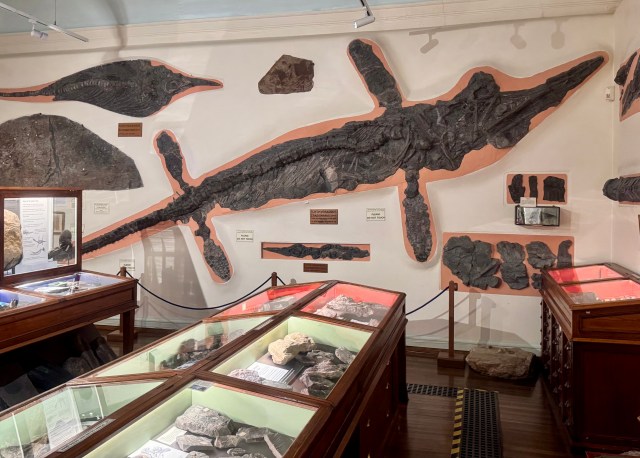
Now, you may ask “What occurred in Whitby prior to all of these recorded events?” The Whitby Museum answers your question. A large part of the room displays the fossils of the Jurassic period. Ichthyosaurus. Ammonites. And more.
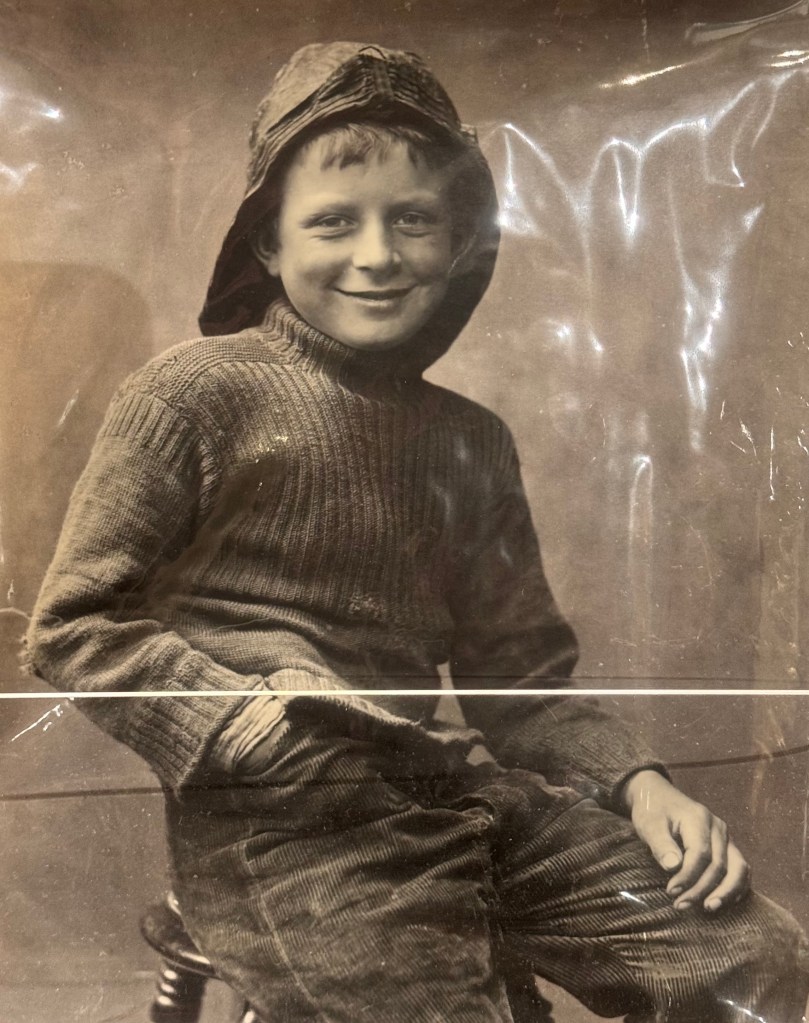
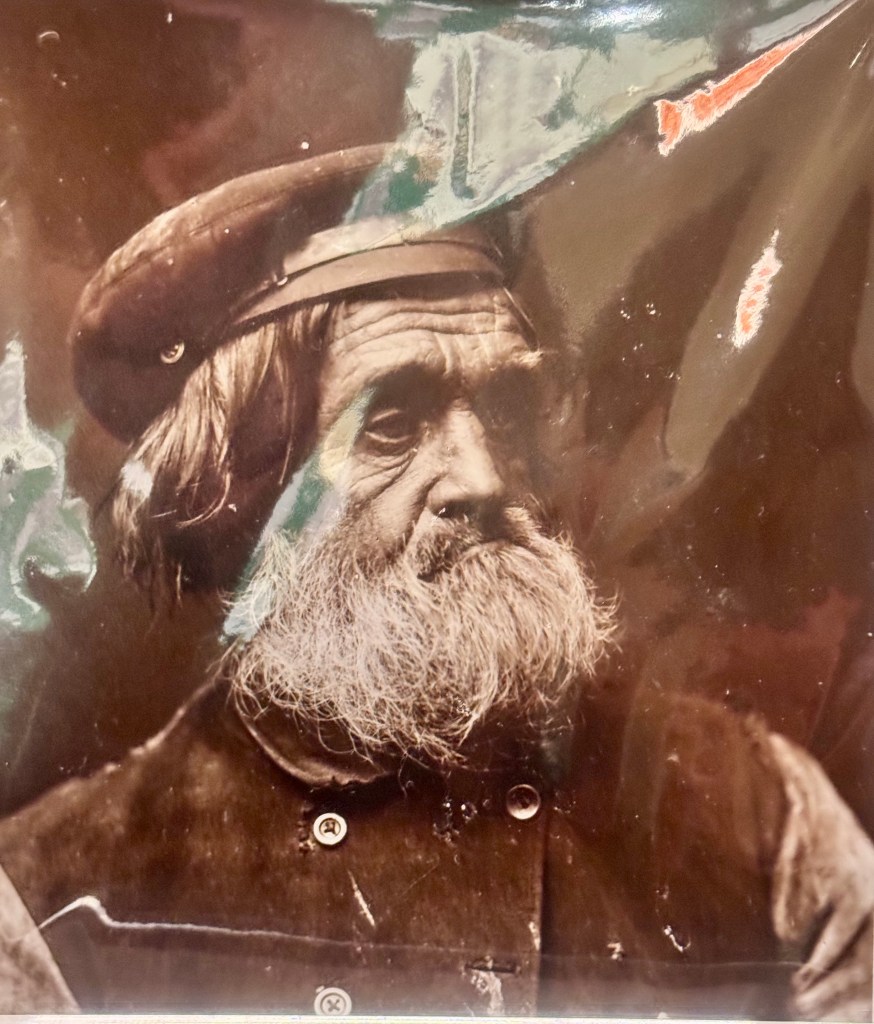
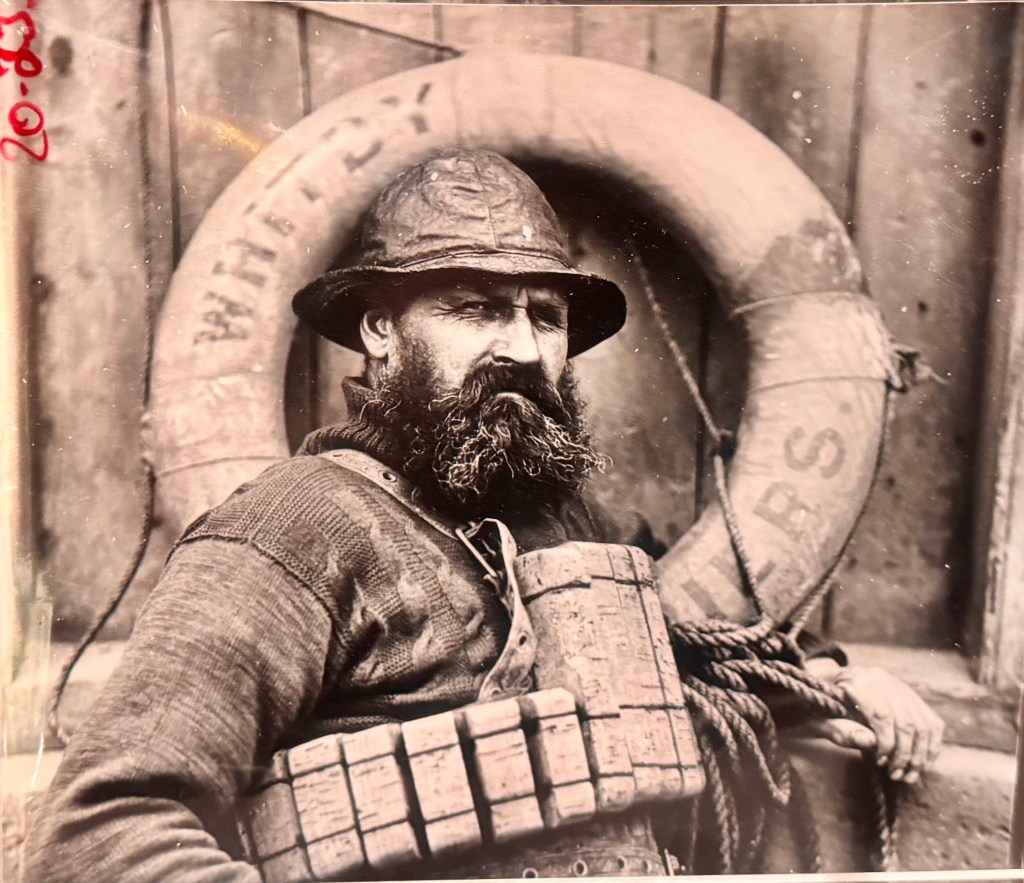
And one more small display case. Apparently, Whitby has been the home of several well-known photographers. Frank Meadows Sutcliffe became recognized as one of the premier Victorian photographers with its portraits of local residents. Beautiful!
I see a sign for “Curiouser and Curiouser.” Almost as though the museum staff is too embarrassed to put this exhibit on the main floor, I climb a set of stairs. There I enter a room the size of a large family room.
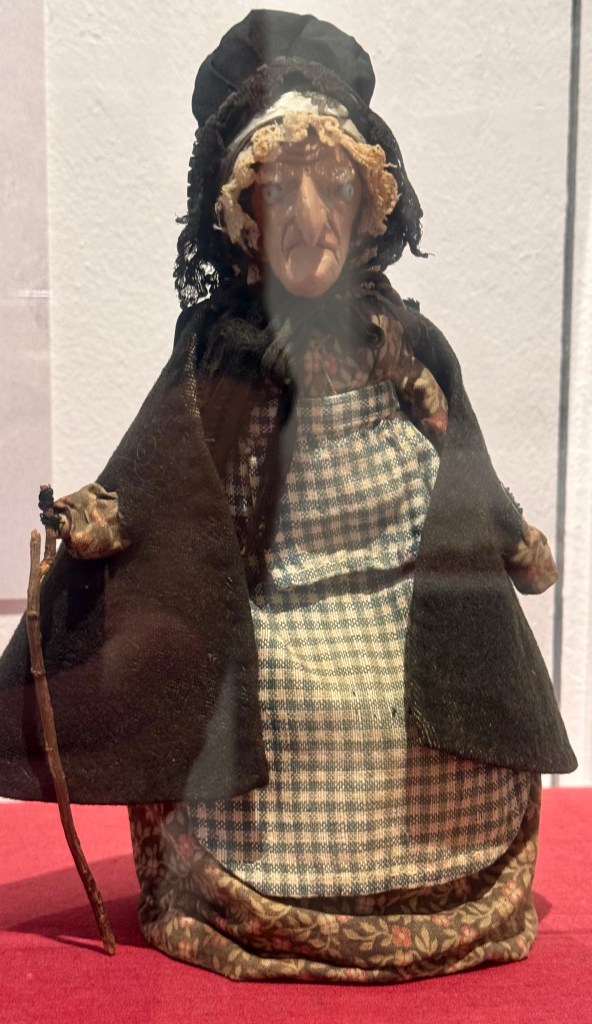
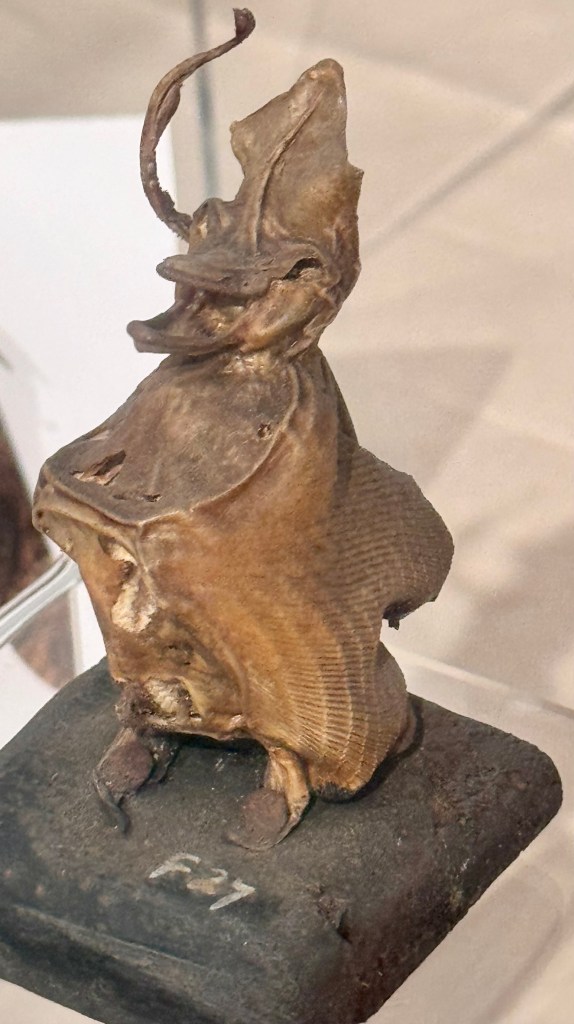
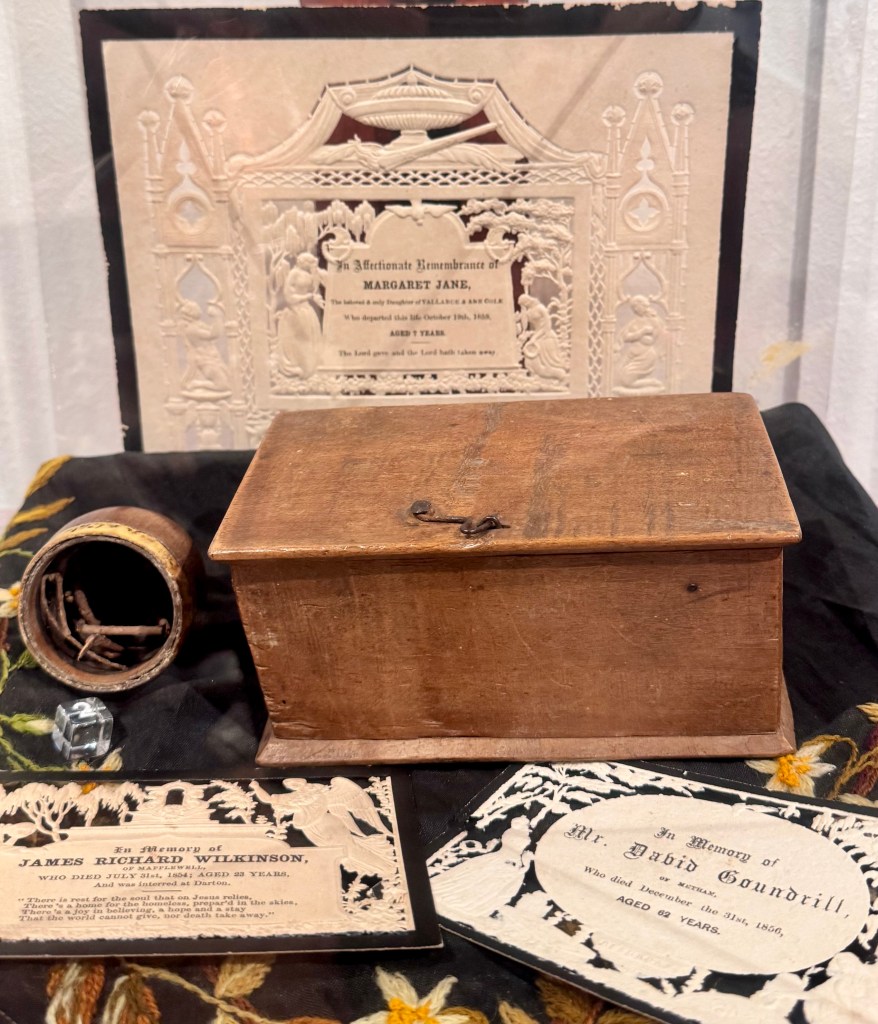
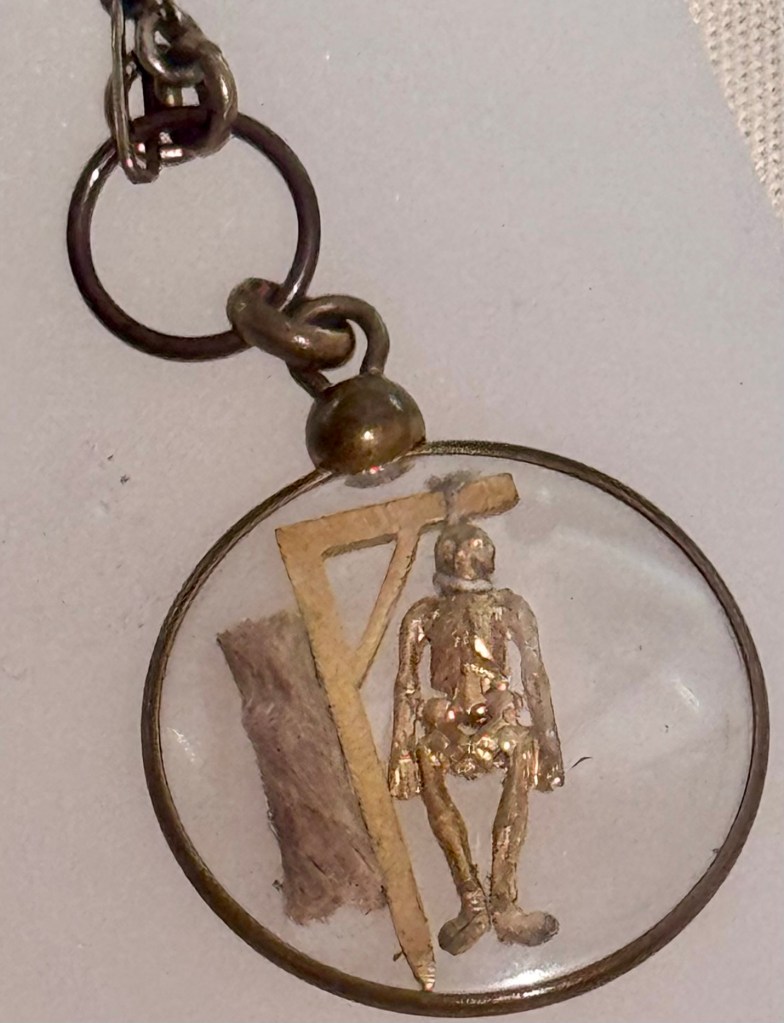
In that upstairs room, I get to see two different exhibits. One is the “Curiouser and Curiouser” exhibit. I see the “Ruswarp Witch (a strange story too long to tell here),” “Flea Traps (everybody had fleas back in those days),” “the Hangman’s Pendant (to make money, the hangman and his crew sold small pendants of a person being hanged during the day of an actual hanging),” the Coffin (have your own miniature coffin made out of the scraps of the actual wood of your loved one’s coffin for their hair, comb, knife),” and the “Hand of Glory.” Allegedly, a recently hanged man had his hand amputated. When small candles were placed in the fingers’ nails and lit, then the thieves knew that everybody in the household would be put into a deep sleep, unaware of the thieves. I love these legends.
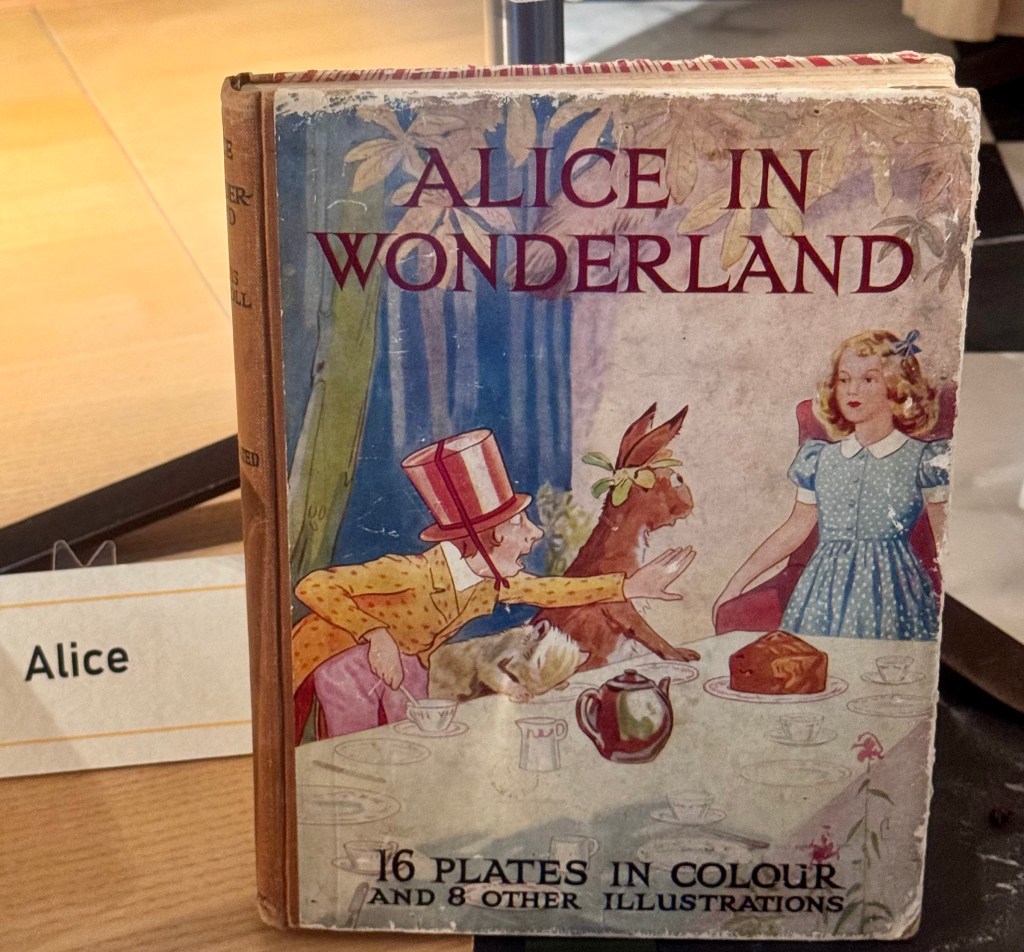
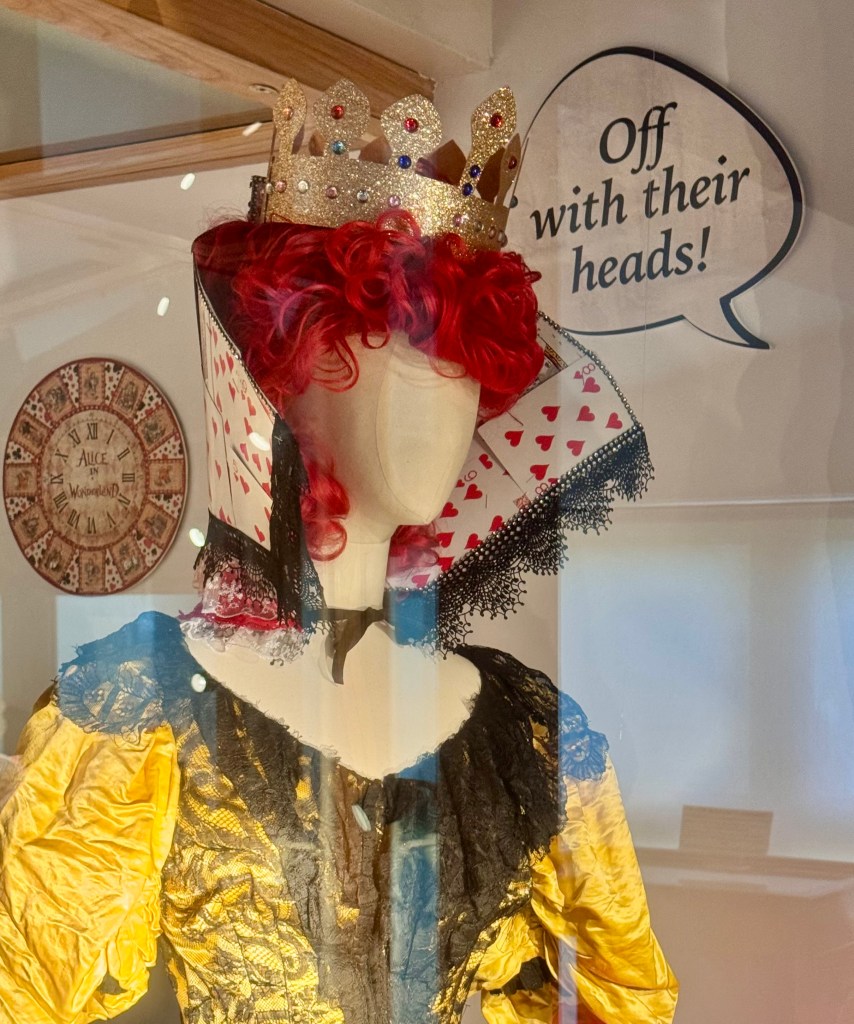
The other exhibit is my last exhibit. A small space has material devoted to Lewis Carroll (whose real name is Charles Lutwidge Dodgson), and, drumroll, to life-size figures from “Alice in Wonderland.” What a tour de force! The Madhatter “It’s always tea time.” The Red Queen “Off with their Heads.” And more.
This small museum epitomizes my walk through northern England. In one small town’s museum, I see the amazing breath, depth, and density of English history. Of course, there are stories about the famous local people, the Captain Cooks and the Frank Sutcliffes; there are also items of not-so-famous people, the sons who earned medals, the girls who played with dolls and the women who used the ceramic dishes. So, so much collected. So, so much representing life within a few miles of Whitby.
I’m sure if the building was any larger, I’d see even more!

