
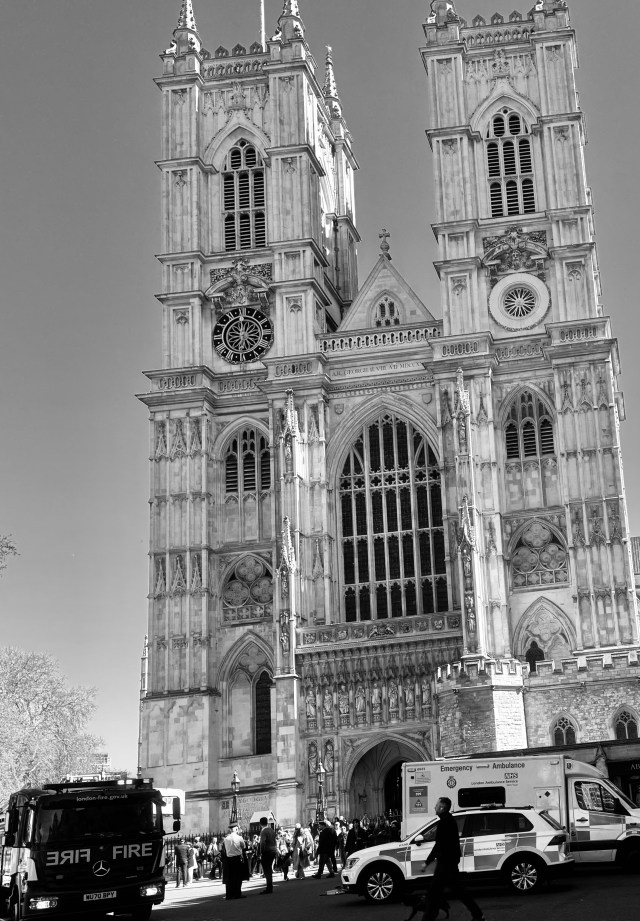
Westminster Abbey is quite the building! Over 3300 burials. Over 600 tombs and monuments. 300 memorials tablets and plaques. Statues are everywhere! Not only are there statues and busts of royalty, but also of so many other important British individuals.
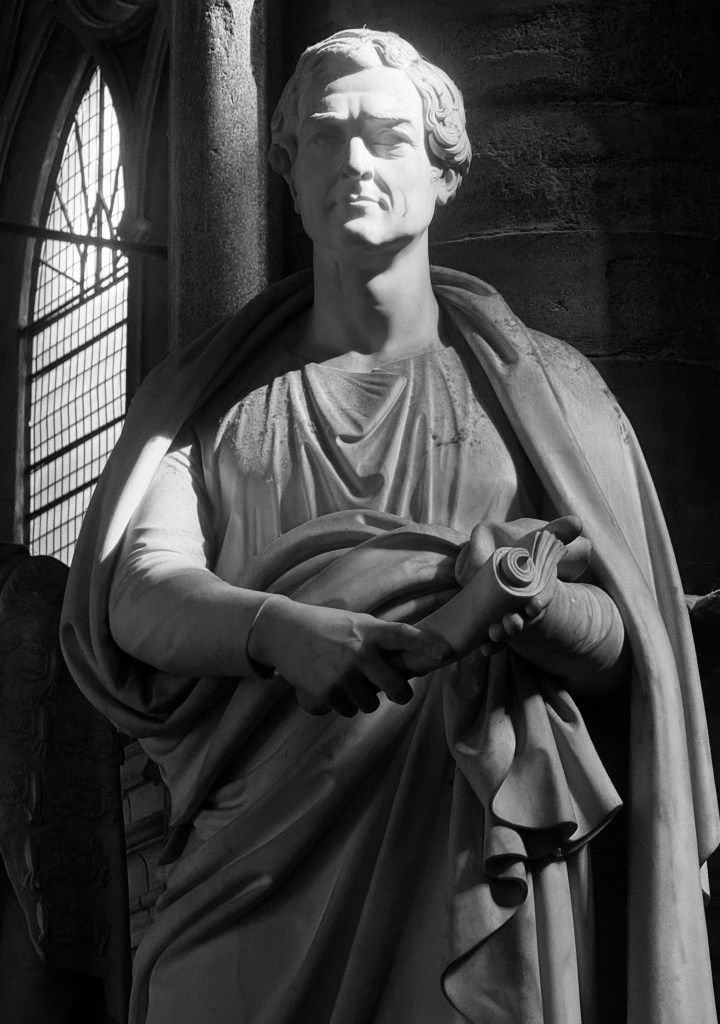
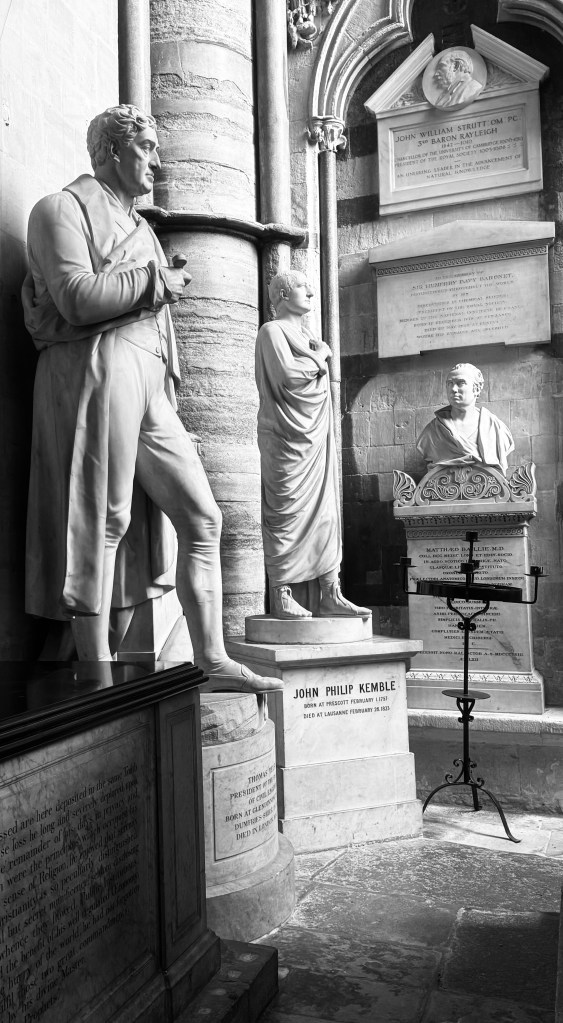
Entering Westminster from an eastern doorway, we are soon walking through “Statesmen Alley.” William Gladstone. Benjamin Disraeli. Rival leaders of dueling political parties, these two prime ministers hated each other. “If Gladstone fell into the Thames, that would be misfortune; and if anybody pulled him out, that, I suppose, would be a calamity.” These men not only ignore each other, but these men seem to ignore us, but we see them! Now they have to stand within feet of each other for eternity!
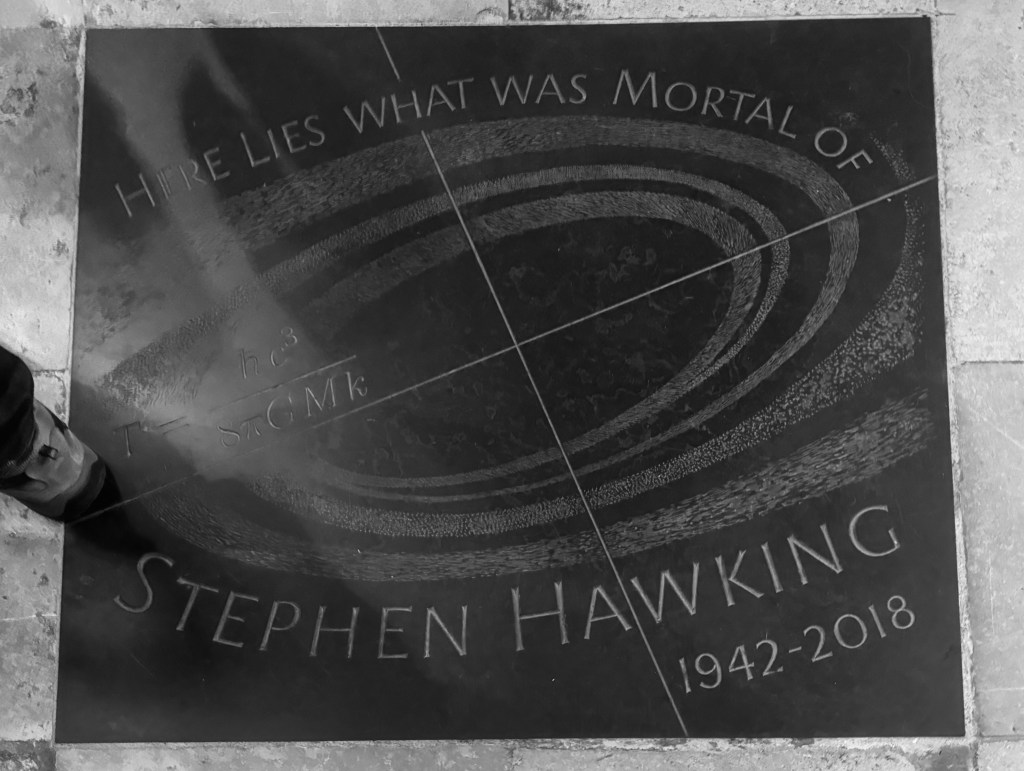
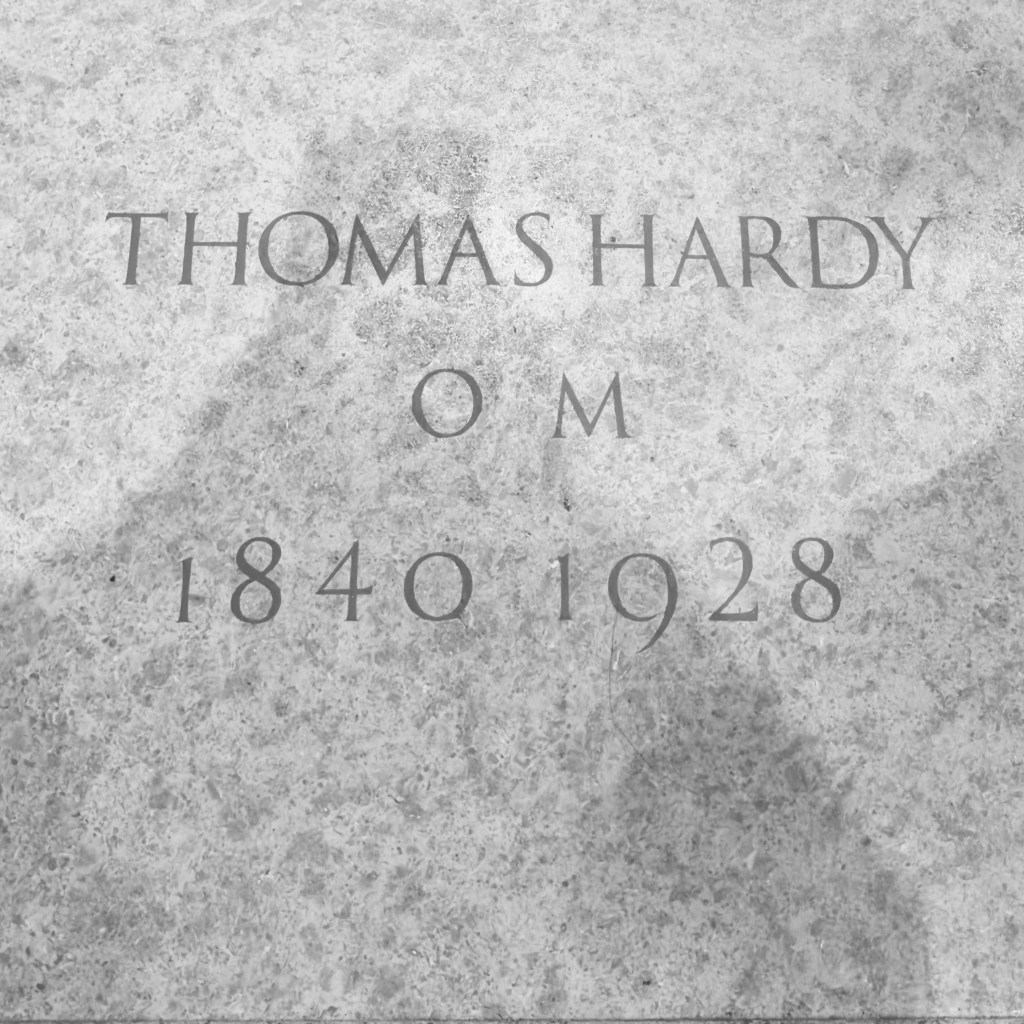
There are two other collections near the nave. Toward the eastern part of the nave, is Scientist’s Corner. While everyone notices the large memorial to Sir Isaac Newton, we also see floor memorials to Charles Darwin and Stephen Hawking. On the south transept, we find the Poets’ Corner. A Who’s Who of great British writers from the memorials to Chaucer and Shakespeare to the more recent inclusions of Thomas Hardy and C.S. Lewis.
If we exit near the Great Western door, then outside and above that door, we see the modern Martyrs, ten Christians who died for their commitment to the Christian faith. Dietrich Bonhoeffer and Martin Luther King are examples.
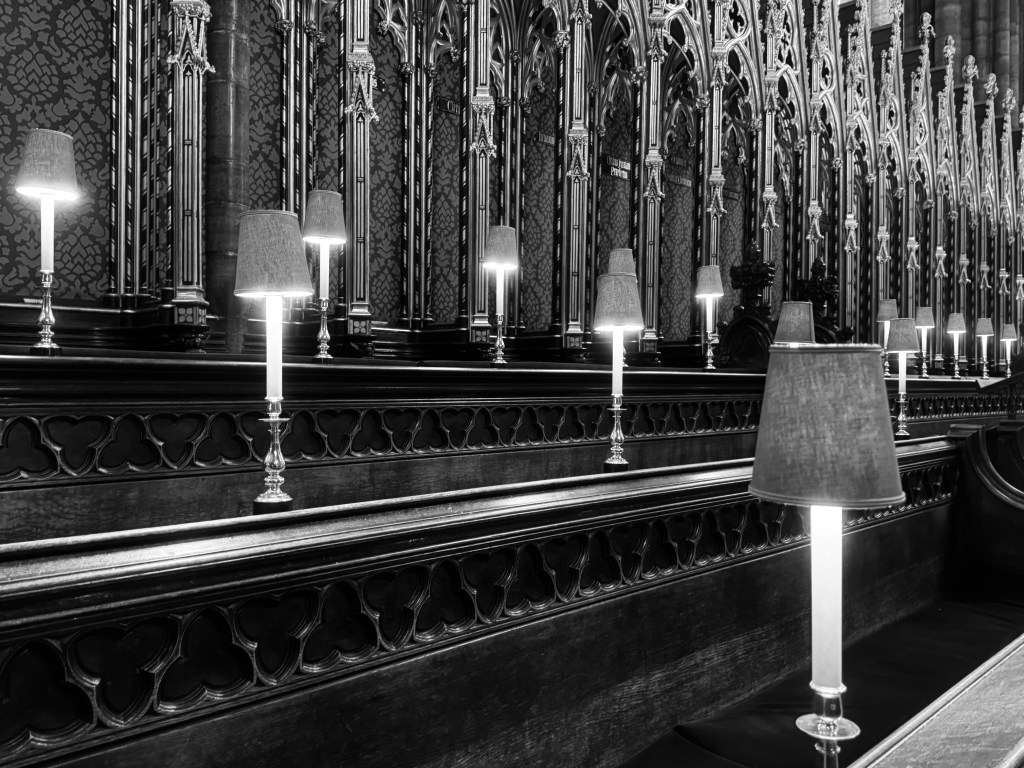
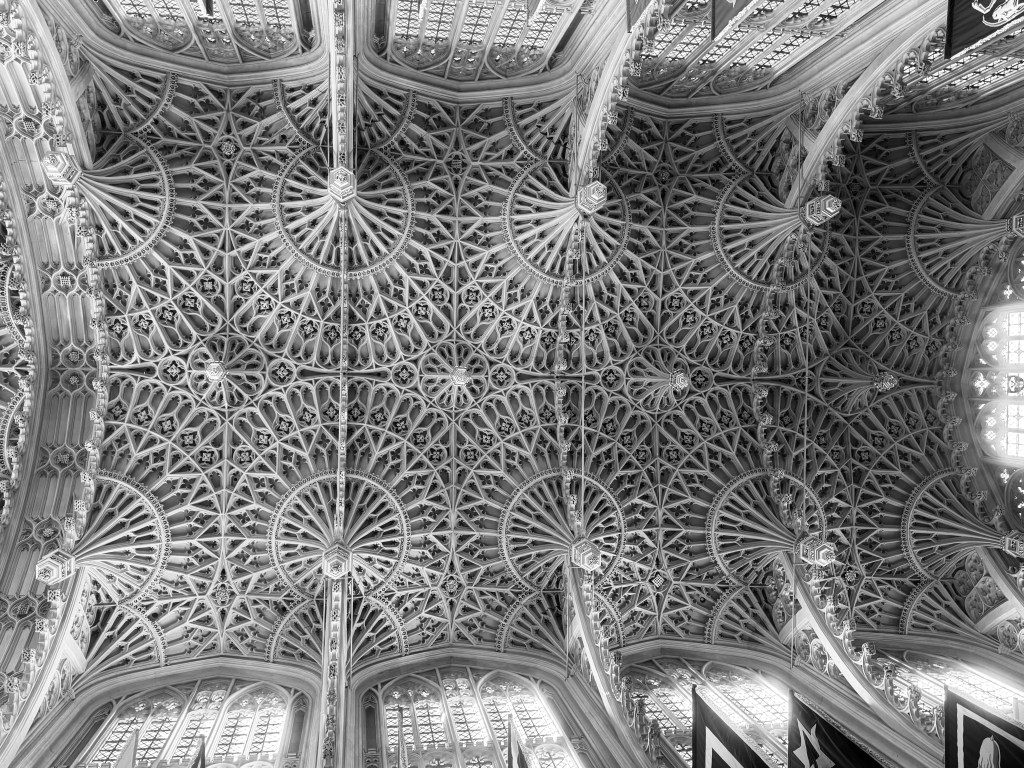
Back inside Westminster, we move to the space behind the choir, the area for 30 kings and queens. The most British royalty buried anywhere. Henry VII’s Lady Chapel contains 15 of those kings and queens, noteworthy are the tombs of Henry VII, Elizabeth I, and Mary, Queen of Scots. This is the largest surviving collection of early Tudor figure sculpture in England, originally numbering 107 before some were destroyed during the English Civil War.
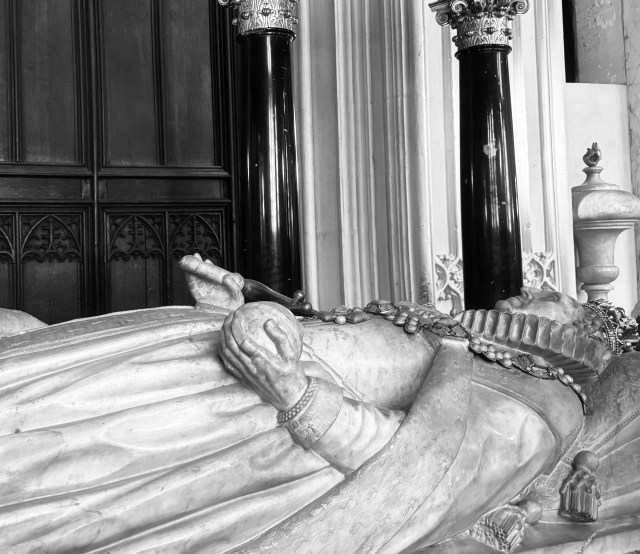
In this area we are naturally drawn to the tombs of Queen Elizabeth the First and Mary I, Queen of Scots. Interestingly, when the Protestant King James I had these tombs created, he wanted Queen Elizabeth to be buried above Queen Mary to show the supremacy of the Protestant line. Always a political element!
Who’s absent? There are absences. Many of the Anglo-Saxon royalty are “buried,” or at least their bones reside, at their capital of Winchester. When the Normans conquered England, they rebuilt the Winchester cathedral. During the process, they moved and relocated the bodily remains into new lead coffins near the altar. Alas, as a result of this relocation, the records stated that “remains of “kings were mixed with bishops, and bishops with kings.” As if that wasn’t confusing and disrespectful enough, several hundred years later, these remains were transferred into wooden “Mortuary chests.” The result was the same as the prior relocation, namely, the names on the coffins did not correspond with the actual person’s bones. Finally, during the English Civil War, the Parliamentarians took those Mortuary chests and scattered the remains onto the floor of the cathedral. So much for respecting the dead, especially dead royalty! Through scientific scanning of the coffins, researchers now estimate that rather than 12-15 individuals, the coffins now hold the remains of some 23 individuals.
There are other absences. The Plantagenet kings are buried in numerous places. Henry II & Richard I in Fontevraud Abbey in Anjou, France; the disliked John lies in Worcester Cathedral; and Henry I is buried in Canterbury Cathedral. While many of the Tudor royalty are buried at Westminster, Henry the VIII is buried at Windsor Castle. In addition, approximately twenty members of the Windsor royal family are also buried at Windsor Castle, including Queen Elizabeth II.
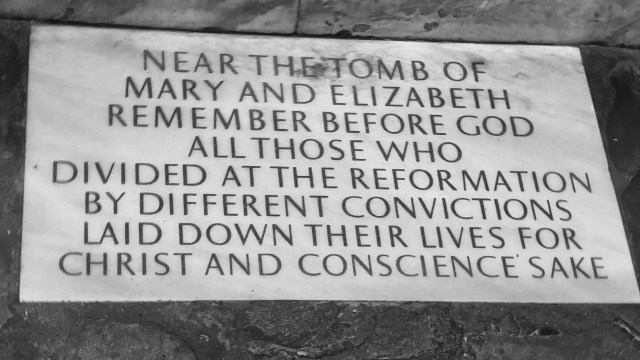
What about these Westminster tombs and memorials? On the one hand, the tombs and memorials intend to have us admire these individuals. There is much to admire. But human life is always more complicated than a large tomb or chiseled words on a memorial. Only occasionally do we get a hint that their actions occasioned pain, suffering, and death. I find the words on the stone in front of the tombs of Mary and Elizabeth to offer that reminder. The words honor individuals acting out of conscience; the words implicitly suggest that religious differences should not lead to war and death.
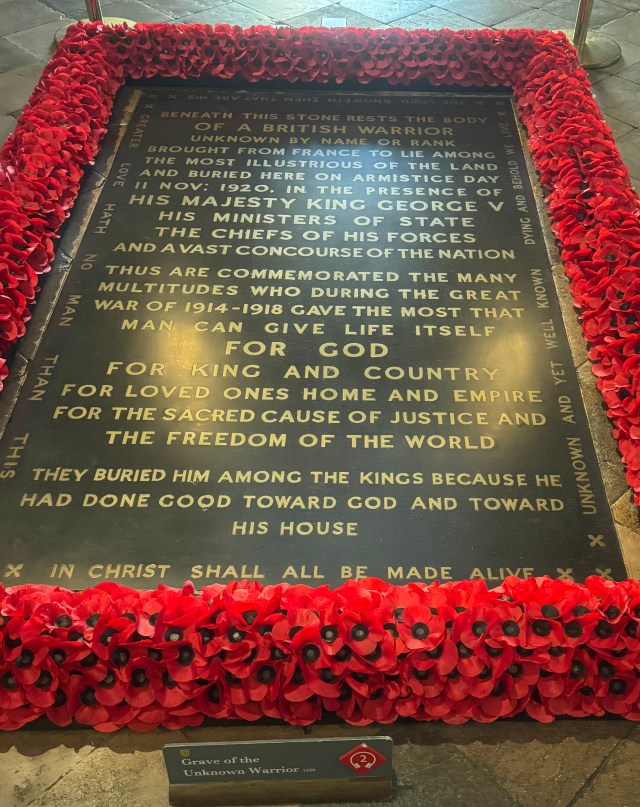
On the other hand, these tombs and memorials can reinforce a restricted way of viewing history. These displays may lead us to conclude that these famous individuals constitute the only, or the main, historical actors of their day. Yet, many of us have become more inclusive in our understanding of historical causation. Cultures affect even “great men.” Ordinary people affect broader history. Certainly the “Tomb of a British Warrior” acknowledges the role of ordinary persons.

