
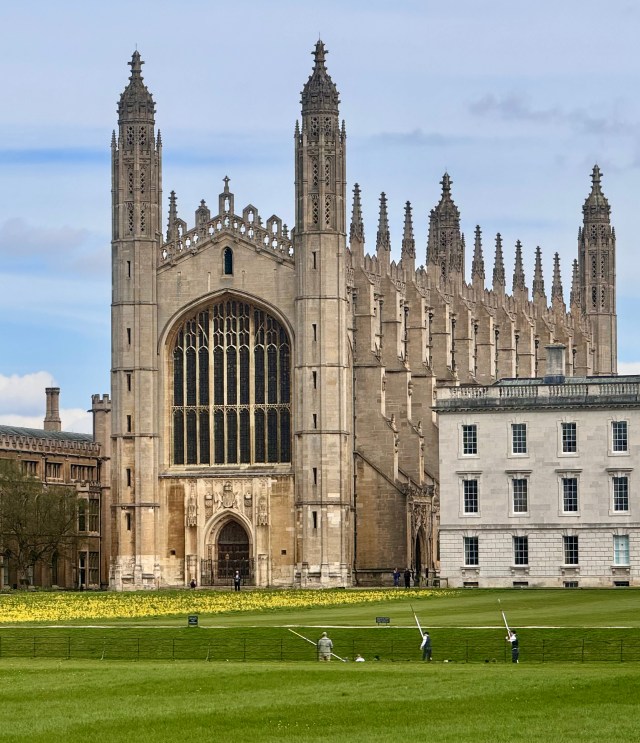
Can you guess how many Nobel Prizes are associated with Cambridge University? 126! Simply wow! Our Cambridge guide states that “that other school” only has 76. When and how did Cambridge University become such a center for many really, really, really smart people?
Before our guide addresses that question, he tells us that there are three important dates to English history, one of which involves Cambridge. There is 1066 with William the Conqueror; 1209 with the founding of Cambridge University; and there is 1966 when England won the World Cup, and will probably never win again. But back to my question: when and how did Cambridge University outdistance other universities?
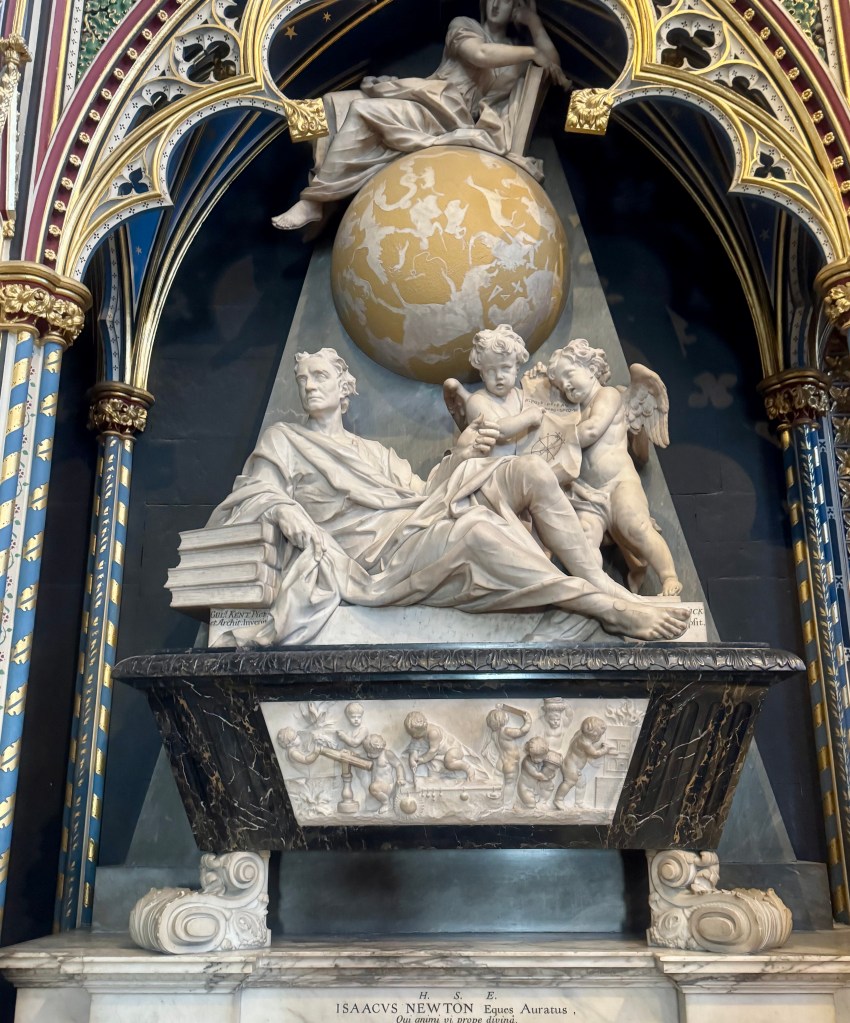

As in many situations, one person, Sir Isaac Newton plays the key role. Although he was apparently a jerk, because he didn’t think anybody was as smart as him, he influences others. Publishing Principia in 1687, Newton begins to unravel gravity, planetary movement, and the laws of motion. The more immediate effect is that mathematics, rather than classic literature, became central to the Cambridge curriculum. Combine mathematical precision with experimentation and what do we have? The Scientific Revolution.
Besides a curriculum change, there has to be a way to share intellectual questions and pursuits. Although King Charles II organizes The Royal Society of London for Improving Natural Knowledge in 1660, Newton becomes President in the early 1700’s. For over twenty years, he attracts financial support, publishes the world’s first scientific journal, and encourages “peer review” of articles. Its operating motto is “Nullius in verba (“Take nobody’s word for it”).”
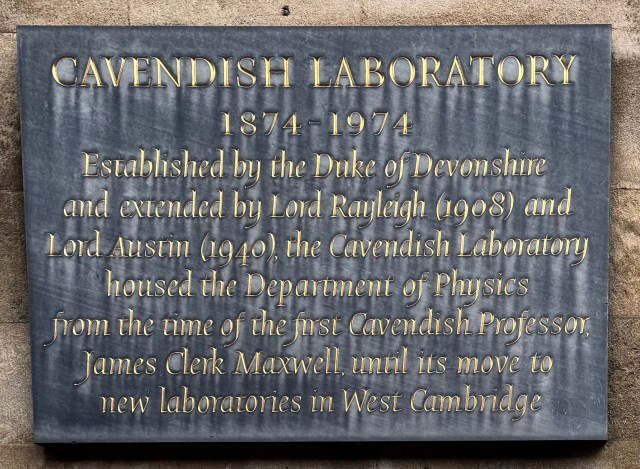
In more recent years, Cambridge in 1970 establishes Europe’s first Science Center. Multi-disciplinary in organization, the private, corporate world joins the public world of Cambridge University with over 170 companies now involved. Cambridge is known as “Silicon Fen.”
Why is Cambridge so important? As an academic, I might be excused for being excited about universities. However, I’m particularly interested in the necessary conditions which make discoveries possible. Besides discoveries requiring immensely talented and creative individuals, intellectual progress requires social conditions. Others who know and respect “peer review;” others who participate in sharing ideas through journals and publications; others who find financial support from public and private sources.
Why is Cambridge important? Colleges and universities create futures. While never guaranteed, graduates figure out how to ask better questions. Graduates figure out how to judge alternative perspectives and select their own. Graduates have skills transferrable to a variety of fields and a variety of jobs.
When our current President eliminates funding for education, he is not simply showing his displeasure with individuals and the conclusions that they draw, he is challenging our ability to think creatively about present and future problems we face. Destruction is so much easier than creation! Tragic. Tragic. Tragic.