
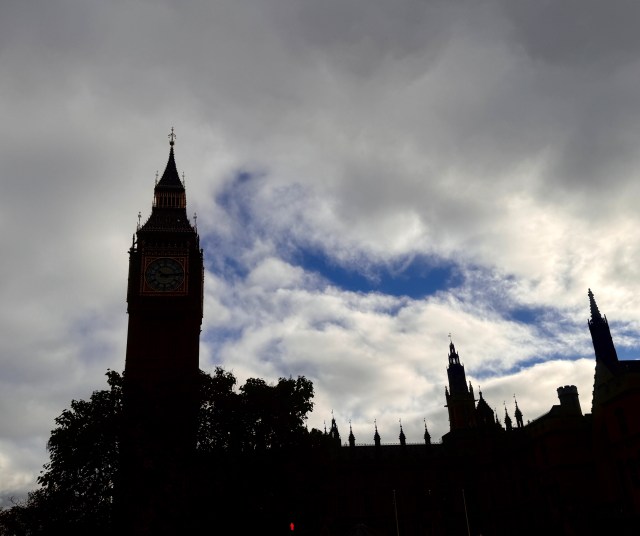
Everybody recognizes the Houses of Parliament along with Big Ben. Of course, my wordage is slightly inaccurate. Everybody recognizes the Palace of Westminster. Occasionally, we’ll see a figure in the House of Commons giving a speech being listened to by others sitting a few feet away. Occasionally, when we see the London skyline, we’ll see Big Ben, the Elizabeth Tower which includes the tower, the clock, and the biggest bell which is Big Ben. So much for trivia.
The family and I are visiting Parliament for the first time. Visiting a site for the first time always has a sense of anticipation. What will I see? What do I recognize? What surprises me? Will I leave feeling as though this site is important? In this case, on the one hand, I’m struck by the grand presentation of both Parliament and the enveloping centuries of British history. On the other hand, I’m struck by the frequent Parliament fires, bombings, and closures.
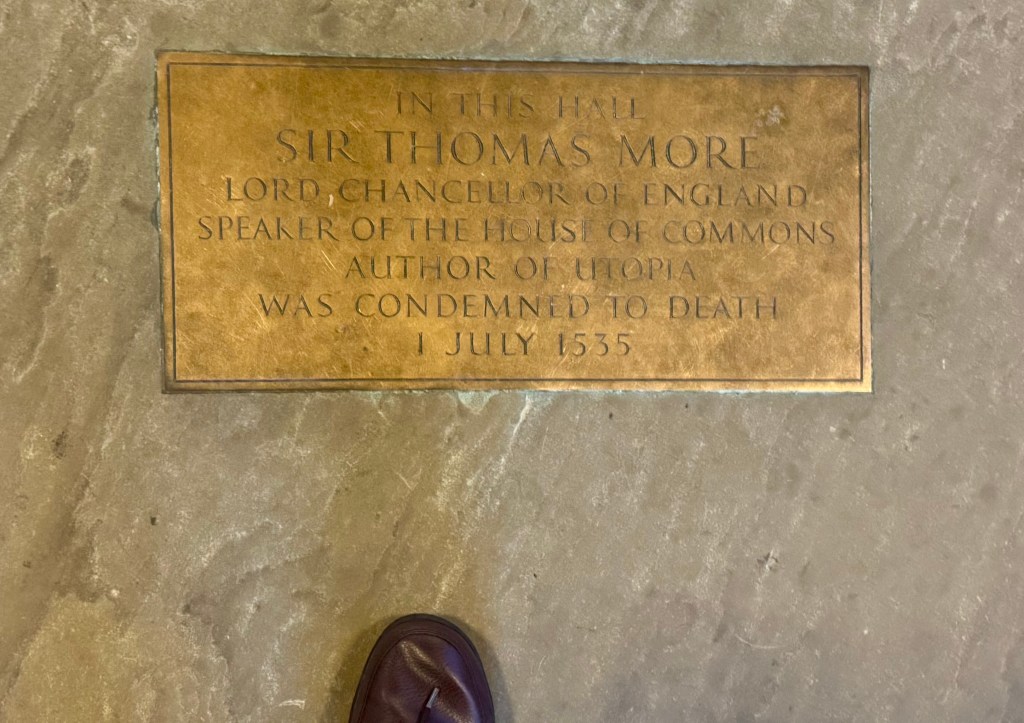
To begin, both Parliament and its history communicate a sense of grandeur, a sense of a proud history.
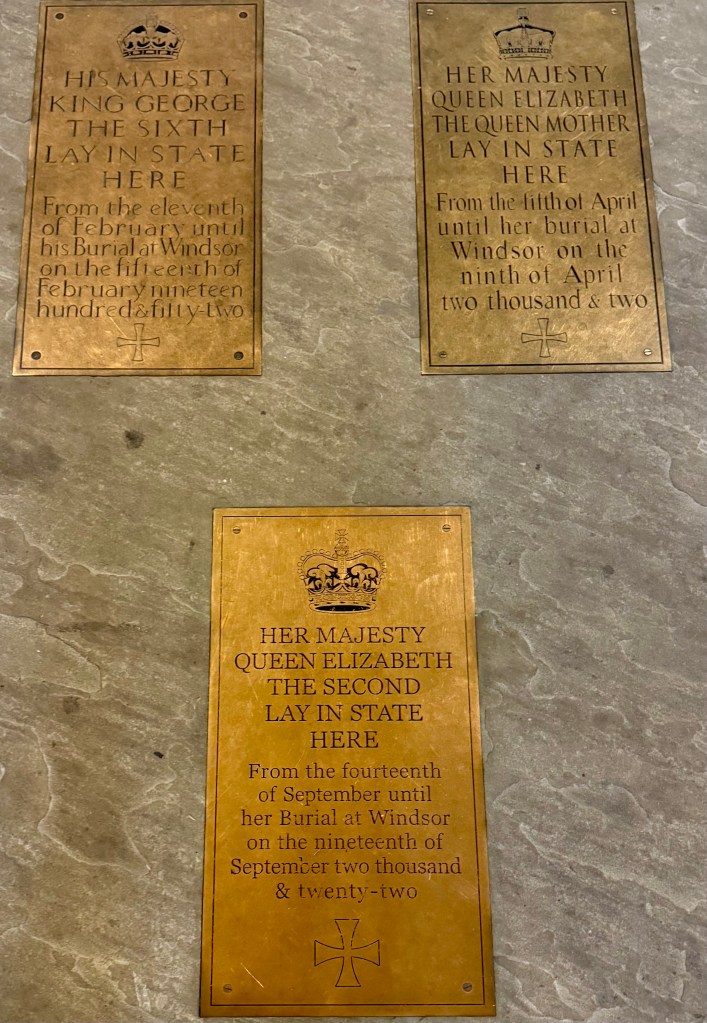
As we enter Westminster Hall, we learn the basic facts of buildings on this site. In the 11th century, King Edward built the first royal palace next to Westminster Abbey. A few decades later, King William II builds Westminster Hall. As the oldest structure in this complex, Westminster Hall is a very large hall which once held ceremonial dinners until those dinners became too expensive for this location. The hall now holds the lying in state of important British figures. The most recent has been Queen Elizabeth who lay in state here two years ago. Returning to the overall history, King Henry VIII moved the royal palace to Whitehall, allowing the Palace of Westminster to become the permanent home for Parliament.
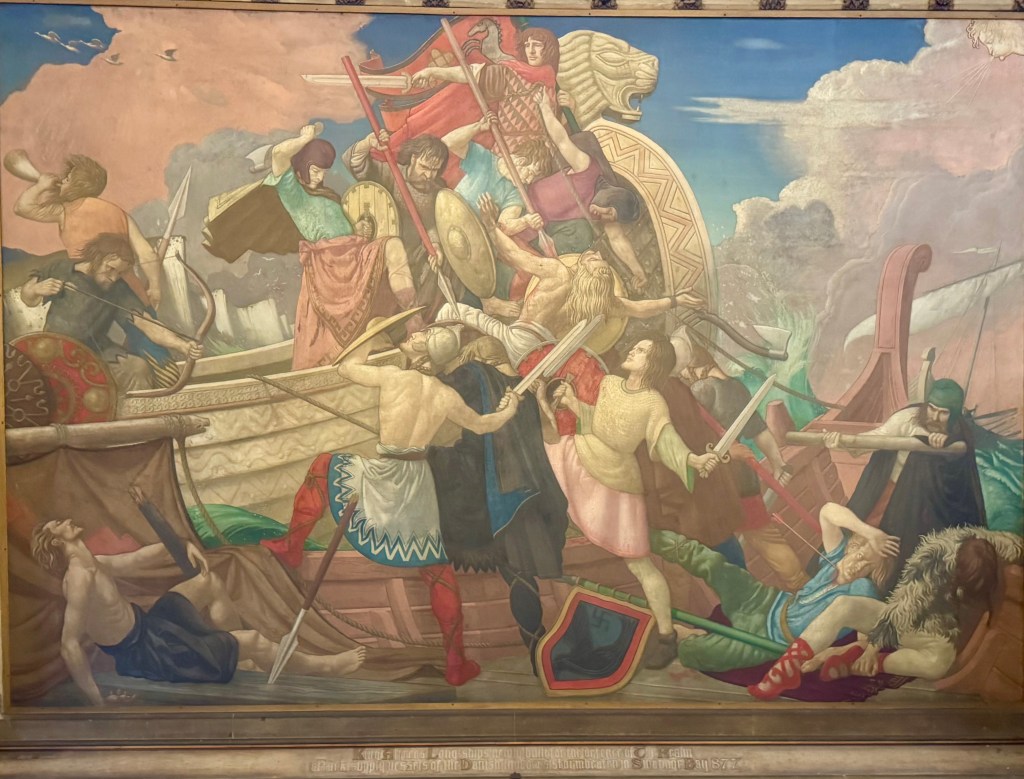
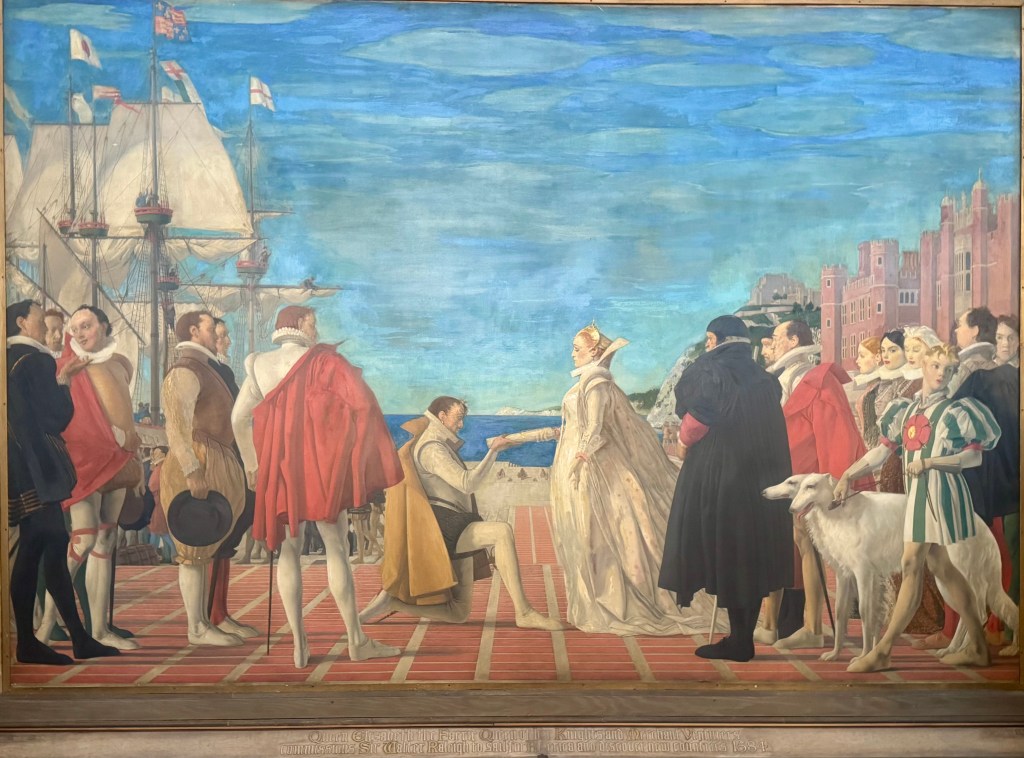
Walking through St Stephens Hall, we walk past eight very large paintings depicting the “Building of Britain.” Murals such as King Alfred’s Longships Defeat the Danes (877), Richard Coeur de Lion Embarking for the Crusade (1190), and Queen Elizabeth Enrolleth Her Brave Defenders (1588).
Upon entering an octagonal hall, we are directed to the west to visit the House of Lords. Upon returning to this hall, we continue to the other end of the building, the House of Commons.
The House of Lords is the more luxurious chamber. While for centuries, the House of Lords had only aristocrats as members, more recently others have been allowed membership in this unelected body. We had no idea that 760 individuals, from Life Peers, to Hereditary Peers, and finally to “Spiritual Peers” make up this body. They’d never all fit in the chamber! Different from the past, present individuals come from many different fields, medicine, law, business, the arts, and the military. Their power has been severely curtailed over the centuries. Their present role is to scrutinize bills and to question governmental ministers. It can delay, but not introduce nor stop, legislation from the House of Commons.
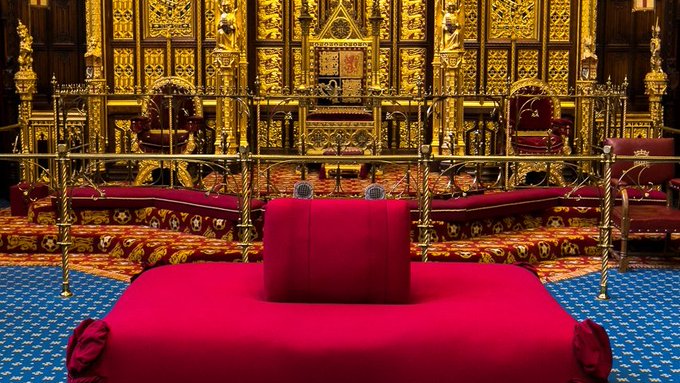
One piece of trivia. There is a seat for the Lord Speaker of the House of Lords which is a “wool cushion,” known as the Woolsack. It serves as a medieval symbol of the historic wealth and global reach of the United Kingdom. Tradition!
The House of Commons holds the real power in making laws and overseeing government. The 650 MP’s (Member of Parliament) is elected from a specific geographic district. Interestingly, there are only seats for 427 MP’s in the room!
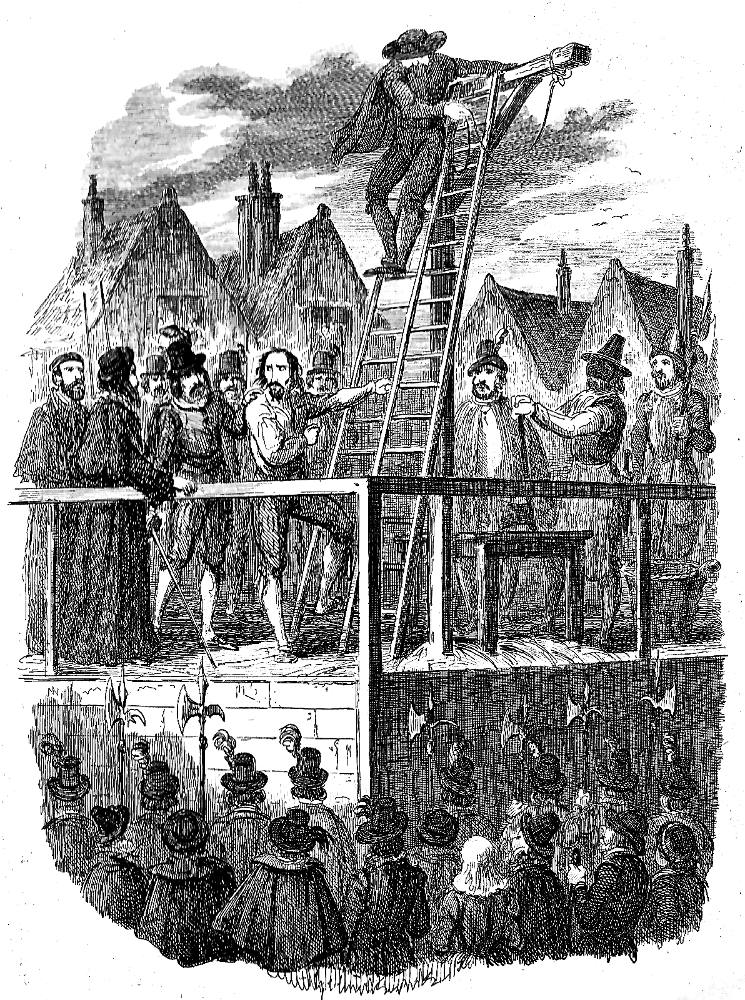
There are also bombs, fires, and closures.
Bombs. In 1605, Guy Fawkes plans to destroy Parliament. Hoping to trigger the country’s return to Catholicism, he plants 36 kegs of gunpowder under the House of Lords. He is discovered before the kegs are lit. Fourteen times during World War II, bombs explode in the House of Commons. Because bombs in 1941 destroy the House of Commons, the House of Commons is restored and reopened in 1950.
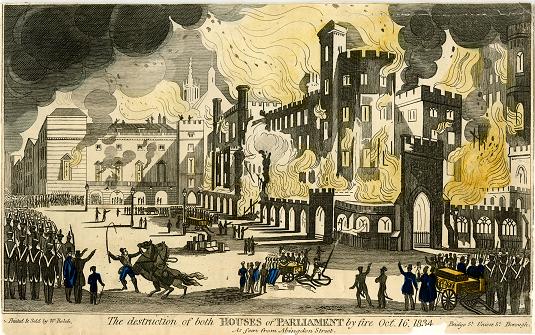
Fire. For every wood structure from houses to cathedrals, fire is the enemy. The Great Fire of 1834 gutted the structure except for Westminster Hall. From 1840-1870 rebuilding takes place which gives the structure its neo-Gothic appearance.
Closure. Charles II dissolves Parliament on December 29, 1660. The Glorious Revolution of 1689 permanently dissolves an absolute monarchy and creates a constitutional monarchy by establishing the supremacy of Parliament. The decline of royal power and the increasing power of the Prime Minister and a broader electorate go hand-in-hand. The Reform Act of 1832 increases the electorate in many ways such as including more middle-class votes even though women and working class men are denied ability to vote. Because Queen Victoria retires from a political role after her husband, Prince Albert’s death, results in more activist Prime Ministers such as William Gladstone and Benjamin Disraeli. Finally, the Parliament Act of 1911 prohibits the unelected House of Lords from vetoing laws passed by the elected House of Commons.
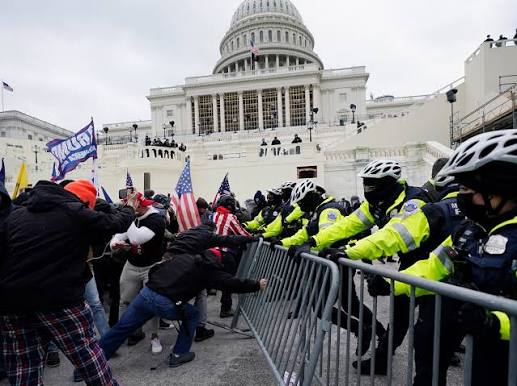
On January 6th 2021, similar to Parliament’s history of bombs, fires, and closures, the US Capitol is attacked and closed. Since then, some have tried to challenge the rising authoritarianism, monarchy-like, actions of the current US President. Similar to Parliament’s history of expanding the role of the Prime Minister and the House of Commons by challenging both royal power and wealthy aristocratic privilege, the US has also expanded, in general, the electorate.
Trump’s actions challenge this history. Denying elections’ validity despite judges rejecting the vast majority of over 60 cases; encouraging states’ redistricting in order to assure agents supporting his agenda; restricting the ease of voter access in order to make it more difficult for the electorate to vote. We’ll see what happens.
As Parliament has survived bombs, fires, and closures, so most of us hope that the US Congress will survive as a living and responsive institution in these days of attack.

