
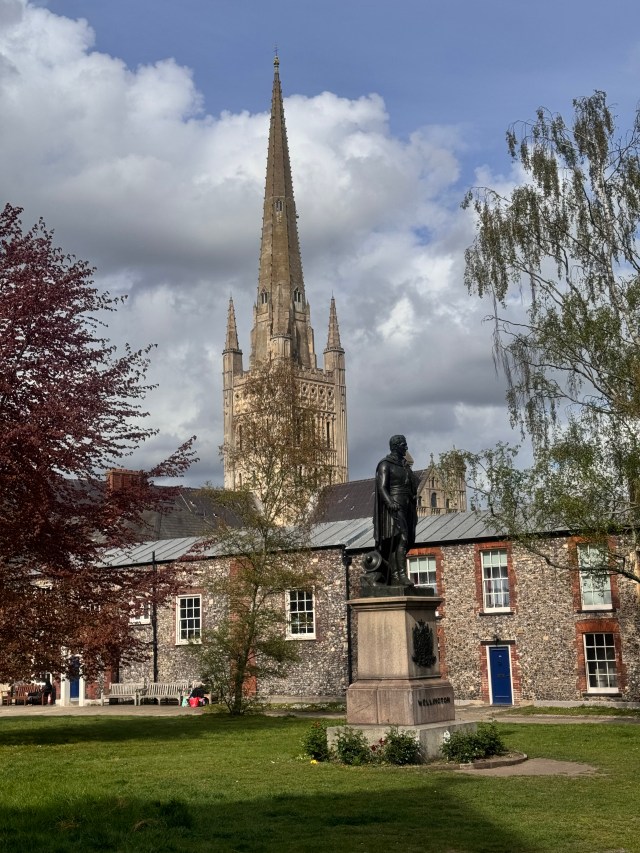
I love walking into a cathedral and seeing art. I’m particularly excited when I see art from centuries ago juxtaposed with art from this century (ok, the twentieth century also). Norwich Cathedral is a prime example.
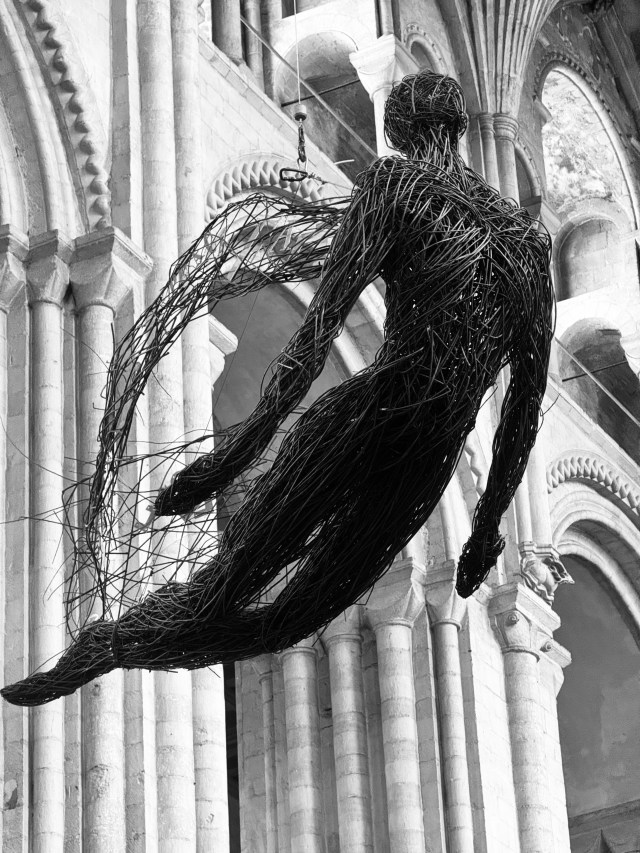
With a meeting of a hundred Anglican priests concluding, I walk into the nave. I’m greeted by an angel. There hanging from the ceiling is a large angel which I discover is made from willow branches. For Easter 2012, two local artists helped children construct the angel. In a thousand-year-old cathedral, modern art catches my eye first. Nice!
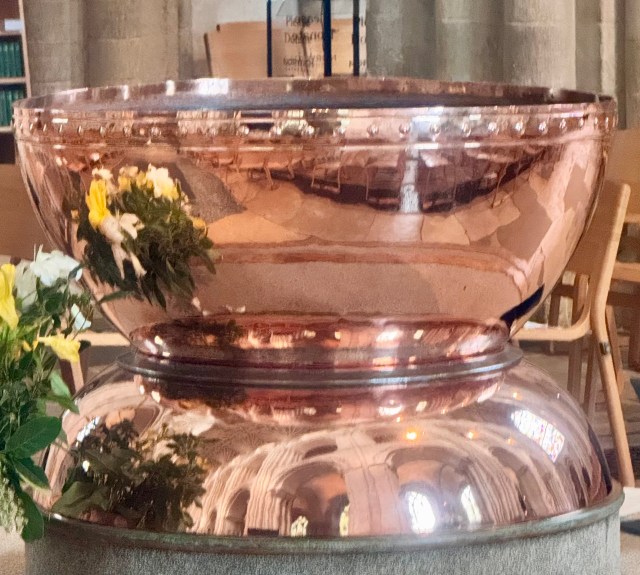
In front of me is a baptismal font. Not unusual. Yet, another surprise. The baptismal font comes from the nineteenth century, from a recently closed chocolate factory. Its previous life was a mixing bowl for chocolate! Again, Nice!
I move from the west end to the east end of the cathedral. In beautiful stain glass is a memorial to Edith Clavell, a World War I nurse. While working in German-occupied Belgium, she cared for any wounded soldier, regardless of their nationality. Because some of the injured British soldiers escaped and returned to Great Britain, some people get suspicious. Eventually, after betrayal, the Germans accused her of treason. To deter others, the Germans killed her by a firing squad. Needless to say, as the Allies learned about her murder, there was quite an uproar!
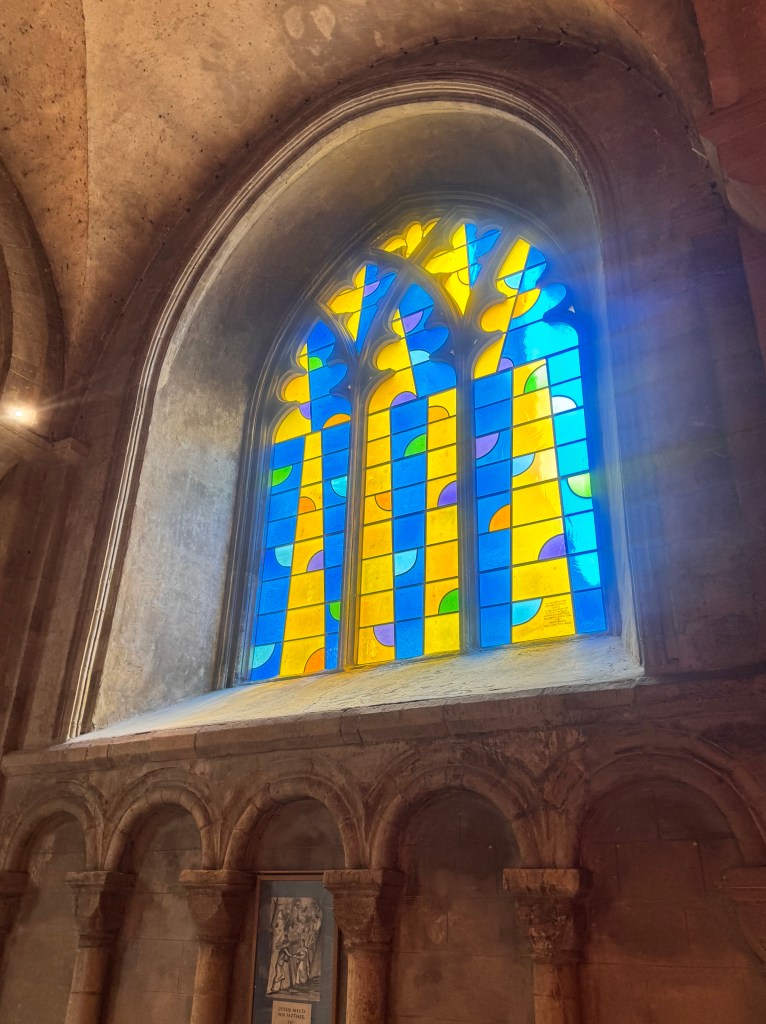
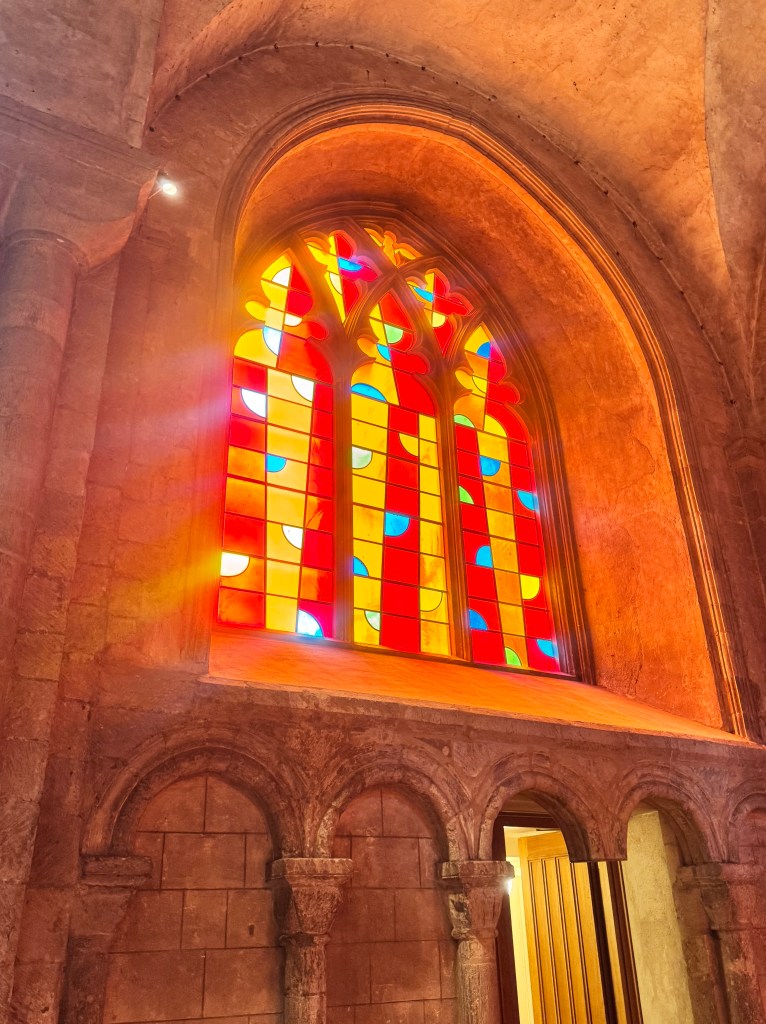
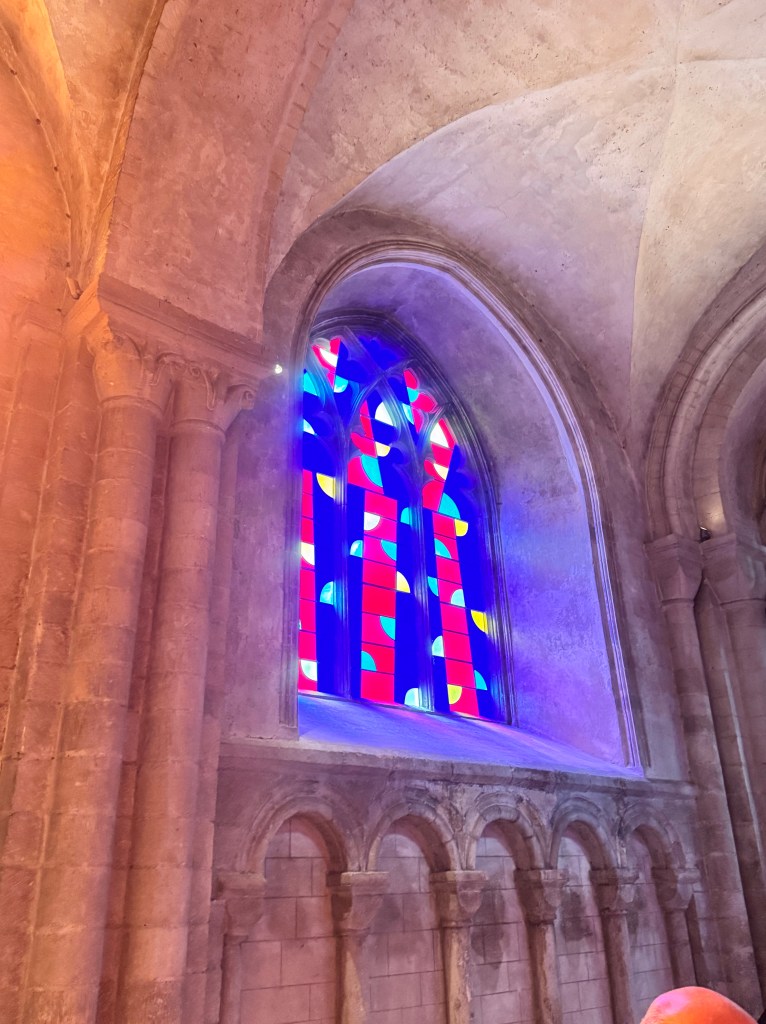
Finally, in the north aisle, there are beautiful abstract windows from 2014. Called the Trinity Windows, they cast vibrant colors into the cathedral. Beautiful!
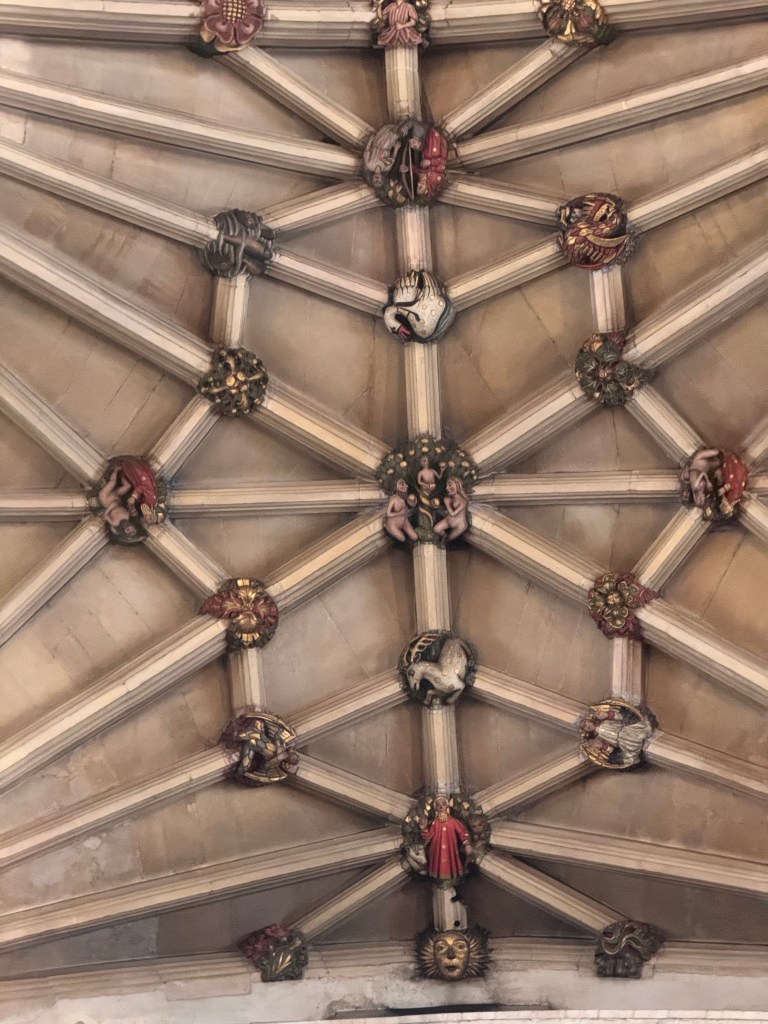
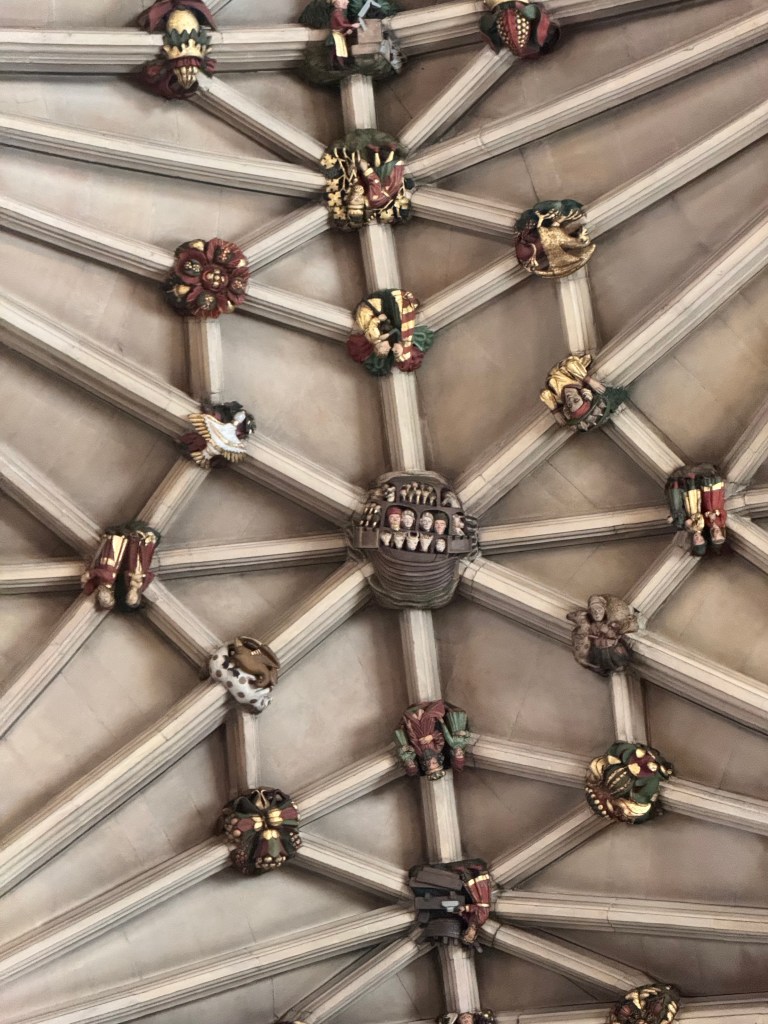
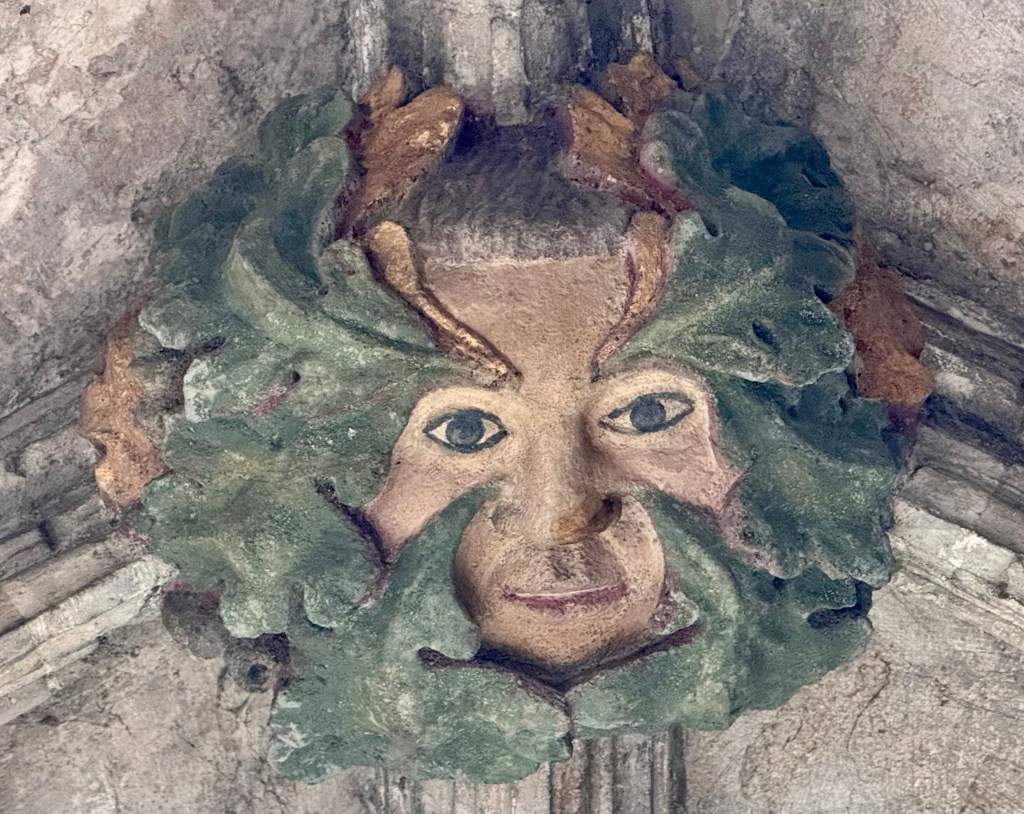
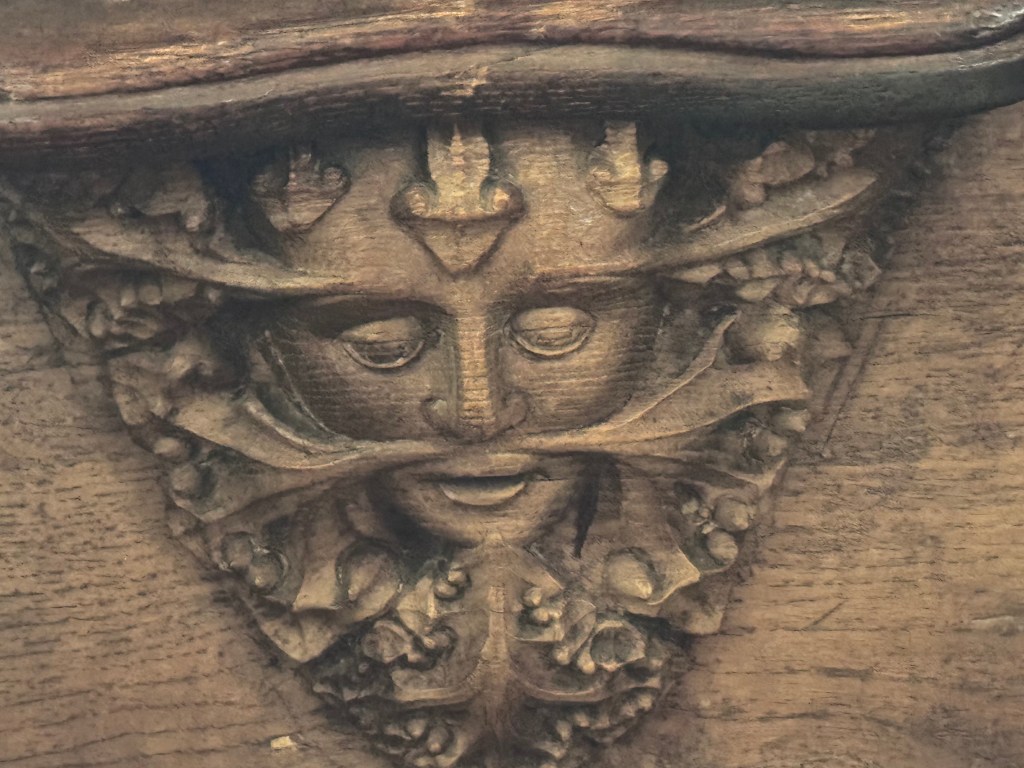
Begun in 1096, Norwich is an example of an early Norman cathedral. It is a “Living Space.” Much older artistic work blends with these modern artistic expressions. Stain glass windows. Bosses on the ceiling (over 1000)! Thoughtfully, the cathedral provides a mirror to see some of the bosses high above one on the ceiling. Where are those that represent the “Green Men?” Misericords (“mercy seats” in the choir) designed with floral and mythical creatures. Surviving 13th-14th century frescos. Even I notice the heavy semi-circular arches rather than the later narrower, pointed Gothic arches.
Centuries and centuries of workmanship mixed together. Centuries of artistic ways of enhancing worship and this space as a means of glorifying God. One can’t help but love Norwich Cathedral.

