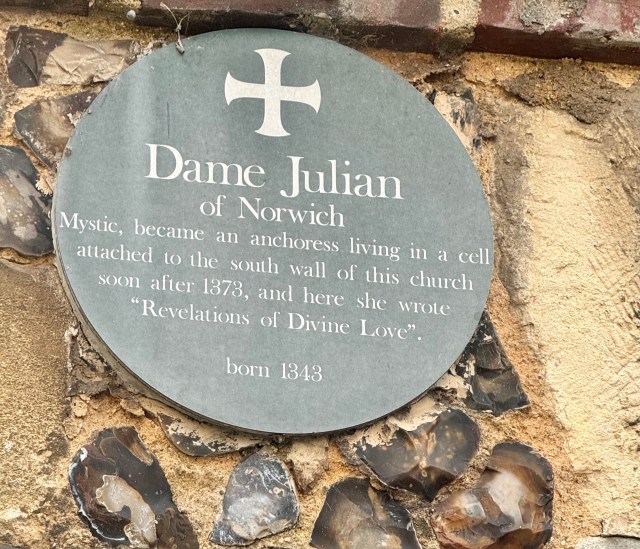
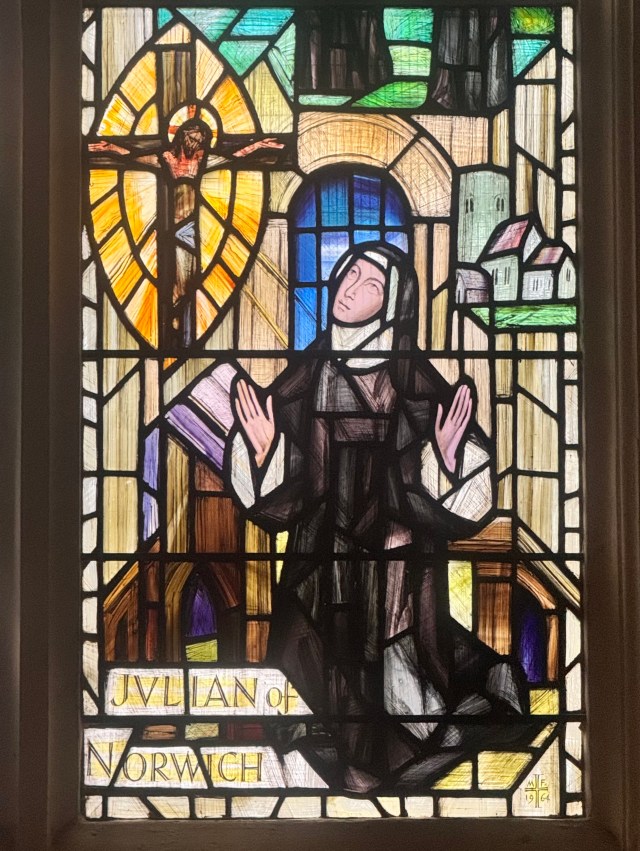
Probably around 1998 or 1999, I visit Norwich with my Reinhardt students. The purpose? I want them to become familiar with one of the major late-medieval English mystics. I can still remember students asking: “Did she really spend her life in that cell? That room off the nave?” “Yup!” That was the tradition for anchoress.

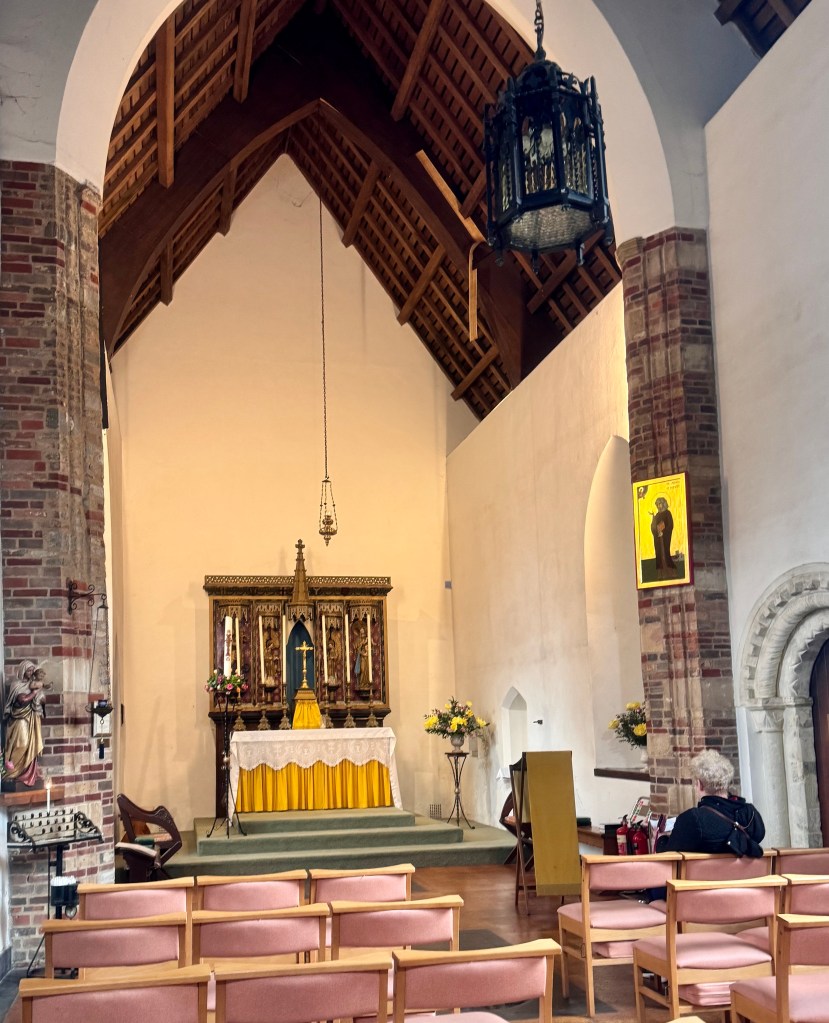
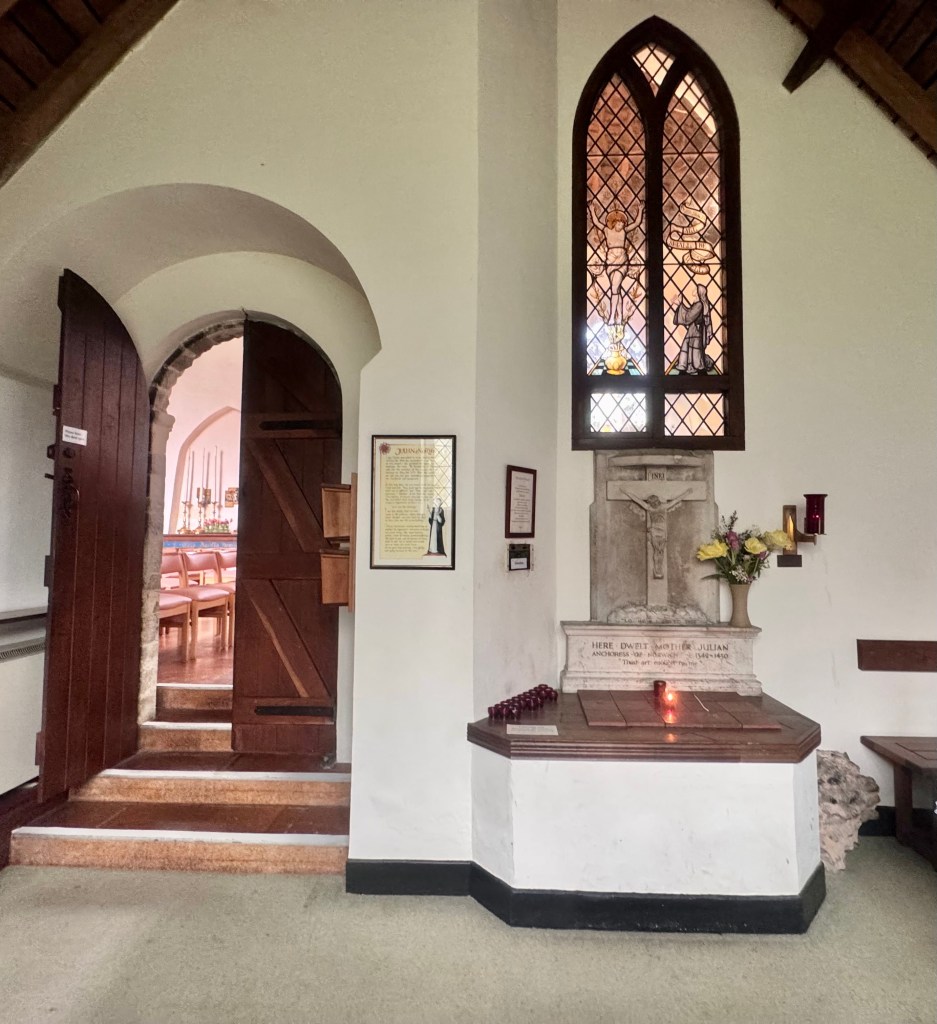
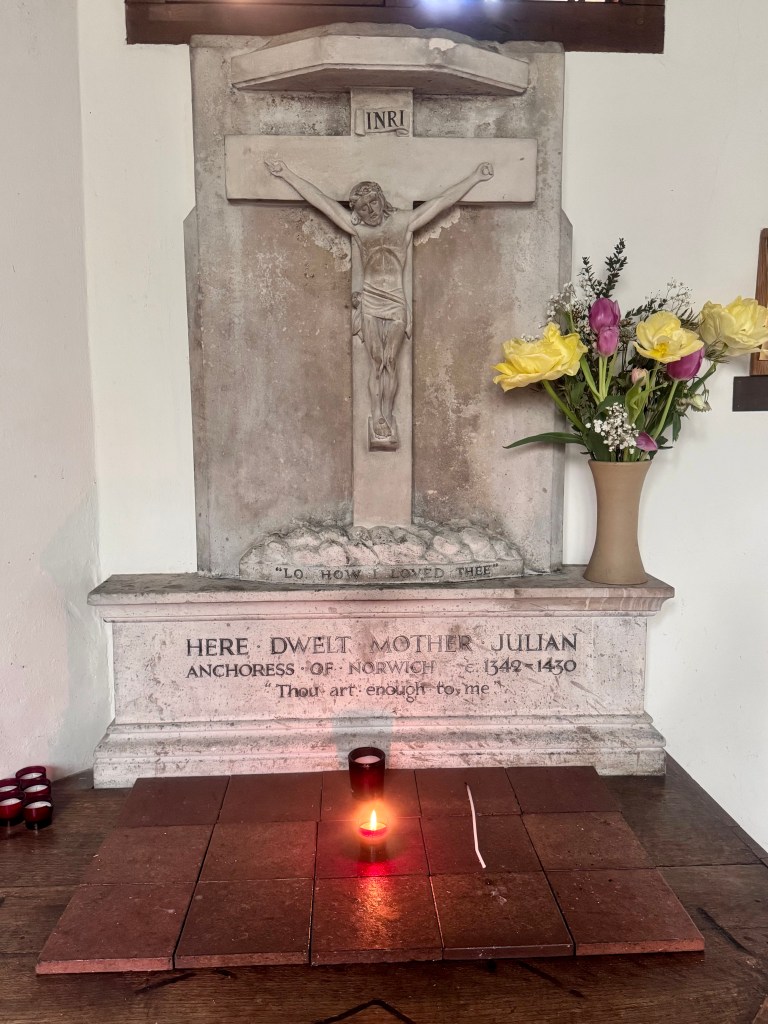
Not much is known about Julian, if that is her real name. Living from approximately 1343-1416, she resides in Norwich, at that time possibly the second-largest and wealthiest city in England. During those years, she lives through the Black Plague and the years of the Peasants Revolt. Tough times. We don’t know if she is an anchoress, a woman secluded to a life of prayer, before or after her encounter with death.
How does one become an anchoress? After a long selection process a ceremony is held, “During the ceremony, psalms from the Office of the Dead would have been sung for Julian (as if it were her funeral), and at some point she is led to her cell door and into the room beyond.” The room is sealed. Not completely isolated from others, Julian is attended to by other women and other individuals can speak to her through an opening asking for spiritual advice and counsel.
We remember her because at the age of 30 she becomes deathly sick, even to the point that the local priest gives her the last rites. She recovers though. After her recovery, she describes sixteen visions of the Passion of Christ during that sickness, and puts those visions into writing. Entitled The Revelations of Divine Love, she writes an earlier Short Text and, many years later, a Long Text. How is that for distinguishing texts!

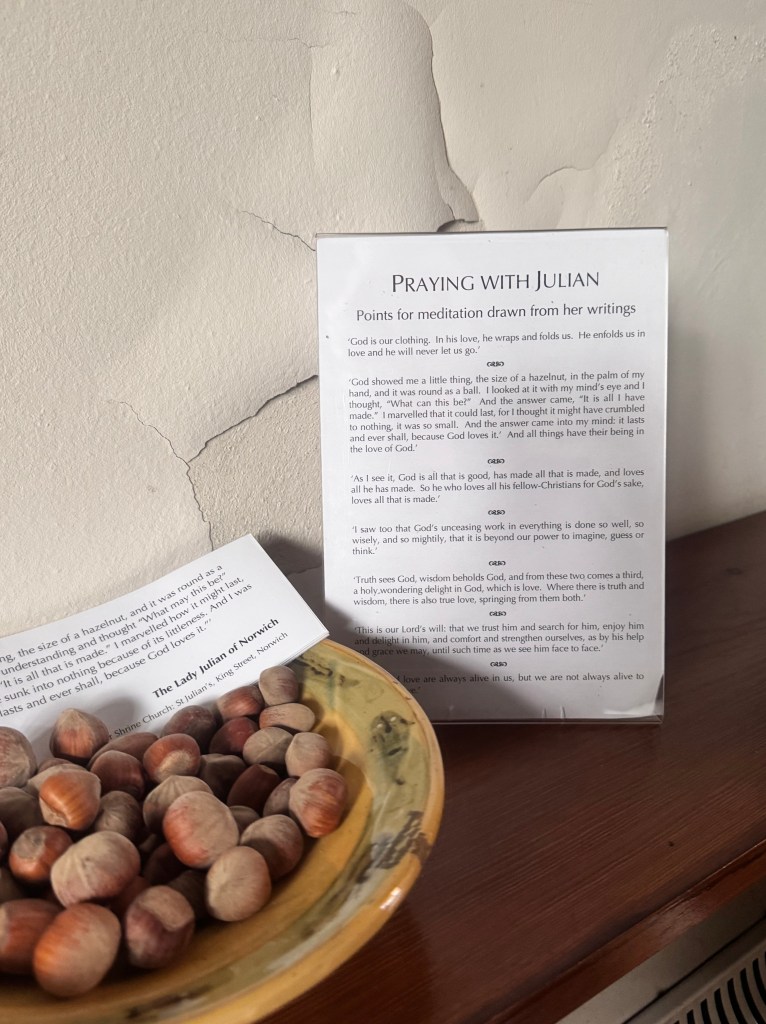
Anyone familiar with mysticism is probably familiar with her phrase “All shall be well, and all shall be well, and all manner of thing shall be well.” Rather than primarily wrathful, Julian images God as loving and assuring a future of well-being. In the course of these writings, she frequently turns to feminine imagery, such as “Mother Jesus,” to convey her point.
It is hard to recover some of these medieval, traditional practices. We don’t seal ourselves into a room. We don’t limit ourselves to whom we talk. Yet, there is a singleness to life that can be repeated. Julian experimented with a language which allows old insights to be repeated and new insights to be formulated, even if the language is provocative to some.
Julian of Norwich. A woman who shows the foolishness of restricting the ability of women to make contributions. Even from a sealed cell, she is a powerful example of devotion, of insight, of the powerful use of language. In my own life, I’m reminded as a student sitting in Sister Margaret Farley’s classroom or as a chaplain untangling situations with Sister Georgine Porter at Yale-New Haven Hospital. Contrary to older Christian fundamentalists and newer Christian Right advocates, women have always overcome restrictions and contributed to those around them. The Big One upstairs doesn’t seem to play favorites with men only.
Back to Julian of Norwich. A person to be admired from a distance; a person to be treasured more closely.
Her other cultural significance? Her Revelations of Divine Love is the earliest surviving English-language works attributed to a woman. Nice!