
I’m like a hunting dog trying to find pheasants. I cross a street. I backtrack to an alley. I swivel my to the left, then to the right. I look down to the base of a column. I look up the column as far as most people can reach. What do I want to find? Graffiti.
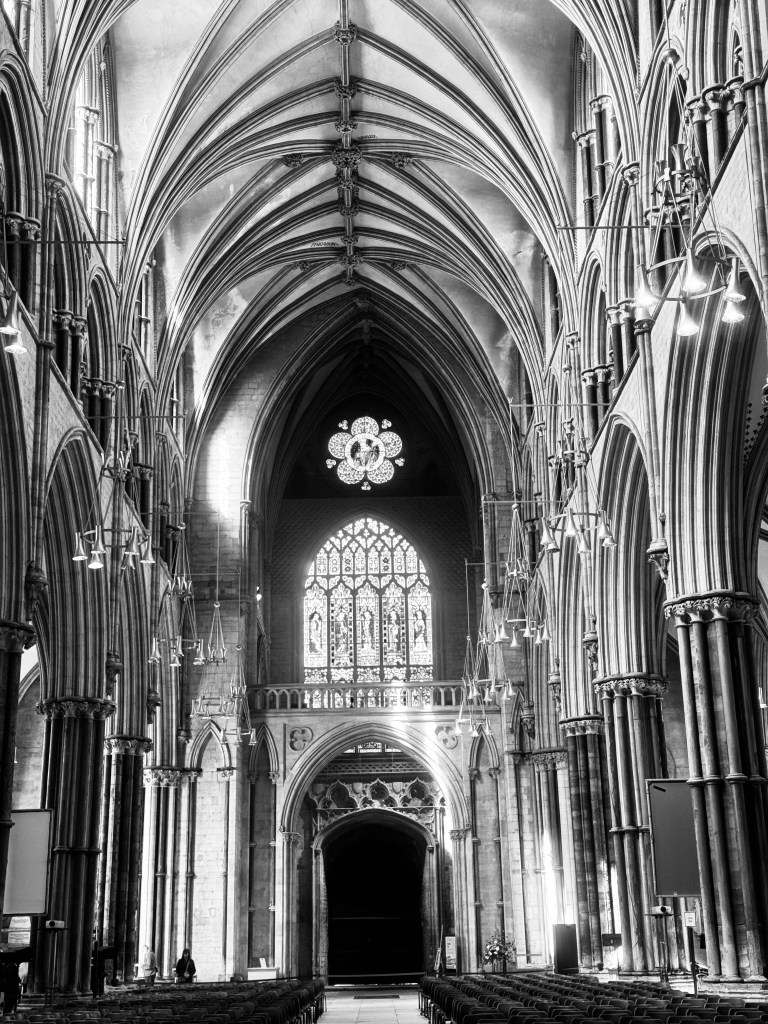
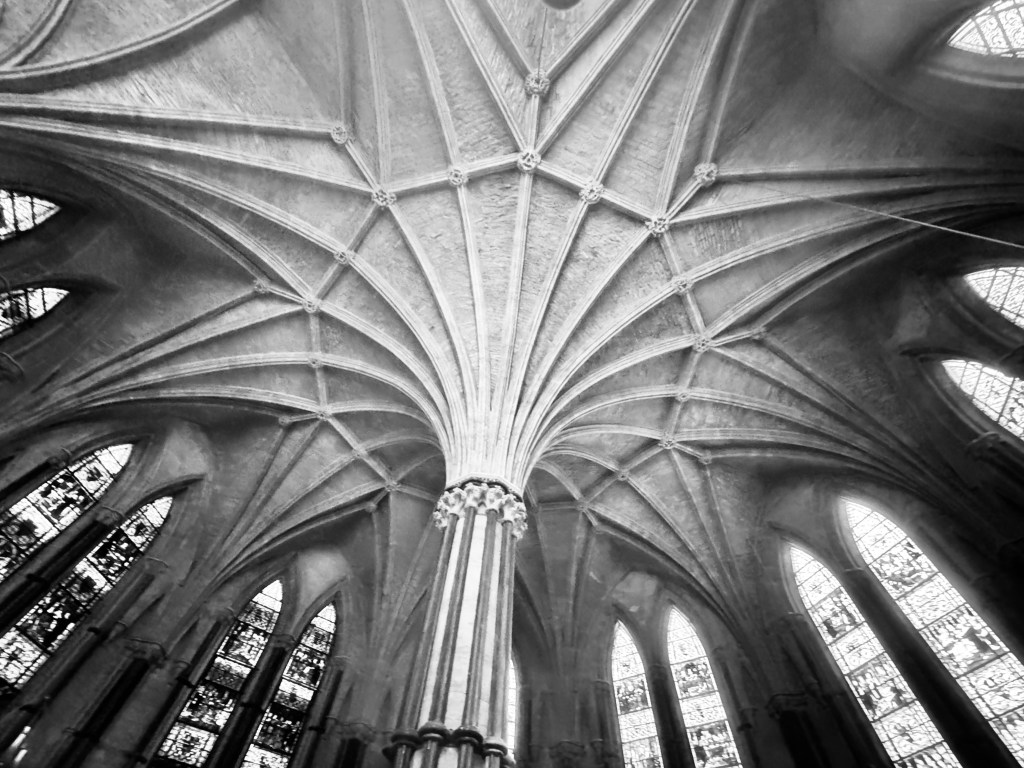
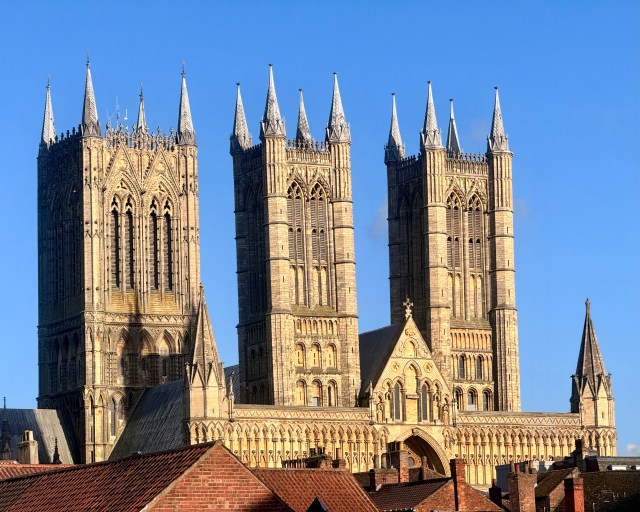
I’ll grant that most cathedral visitors don’t search for graffiti. Other things catch our eyes. Built between 1186–1200, Lincoln Cathedral was for two hundred years the tallest cathedral in the world. The cathedrals’ nave is certainly majestic; the stain glass windows simply mesmerize me with their colors; the choir stalls take me back in time as I listen to a cathedral choir during evensong or eucharist. So, it is understandable that we notice these other cathedral features. Yet, I still love to hunt. I still love to find those markings, those scratchings.
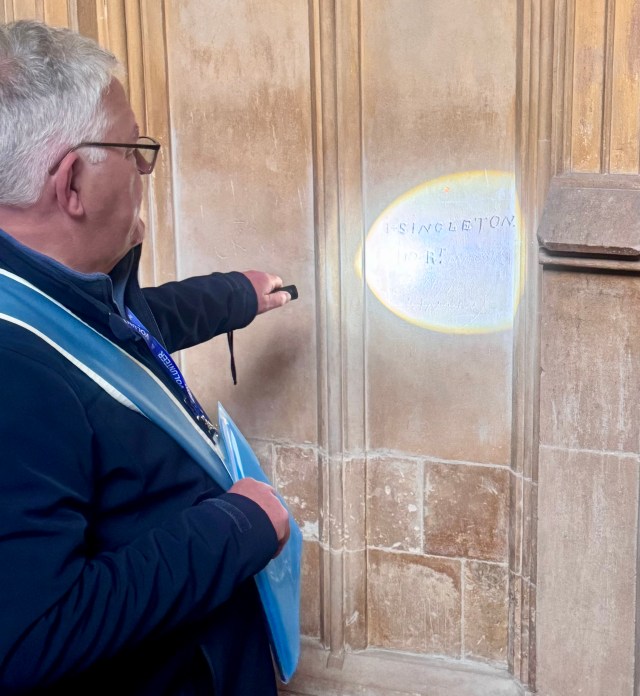
Fortunately, Nigel is leading a tour. Nigel and seven others are recording Lincoln Cathedral’s graffiti. They have catalogued over 8,600 graffiti markings! While we can see graffiti everywhere, he helps us find the more unusual and the more hidden graffiti. More importantly, he explains what we are viewing.
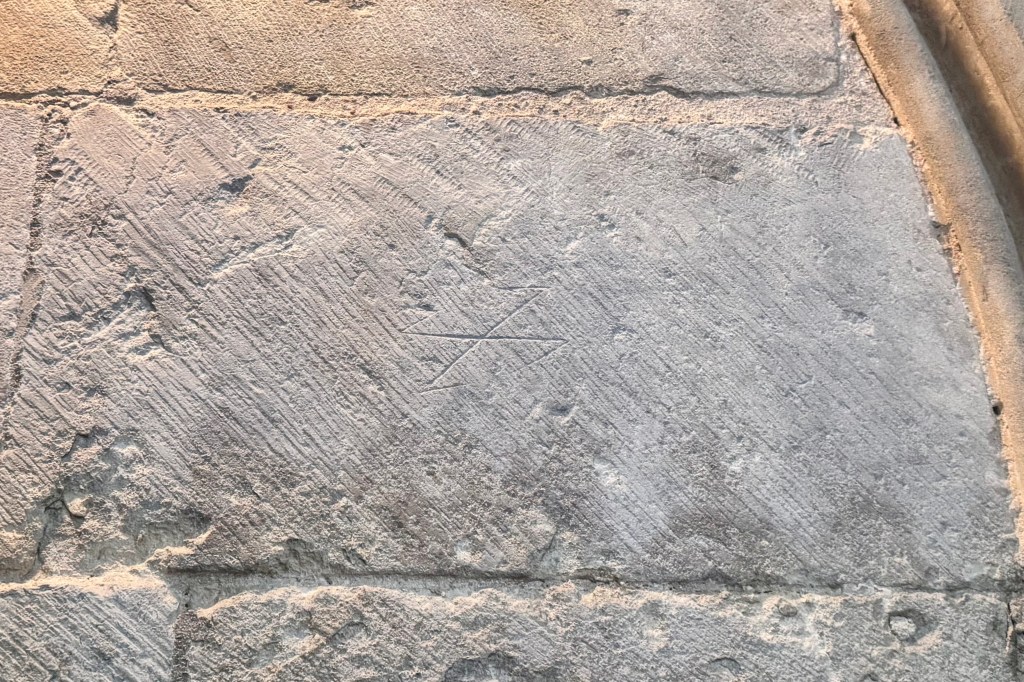
What do we see? The first graffiti is simply mason marks. A cross, an arrow, a circle to say “This is my mark. I worked here.” Nigel reminds us that the almost all the building creators were illiterate. Only later, when clerics, barristers, merchants, and clerks begin to carve graffiti do we have letters. These later generation of graffitists carve their initials. Or, as here at Lincoln, someone carves a local landowner’s name upside down, a curse!
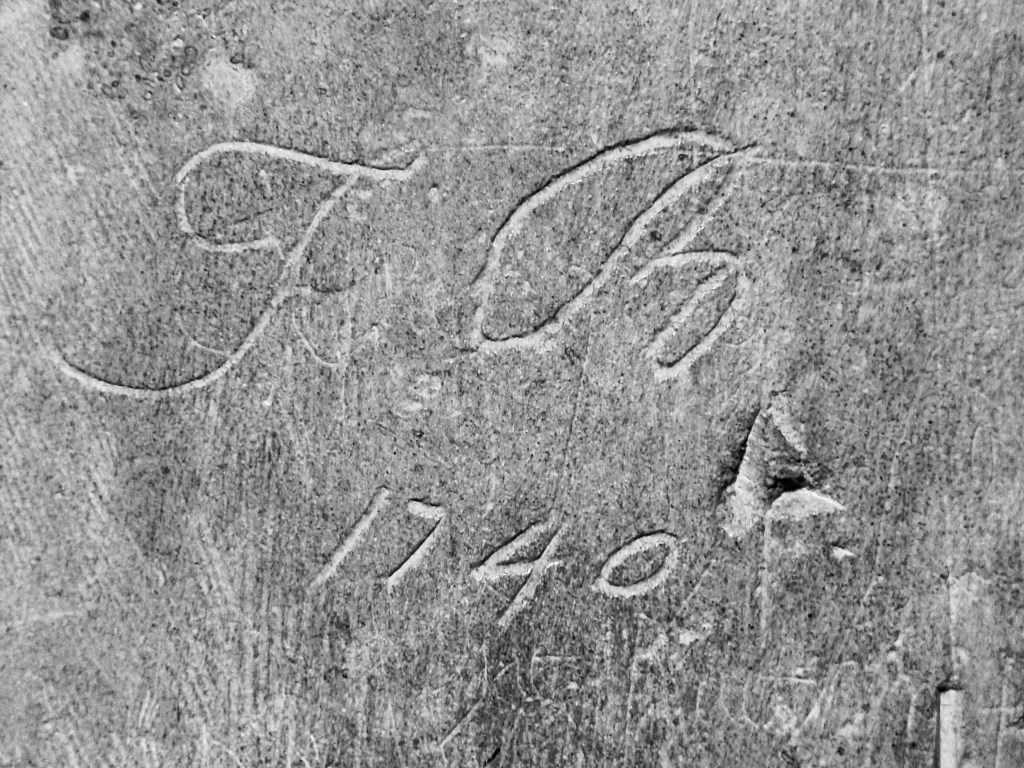
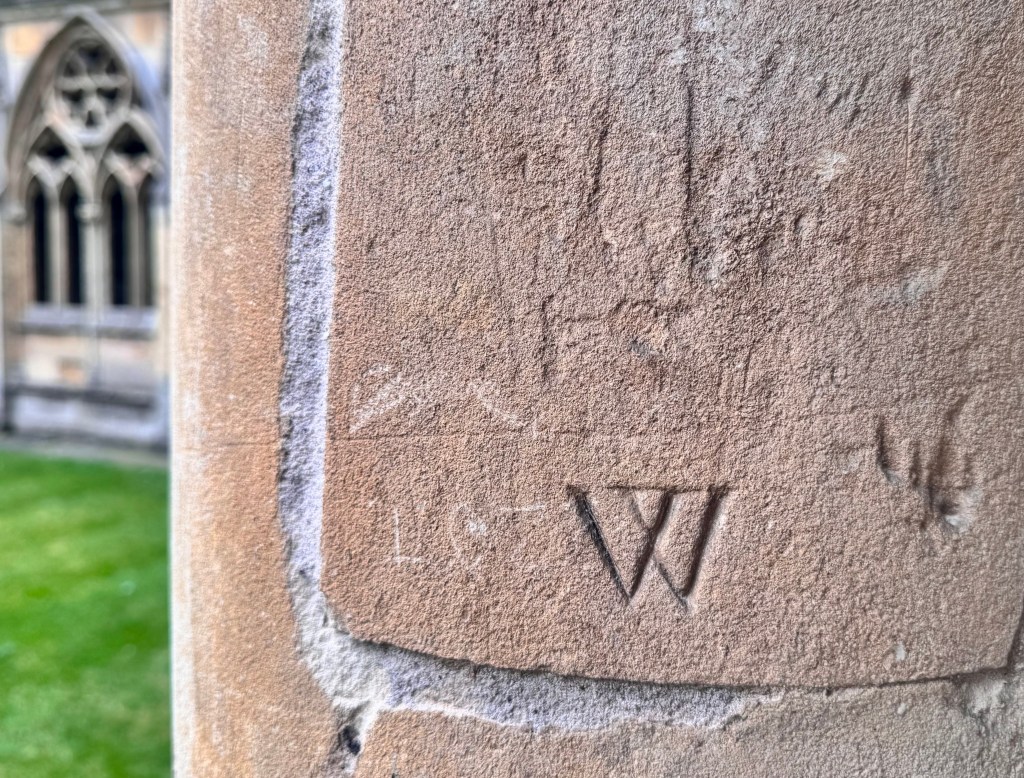
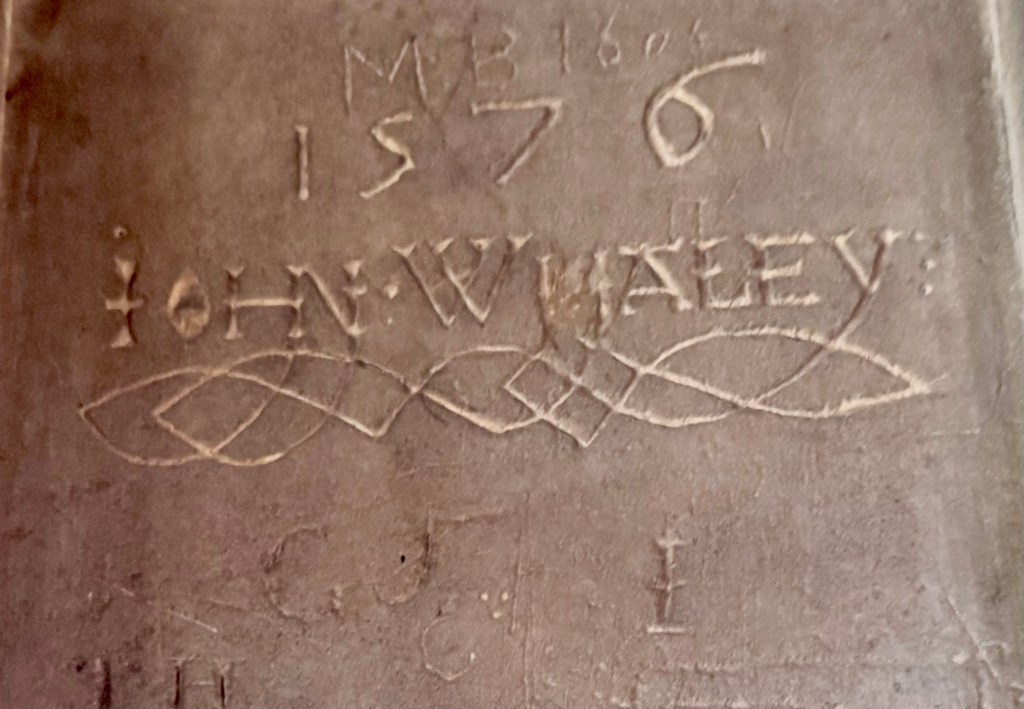
We see a special type of religious markings. Daisy wheels near entrances. These six-petal floral designs supposedly trap bad luck and evil spirits. Interesting!
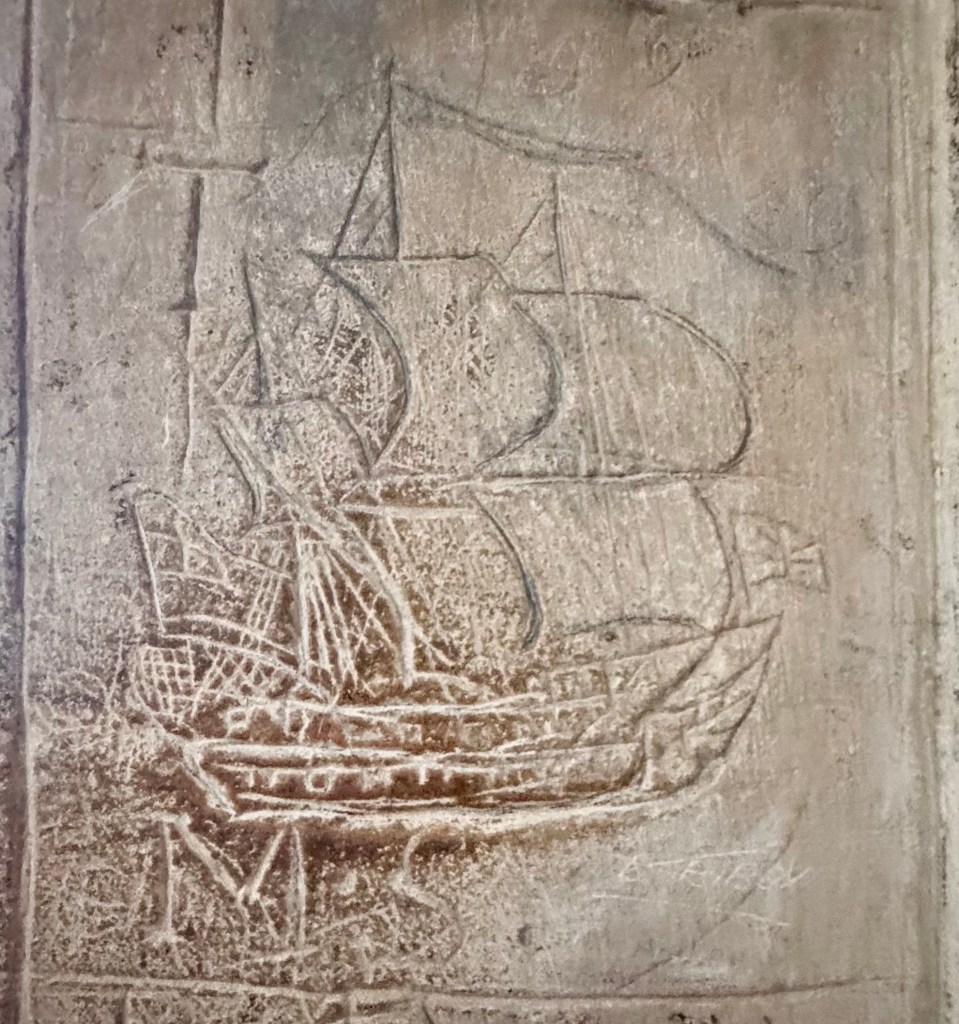
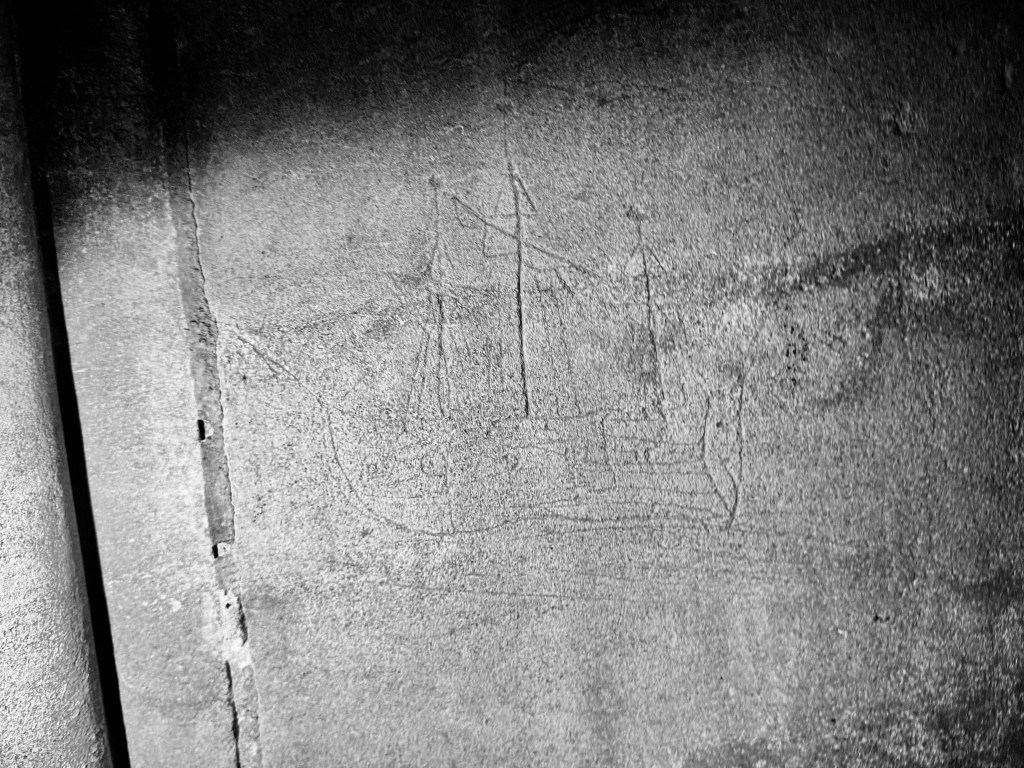
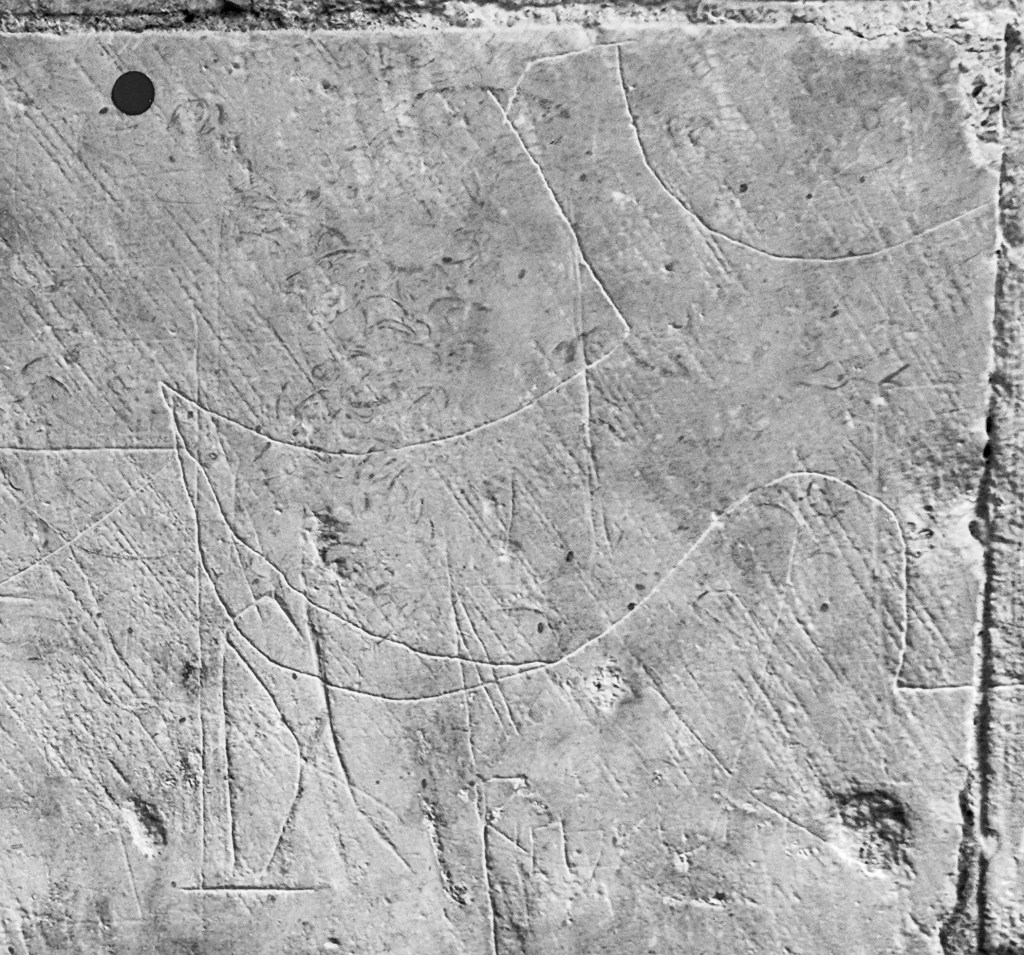
We see other markings. Musical staffs with notes. A shoe. A three-masted galleon. Nigel asks us: “Was the graffiti showing gratitude for a past, safe and successful voyage? Was this graffiti a petition for safe passage on a future voyage? We will never know!”
How is the graffiti carved? Nigel reminds us that cathedrals were usually quite dark. For those carving graffiti, they would need either to carve the graffiti during daylight, or they would need a torch, a light. Also, since the stone is hard, these ancient graffiti artists couldn’t complete a carving in a matter of minutes. No quick spray paint or magic markers back then! Using a knife that everybody carries, the work would take hours, sometimes days. The work is loud as the graffiti artist gouges the rock.
Nigel is asked: “Wouldn’t others notice?” “Of course, others noticed. So, the persons in charge, the authorities back-then, must have had a laxer attitude toward the graffiti than we do towards graffiti. They must have permitted graffiti being carved.”
I can spend hours in cathedrals. For all sorts of reasons!

